Monthly Archives: April 2023

Bluebells!

26 April 2023

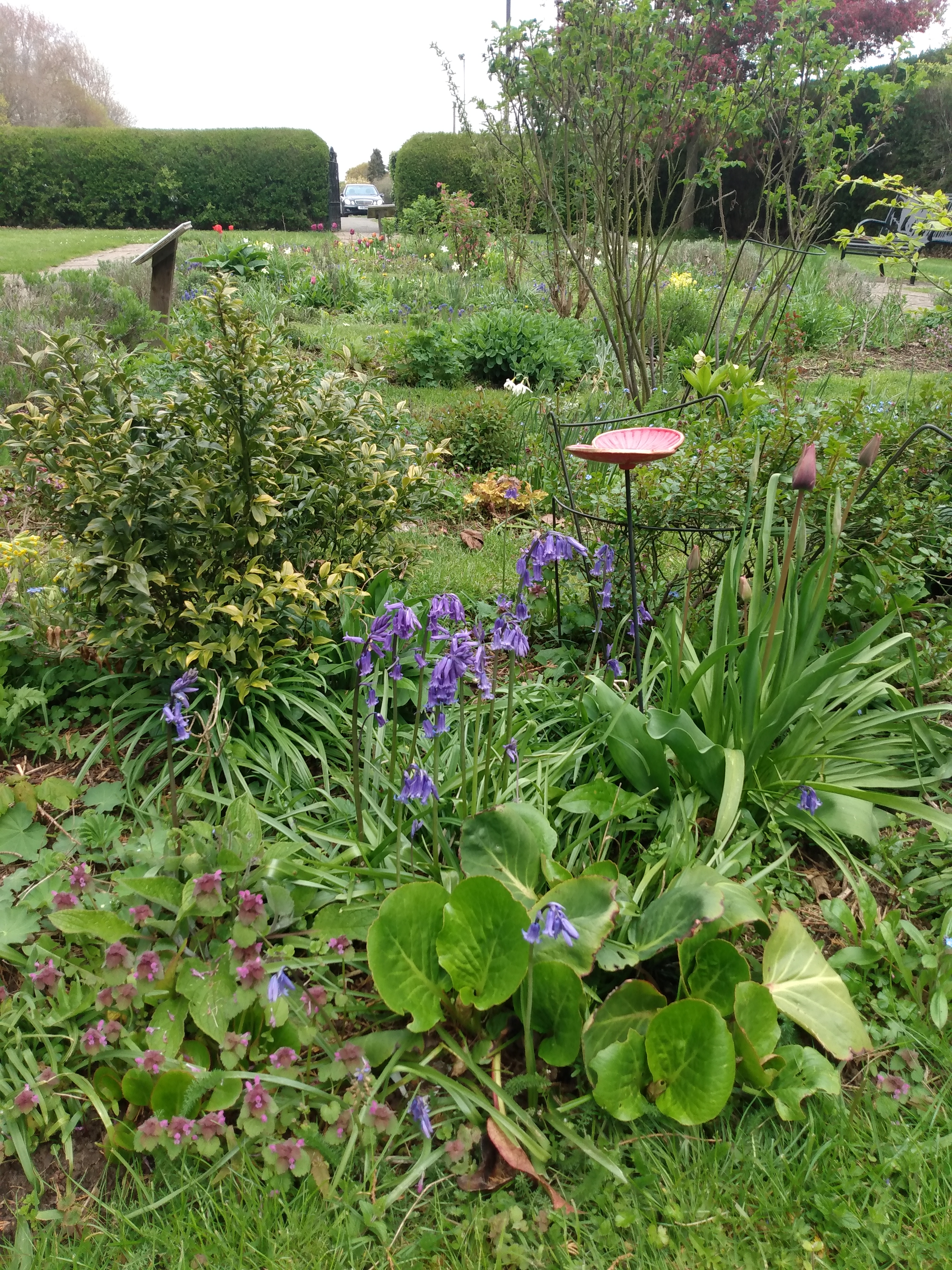
When we started working here, we planted some native bluebells in the bed nearest to the war memorial. They came up the next year, but didn’t flower at all for a few years; then last year, we had a couple of flowers. And now this year, look at them!

The main clump are the ones we planted originally; what’s really exciting is that they appear to be spreading, so they’re happy here. Lovely to see them on a cold grey morning today!

More on the brook along Cotefield Drive

April 19, 2023

It’s always interesting working at some of the other wildlife sites that South Beds Friends of the Earth look after (there are 19 of them!), just seeing different ways of doing things, and learning more about where plants really thrive, rather than just surviving.

And it can make us very grateful for what we have here in the Garden of Remembrance – for example, unlike the area by the brook along Cotefield Drive, we don’t have people letting their dogs use the space as a toilet for us to clear up after. And we don’t have any vigorous clumps of nettles trying to smother all the more delicate wild flowers, partly due to over-fertile soil – which itself is partly due to people thinking it’s fine to just dump lawn clippings and other plant waste on!

Fly tipping and dog mess problems apart, the bank of the brook’s been transformed over the last couple of years, from a tangle of nettles and brambles to a much more interesting mini-landscape with little clearings of red and white deadnettles, primroses, red campion, foxgloves. Even on a cool day like yesterday, we saw several different types of bees out, enjoying all the nectar. And of course, there were still plenty of young nettles for us to bag up and add to our compost.

—-

Colour and Cooperation

April 17, 2023

At last we’ve had some sunshine, and what a difference it’s made – suddenly we have colour in all the beds, and everything’s started growing again. Here’s one of the beds near the car park:
We’re beginning to untangle the various tangles of self-sown plants – unfortunately, most of them contain the only poppies we’re likely to have this year, so we’re trying to keep most of those, while removing all grass clumps, and some of the other plants. And at the start of the year, we sometimes wait until annuals like red deadnettle have finished flowering before pulling them out, so there’s plenty of nectar and pollen for the many early bees around the gardens.

Mostly though, we’ve been getting on with the behind-the-scenes work, like sowing more annuals to fill gaps, turning the compost bins, and getting the last bags of leaves into the leaf mould bin. And yesterday, a couple of the team went over to Cotefield Drive to help weed out nettles on the banks of the brook, to stop them suppressing the many wild flowers that have been planted there over the last few years. The cooperation helps both teams – when we came back, we brought six bags of young nettles, full of nitrogen to give our compost a boost as we remake it, and speed it up; we’re hoping to mulch more before any summer heatwaves, to keep moisture in the ground and reduce the amount of water we have to use.


Mid-spring update

April 10 2023

It’s been a really long, cold, wet winter, but finally we’re beginning to see a bit of colour in the gardens, and bees are visiting the flowers more as the days get just a little warmer.

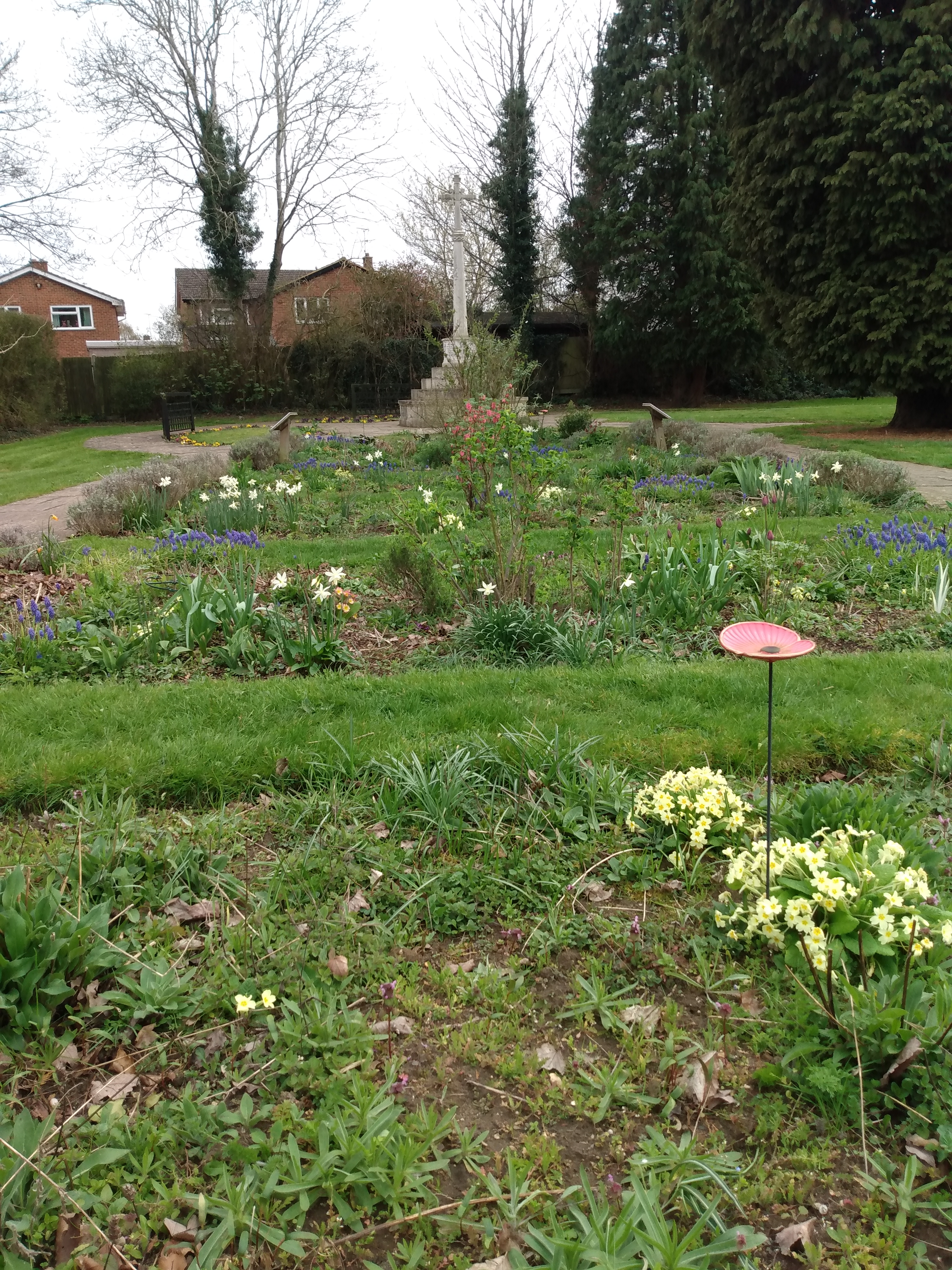
Looking south from the car park gate to the war memorial

‘Thalia’ daffodils – these are the ones that bees like, they don’t seem to bother with the usual yellow ones

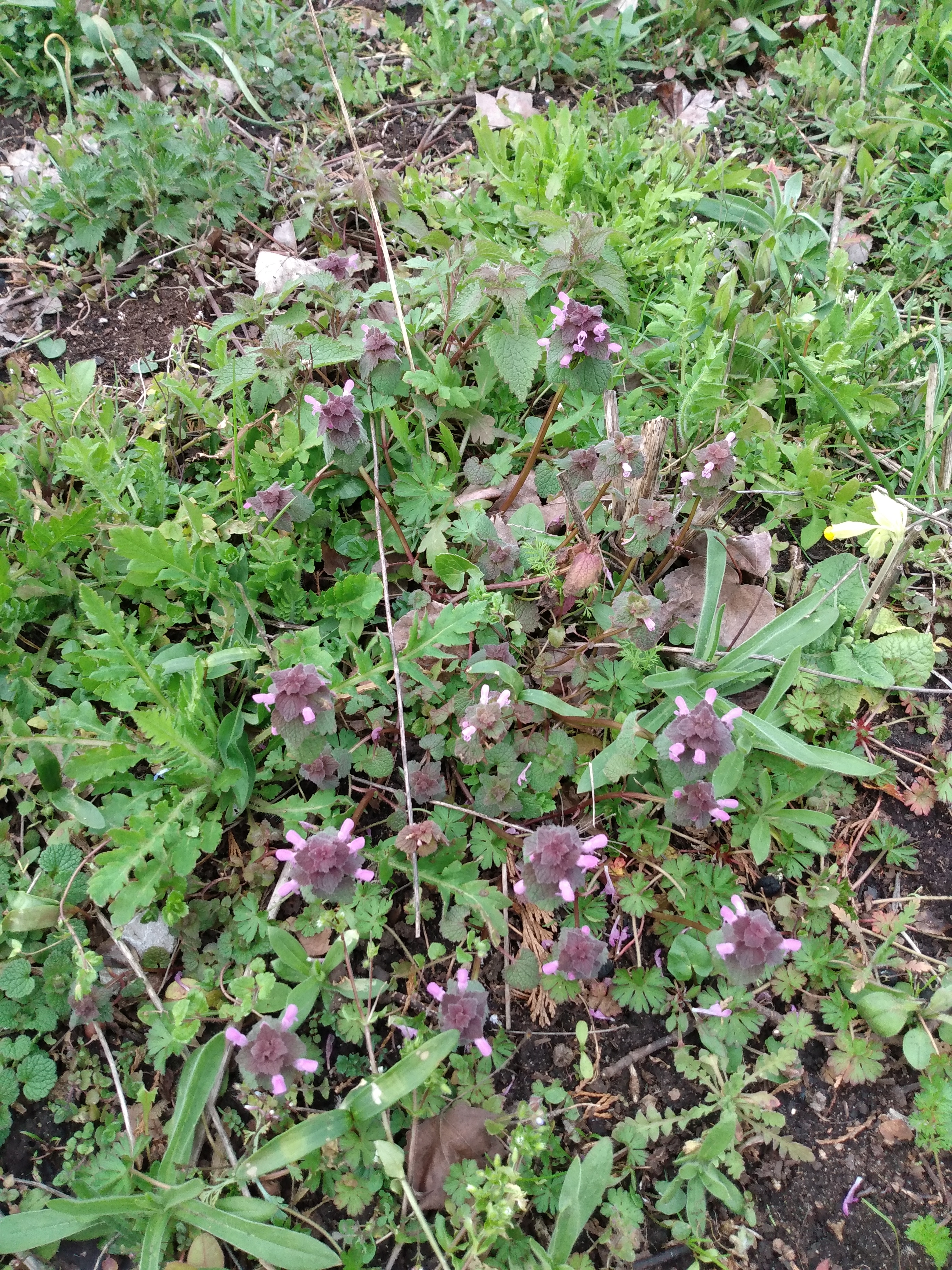
Our constant, unassuming star plant – once we’ve managed to establish this red deadnettle, it’s seeeded itself quietly around the gardens, and is one of the ones most visited by bees

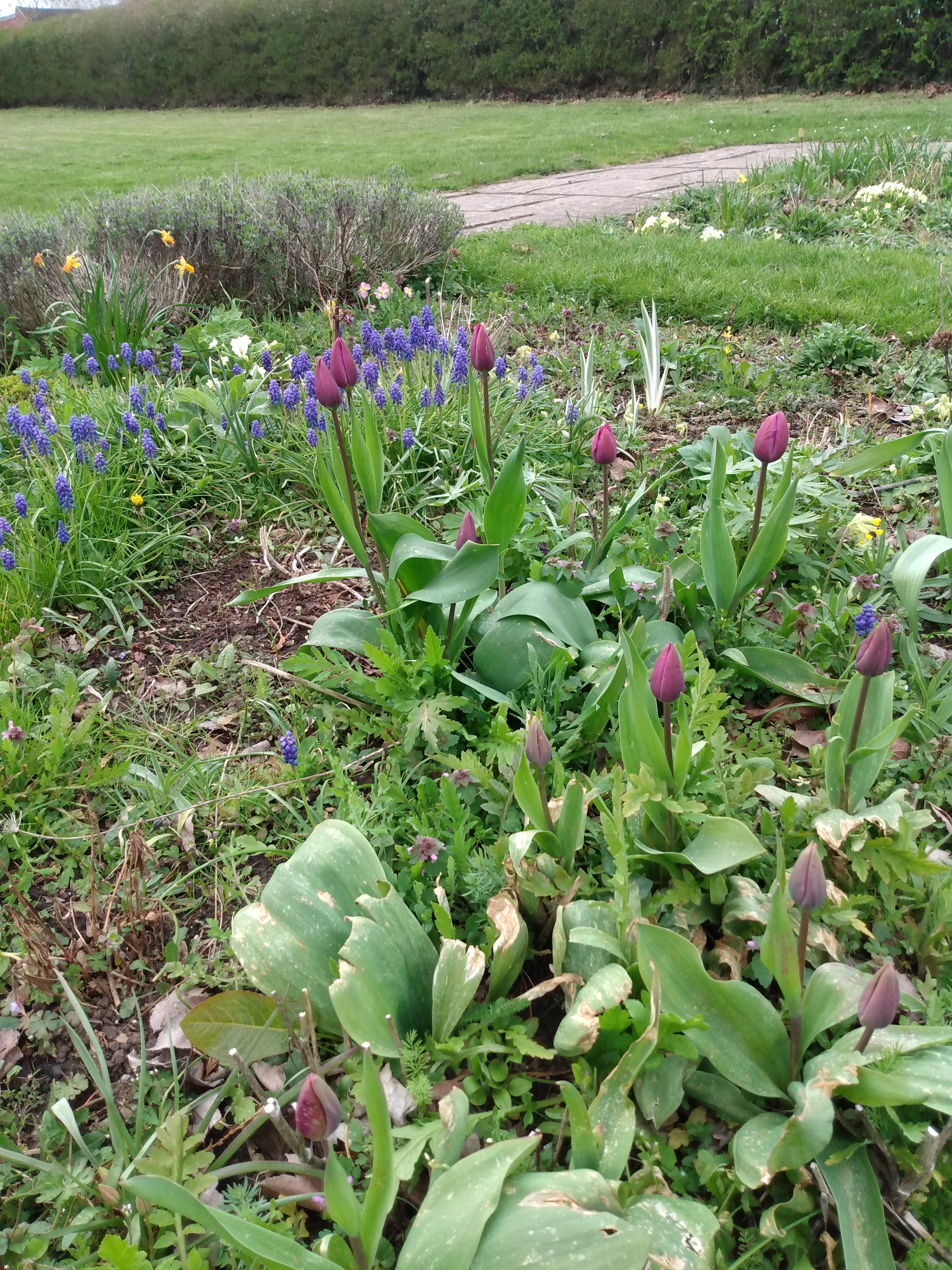
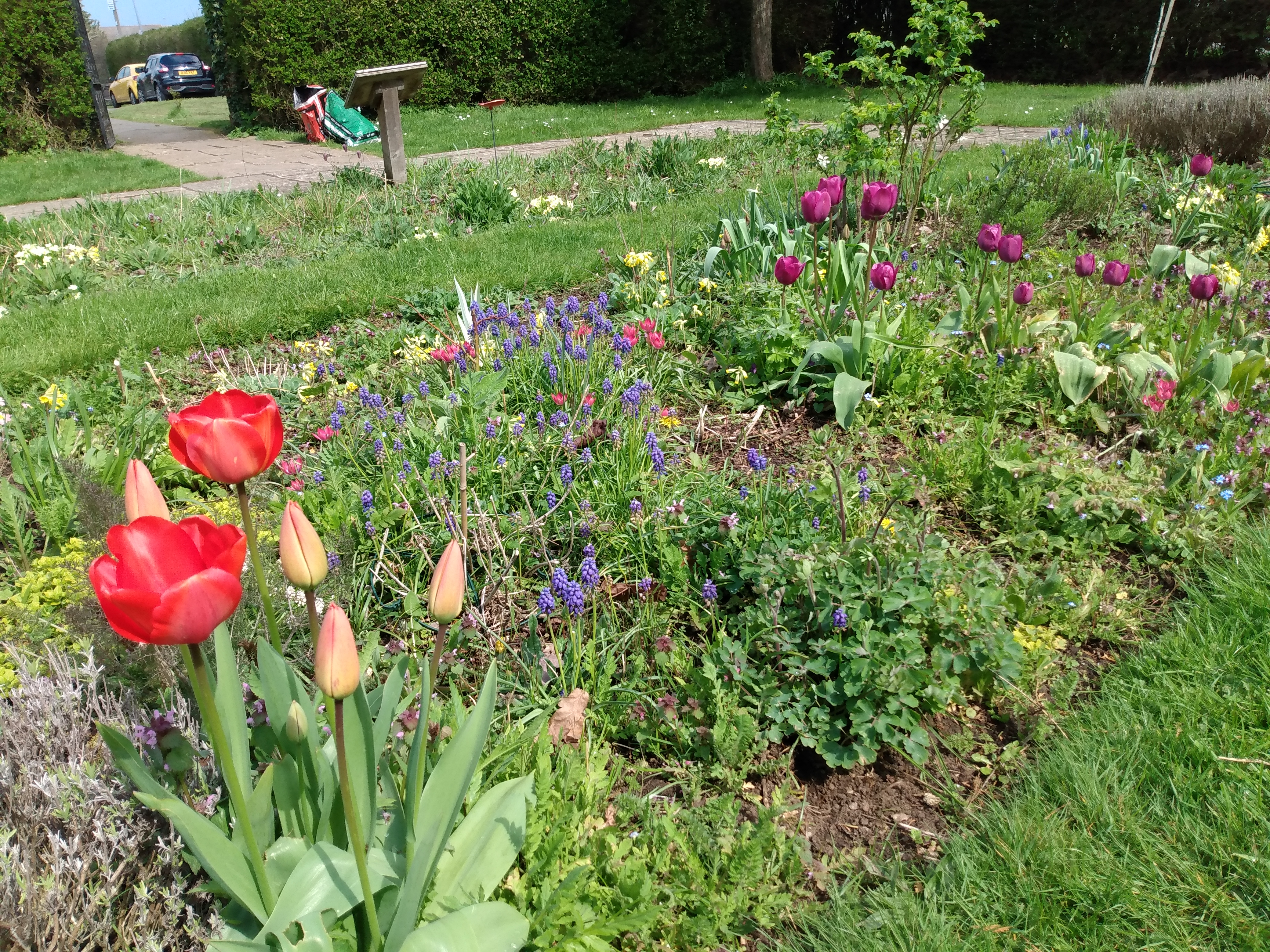
Purple tulips and blue grape hyacinths

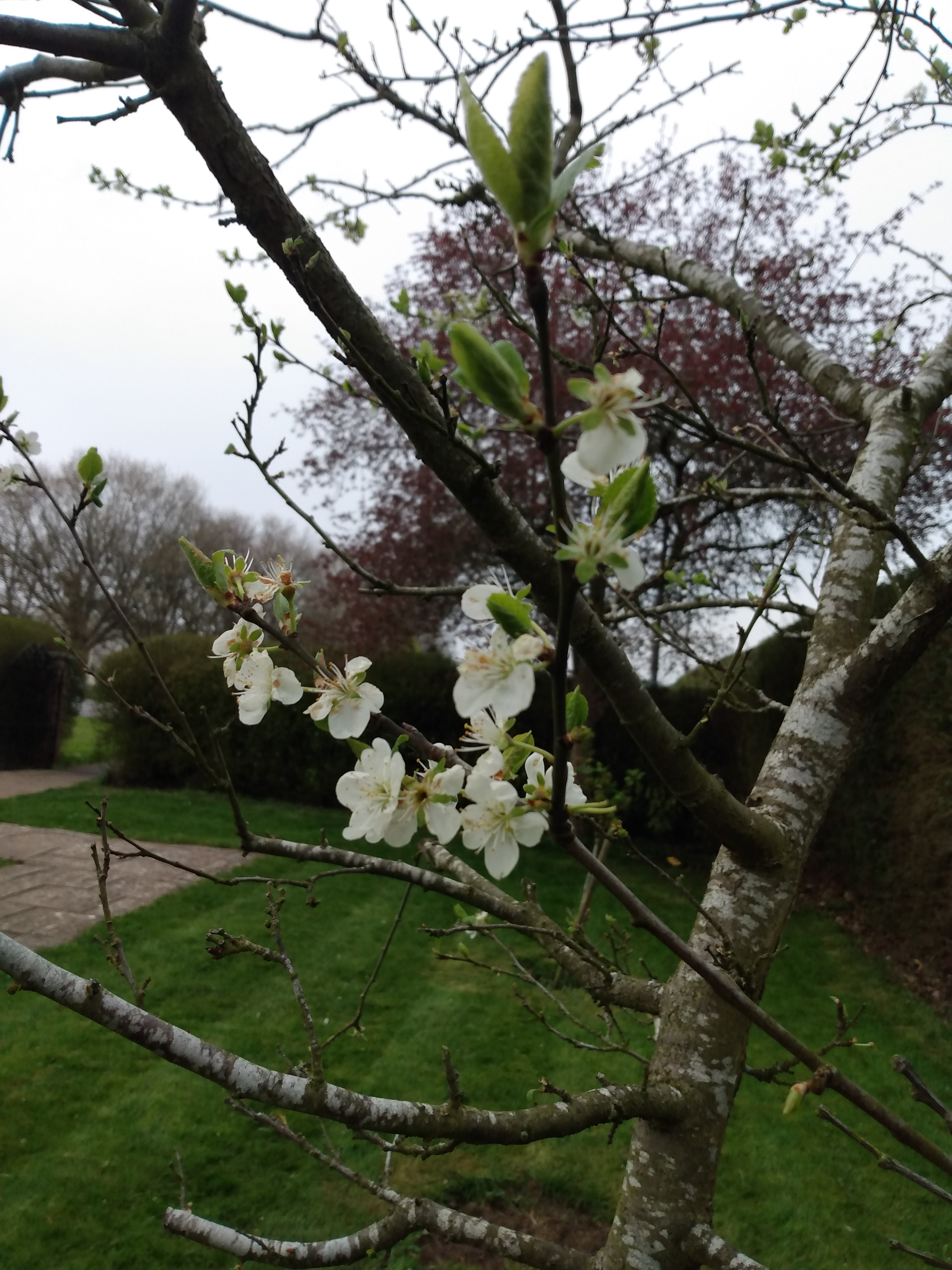
The plum blossom is out at last!

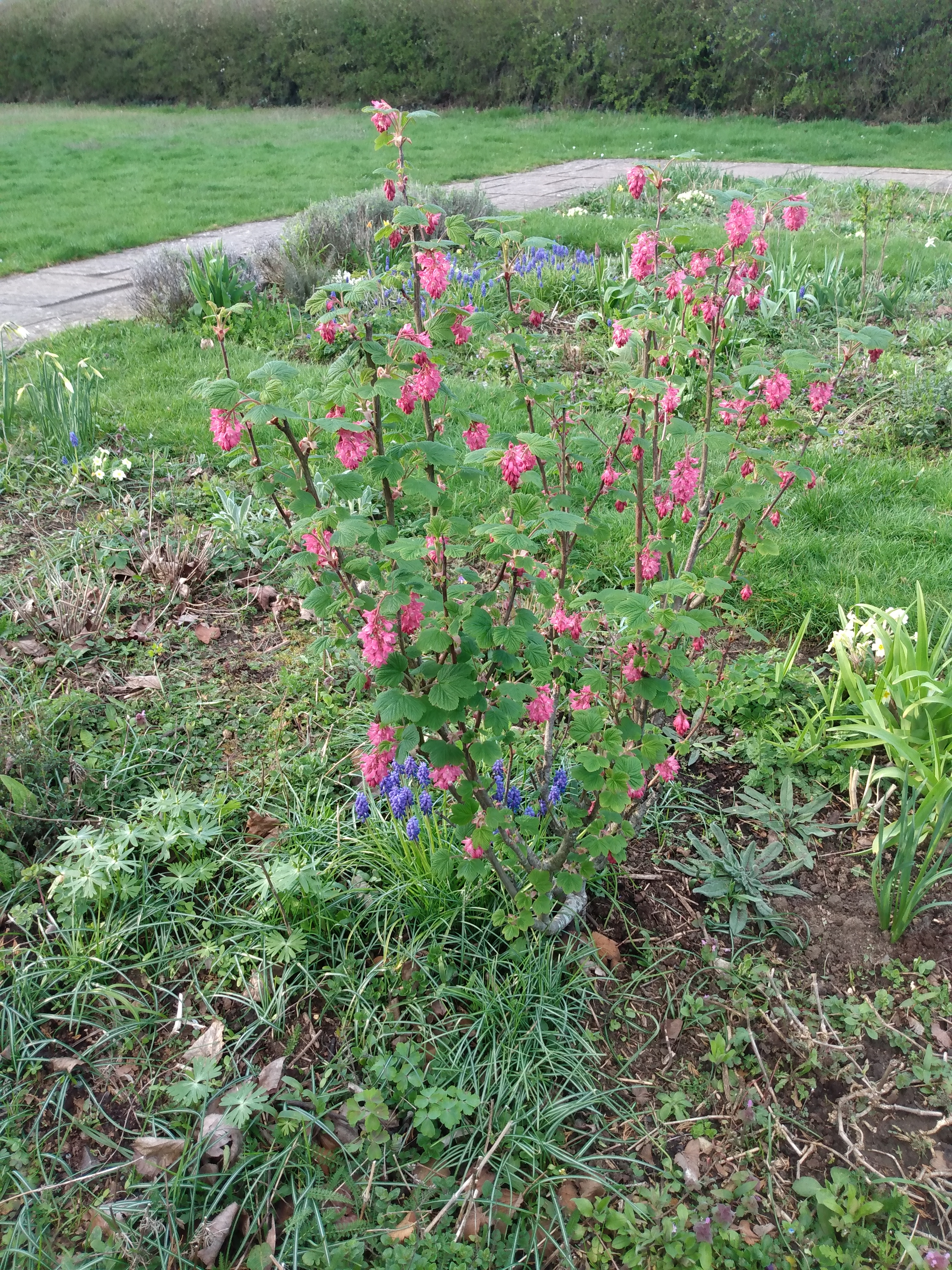
The flowering currant’s taken a while to establish itself, but it’s flowering really well this year