Category Archives: Uncategorized

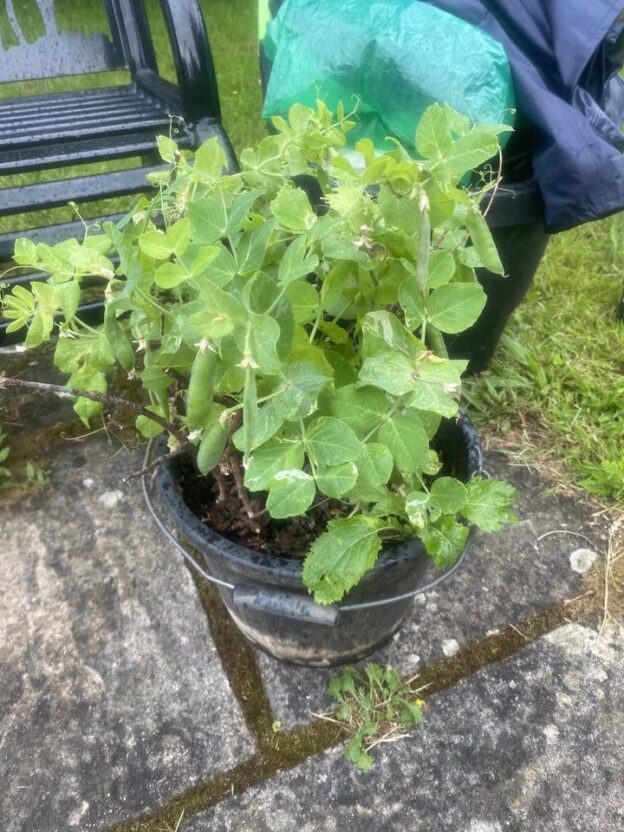
Peas growing in a bucket

Preschool peas are here!

17 June 2026

Sorry it’s been such a long time since the last blog post – in fact, there’s been time for the peas to grow, flower, and fill the pods with peas.
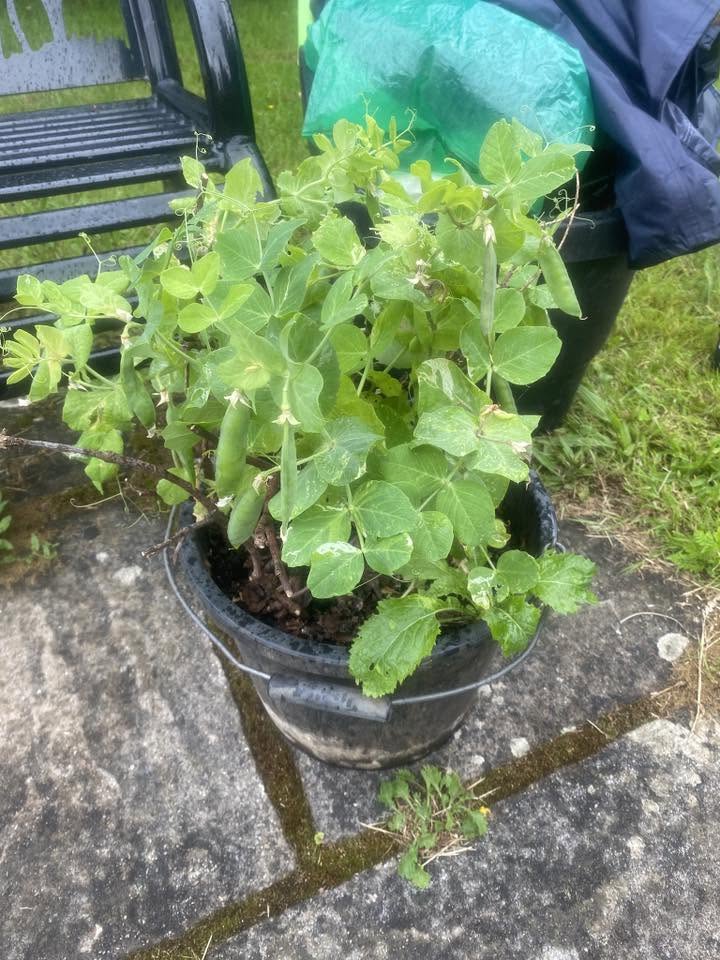
Peas growing in a bucket
Peas!

Unfortunately the children hadn’t been able to come round when we were working there over the last few weeks, so this is the first time they’ve seen their plants since they first came through the soil; but it was worth waiting for.

We took the bucket of peas round to the gardens and met some of the children there, where they picked some of the pods and discovered that small raw peas are very tasty. They left some for their friends back at the Pavillion, too.

We’ll do this again next year, with two or three buckets. It’s much more successful when members of the gardening team can look after the plants when they’re in their own gardens.

Some of the children went searching for ladybirds, and found quite a few:
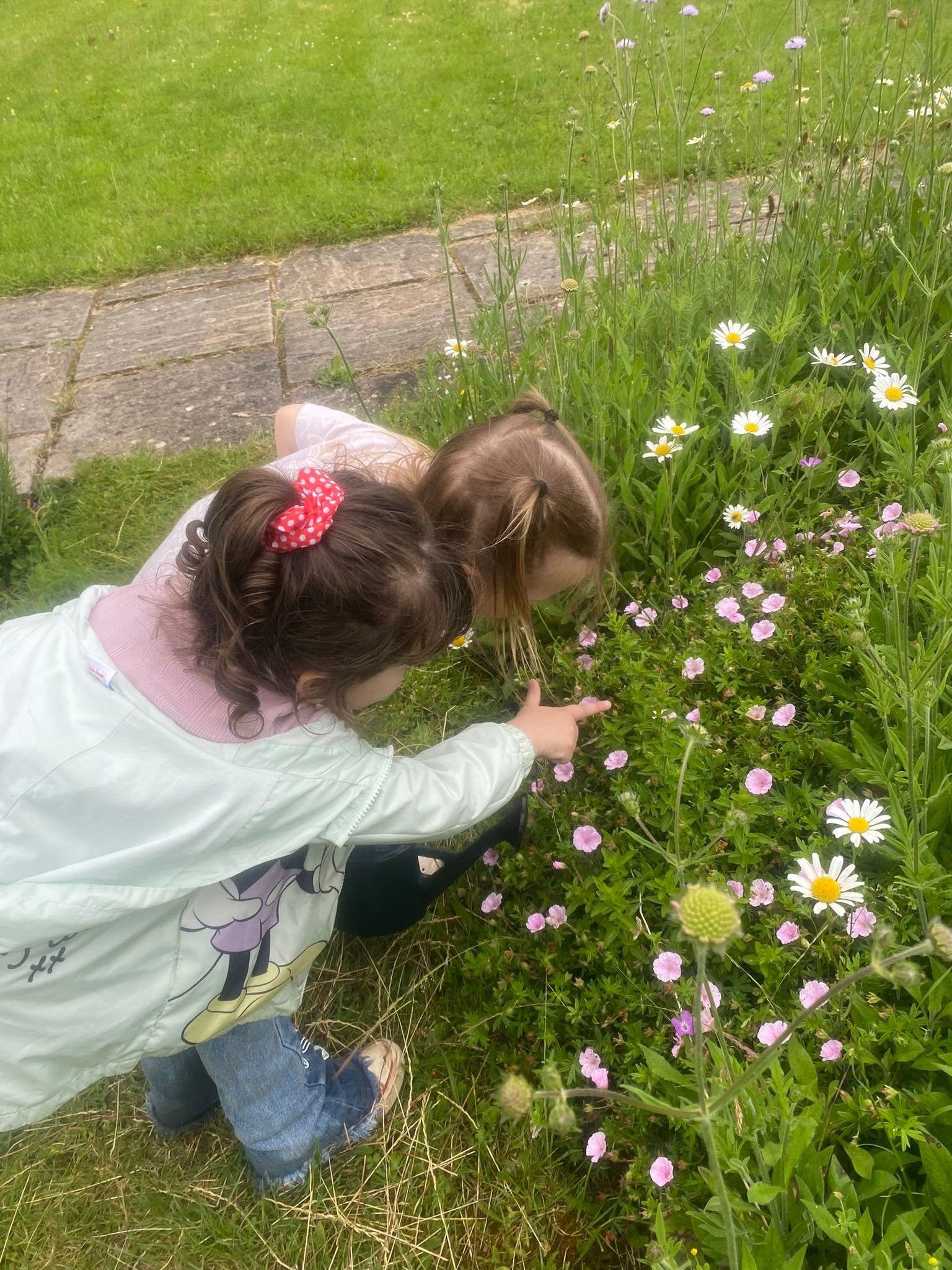
Children checking for ladybirds
Checking for ladybirds
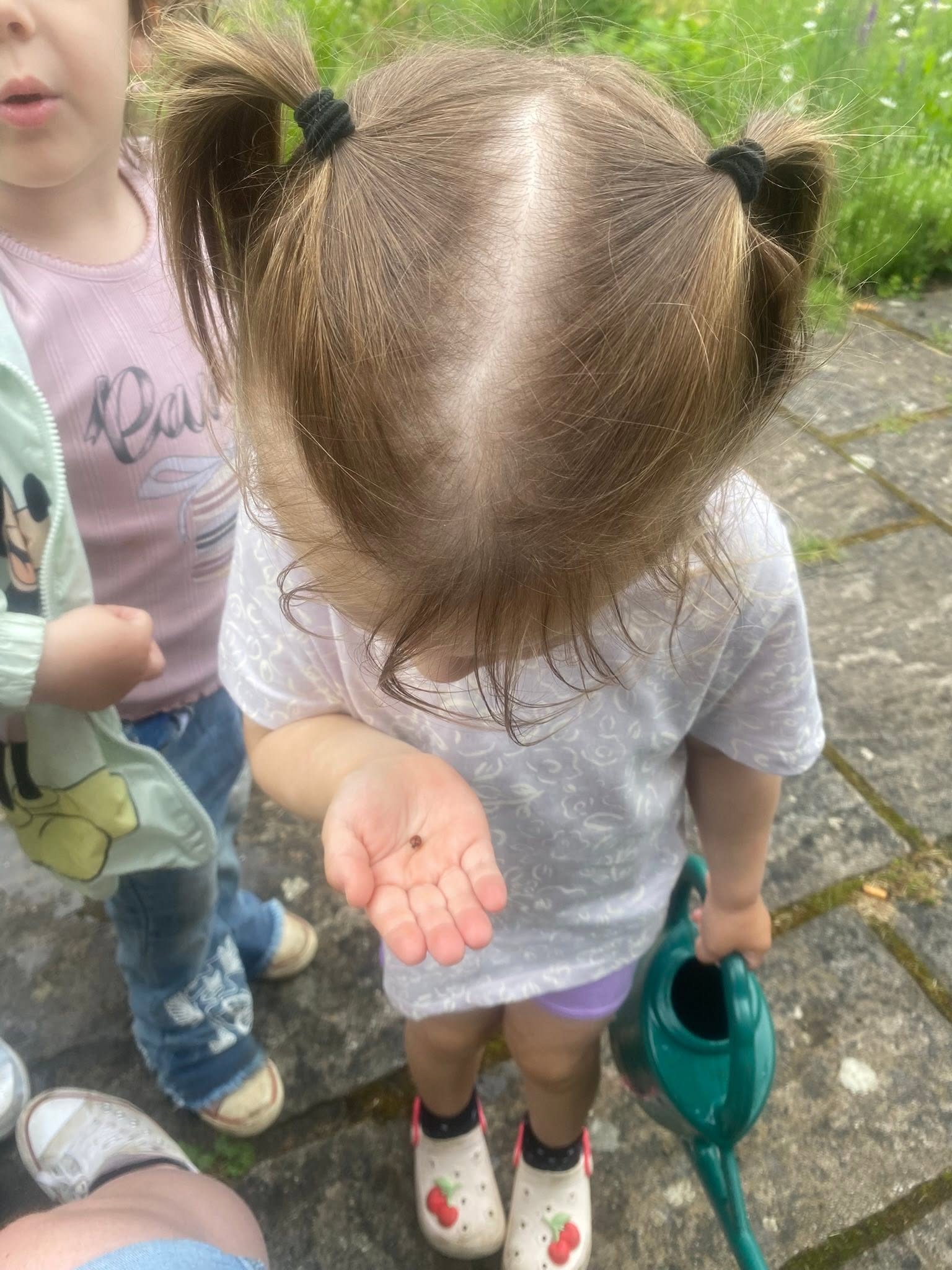
Child looking at a ladybird on her hand
Found one!


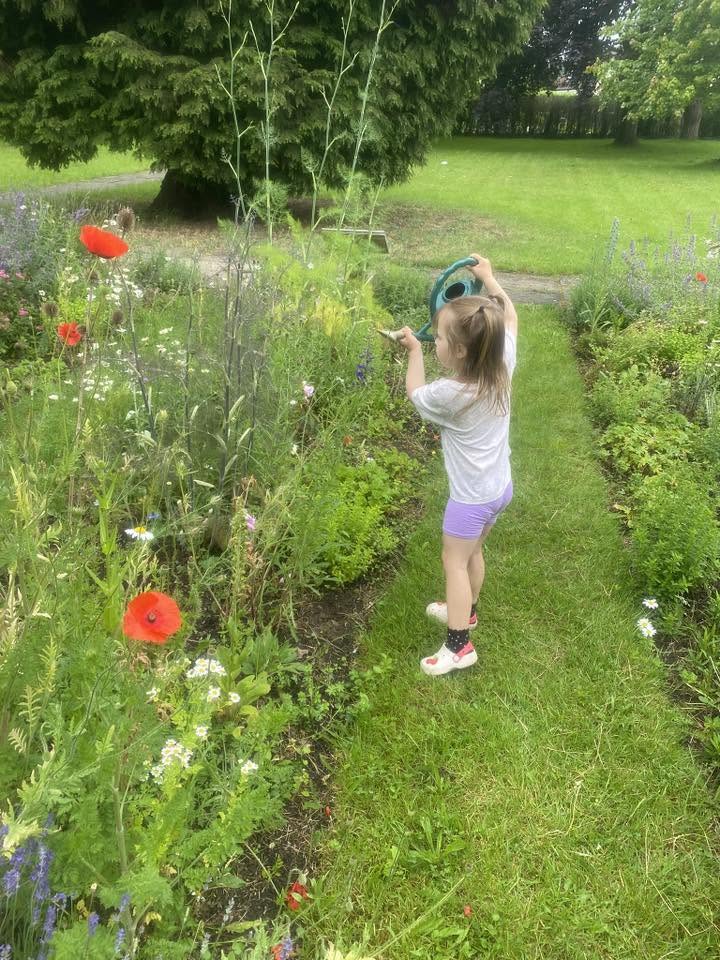
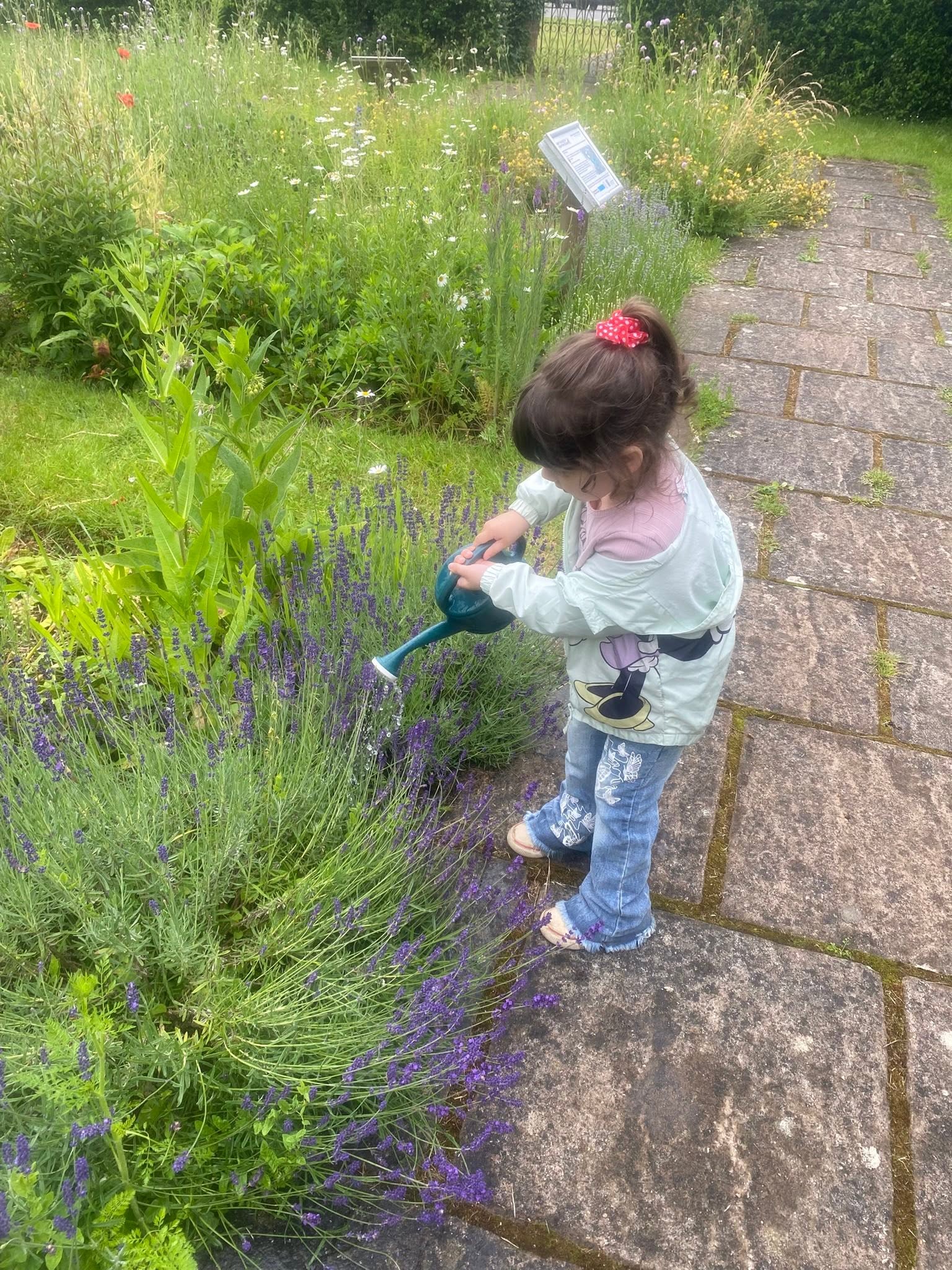
It’s been quite warm this week, and dry, so the gardens really benefited from all the watering the children did next – happier plants, a few damp feet, and smiles all round.
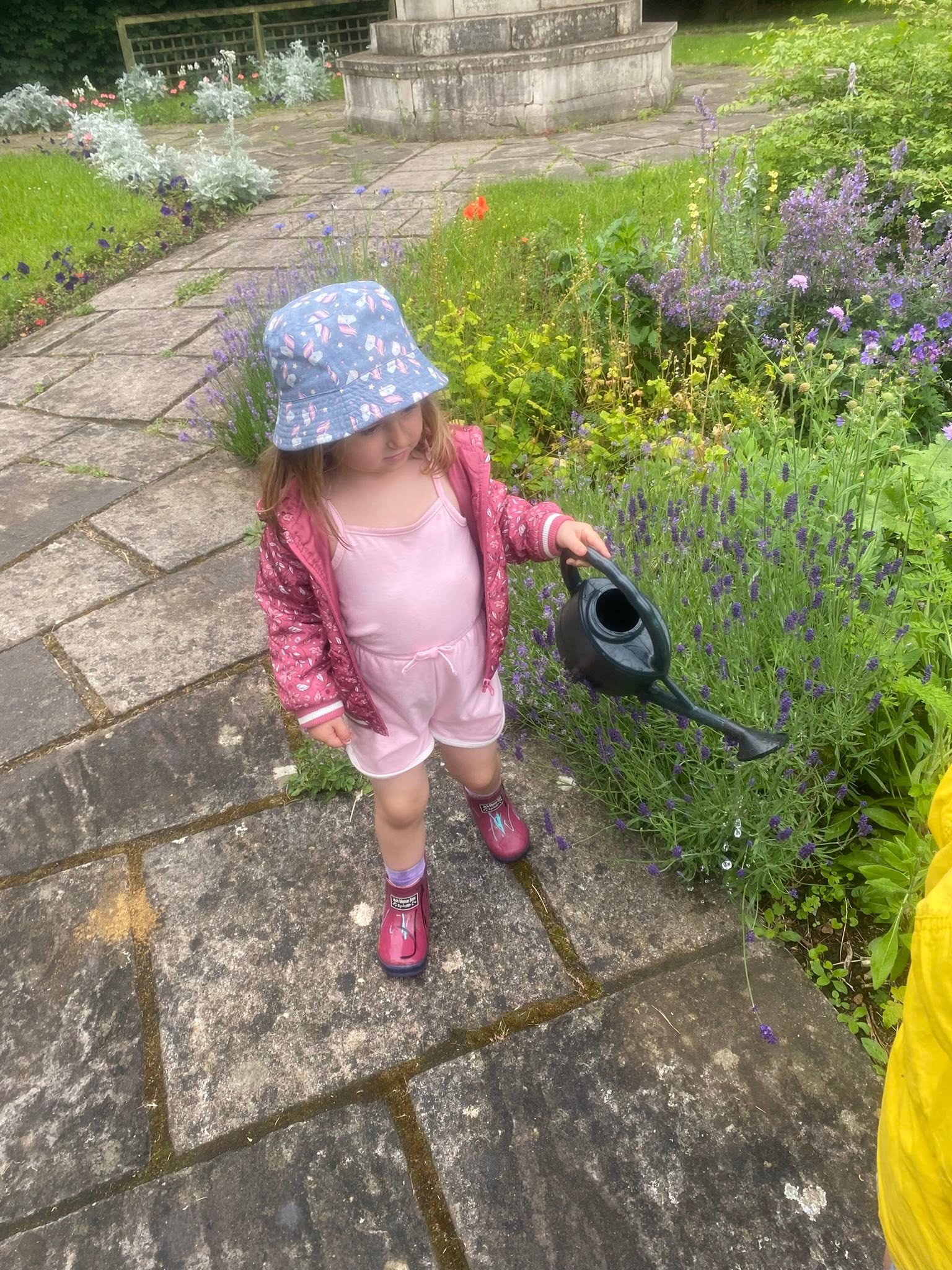
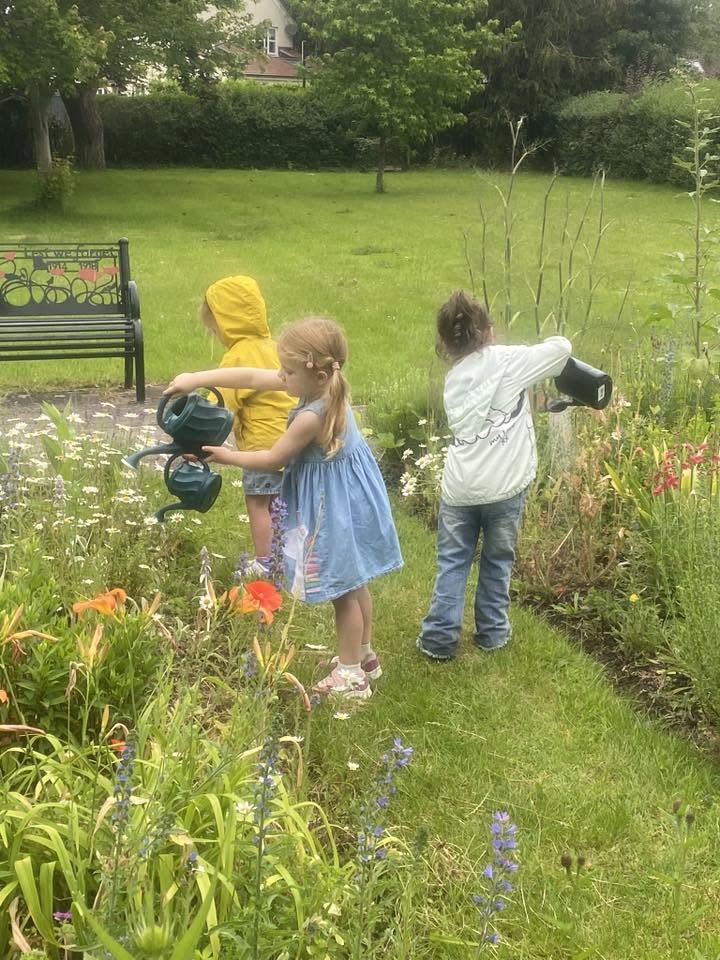
Child watering plants
Children watering plants
Child watering plants

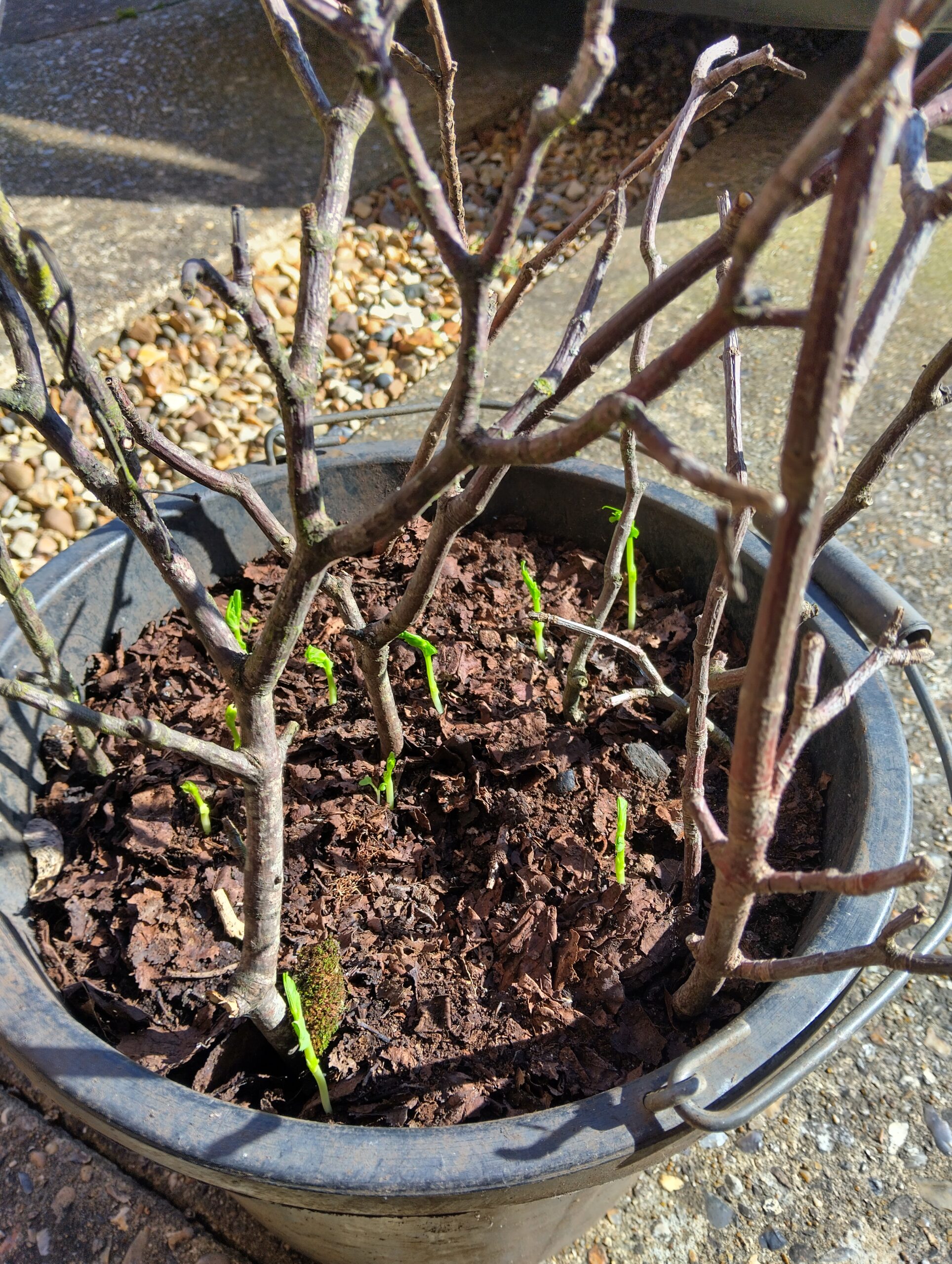
Preschool peas on the way

7 April 2026

The children from the local preschool came round just before the end of term to sow a few peas; they’re just coming through now:

We’re not growing veg in their flower bed this year, as it hasn’t worked well. None of the available beds gets enough sun, and over the years it’s taken most of the compost we make just to improve the soil enough to grow a few baby carrots and peas.

The main problem is that we’d need to be watering three or four times a week in the hot, dry weather we tend to get now between April or May and July, when the peas would be ready. That’s not sustainable, either in terms of volunteer time, or the sheer amount of water needed to keep up with the way that large fir tree drains the beds. Much better to plant things that can cope.

But the children do love growing things they can eat! So this year, we’re experimenting with growing things in large containers (workmen’s buckets), with holes drilled in the bottom for drainage, and filled with a good rich mix of bought-in peat-free compost, home-made compost, and leaf mould. The children then sowed peas, topped up the container with leaf mould, and found sticks to put in to support the plants as the grow. Then the team can take the containers home to look after – much easier than trying to arrange watering visits – and bring them back for the children to see as they grow.

We’re going to do the same with radishes, carrots and probably lettuce. Watch this space!

A few more photos

24 March 2026

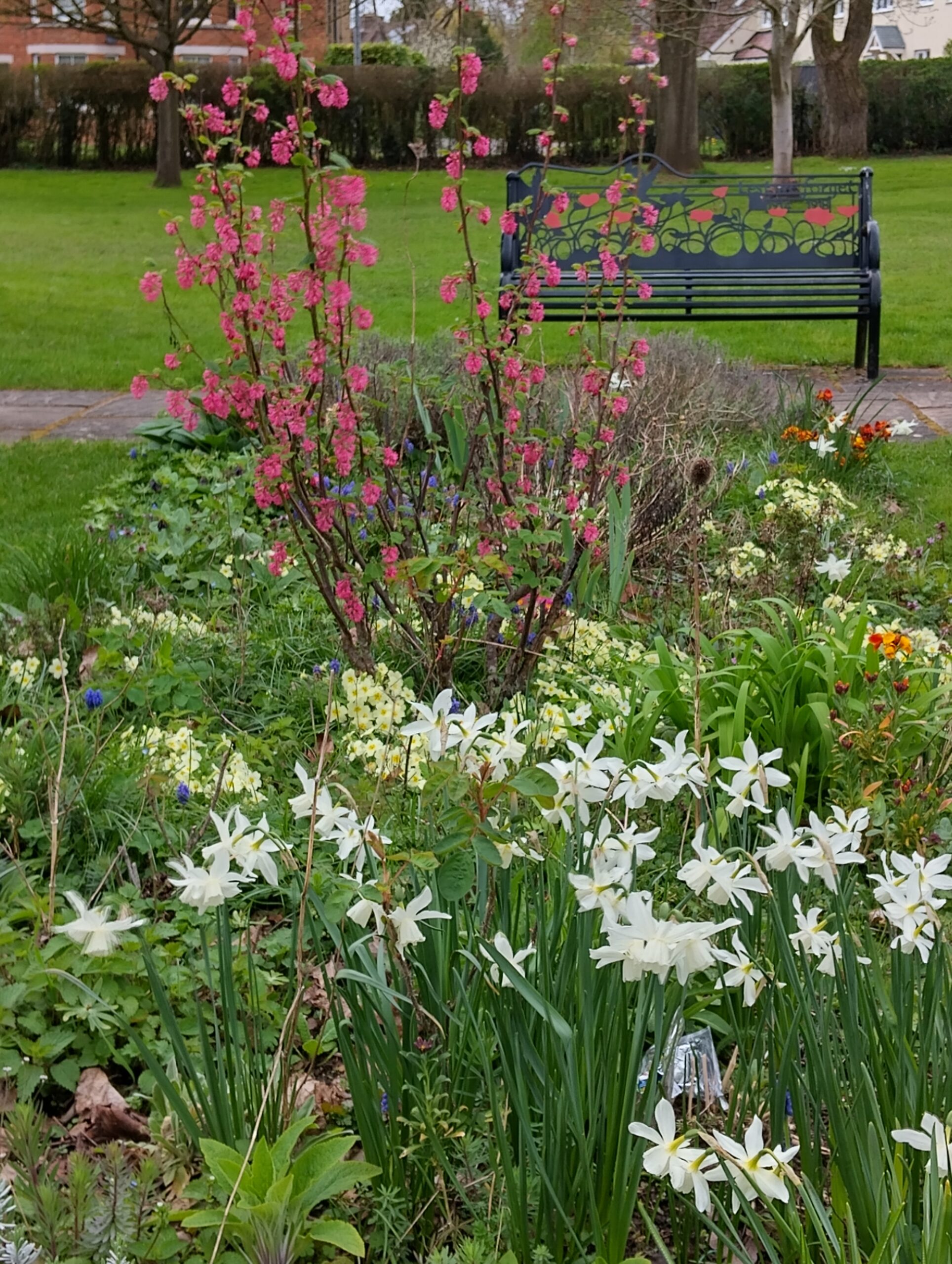
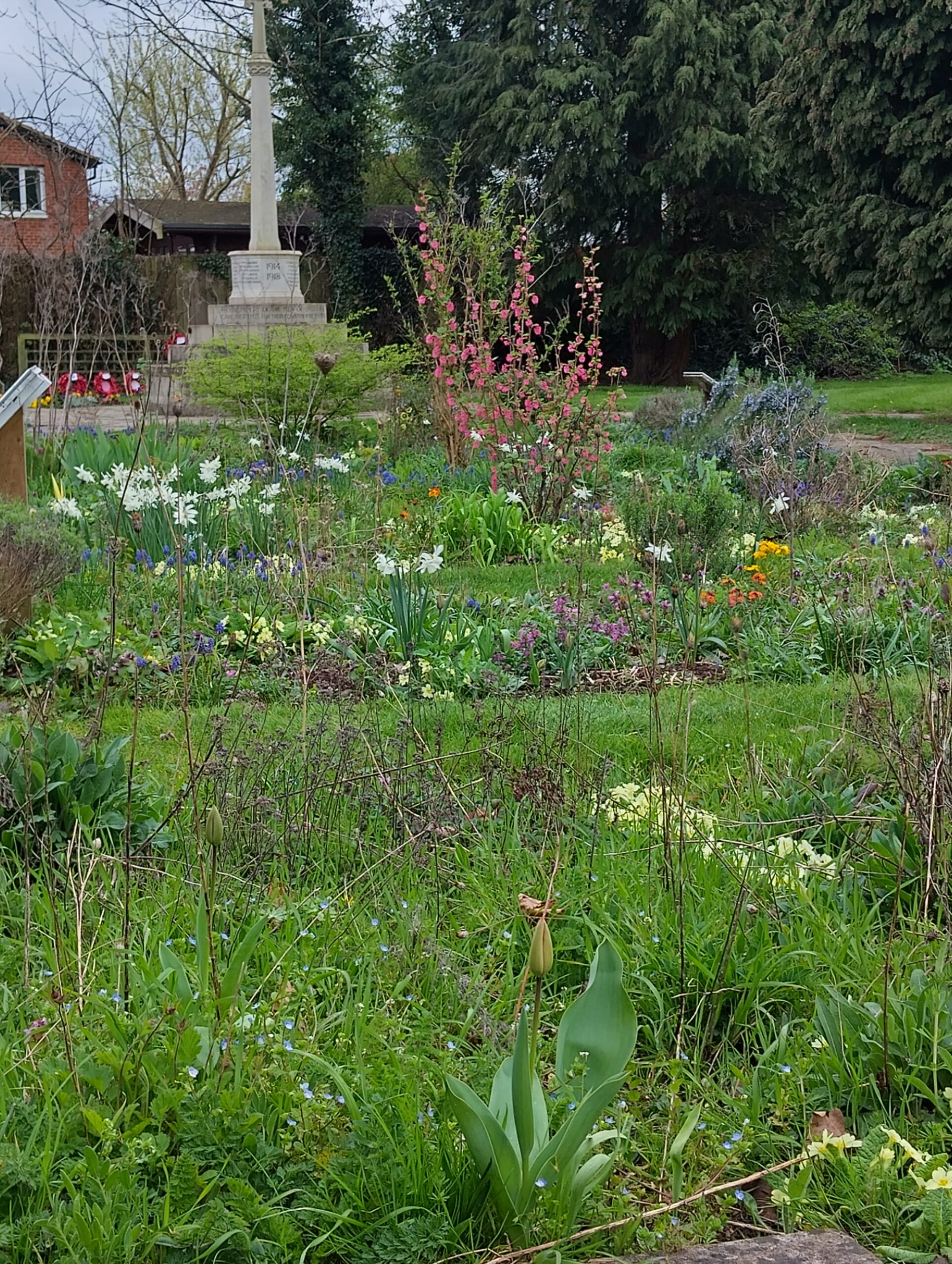
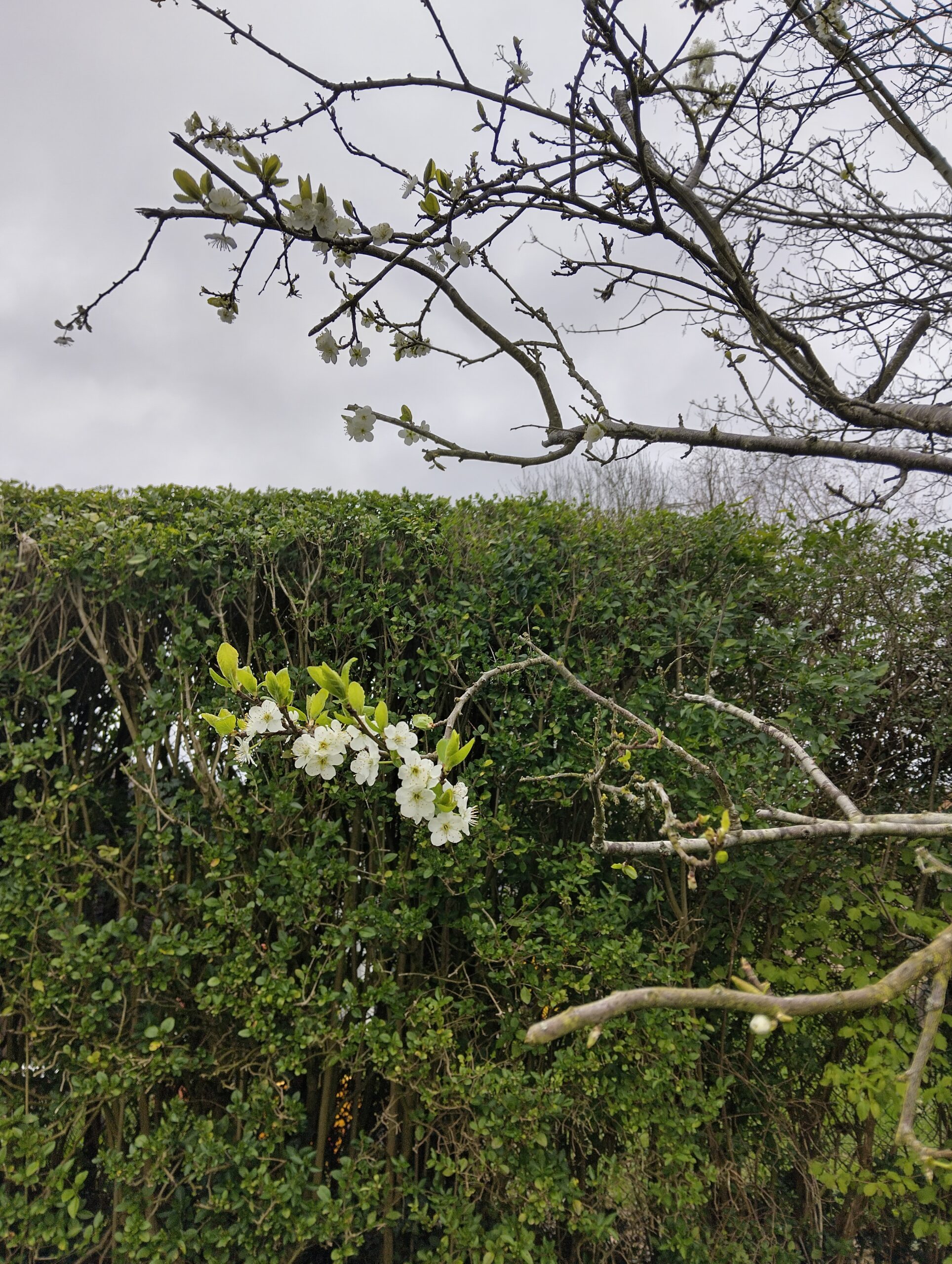
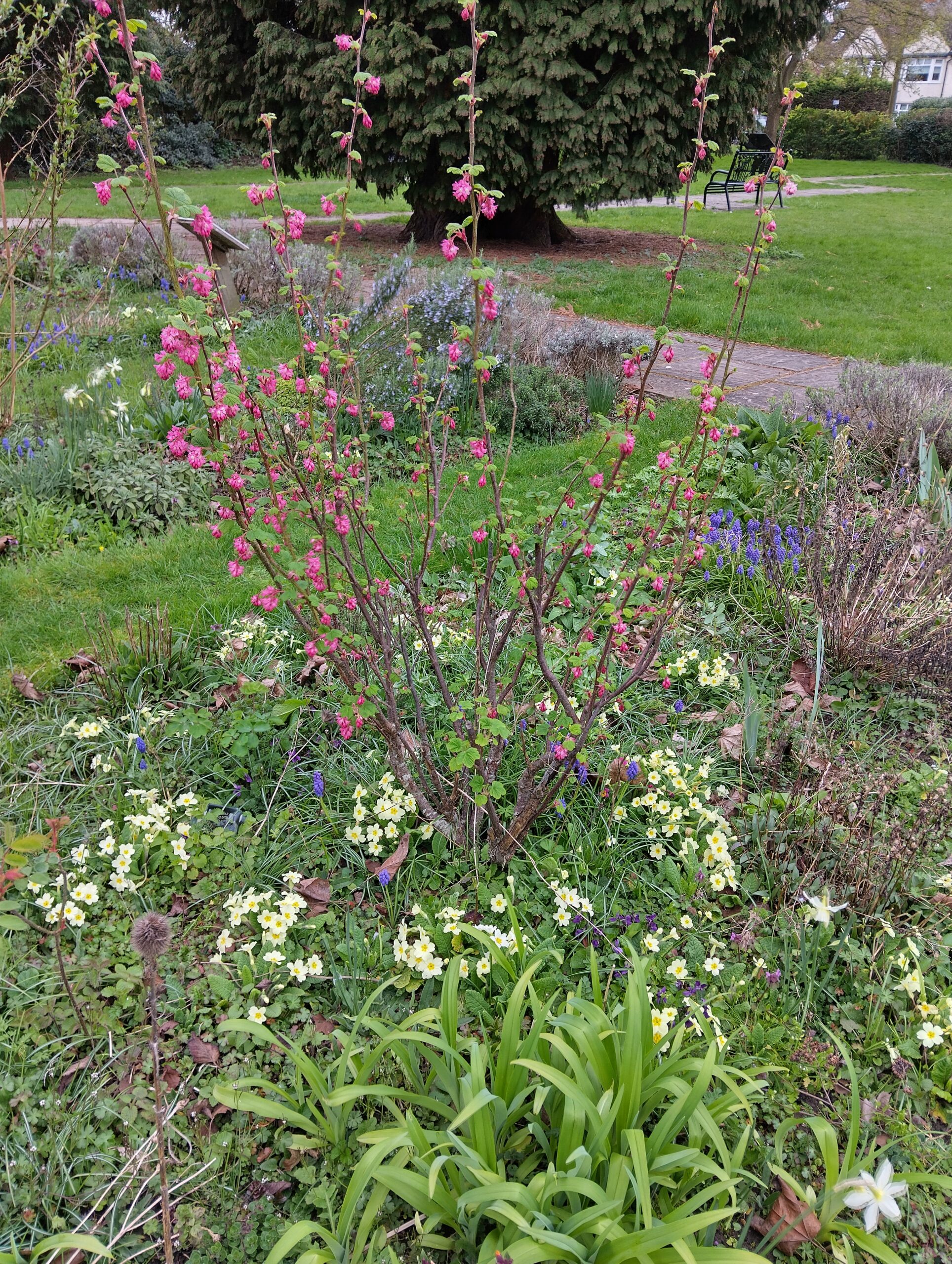
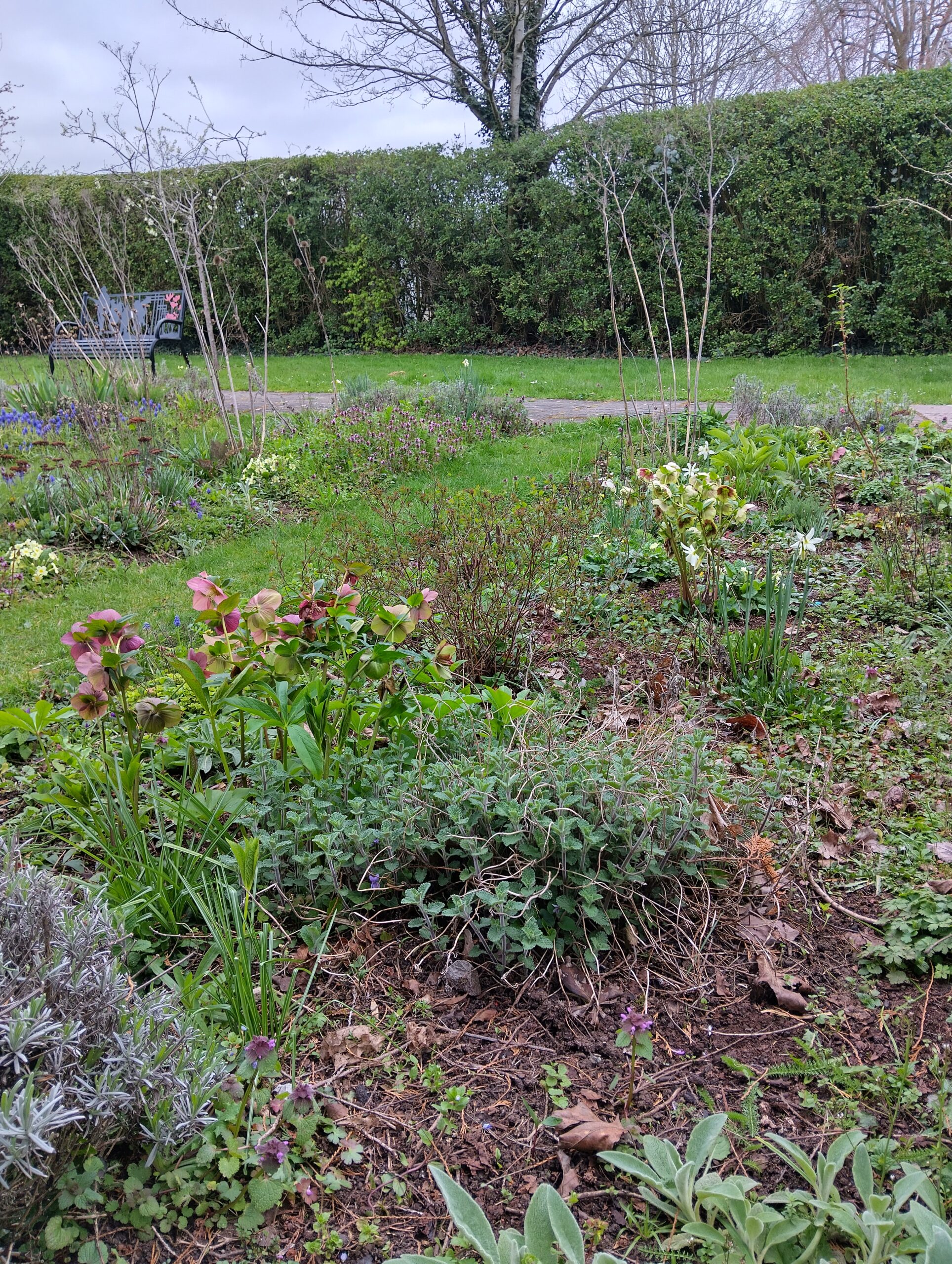
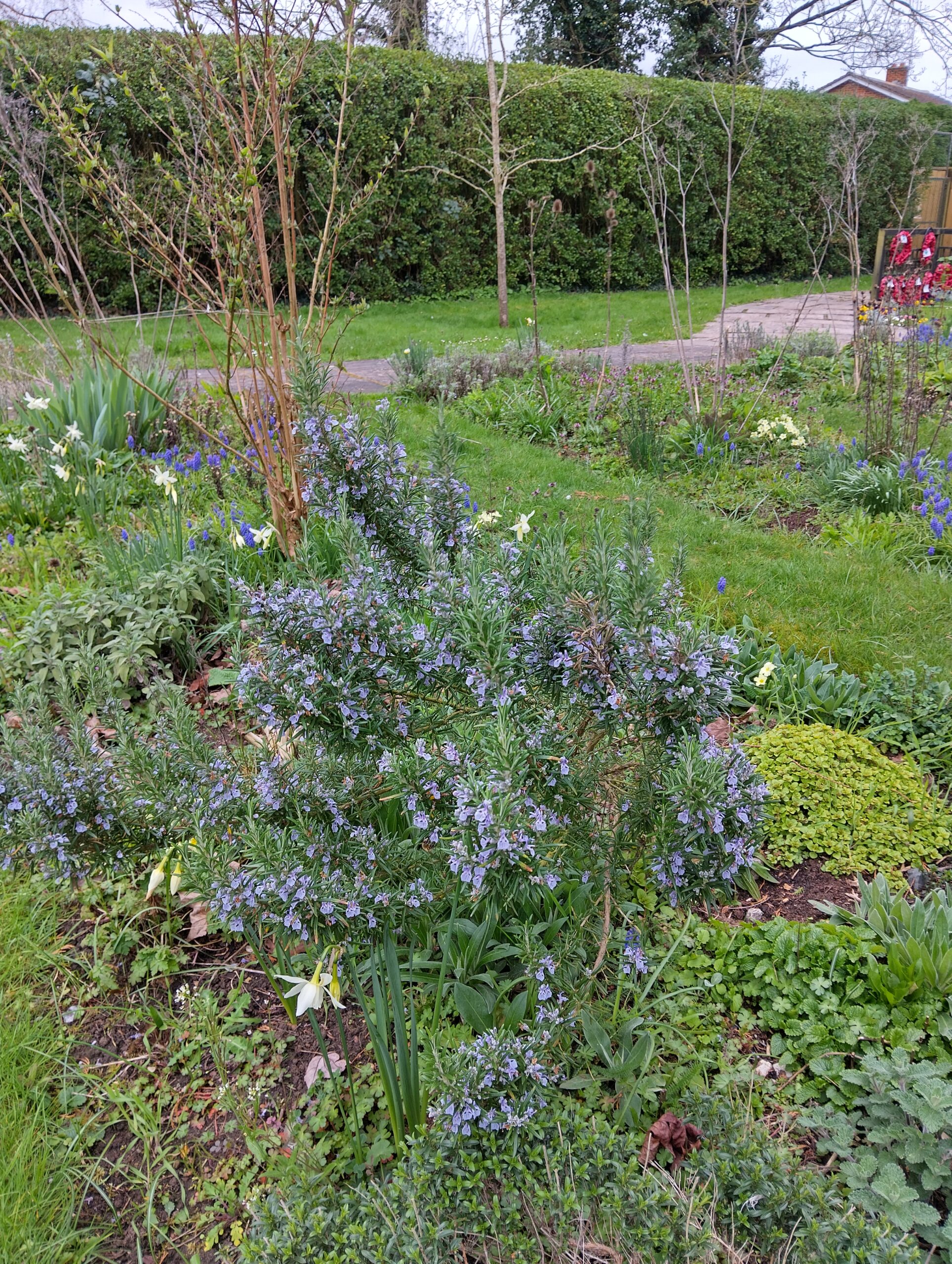
There are more flowers coming out all the time now – here are a few from this morning.

The plum blossom is pretty sparse, probably because the local wood pigeons could reach most of it.

The flowering currant is dong well this year, as are the primroses we put round it some years ago. Over the years they’ve spread all over the gardens.

The hellebores have been flowering for a few weeks now, and the bees just love them.

The rosemary bush is in full flower, and it’s only March!

A few photos as spring arrives

12 March 2026

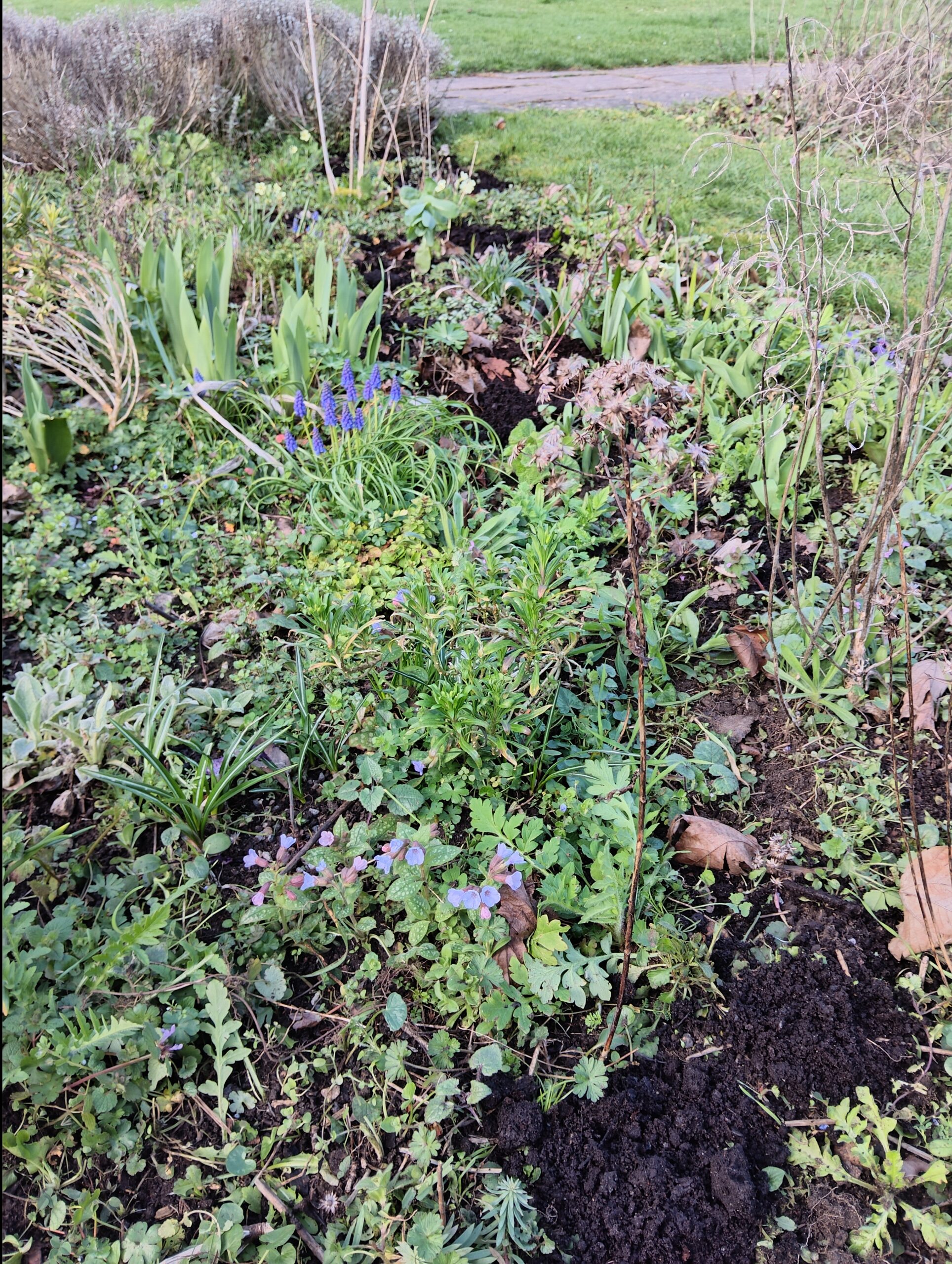
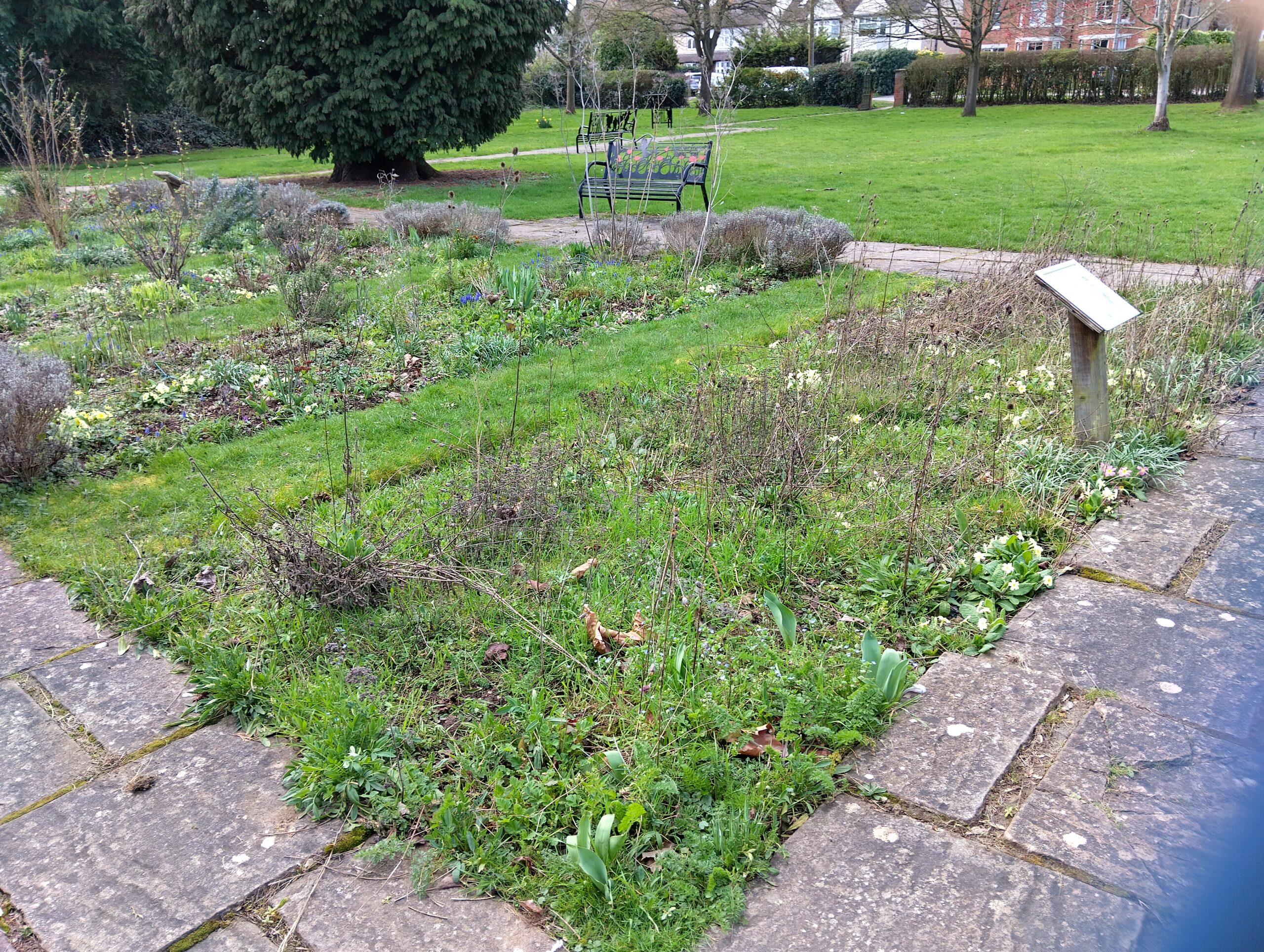
Here are a few photos of the Gardens, taken this week as primroses and hellebores take over from the winter aconites and crocuses.

The crocuses don’t photograph well, which is a pity; over the last few years they’ve spread all over a couple of the beds. Bees are just starting to look for nectar and pollen, so it’s well timed! Here are a few photos of the other flowers in the garden at the moment:

The first flowers of pulmonaria and grape hyacinths – these two are real bee magnet flowers in early spring

The primroses have spread all over the garden

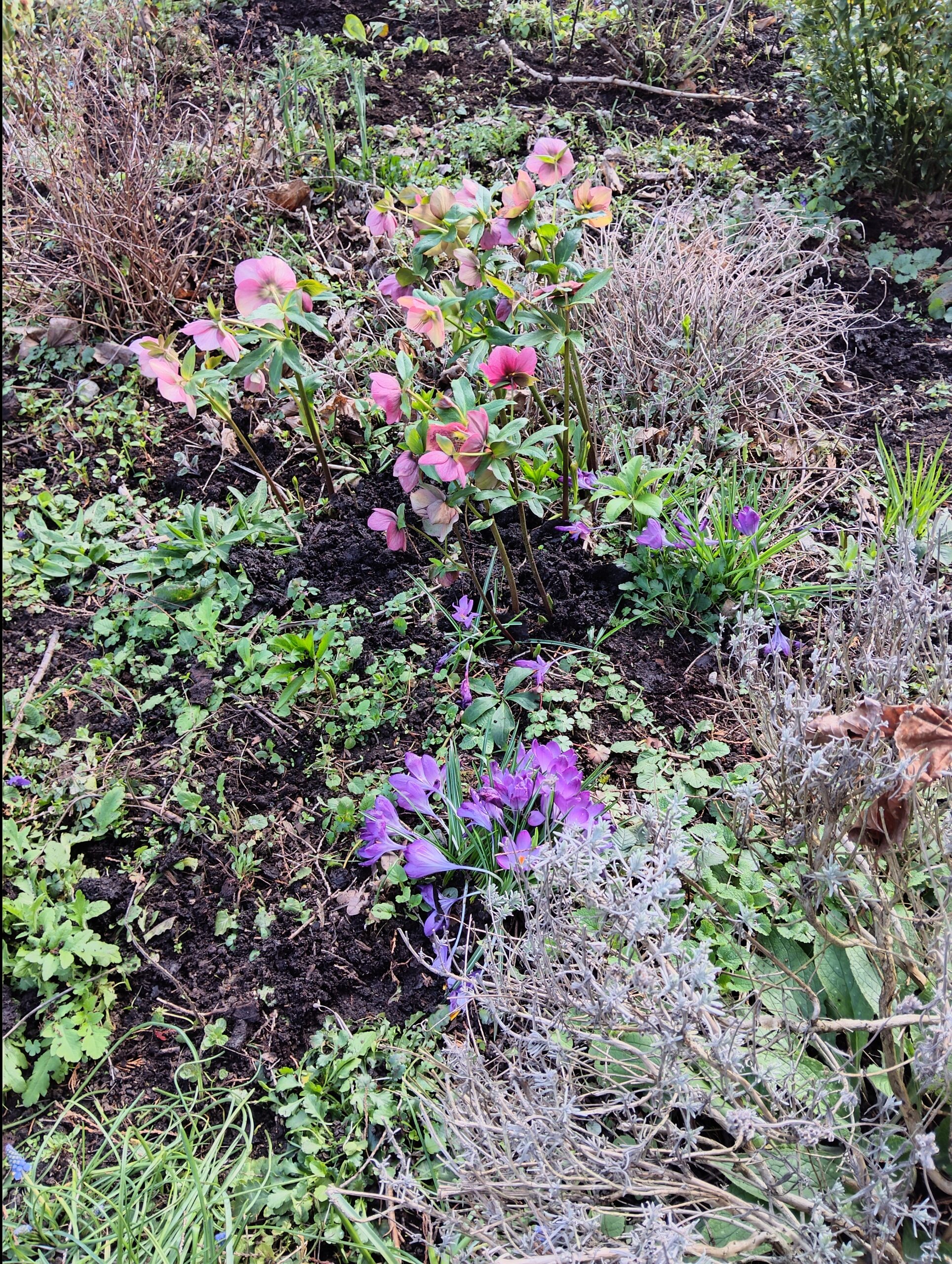
Hellebores and a clump of crocuses in one of the bottom beds

Protecting plants over winter

23 November 2025

A couple of blog posts ago [https://linsladememorialgardens.uk/2025/10/27/using-dead-leaves-in-the-gardens/] we mentioned that we’d be putting dead leaves directly onto the beds to protect plants over the winter. We’ve had a couple of sharp frosts this week; it was time to get started.

The frosts turn dahlia leaves and stems black and manky – not a good look for a public garden, and not particularly beneficial to insects for hibernation. So over the last couple of visits the team has cut them all down, added some of the dry stems from the wild flower bed and chopped them all up (to make them rot faster) and added them to the compost bins in the work area.

We’ve still left a lot of stems in the wild flower bed for hibernating insects, but leaving some airspace between the plants shows off the seed heads, and looks just a little more deliberate – and it gives us on-site Browns to add to the Greens that are (were?!) the dahlia stems. When we make compost we aim to have about the same volumes of Greens (leaves, stems, grass, coffee grounds) as of Browns (dry stems, broken-up sticks, cardboard, shredded paper, torn-up egg boxes). And we tear or chop things up so there are more broken surfaces, which rot down more quickly.

We emptied a few more bags of leaf mould over or round specific plants, then raked up a few trugs full of leaves from the grass and added them on top – this will help to protect the roots from the cold wet winter to come. A number of plants like dahlias and salvias can withstand frost, but they really hate cold, wet, poorly drained ground – which is exactly what we have here. Adding this extra organic matter should help; most of our dahlias have come back year after year.

Using dead leaves in the gardens

27 October 2025

We’ve just emptied the first bags of leaves into the leaf mould bin that we cleared a couple of weeks ago, it’s good to be back in that routine for a couple of months.

We’ll also be starting to empty bags onto the ground around plants soon, which keeps the soil covered and helps it hold moisture; it also makes the gardens look tidy ahead of Remembrance Day.

But a little later on we’ll also be putting leaves directly round many of the plants, to insulate the roots more by trapping air round them and keeping frost off them, and to provide more shelter for all the beetles and small creatures that have moved in over the decade we’ve been looking after these gardens. It’s a real balance between maintaining a wildlife-friendly garden, and keeping it looking tidy and respectful; and tucking dead leaves round plants doesn’t help the tidiness. So we wait till after the services, when everything’s dying back and the leaves don’t look out of place or scruffy.

These leaves will gradually rot down over the winter, adding organic matter to the soil, which will help it hold moisture – very important in the kind of summers we’re having now, with weeks on end without rain, with added heatwaves. This year we hardly had to water at all.

It’s been interesting to notice that mainstream garden writers and presenters are increasingly suggesting we put leaves directly round plants for the winter – what a long way we’ve all come since the general advice was to cut everything down and clear the ground for the winter. I seem to remember it was called ‘putting the garden to bed’ – well, I’d rather have a blanket over me when I’m in bed, and a blanket of leaves seems to suit plants better, too!

It’s that time of year again!

12 October 2025

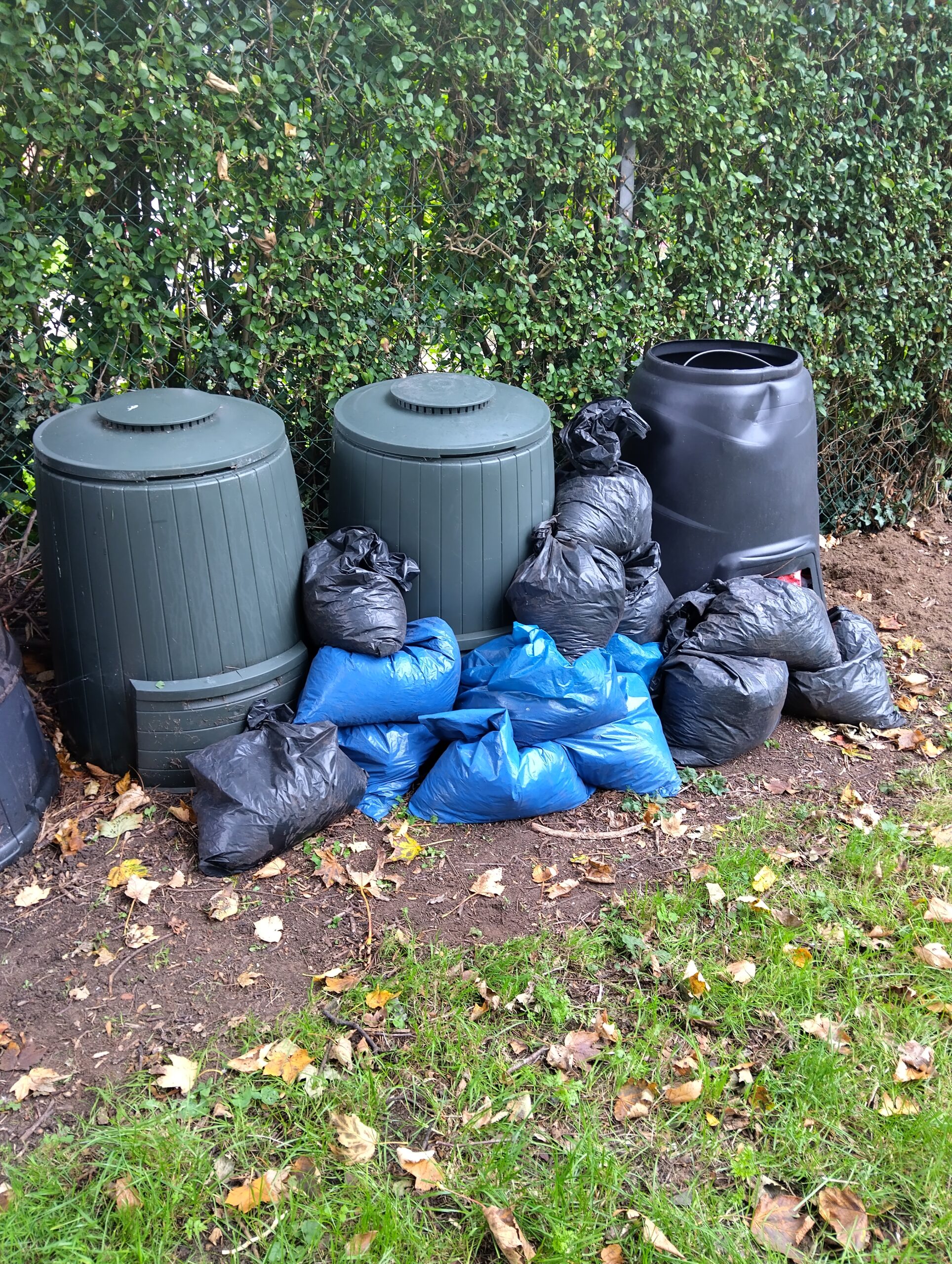
It’s nine years since we started collecting bags of leaf to make leaf mould. Originally we just emptied them into Dalek-type composters like these:

but we soon found we needed to construct a much larger bin, with two 2-metre cube compartments – one to collect that year’s leaves, and one to let the leaf mould rot down for a further year.

And now it’s that time of year again – if you’d like us to collect bagged-up leaves, drop us an email or message us on Facebook and we’ll come and pick them up and add them to the bin. We emptied it this morning, it’s all ready and waiting:

More on the Plant Sale at the end of this month

12 April 2025

These are the plants we have already for our Plant Sale on April 26 (on the verge between the car park for the Linslade Memorial Gardens, and the Gardens’ hedge).

The plants are generally small-flowered and unshowy, but they do attract bees and other pollinators, and most of them are perennials (that means they’ll go on growing in your garden / window box / other container) for several years.

The ones that aren’t perennial are foxgloves and verbascum, which are biennial – that means they spend the first year making a rosette of leaves, which produces a flower spike (or two) the following year, in about May-June. If you let the seeds ripen you’ll have more than enough to start the whole cycle over again, so although they’re not perennial, if they like where you put them, they should keep going for years.

Garden flowers:

Bearded Iris; Iris pallida; Hardy geraniums – Geranium macrorrhizum, Geranium ‘Kashmir White’, Geranium ‘Cloud Nine’, Blue species geranium; Geranium ‘Bill Wallis’; Purple toadflax (Linaria purpurea); Sisyrinchium; Lambs’ ears (Stachys byzantina); Mullein (Verbascum); Verbena ‘Bampton’; Veronica spicata ‘Red Fox’; White pulmonaria.

You can find details and photos of these plants on the RHS website

Herbs:

Oregano; Golden oregano; Lemon balm; Garden mint;

Wild flowers:

Cowslip; primrose; foxglove; Water avens (Geum rivale); Mush mallow

Others:

Bowles’ Golden Grass (Millium effusum) – we need grasses too in a wildlife bed; some of the solitary and bumble bees nest in grass, and it provides cover for insects and small mammals. This one glows bright green for most of the year, lighting up the flower bed in winter.

Aloe vera – not a bee magnet, not even good for habitat, just an addition as a blatant fund raiser, they’re popular house plants but can be hard to find

Save the Date again!

12 March 2025

Last year’s plant sale was really fun, so we’re doing it again this year on Saturday April 26, from 10:30 to 12:30.

The Town Council would prefer us not to hold it in the Memorial Gardens themselves, but have said we can use the wide grass verge between the hedge and the car park.

There’ll be pretty much the same mix of plants as last year – many perennials (herbs like golden and common oregano, and thyme; bee magnets like purple toadflax and foxgloves; and geraniums, irises and a couple of ornamental grasses.

Like last year, we’ll have tea and coffee, and many gardeners on hand if you’re not sure what’ll work in your own garden.