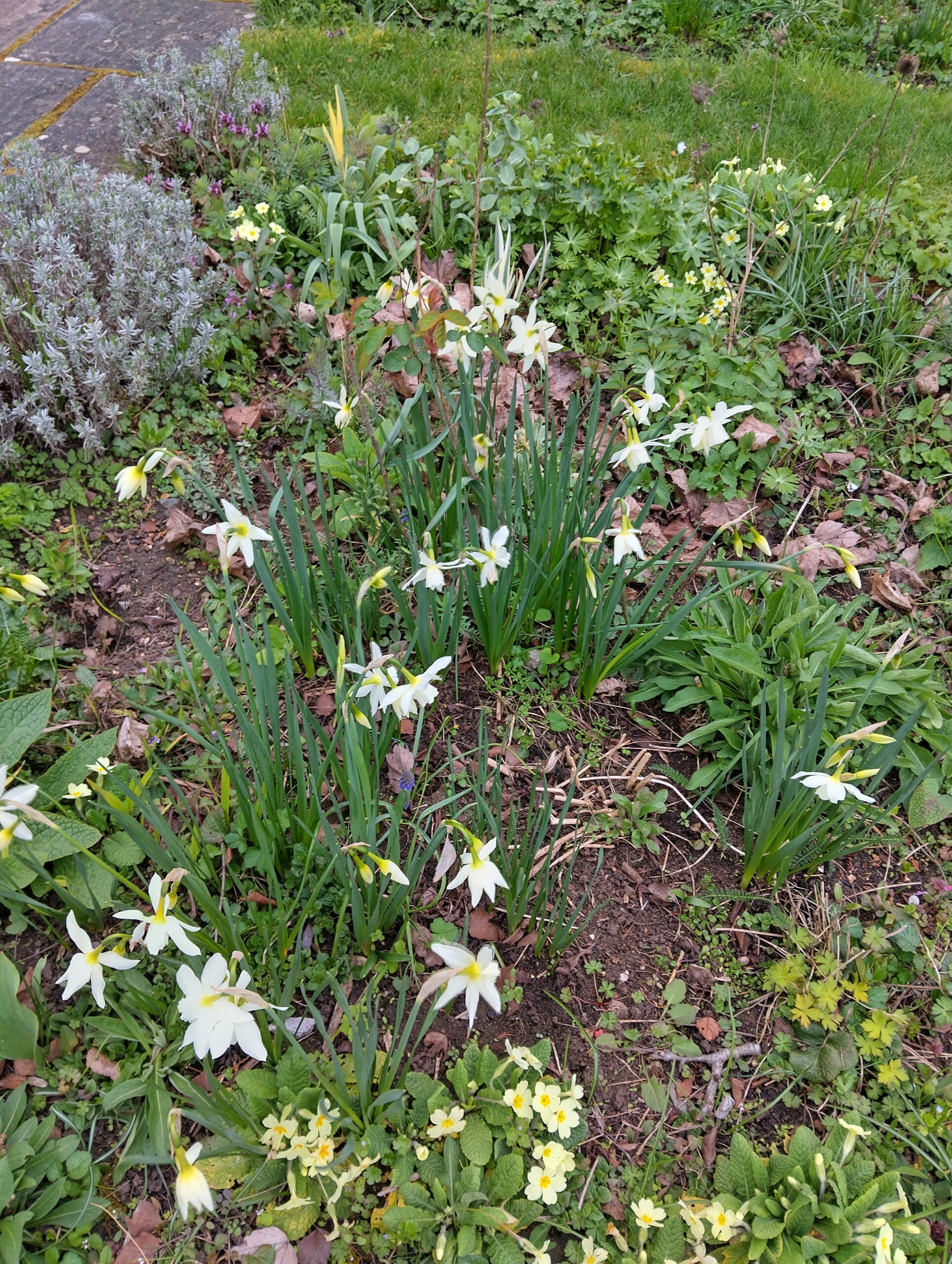
I’ve been asked what variety our white daffodils are – they’re Thalia.
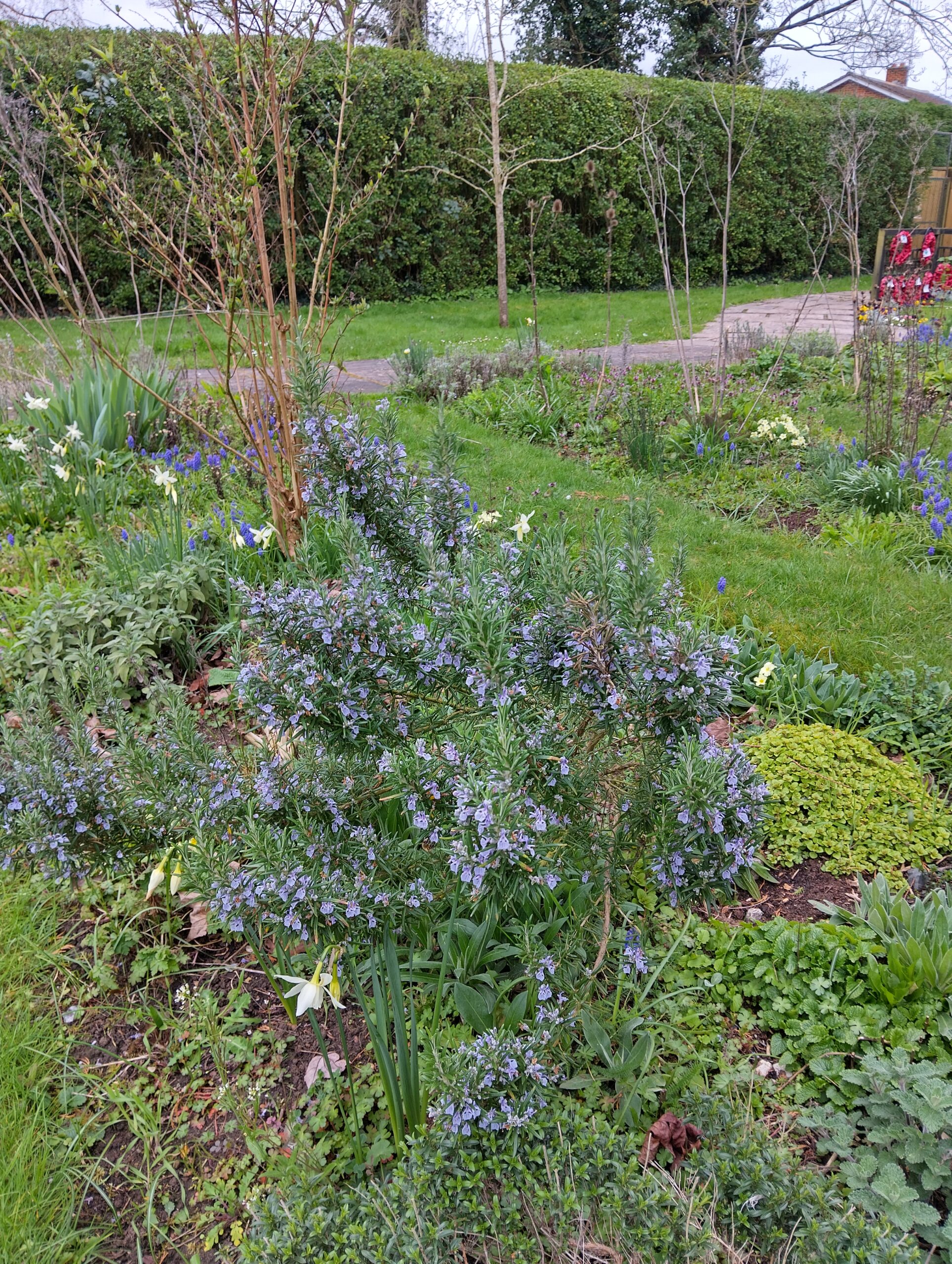
We learned some time ago that bees don’t generally go for daffodils, which have been bred for many things, but not for producing nectar and pollen. On the other hand, bees do like these, so we grow them; and they seem to like the garden, as they’ve spread out from most of the places we planted them.
They used to be really difficult to buy bulbs for, but over the last few years I’ve noticed that gardening articles, social media and TV gardeners have been recommending them, and many more suppliers stock them.
We haven’t posted much recently, but we’ve spent the long grey wet winter preparing the Gardens for this year’s flowers. There’s still plenty going on round at the gardens. Now at last we’re seeing the sun, and seeing the effect on all the plants – not least the weeds, which have really started to grow. We’ll be starting to deal with over the next couple of weeks.And at last, we’re seeing the sun, and seeing the effect on all the plants – not least the weeds, which we’ll be starting to deal with them over the next couple of weeks.
A lot of what we do over the winter involves leaves and compost bins. When it’s not raining, we might be emptying one of the compost Daleks (bins) so we can turn the other bins into it; or we might be adding leaves to the leaf bin to make mulch – ‘black gold’ – to keep moisture in, and stop weeds growing.
And the Town Council’s Grounds Staff have added many large bags full of leaves to the bin – thank you very much! They’ll be put to good use.
We’ve also been nursing a lot of cuttings through the winter – it’s one of our main ways of increasing the number of plants here, without having to buy more. And when we grow our own, we know they haven’t had to be treated with pesticides to look good for sale, or with hormones to make them bloom earlier – neither of those are good for bees. They’ve had a tough time getting through this long wet winter, but they’re really beginning to take off now.
We’ve been asked a couple of times how we decide which weeds to take out, and which to leave – I’ll do a more detailed post on that in a week or so. But basically, what we’re doing now it trying to remove just those invasive plants that could be trouble later on, like ground elder, sheep sorrel, celandines and violets (lovely as they are, they run rampant and can choke other plants). We still want to leave a lot of ground cover for insects, for another couple of weeks till the soil warms up.
Then the fun bit starts, when we try to work out which seedling is a plant we really want, and which so isn’t!
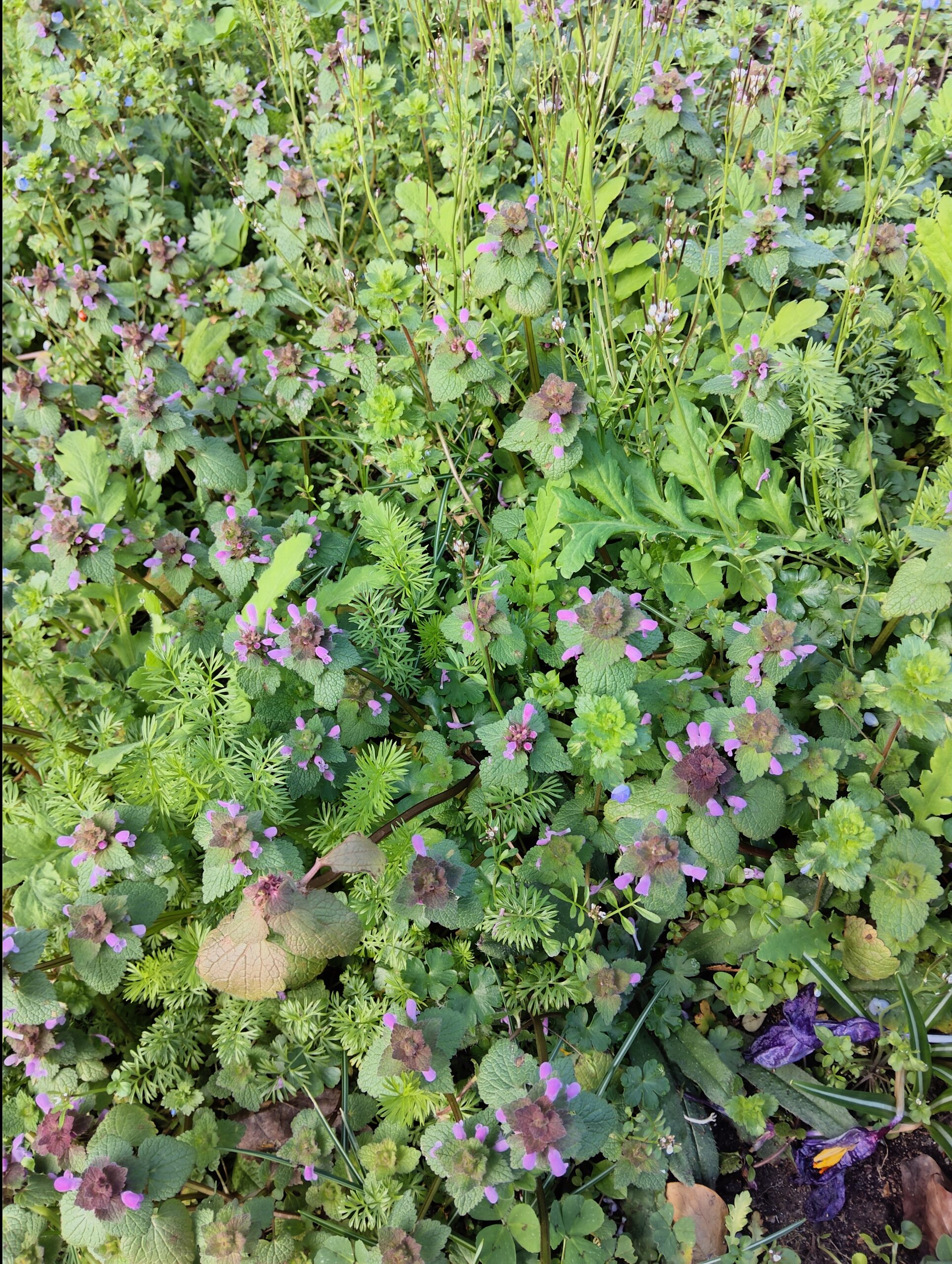
Sneak preview – here’s the first patch we’ll be untangling. A real haven for bees at the moment, they love red deadnettle as it’s full of nectar; but give it a couple more weeks, and it’d be a mess. That’s the balance we’ll be trying to sort out.
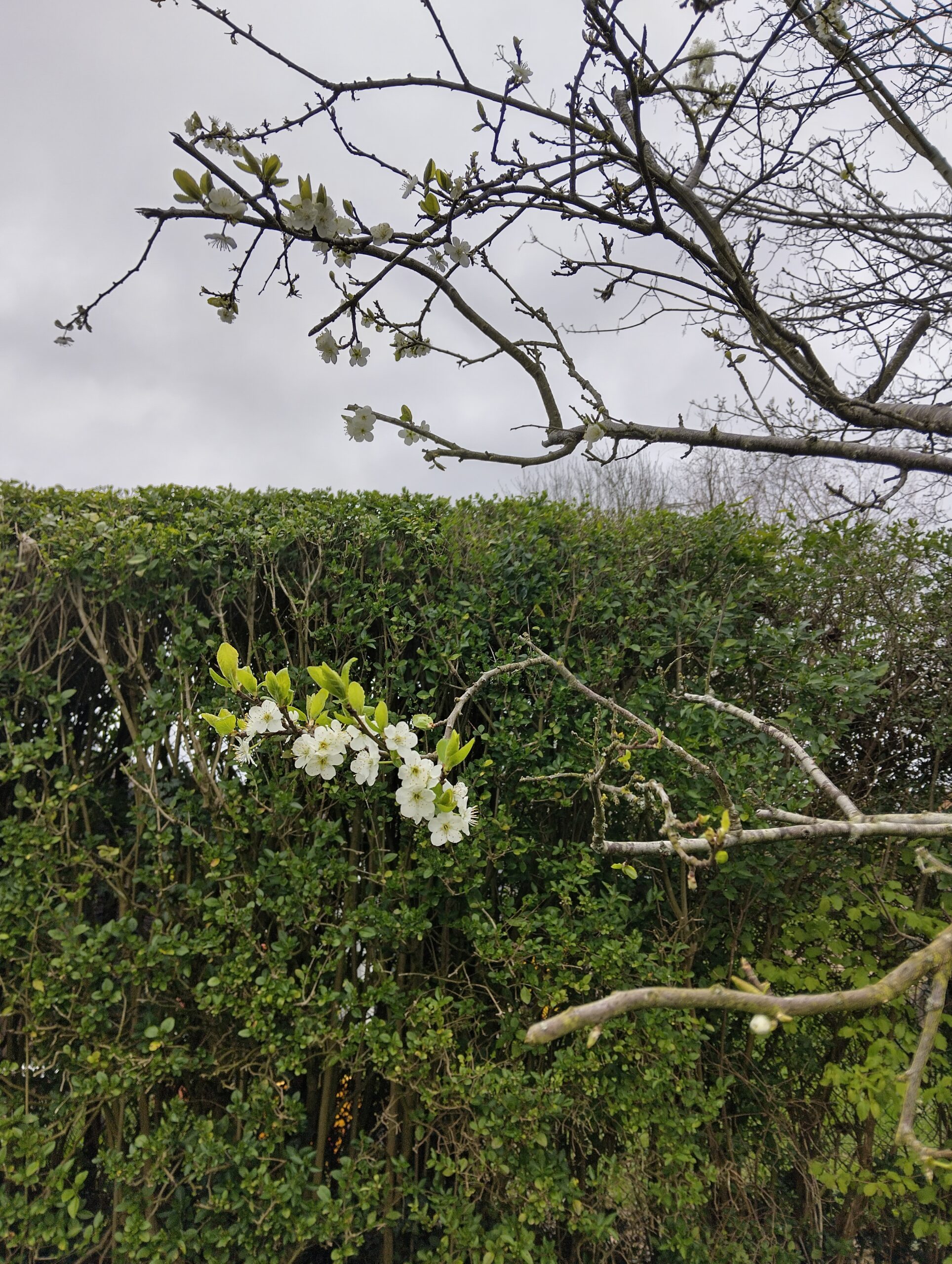
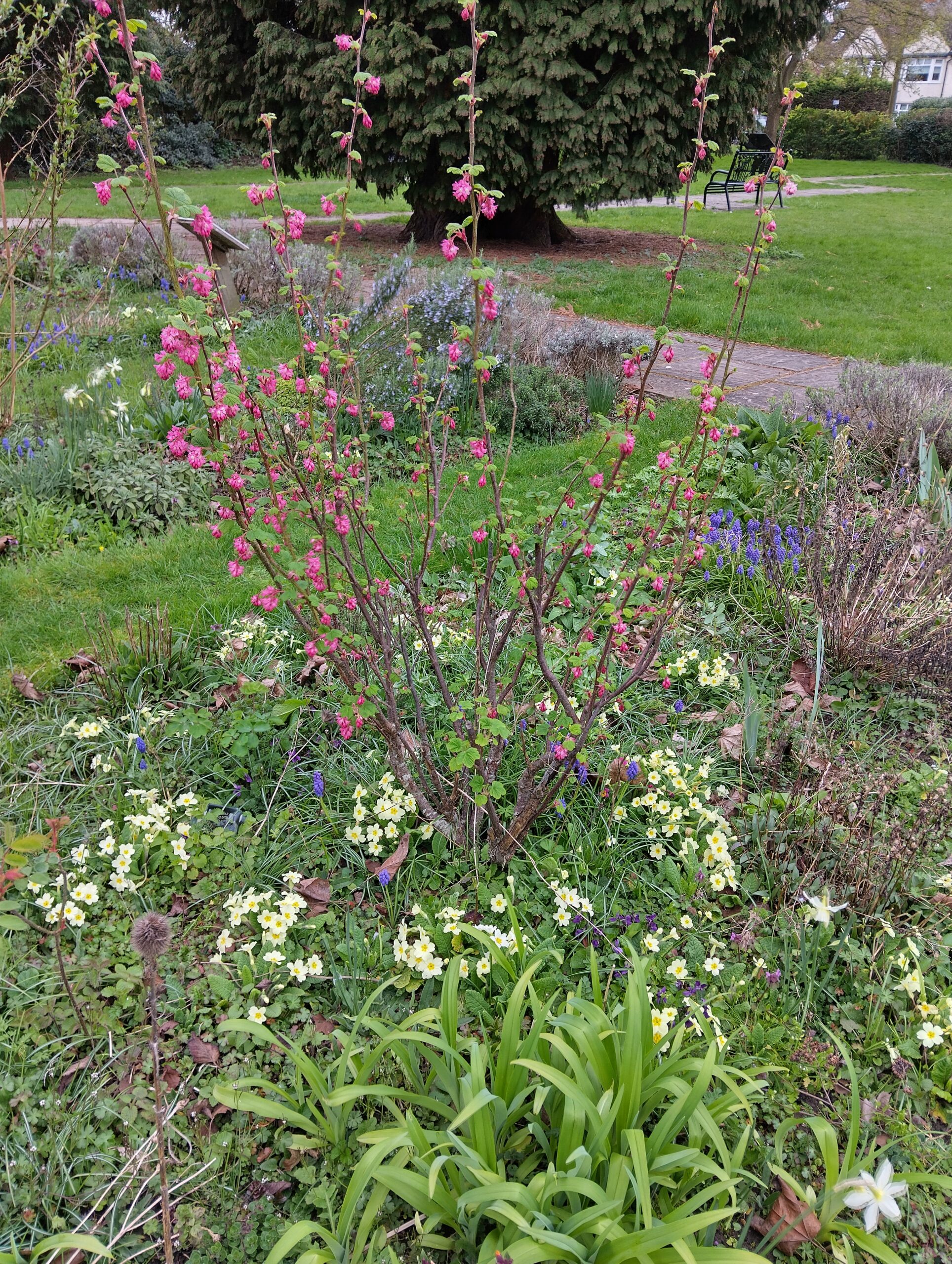
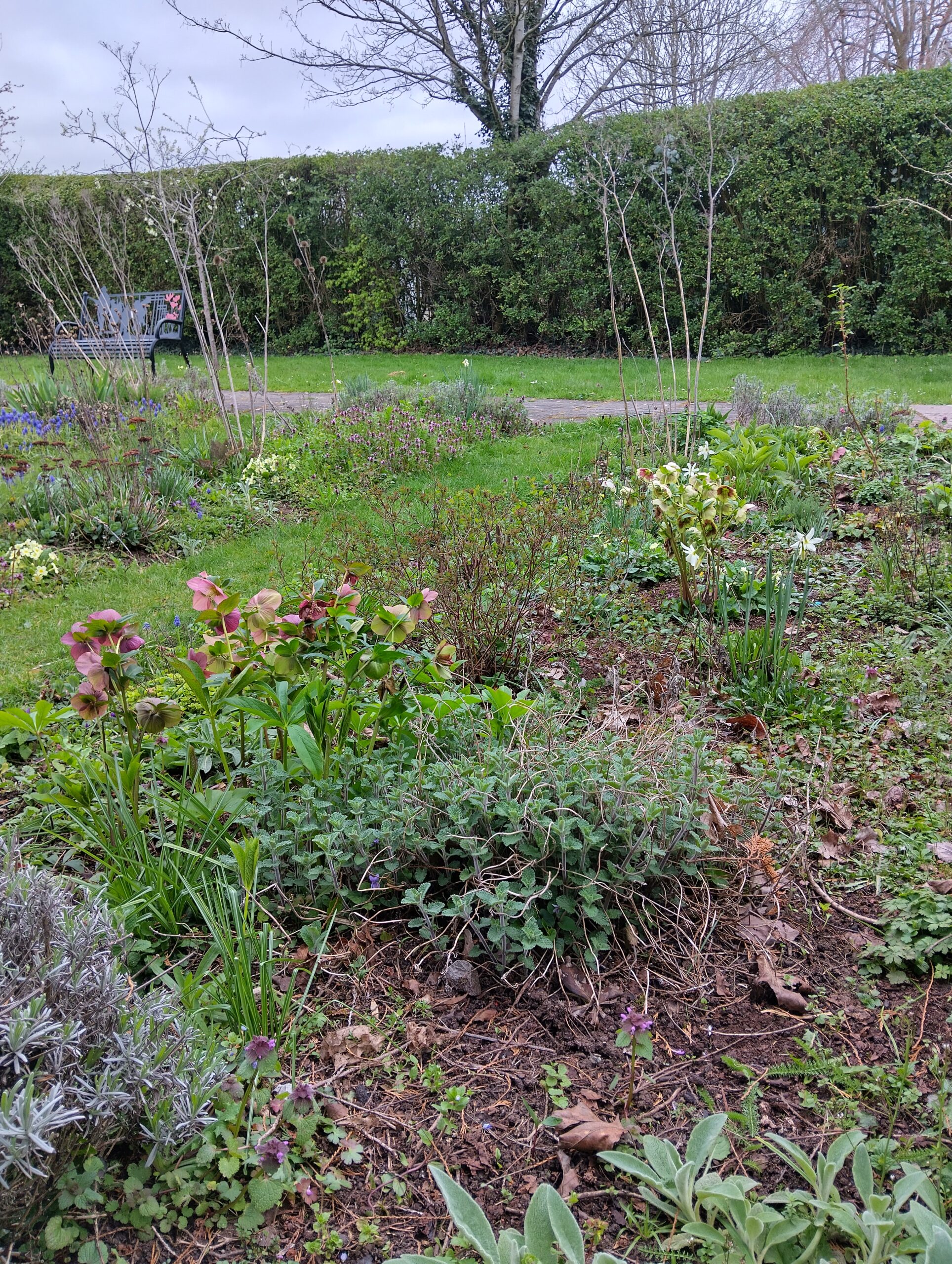
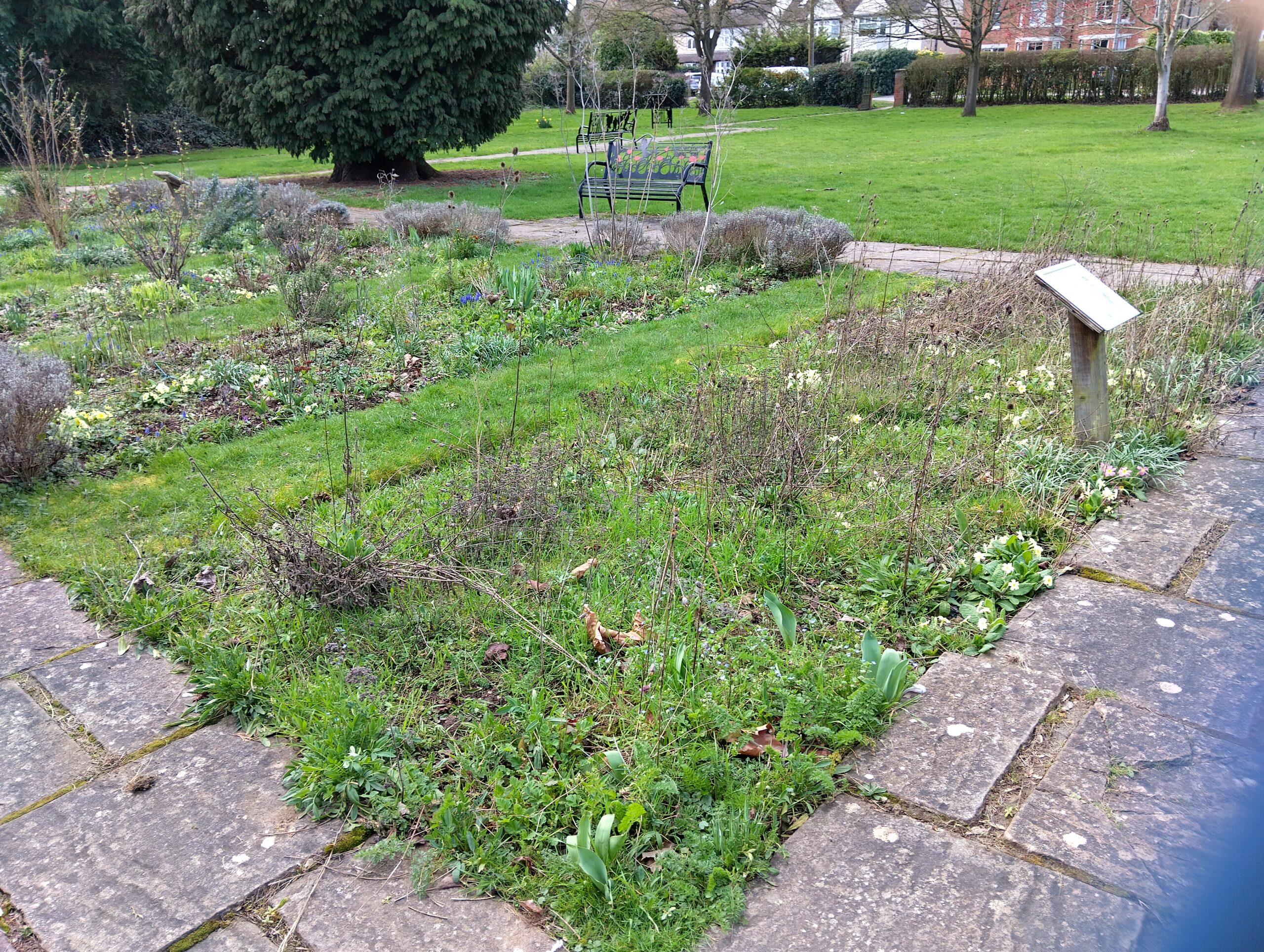
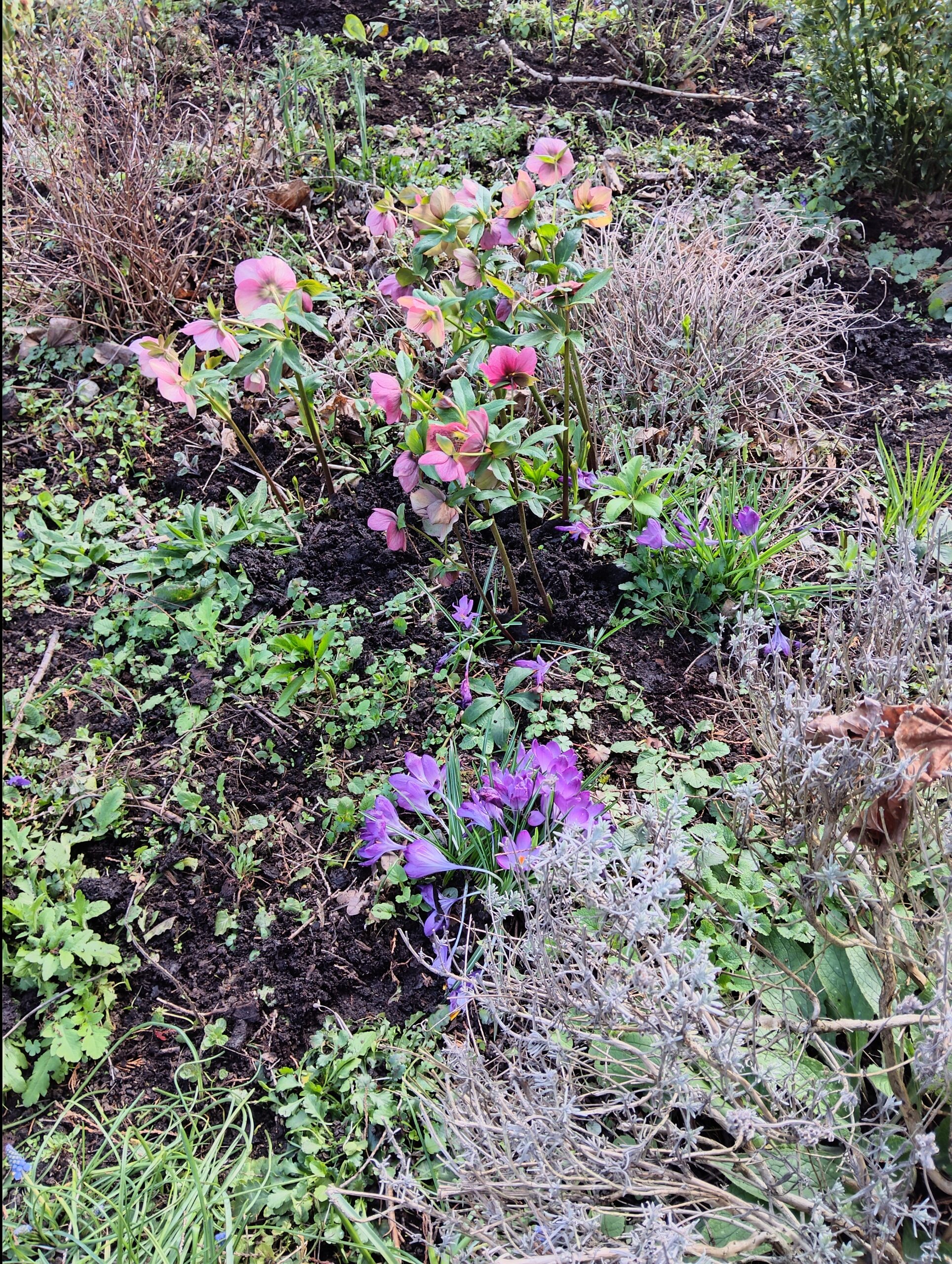
Here are a few photos of the Gardens, taken this week as primroses and hellebores take over from the winter aconites and crocuses.
The crocuses don’t photograph well, which is a pity; over the last few years they’ve spread all over a couple of the beds. Bees are just starting to look for nectar and pollen, so it’s well timed! Here are a few photos of the other flowers in the garden at the moment:
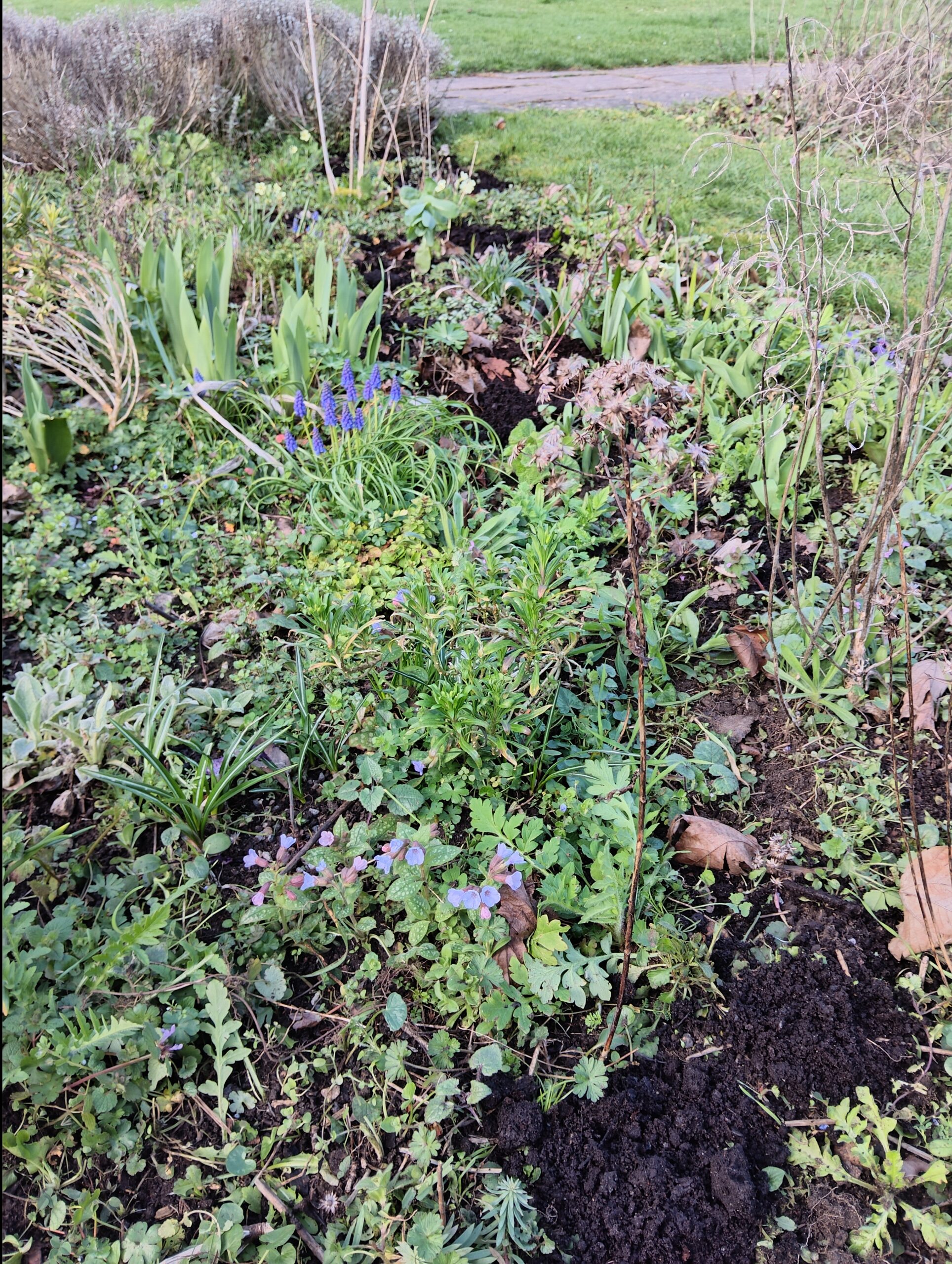
The first flowers of pulmonaria and grape hyacinths – these two are real bee magnet flowers in early spring
The primroses have spread all over the garden
Hellebores and a clump of crocuses in one of the bottom beds