Category Archives: Progress

Taking stock after weeks of drought and heatwaves

13 October 2026

Well, this isn’t the post I was intending to write after ‘Gardening in more extreme weather – 1’ at the end of July. We’d had a little very light rain, and we really thought there’d be more, and that the summer would turn a bit cooler, and we wouldn’t need to water much at all – how wrong could you be!

We didn’t know then that we’d have another two months of heat and drought. There’s been a little misty rain, which at least cools leaves down, but it doesn’t get more than a centimetre down into the soil, if that. Over the whole summer, there’s been five official heatwaves, with well over thirty degrees, for days at a time. At the end of July, we’d hardly started!

Back in August, someone asked us how we managed to keep the garden alive and fairly green, which was a new perspective for those of us who’d been watching plants’ leaves get drier, if not actually shrivel up. They’d noticed other gardens round the town all shrivelled up, and though this site was surviving better. Flattering, though worrying; this garden’s just part of the town’s biodiversity, and we can’t afford to lose any of the links

We thought it must be the amount of leaf mould and compost we’ve put into some areas, particularly round shrubs, which would hold more moisture, and would protect roots a bit. But a lot of our plants did get scorched from the heat alne as they’re just not appropriate any more for days of extreme (for the UK) heat, and no amount of organic matter would prevent that.

In fact, most of the plants we put in in April and May did survive, but just stood still, with no growth at all. The dahlias didn’t shrivel up; but they didn’t put on any extra leaves, and certainly no sign of flower buds. And of course, no flowers; they just started flowering a couple of weeks ago.

We did keep watering the new plants every couple of weeks, as well as a few that were visibly wilting, but mostly, we’ve been just waiting for rain, and noticing which plants did best, and which shrivelled up in the heat, even when watered; we’ll probably replace them this autumn.

And now we’re moving into the storm season, where the problem is having too much heavy rain in too short a time (it washes nutrients away, and damages the soil structure). It never rains but it pours, as the saying goes.
Gardening in more extreme weather – 2


22 September 2026

I wasn’t expecting to be writing this in drought still. We’ve still had no rain to speak of, though the occasional light showers we’ve had – more mist than rain – have done a good job of cooling down scorched plants.

To us, the gardens look parched, though only a couple of specific plants have been wilting in between waterings. But we were heartened by a comment from someone sitting on the bench watching us last week; she said she ‘d started coming down to sit in the Memorial Gardens because they were the only place that still had a lot of green in them, . And when we looked round, she was right. All a question of perspective!

We’ve spent a lot of the last ten years or so trying to make the gardens more resilient, particularly in terms of needing less watering. We try to stop any moisture in the soil from evaporating too quickly, both by mulching a lot through the year with either leaf mould or compost, and by trying to grow plants close together and keep the ground covered, with as little bare soil as possible.

‘Mulching’ just means putting something on top of the soil. It could be slate chips, or gravel, or woodchip; or something organic that will be incorporated into the soil and improve the moisture-holding, as well as protecting it by covering it.

We mainly use the leaf mould we’ve made every autumn, as it doesn’t add too many nutrients; it sounds counterintuitive, but we don’t want plants to put on too much leafy growth, or they won’t stand up to tougher conditions if they have to. The leaf mould gradually gets taken down into the soil by worms.

We also use the compost we make from weeds and cut-up stems. We just use it round the shrubs, dahlias and one or two other plants, to give them a slow-release boost.

We’ve also started growing plants closer together, and leaving far more self-seeded ones between them too. That way, we can weed out seedlings we don’t want, to let the others grow on strongly, but during the hottest part of the year, the ground’s well covered, and we don’t have to water so often.

Unfortunately neither of these methods is effective enough to protect plants in the kind of heat we’ve had over the last few years. We’ve lost several plants that used to survive before summers got hotter; we’re working out what to use in their place. It’s actually a very difficult site – light, sandy soil on top of a pan of compacted clay, which means nutrients wash out of reach of plants’ roots, but drainage is poor and many plants die when they’re wet and cold through autumn and winter. A challenge!

Gardening in more extreme weather – 1

26 July 2026

Today we had a little very light rain, the first in many weeks; and it’s cooler, only 26 degrees this afternoon. The forecast is for 31 degrees in a couple of days, with no likelihood of any more rain in the next couple of weeks. Apparently, this is the new normal.

So we need to adapt how we garden, both for drought and heatwaves any time after March or April, and for wetter, milder winters.

One way that we’ve been changing the way we garden has been accepting that some plants just won’t thrive in these conditions. In particular, roses don’t do well in heat, and we can’t just replace them with the Mediterranean plants we’re advised to use, as they don’t like our claggy cold wet soil in winter.

Instead, we’re encouraging the ones that self-seed, as they seem to thrive better when they’ve chosen where they’re going to grow, which in turn leads to less need for watering. We have wonderful tall fennels, wild carrots, teasels, geraniums, foxgloves and musk mallows. We’re still using dahlias and asters a lot, for more vivid colour, and to reassure people that we’re not just letting the gardens run wild.

We do have a good structure for the gardens as a whole – a lavender border down both sides, with flowering shrubs in most of the beds.

The lavender’s actually a bit tricky, we’ve lost quite a few plants over wet winters, but we take cuttings every spring and have (almost) enough plants to fill the gaps. There are several different varieties of lavender in those borders, and some seem to be more resilient to winter wet and cold soil, so those are the ones we’re taking cuttings from.

And we’re also trying not to waste any water in these hot, dry summers! Or exhaust our volunteers. We use watering cans anyway, so the current hosepipe ban doesn’t affect us, but we’re just watering plants that haven’t yet got established; and the ones that are flowering their socks off for us, like the penstemons and dahlias. We need to spend half an hour watering a little more often than once a week.

Fortunately, the soil holds much more moisture than it used to when we started work here, thanks to all the leaf mould and garden compost we’ve added to some of the beds, but we still need to water in this kind of heat and drought .

But like most of the country at the moment, we’re still hoping for rain to keep everything alive and thriving into autumn.

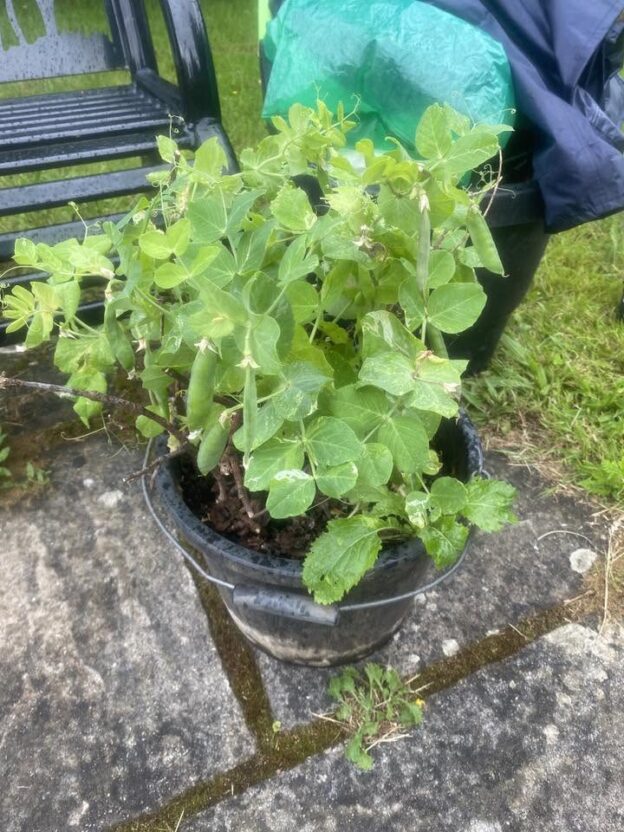
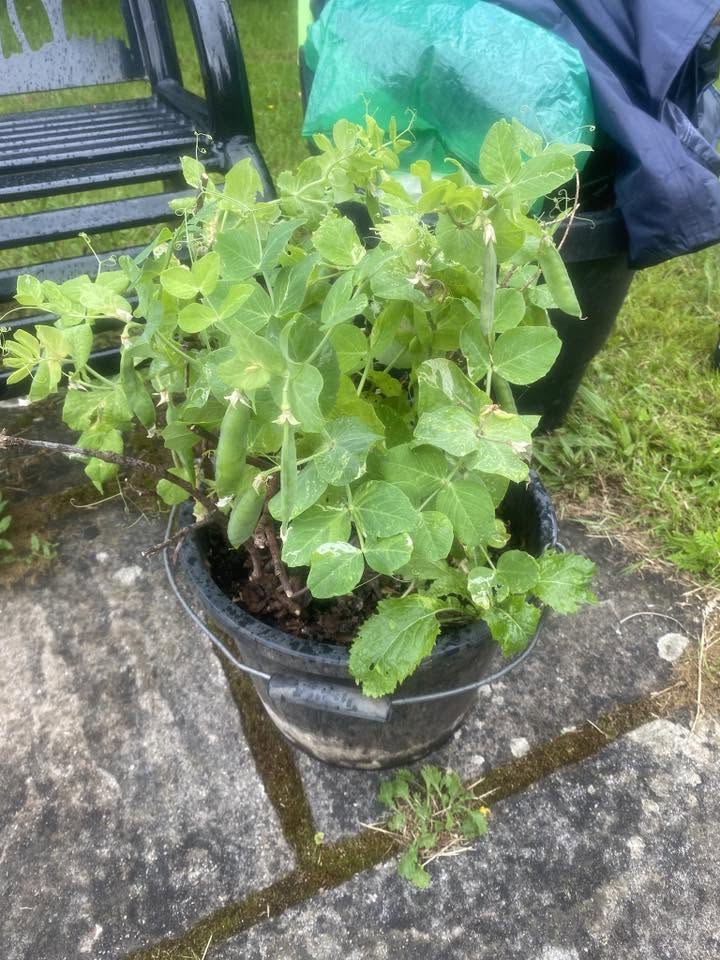
Peas growing in a bucket

Preschool peas are here!

17 June 2026

Sorry it’s been such a long time since the last blog post – in fact, there’s been time for the peas to grow, flower, and fill the pods with peas.

Peas growing in a bucket
Peas!

Unfortunately the children hadn’t been able to come round when we were working there over the last few weeks, so this is the first time they’ve seen their plants since they first came through the soil; but it was worth waiting for.

We took the bucket of peas round to the gardens and met some of the children there, where they picked some of the pods and discovered that small raw peas are very tasty. They left some for their friends back at the Pavillion, too.

We’ll do this again next year, with two or three buckets. It’s much more successful when members of the gardening team can look after the plants when they’re in their own gardens.

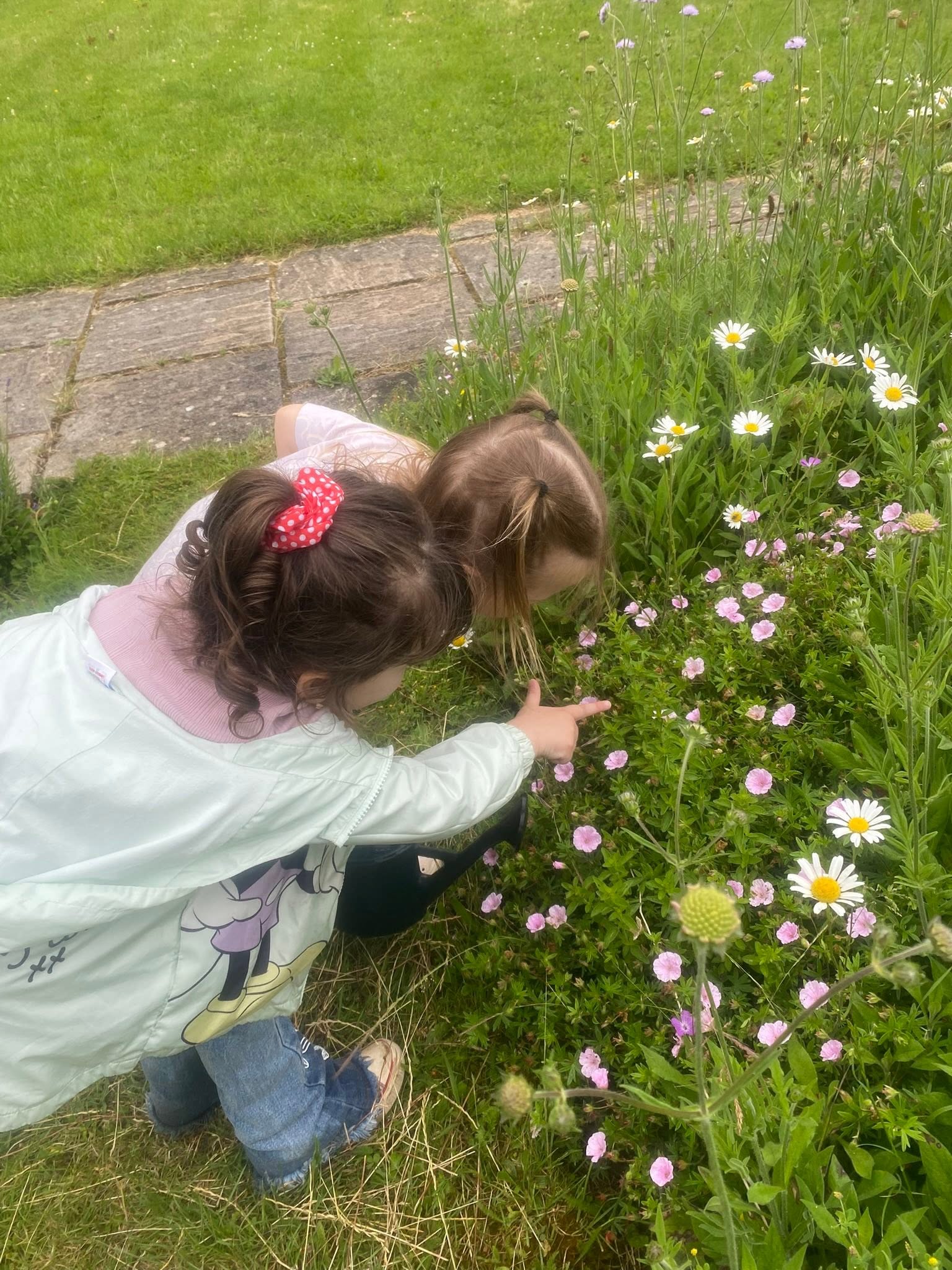
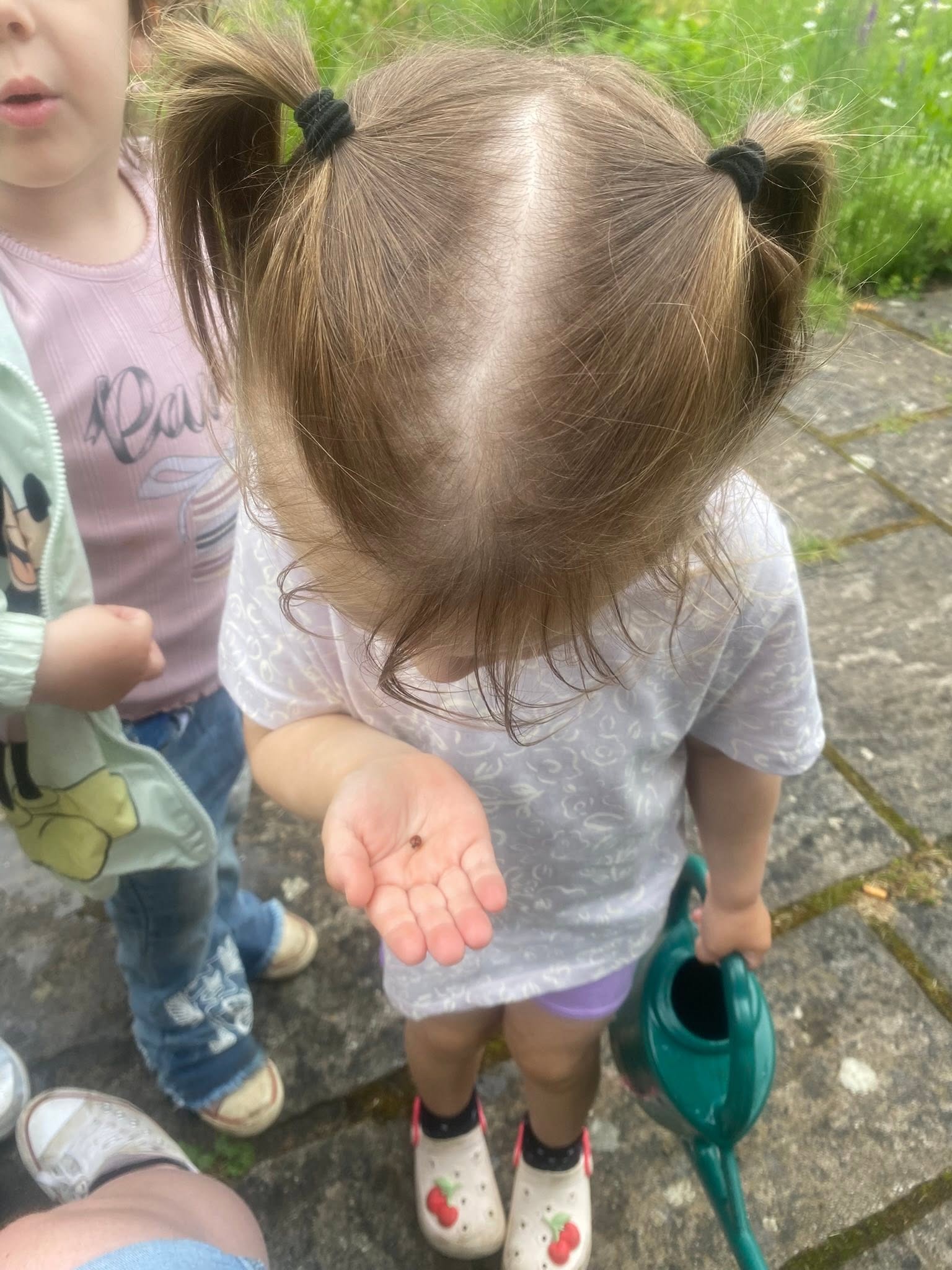
Some of the children went searching for ladybirds, and found quite a few:

Children checking for ladybirds
Checking for ladybirds
Child looking at a ladybird on her hand
Found one!


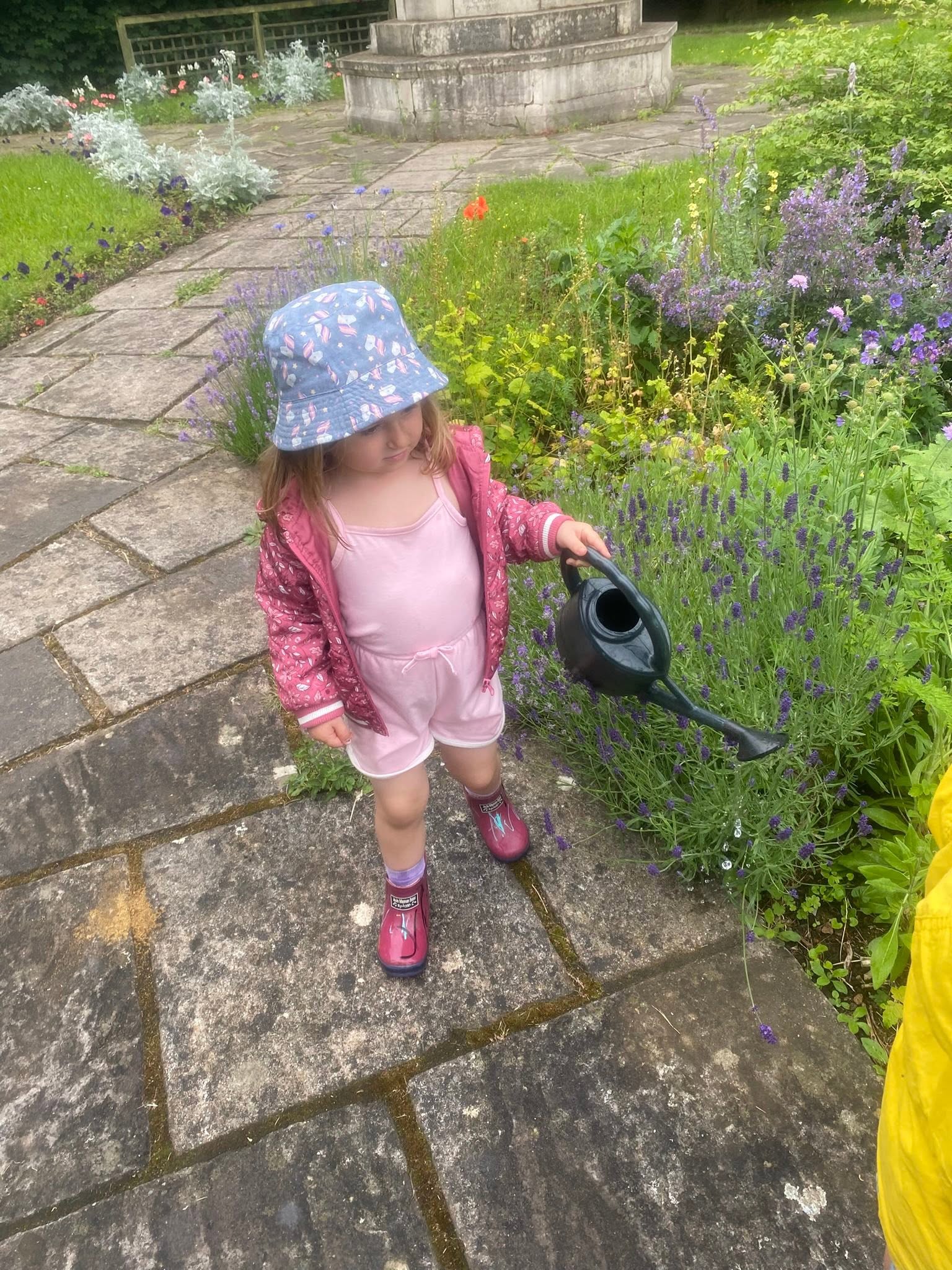
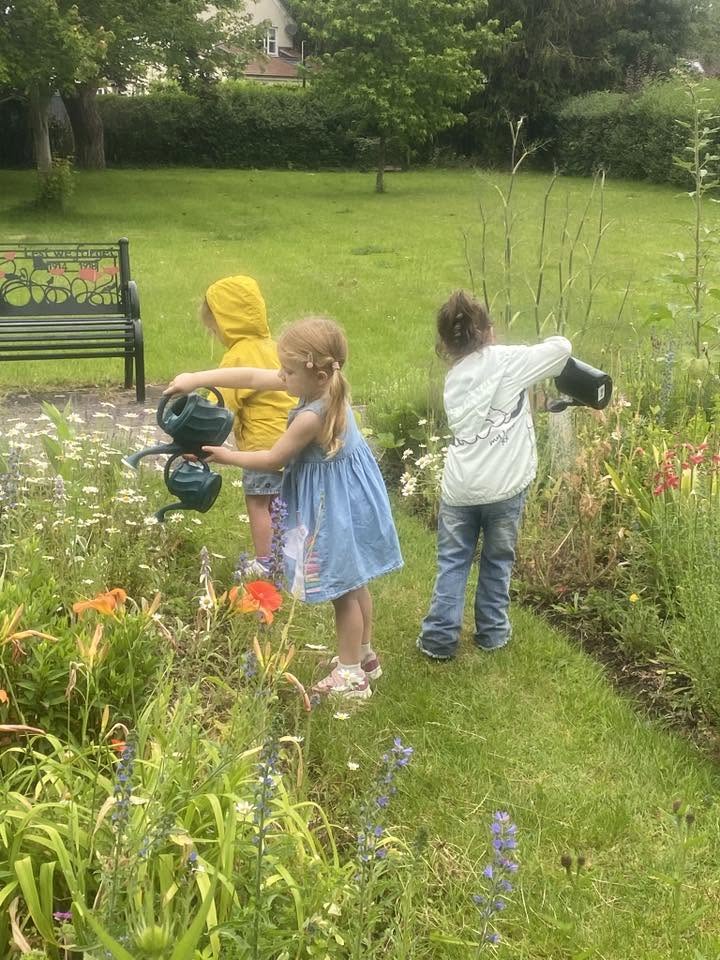
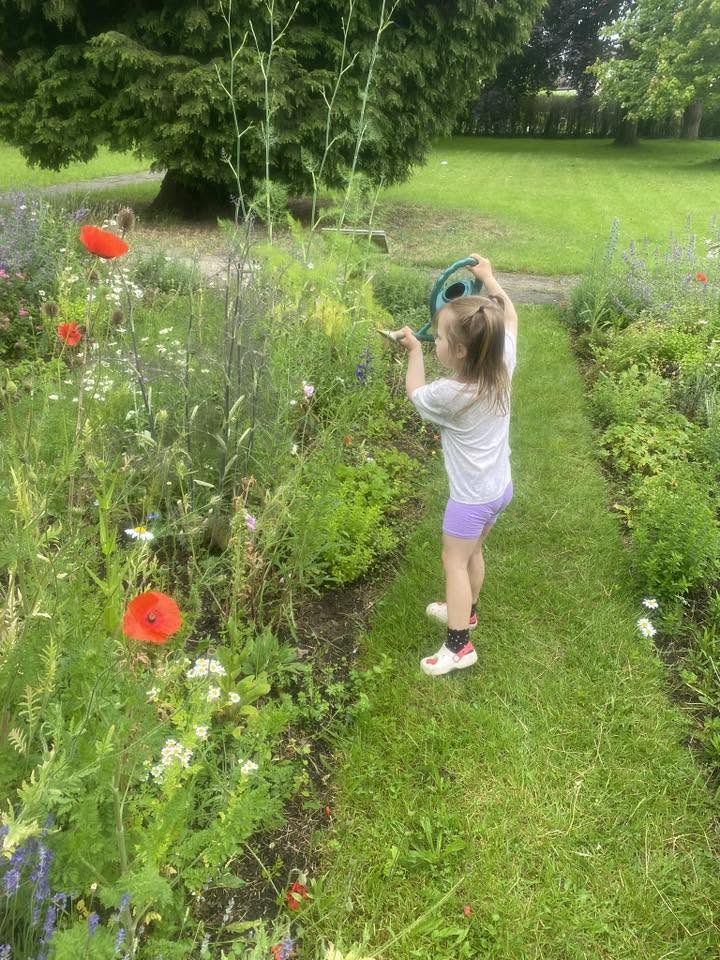
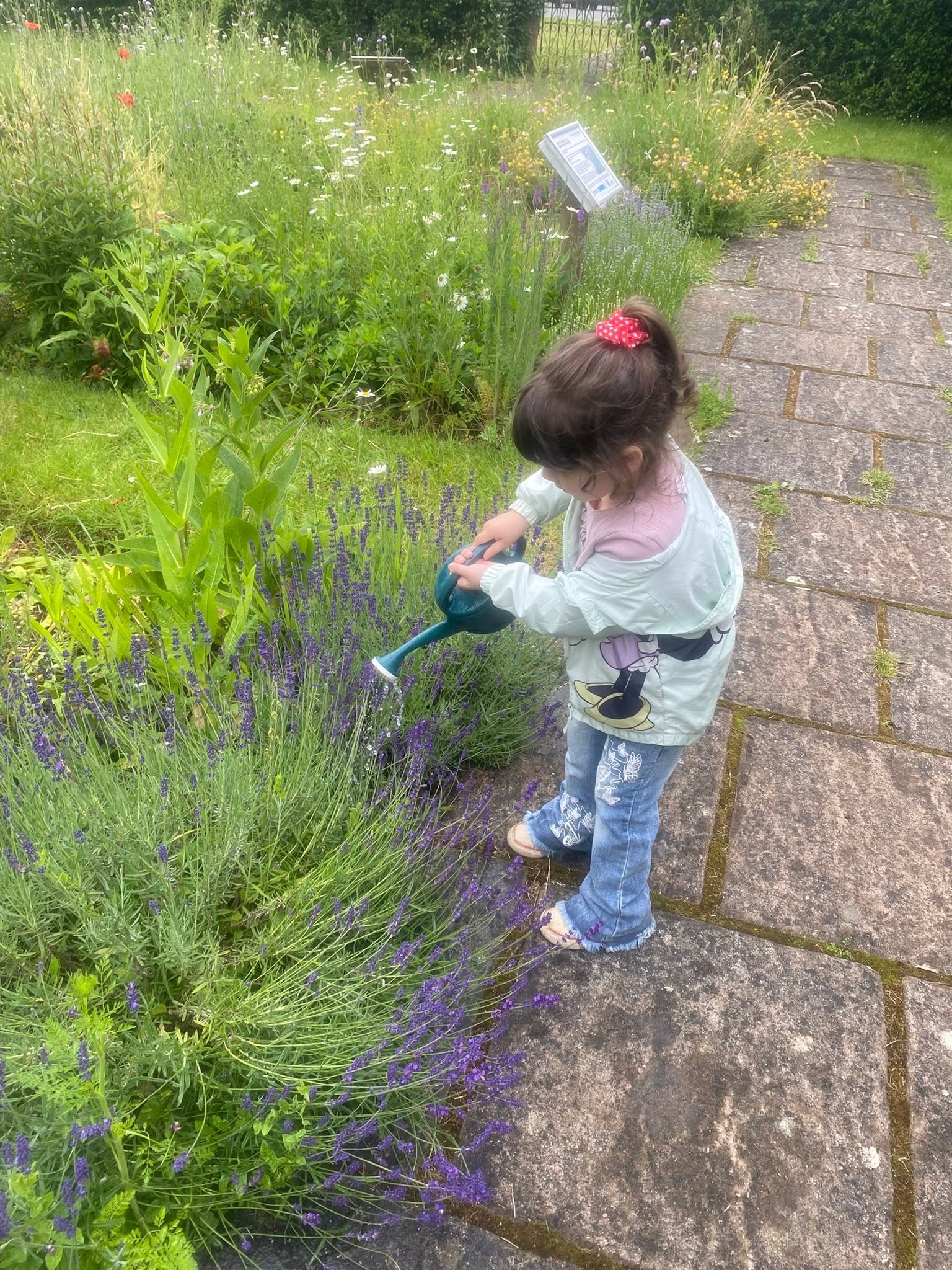
It’s been quite warm this week, and dry, so the gardens really benefited from all the watering the children did next – happier plants, a few damp feet, and smiles all round.

Child watering plants
Children watering plants
Child watering plants

Thalia daffodils

25 March 2026

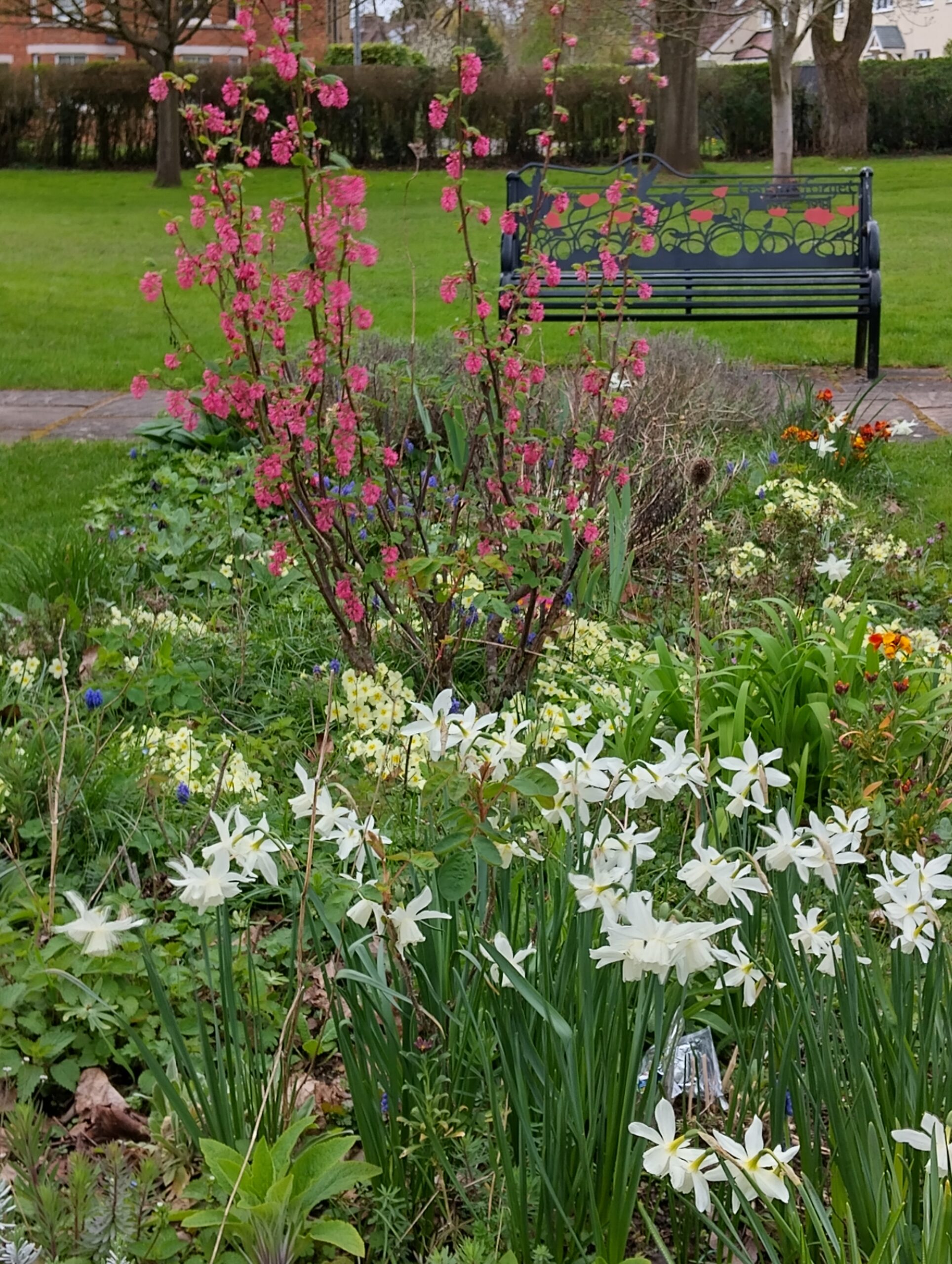
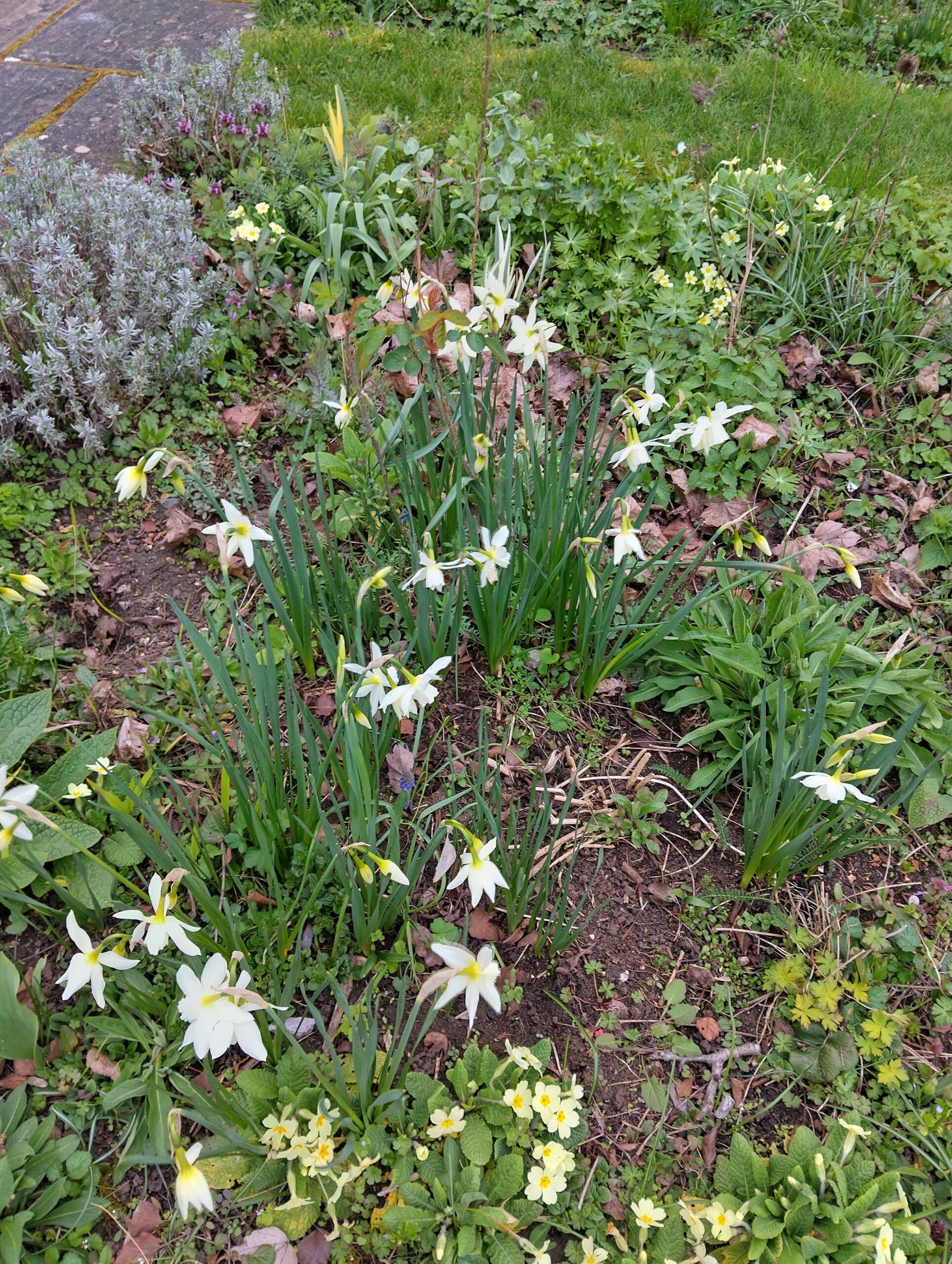
I’ve been asked what variety our white daffodils are – they’re Thalia.

We learned some time ago that bees don’t generally go for daffodils, which have been bred for many things, but not for producing nectar and pollen. On the other hand, bees do like these, so we grow them; and they seem to like the garden, as they’ve spread out from most of the places we planted them.

They used to be really difficult to buy bulbs for, but over the last few years I’ve noticed that gardening articles, social media and TV gardeners have been recommending them, and many more suppliers stock them.

What have we been doing all winter?


19 March 2026

We haven’t posted much recently, but we’ve spent the long grey wet winter preparing the Gardens for this year’s flowers. There’s still plenty going on round at the gardens.
Now at last we’re seeing the sun, and seeing the effect on all the plants – not least the weeds, which have really started to grow. We’ll be starting to deal with over the next couple of weeks.And at last, we’re seeing the sun, and seeing the effect on all the plants – not least the weeds, which we’ll be starting to deal with them over the next couple of weeks.

A lot of what we do over the winter involves leaves and compost bins. When it’s not raining, we might be emptying one of the compost Daleks (bins) so we can turn the other bins into it; or we might be adding leaves to the leaf bin to make mulch – ‘black gold’ – to keep moisture in, and stop weeds growing.

And the Town Council’s Grounds Staff have added many large bags full of leaves to the bin – thank you very much! They’ll be put to good use.

We’ve also been nursing a lot of cuttings through the winter – it’s one of our main ways of increasing the number of plants here, without having to buy more. And when we grow our own, we know they haven’t had to be treated with pesticides to look good for sale, or with hormones to make them bloom earlier – neither of those are good for bees. They’ve had a tough time getting through this long wet winter, but they’re really beginning to take off now.

We’ve been asked a couple of times how we decide which weeds to take out, and which to leave – I’ll do a more detailed post on that in a week or so. But basically, what we’re doing now it trying to remove just those invasive plants that could be trouble later on, like ground elder, sheep sorrel, celandines and violets (lovely as they are, they run rampant and can choke other plants). We still want to leave a lot of ground cover for insects, for another couple of weeks till the soil warms up.

Then the fun bit starts, when we try to work out which seedling is a plant we really want, and which so isn’t!


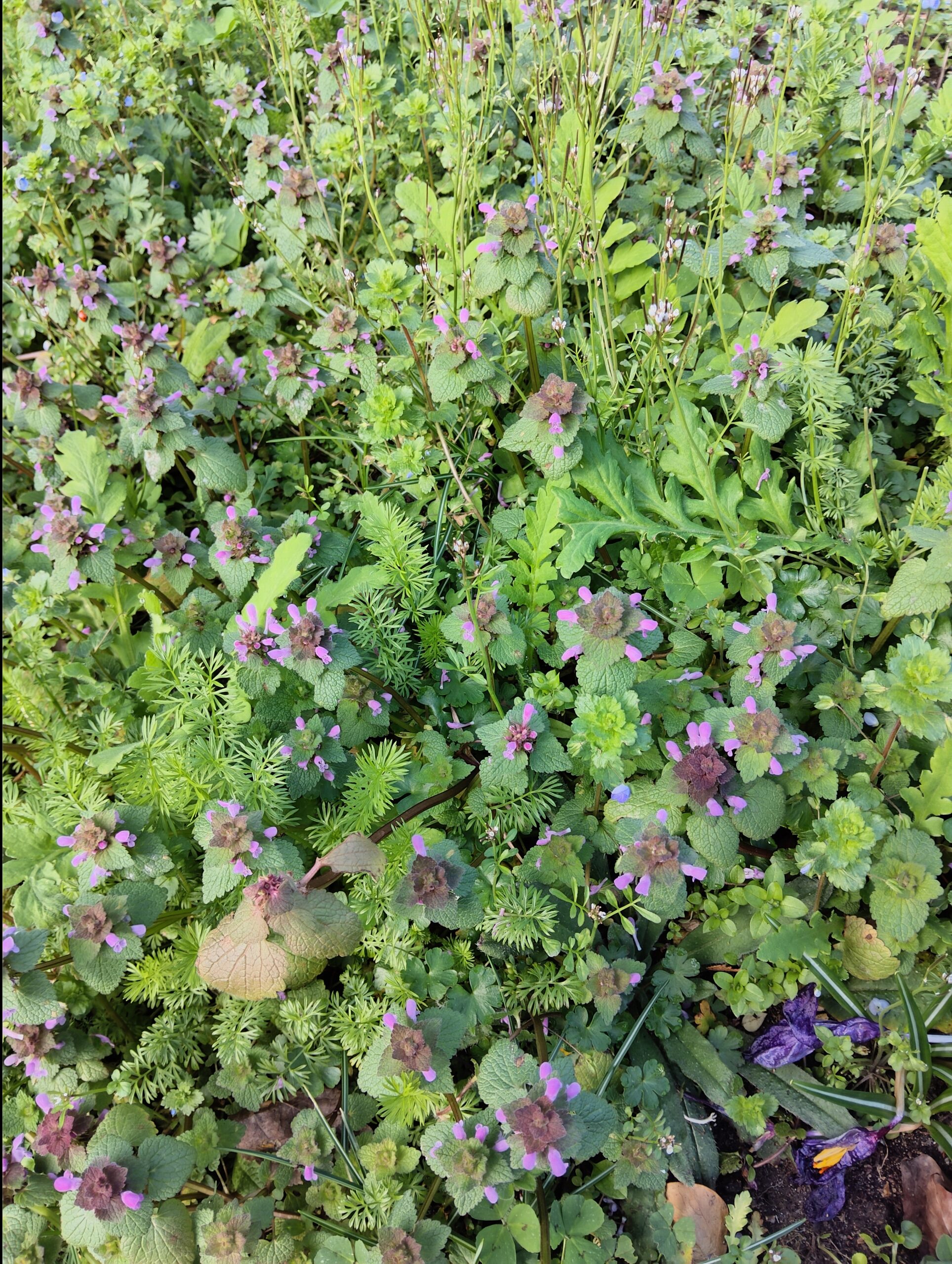
Sneak preview – here’s the first patch we’ll be untangling. A real haven for bees at the moment, they love red deadnettle as it’s full of nectar; but give it a couple more weeks, and it’d be a mess. That’s the balance we’ll be trying to sort out.

https://linsladememorialgardens.uk/2017/11

A few photos as spring arrives

12 March 2026

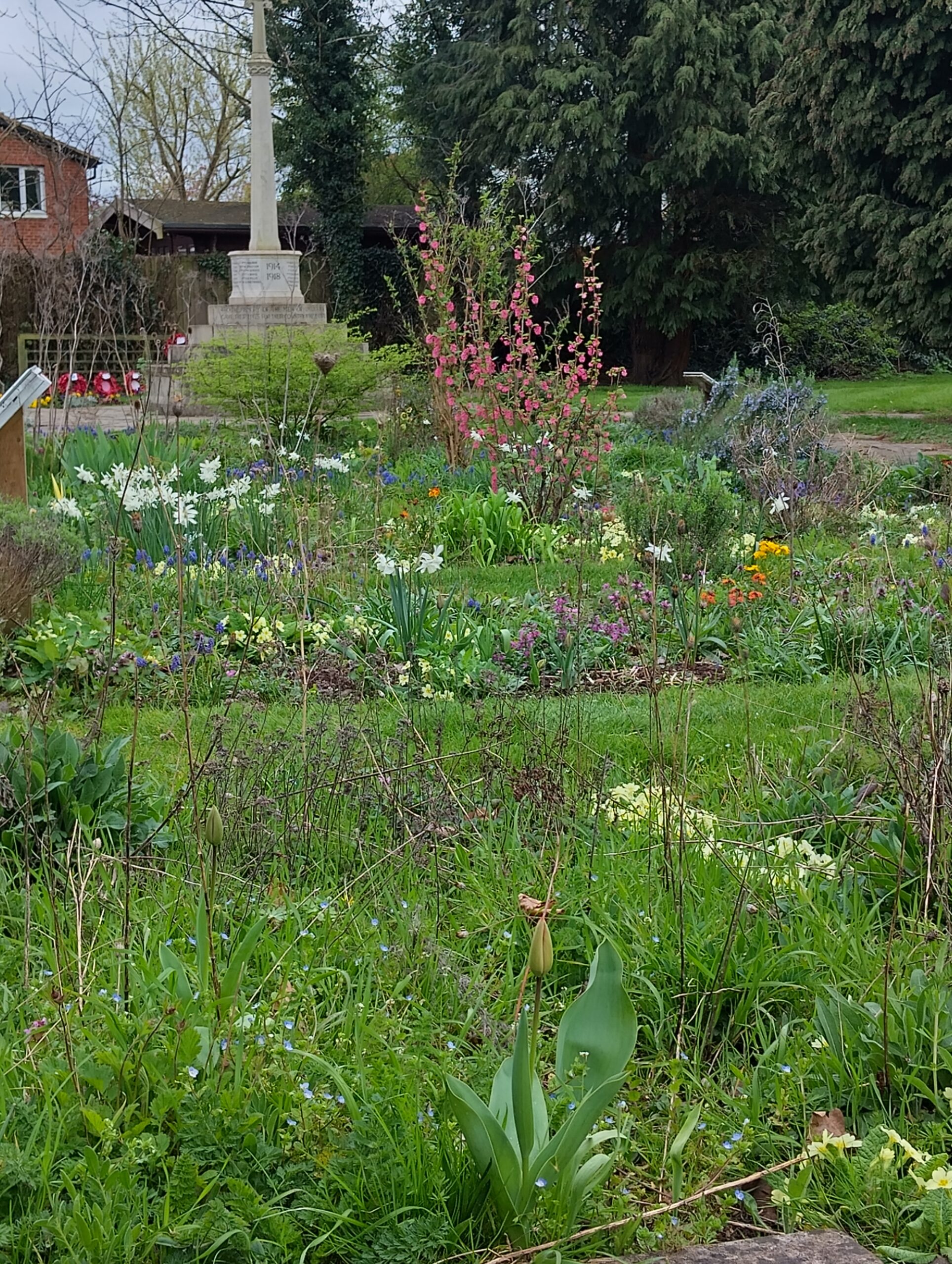
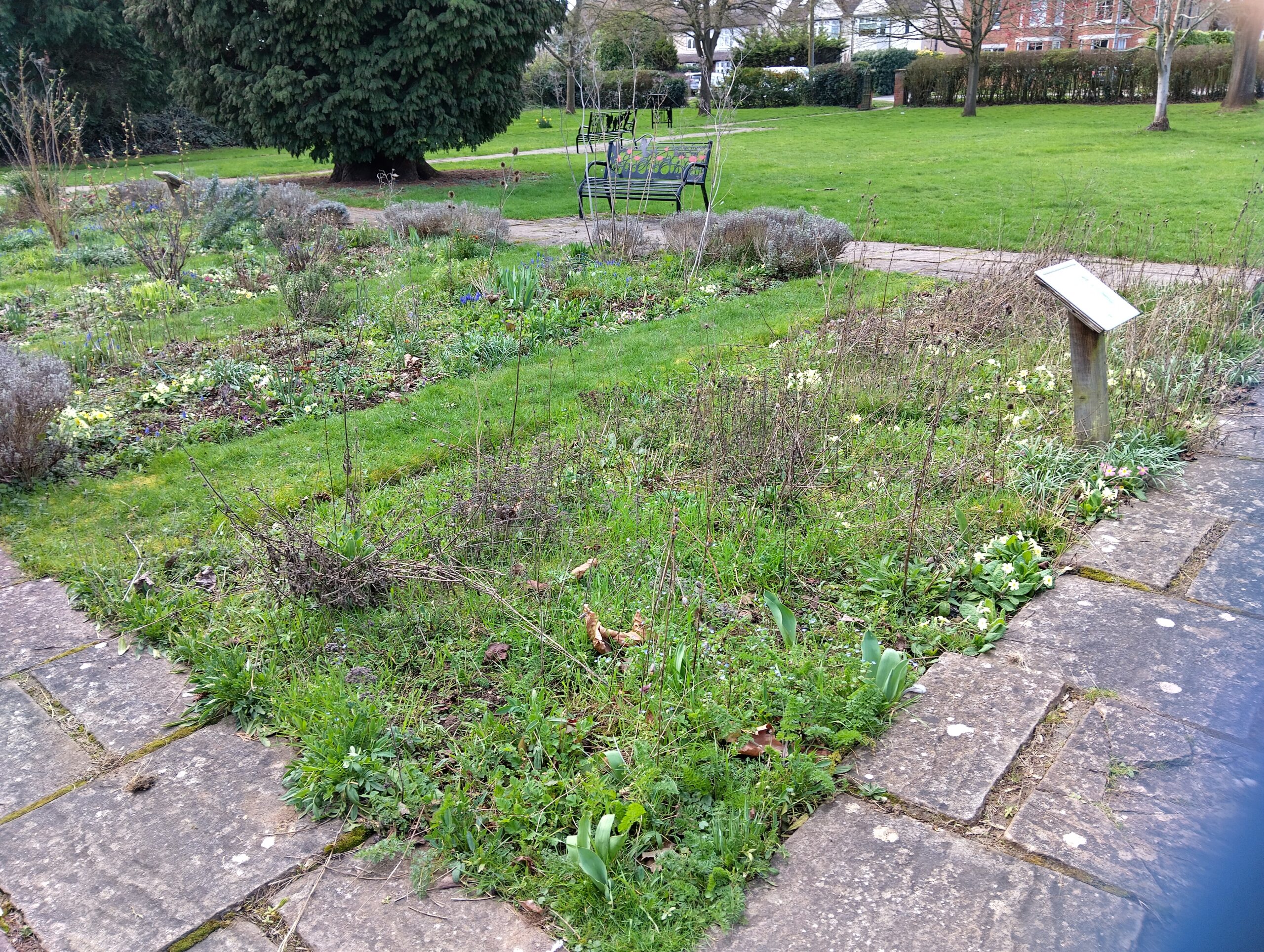
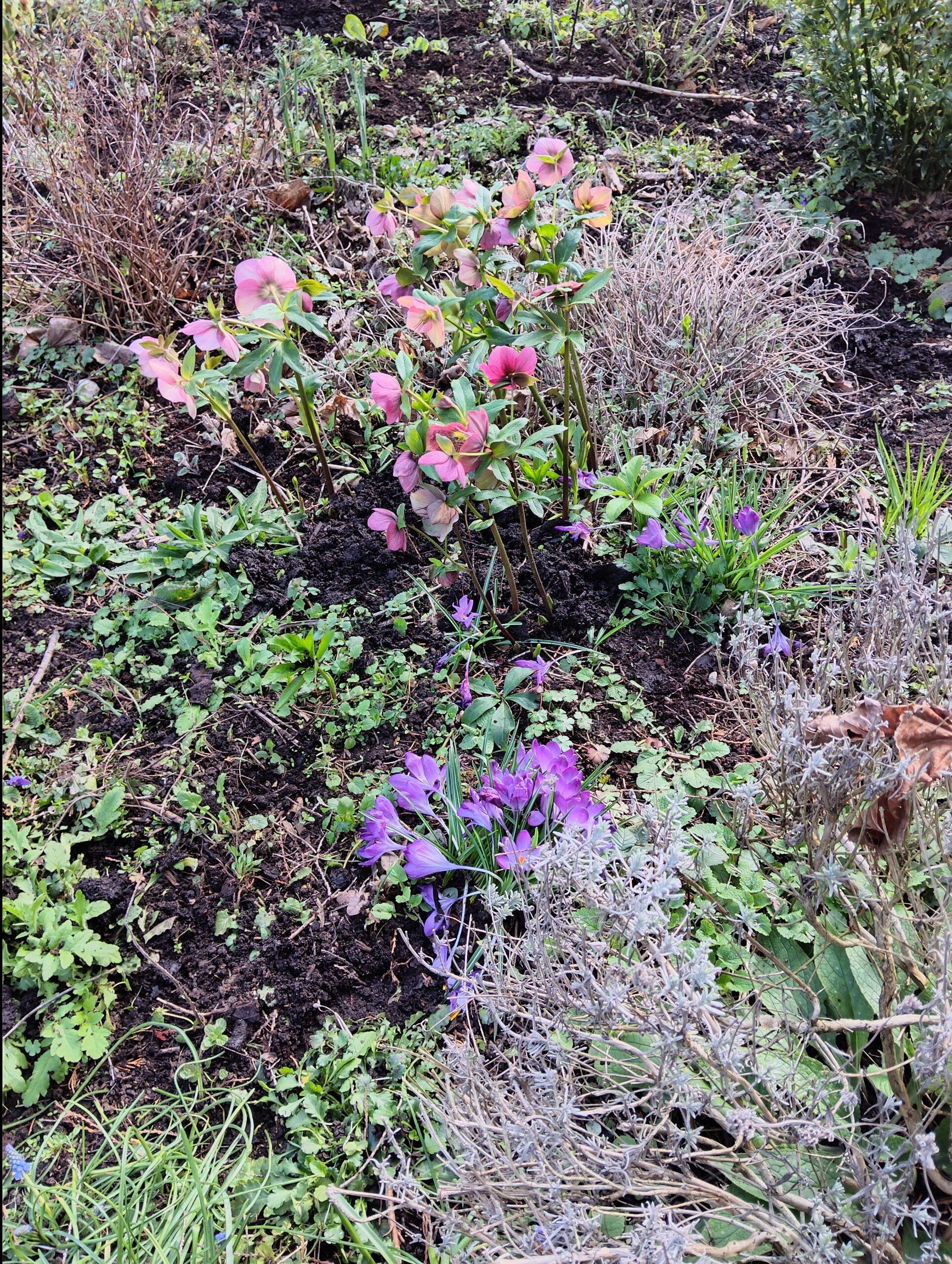
Here are a few photos of the Gardens, taken this week as primroses and hellebores take over from the winter aconites and crocuses.

The crocuses don’t photograph well, which is a pity; over the last few years they’ve spread all over a couple of the beds. Bees are just starting to look for nectar and pollen, so it’s well timed! Here are a few photos of the other flowers in the garden at the moment:

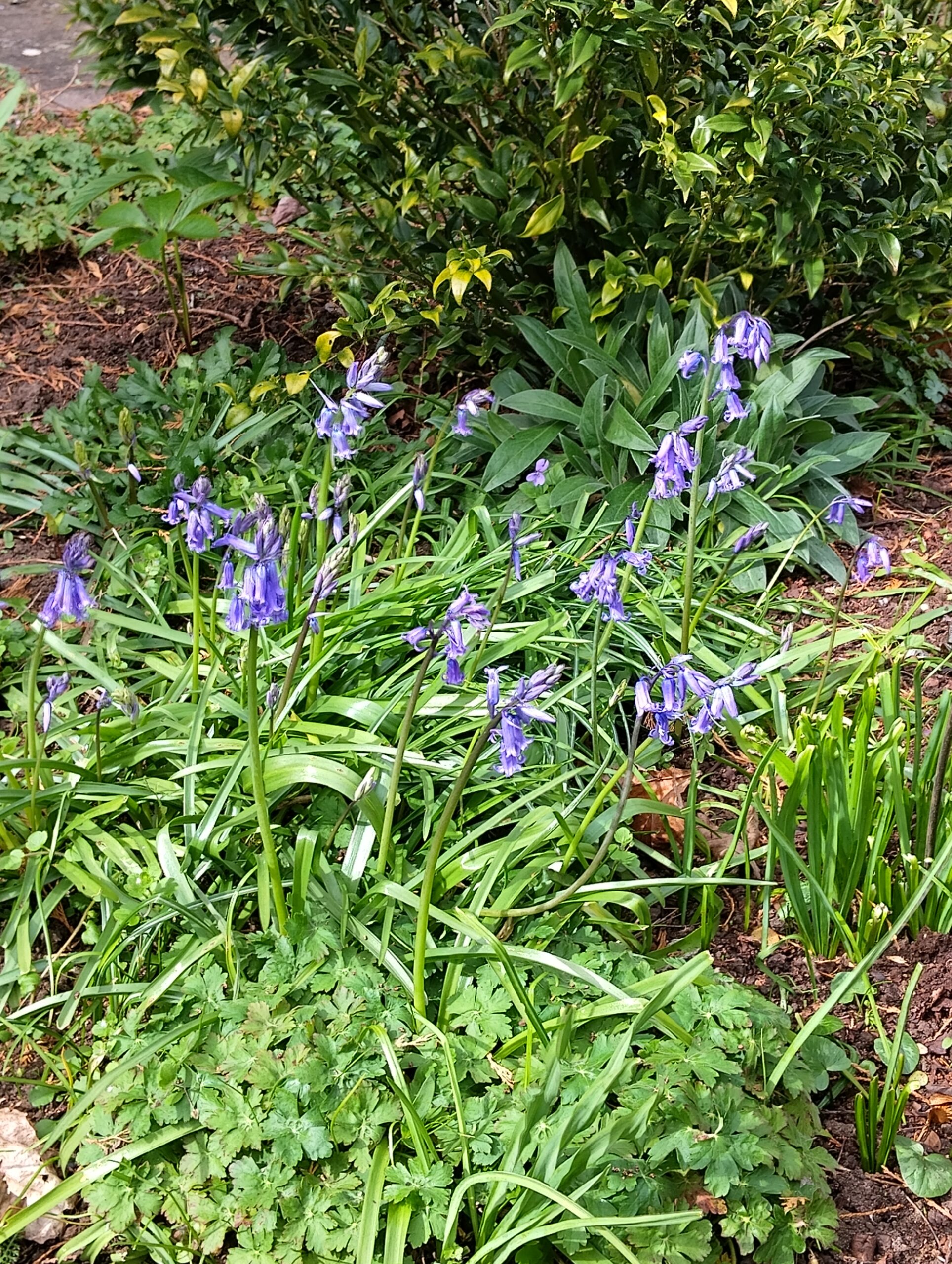
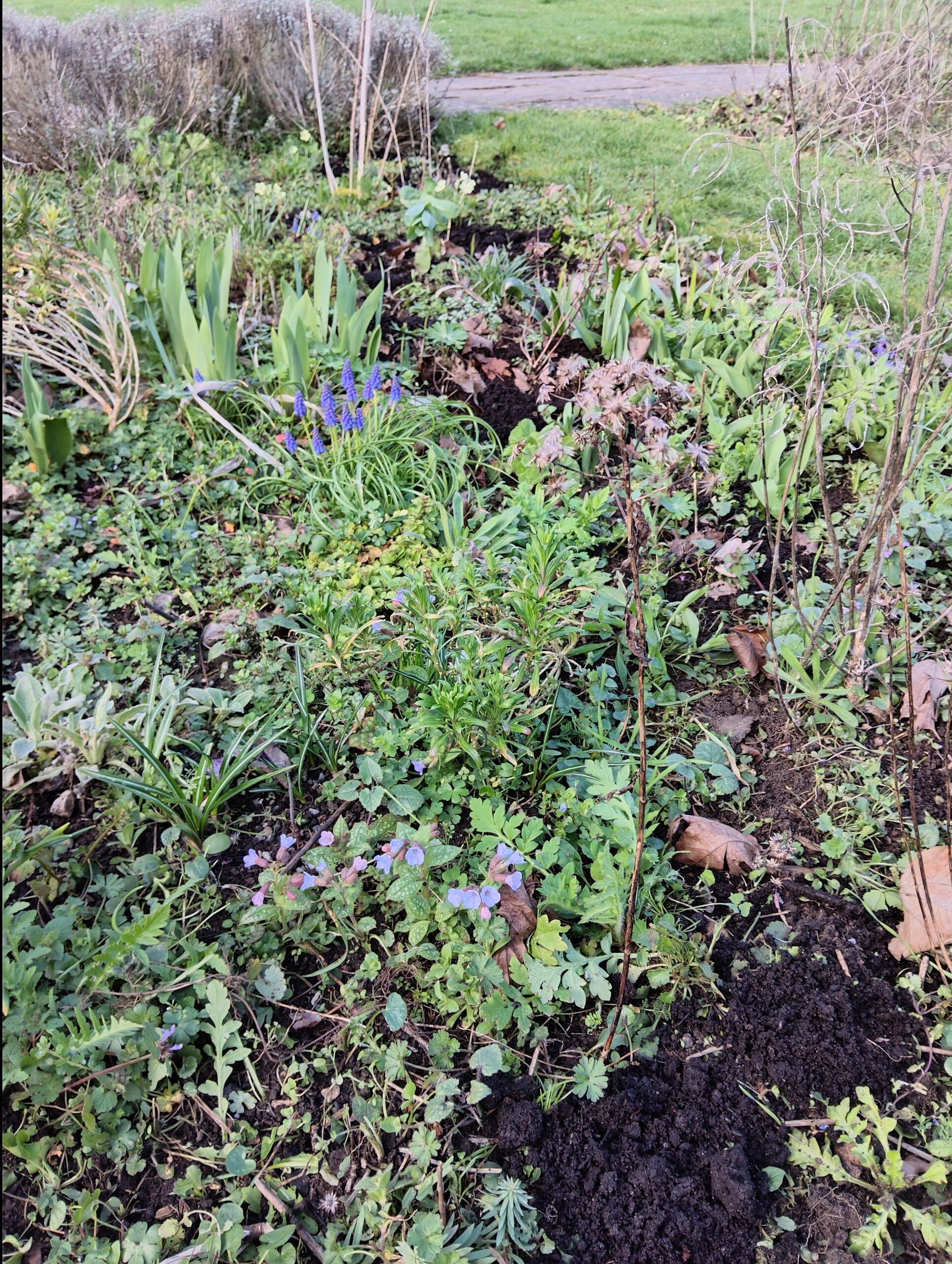
The first flowers of pulmonaria and grape hyacinths – these two are real bee magnet flowers in early spring

The primroses have spread all over the garden

Hellebores and a clump of crocuses in one of the bottom beds

Protecting plants over winter

23 November 2025

A couple of blog posts ago [https://linsladememorialgardens.uk/2025/10/27/using-dead-leaves-in-the-gardens/] we mentioned that we’d be putting dead leaves directly onto the beds to protect plants over the winter. We’ve had a couple of sharp frosts this week; it was time to get started.

The frosts turn dahlia leaves and stems black and manky – not a good look for a public garden, and not particularly beneficial to insects for hibernation. So over the last couple of visits the team has cut them all down, added some of the dry stems from the wild flower bed and chopped them all up (to make them rot faster) and added them to the compost bins in the work area.

We’ve still left a lot of stems in the wild flower bed for hibernating insects, but leaving some airspace between the plants shows off the seed heads, and looks just a little more deliberate – and it gives us on-site Browns to add to the Greens that are (were?!) the dahlia stems. When we make compost we aim to have about the same volumes of Greens (leaves, stems, grass, coffee grounds) as of Browns (dry stems, broken-up sticks, cardboard, shredded paper, torn-up egg boxes). And we tear or chop things up so there are more broken surfaces, which rot down more quickly.

We emptied a few more bags of leaf mould over or round specific plants, then raked up a few trugs full of leaves from the grass and added them on top – this will help to protect the roots from the cold wet winter to come. A number of plants like dahlias and salvias can withstand frost, but they really hate cold, wet, poorly drained ground – which is exactly what we have here. Adding this extra organic matter should help; most of our dahlias have come back year after year.

Weeding and tidying up

08 April 2025

Or rather, why we haven’t done it yet.

Last year about this time, we explained why we don’t cut back all the old plant stems in the autumn, as people used to do to make their flowerbeds look emptier and tidier over the winter (spoiler: it’s because insects and small mammals need places to hibernate in, and dead leaves on the ground and hollow stems in the air seem to be just the thing).

We have cut most of the old stems down now, but we’re still not weeding thoroughly – this isn’t just laziness! A lot of the flowers we encourage here are ones that have self-seeded, and too many of them haven’t germinated yet. So if we weed to bare soil between plants, we’re destroying a lot of plants we might like to keep.

The warm weather over the last couple of weeks has really brought a lot of plants on faster than usual, so we’ll be starting to tidy up in earnest for the rest of this month, and sowing seeds where we find any bare patches.

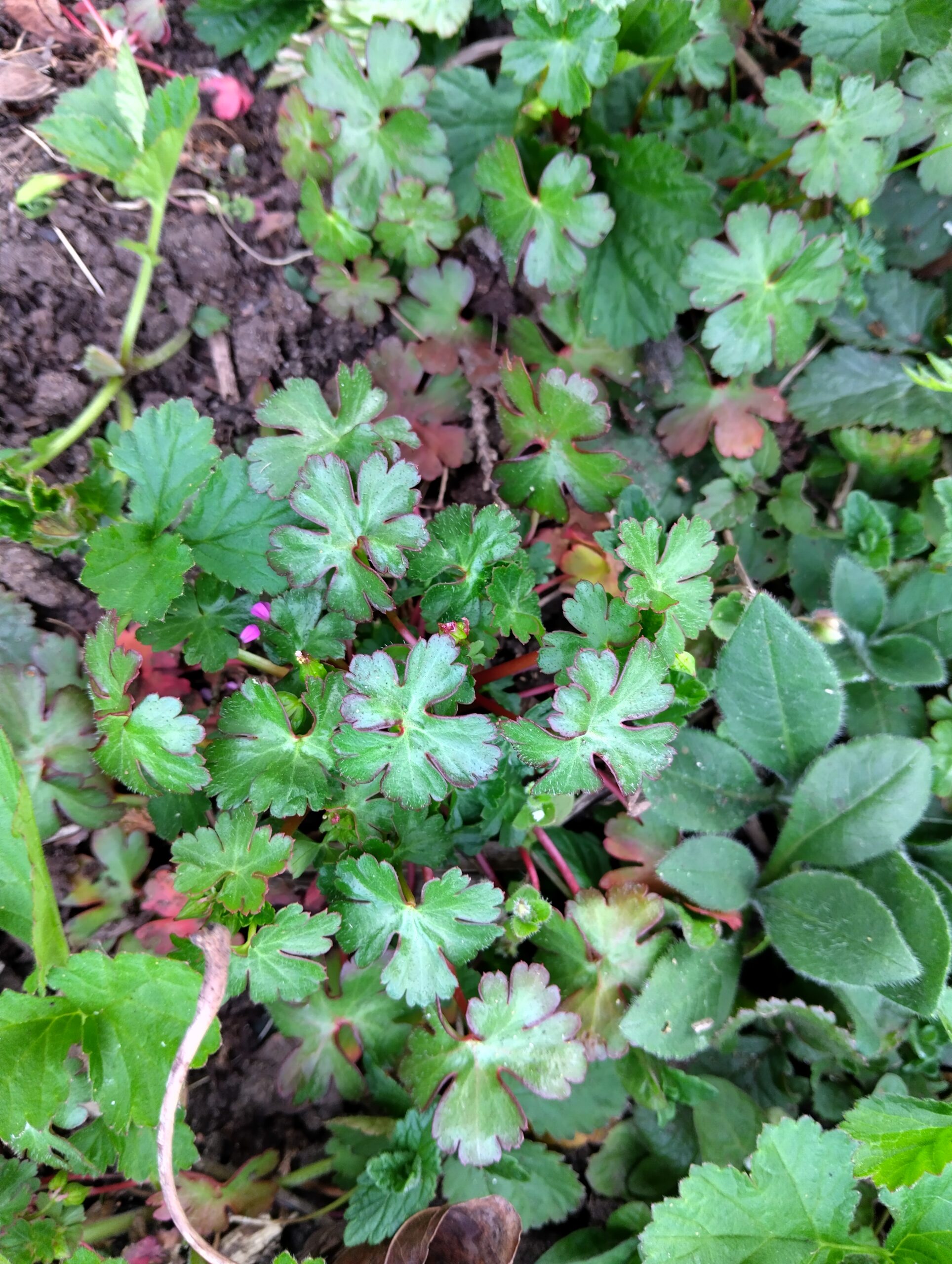
And perhaps most importantly, we’ll be lifting even the useful wild flowers like Geranium lucidum [find photo] in the third bed up from the memorial itself – that’s the bed the preschool children will be planting their peas out in when they come back after the Easter holidays, and we need it to be ready for them then.

Geranium lucidum in the preschool bed
Geranium lucidum

We’ll leave a couple of plants – there’s a large viper’s bugloss which will be a real bee magnet later in the year – but mostly we’ll be clearing more space for them. It’s a big ask to avoid digging up lots of plants by mistake when you’re only 2 or 3 years old!