Author Archives: Pippa Sandford

Gardening in more extreme weather – 1

26 July 2026

Today we had a little very light rain, the first in many weeks; and it’s cooler, only 26 degrees this afternoon. The forecast is for 31 degrees in a couple of days, with no likelihood of any more rain in the next couple of weeks. Apparently, this is the new normal.

So we need to adapt how we garden, both for drought and heatwaves any time after March or April, and for wetter, milder winters.

One way that we’ve been changing the way we garden has been accepting that some plants just won’t thrive in these conditions. In particular, roses don’t do well in heat, and we can’t just replace them with the Mediterranean plants we’re advised to use, as they don’t like our claggy cold wet soil in winter.

Instead, we’re encouraging the ones that self-seed, as they seem to thrive better when they’ve chosen where they’re going to grow, which in turn leads to less need for watering. We have wonderful tall fennels, wild carrots, teasels, geraniums, foxgloves and musk mallows. We’re still using dahlias and asters a lot, for more vivid colour, and to reassure people that we’re not just letting the gardens run wild.

We do have a good structure for the gardens as a whole – a lavender border down both sides, with flowering shrubs in most of the beds.

The lavender’s actually a bit tricky, we’ve lost quite a few plants over wet winters, but we take cuttings every spring and have (almost) enough plants to fill the gaps. There are several different varieties of lavender in those borders, and some seem to be more resilient to winter wet and cold soil, so those are the ones we’re taking cuttings from.

And we’re also trying not to waste any water in these hot, dry summers! Or exhaust our volunteers. We use watering cans anyway, so the current hosepipe ban doesn’t affect us, but we’re just watering plants that haven’t yet got established; and the ones that are flowering their socks off for us, like the penstemons and dahlias. We need to spend half an hour watering a little more often than once a week.

Fortunately, the soil holds much more moisture than it used to when we started work here, thanks to all the leaf mould and garden compost we’ve added to some of the beds, but we still need to water in this kind of heat and drought .

But like most of the country at the moment, we’re still hoping for rain to keep everything alive and thriving into autumn.
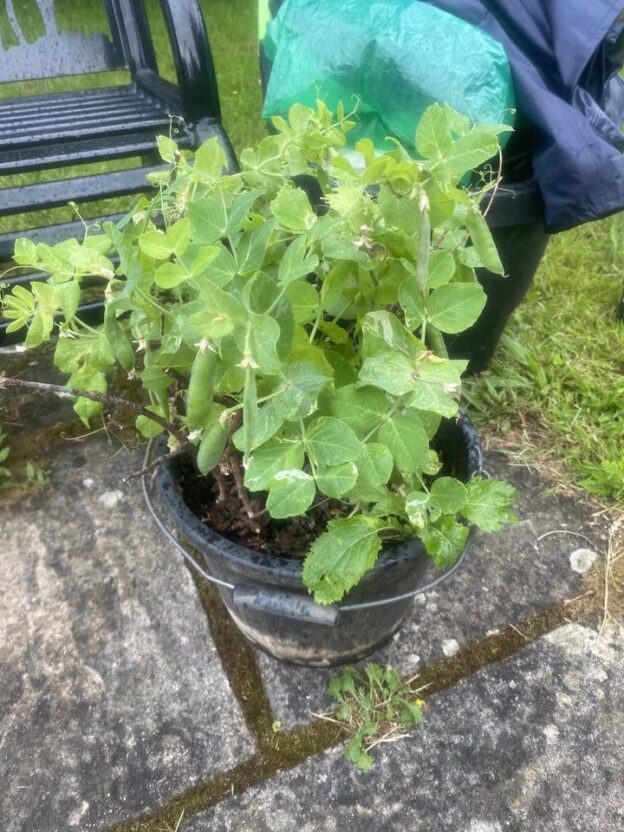
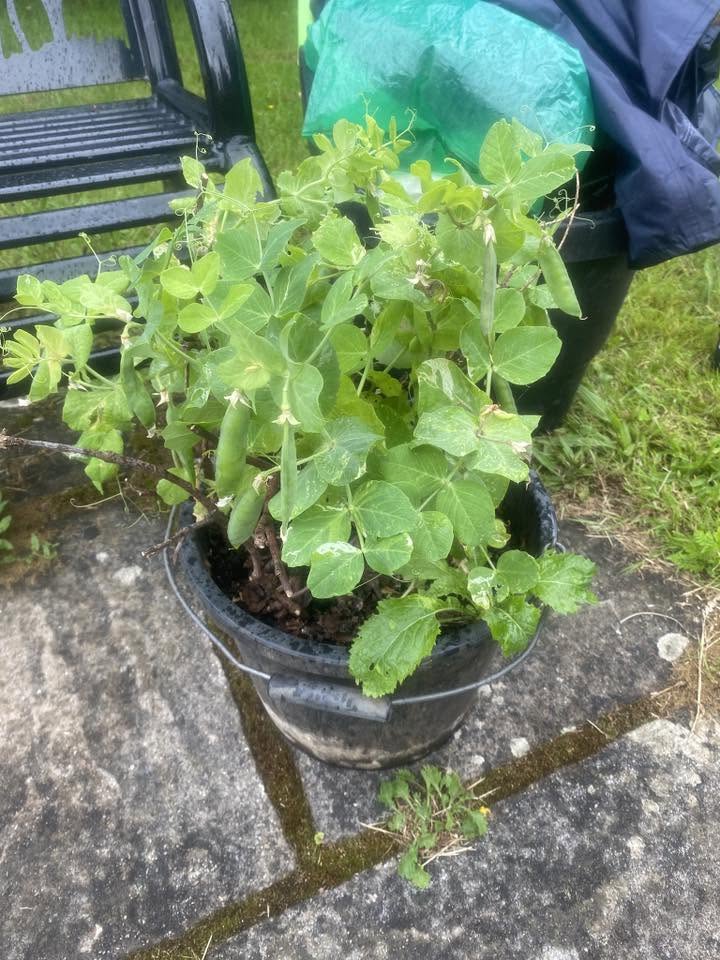
Peas growing in a bucket

Preschool peas are here!

17 June 2026

Sorry it’s been such a long time since the last blog post – in fact, there’s been time for the peas to grow, flower, and fill the pods with peas.

Peas growing in a bucket
Peas!

Unfortunately the children hadn’t been able to come round when we were working there over the last few weeks, so this is the first time they’ve seen their plants since they first came through the soil; but it was worth waiting for.

We took the bucket of peas round to the gardens and met some of the children there, where they picked some of the pods and discovered that small raw peas are very tasty. They left some for their friends back at the Pavillion, too.

We’ll do this again next year, with two or three buckets. It’s much more successful when members of the gardening team can look after the plants when they’re in their own gardens.

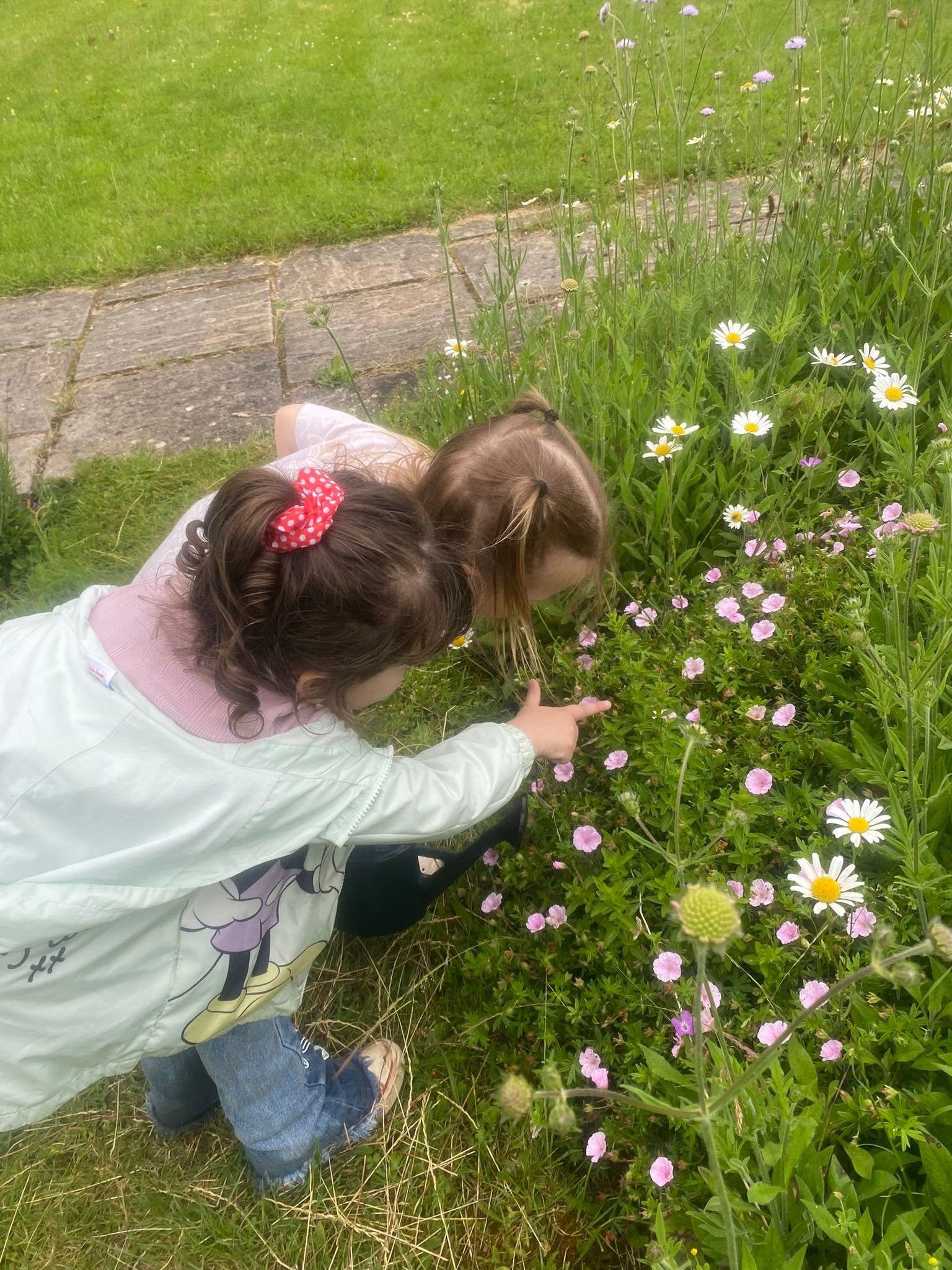
Some of the children went searching for ladybirds, and found quite a few:

Children checking for ladybirds
Checking for ladybirds
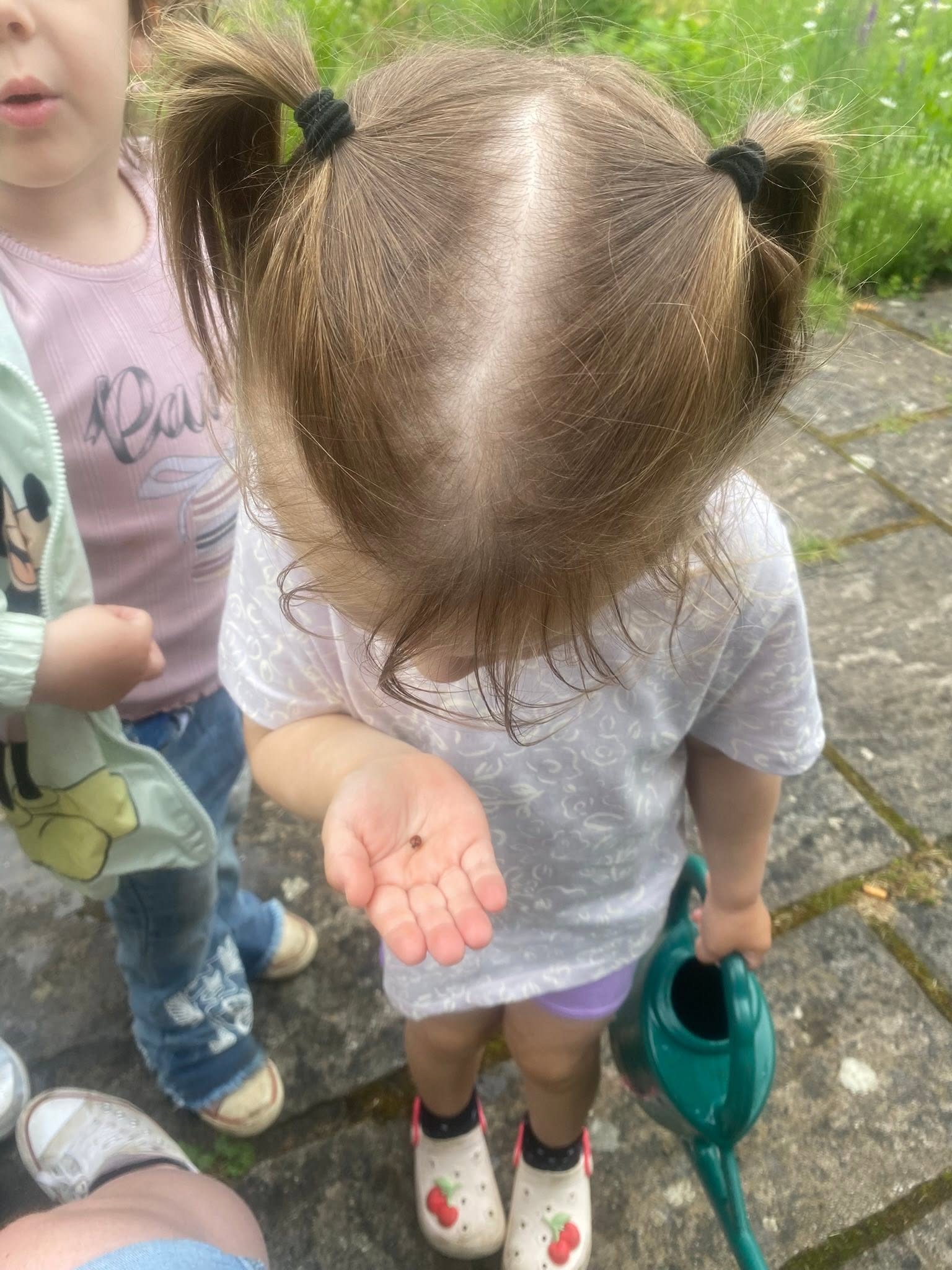
Child looking at a ladybird on her hand
Found one!


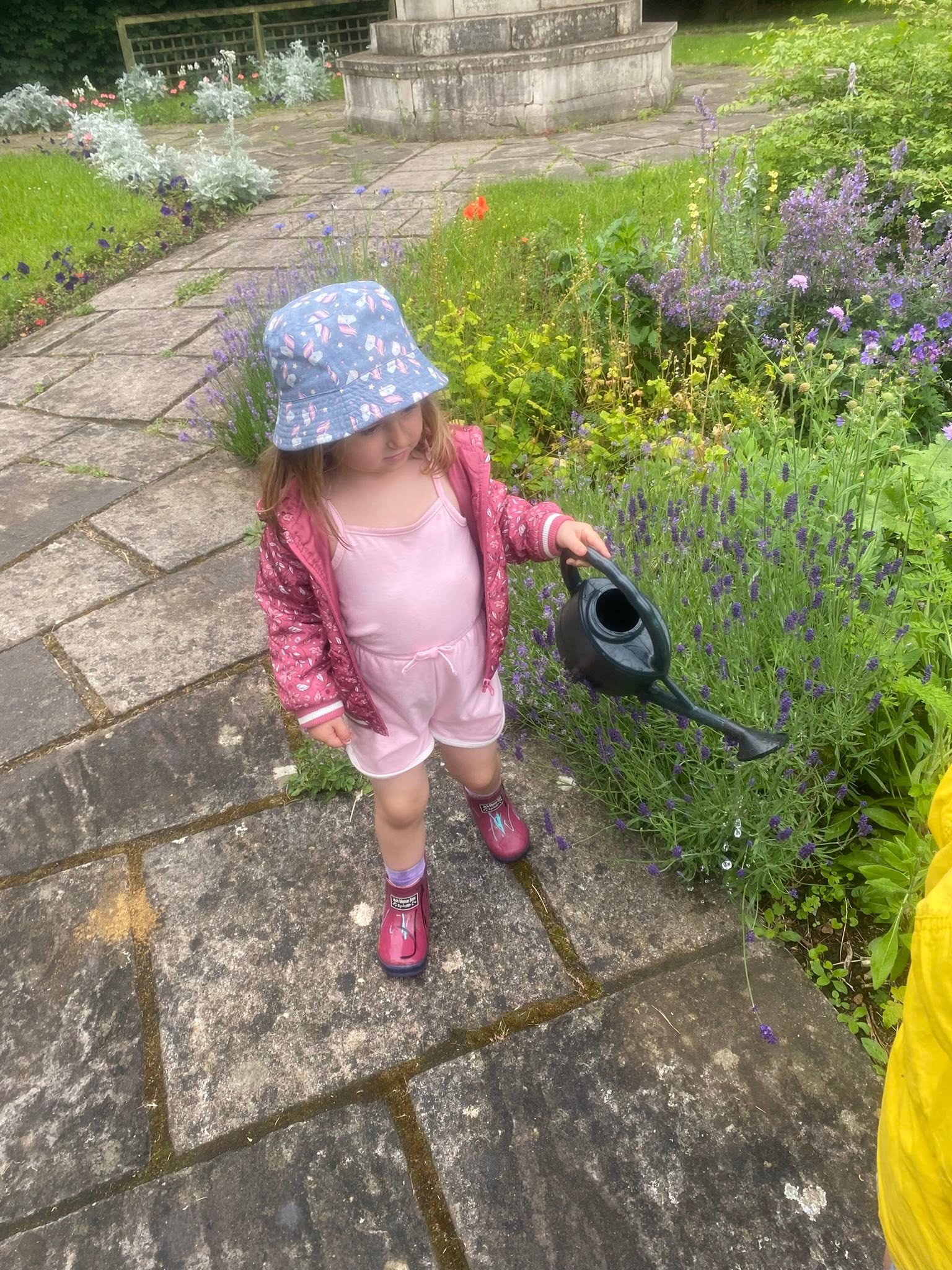
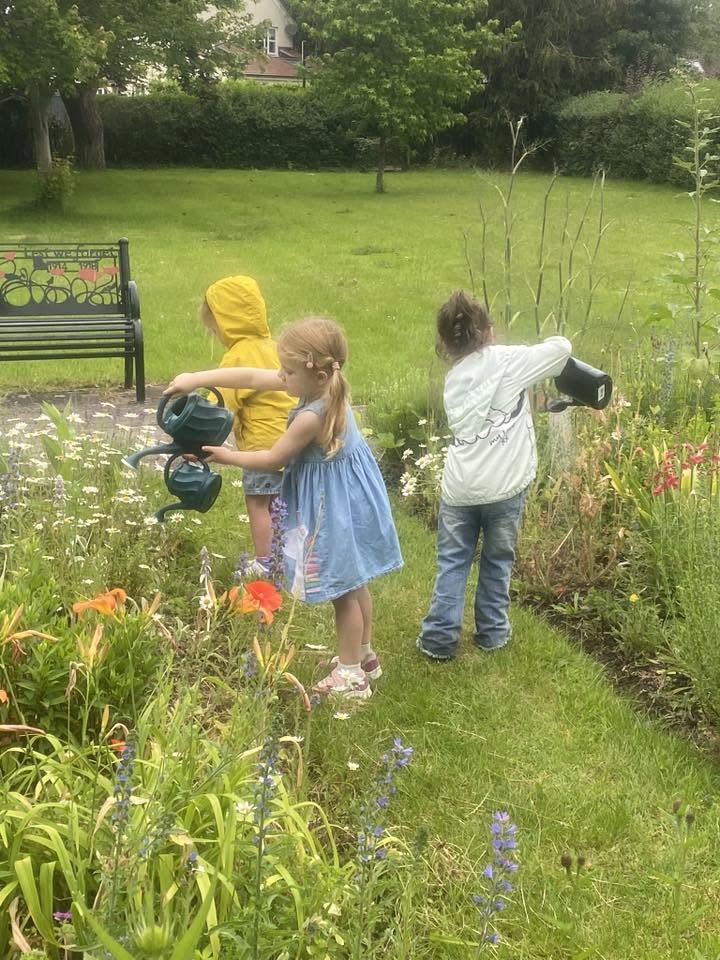
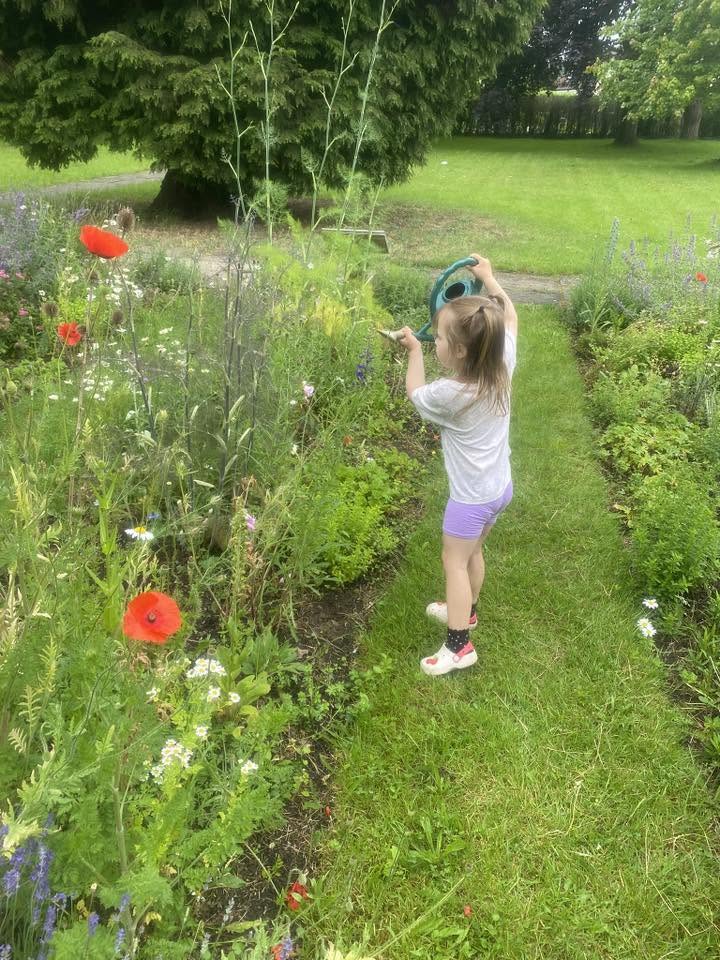
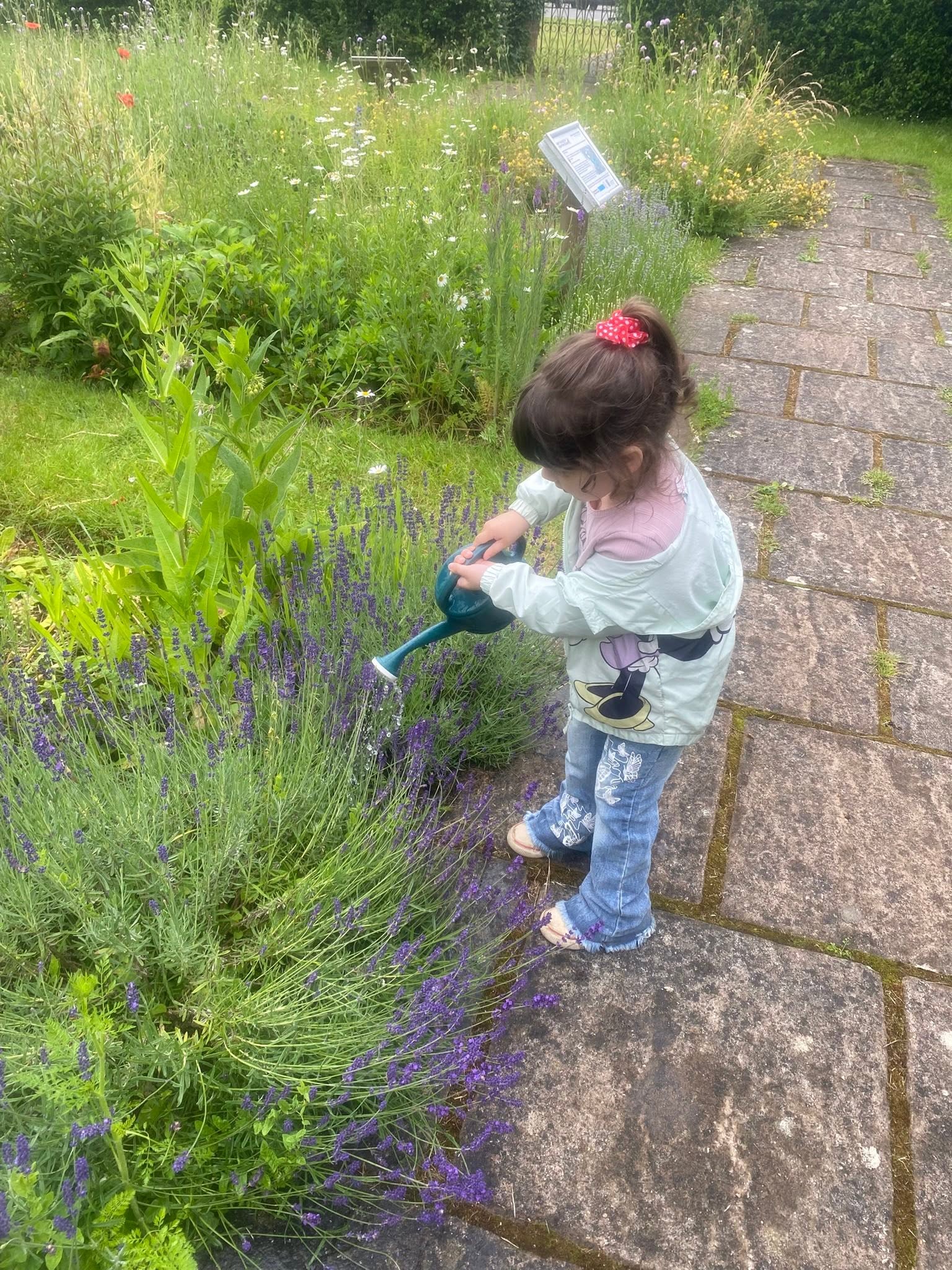
It’s been quite warm this week, and dry, so the gardens really benefited from all the watering the children did next – happier plants, a few damp feet, and smiles all round.

Child watering plants
Children watering plants
Child watering plants

Preschool peas on the way

7 April 2026

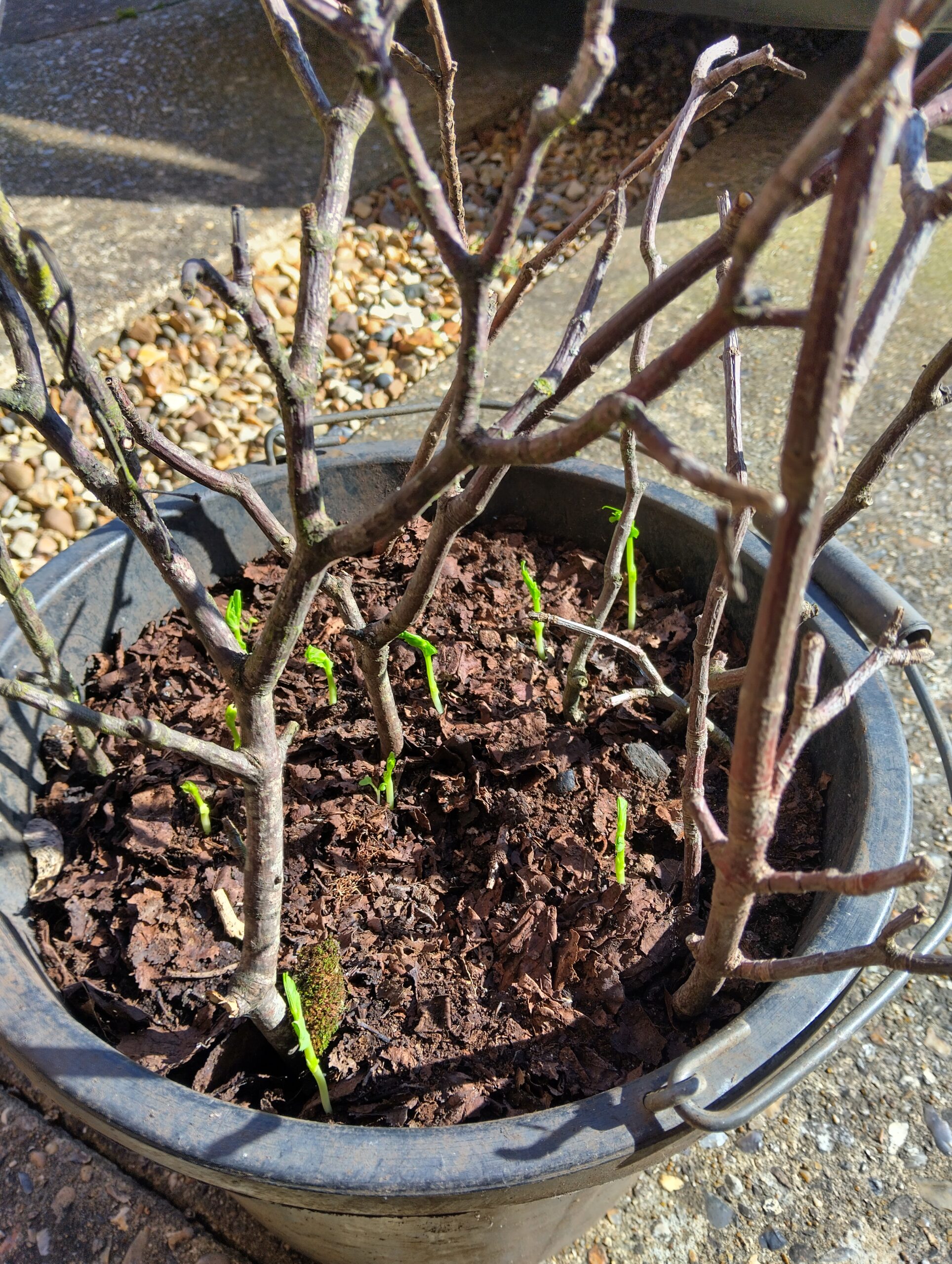
The children from the local preschool came round just before the end of term to sow a few peas; they’re just coming through now:

We’re not growing veg in their flower bed this year, as it hasn’t worked well. None of the available beds gets enough sun, and over the years it’s taken most of the compost we make just to improve the soil enough to grow a few baby carrots and peas.

The main problem is that we’d need to be watering three or four times a week in the hot, dry weather we tend to get now between April or May and July, when the peas would be ready. That’s not sustainable, either in terms of volunteer time, or the sheer amount of water needed to keep up with the way that large fir tree drains the beds. Much better to plant things that can cope.

But the children do love growing things they can eat! So this year, we’re experimenting with growing things in large containers (workmen’s buckets), with holes drilled in the bottom for drainage, and filled with a good rich mix of bought-in peat-free compost, home-made compost, and leaf mould. The children then sowed peas, topped up the container with leaf mould, and found sticks to put in to support the plants as the grow. Then the team can take the containers home to look after – much easier than trying to arrange watering visits – and bring them back for the children to see as they grow.

We’re going to do the same with radishes, carrots and probably lettuce. Watch this space!

Thalia daffodils

25 March 2026

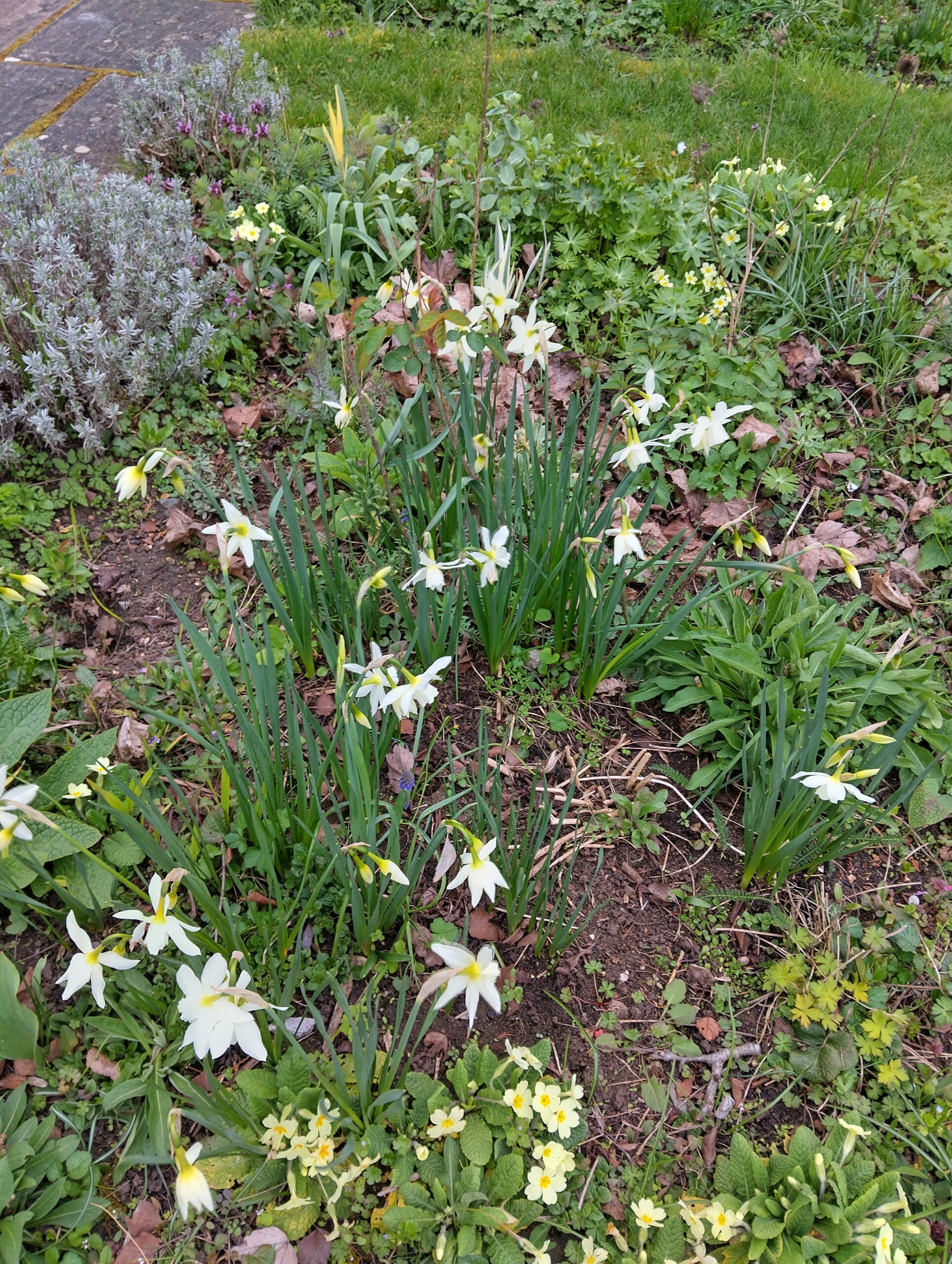
I’ve been asked what variety our white daffodils are – they’re Thalia.

We learned some time ago that bees don’t generally go for daffodils, which have been bred for many things, but not for producing nectar and pollen. On the other hand, bees do like these, so we grow them; and they seem to like the garden, as they’ve spread out from most of the places we planted them.

They used to be really difficult to buy bulbs for, but over the last few years I’ve noticed that gardening articles, social media and TV gardeners have been recommending them, and many more suppliers stock them.

A few more photos

24 March 2026

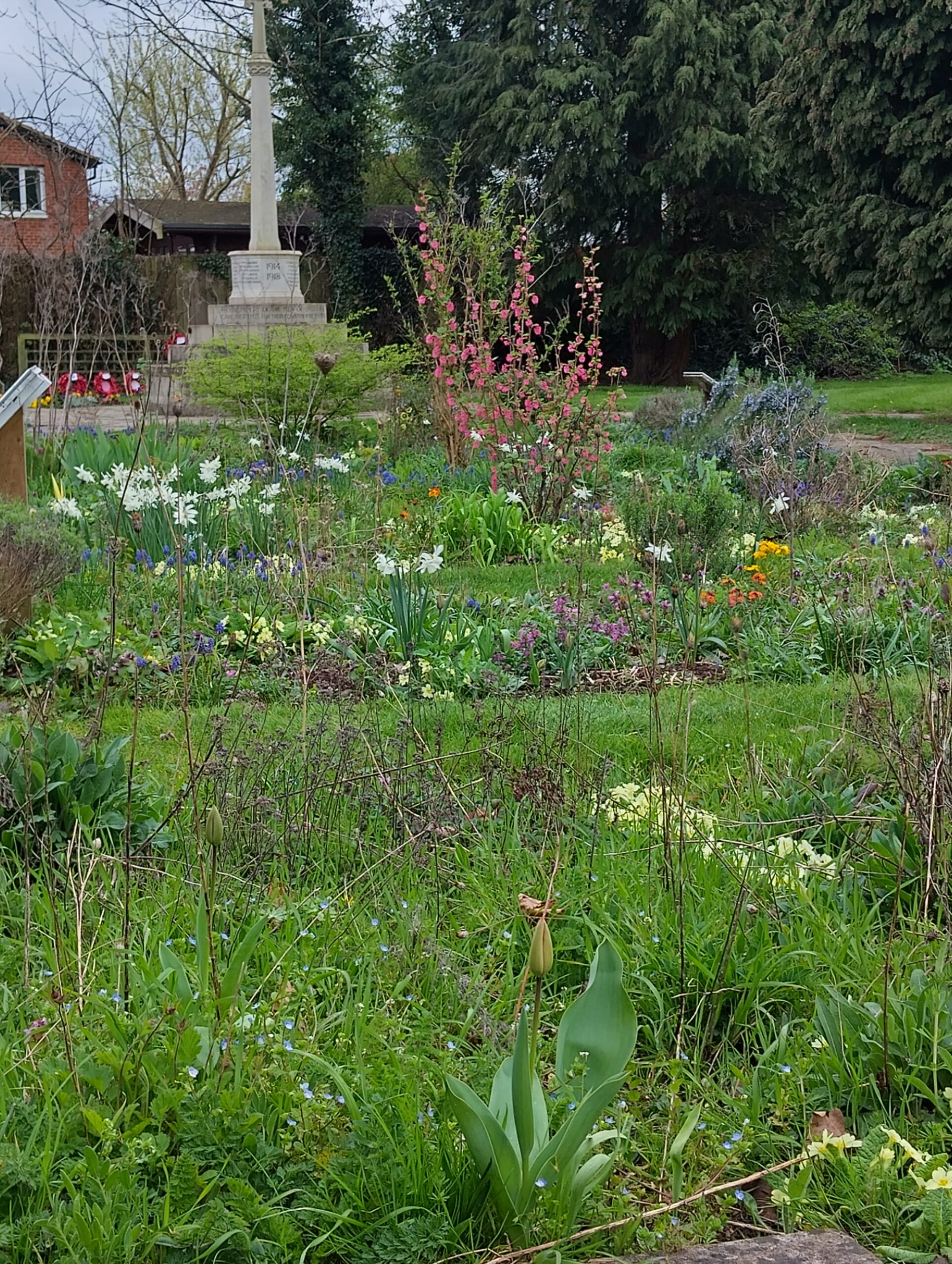
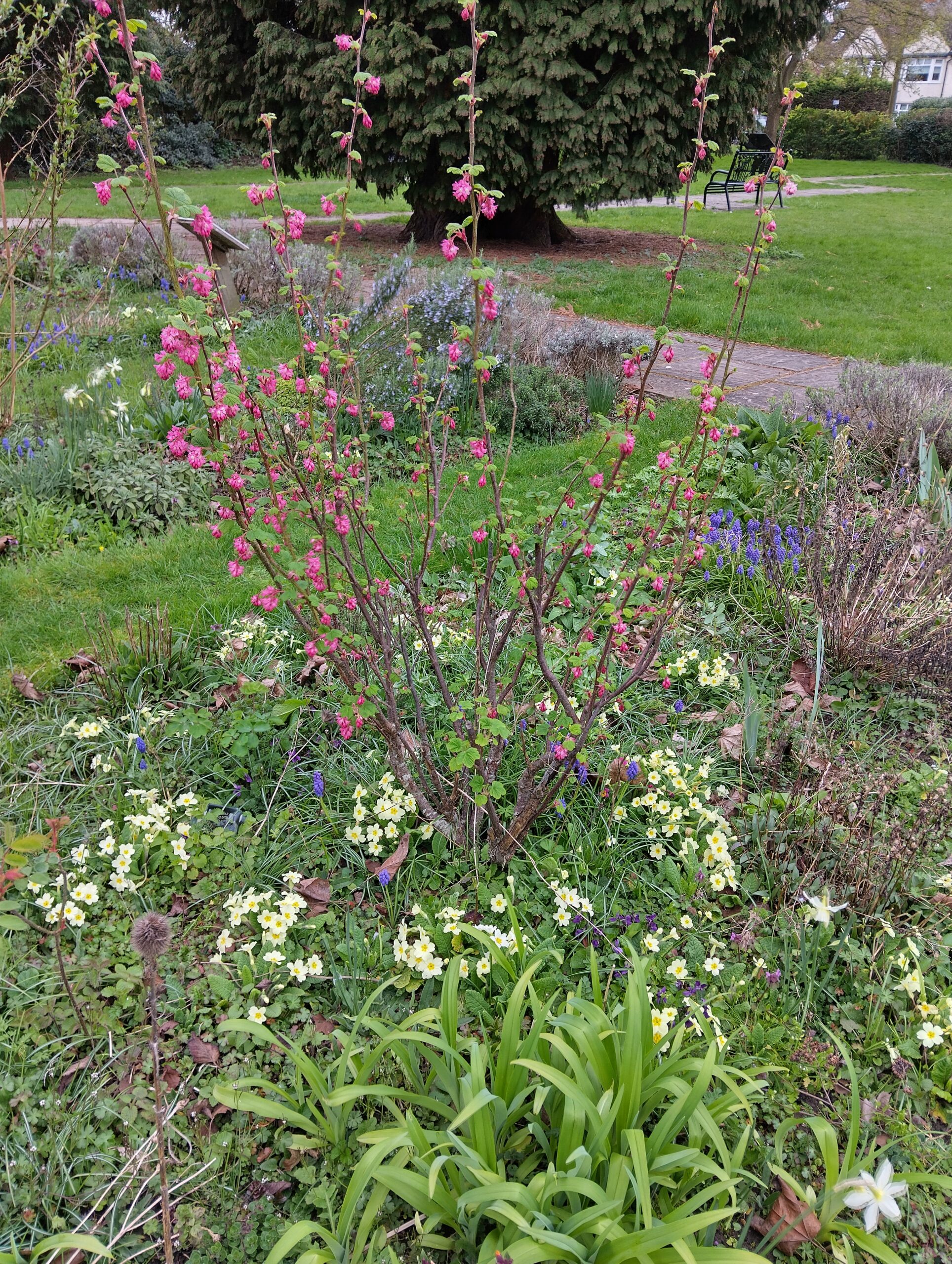
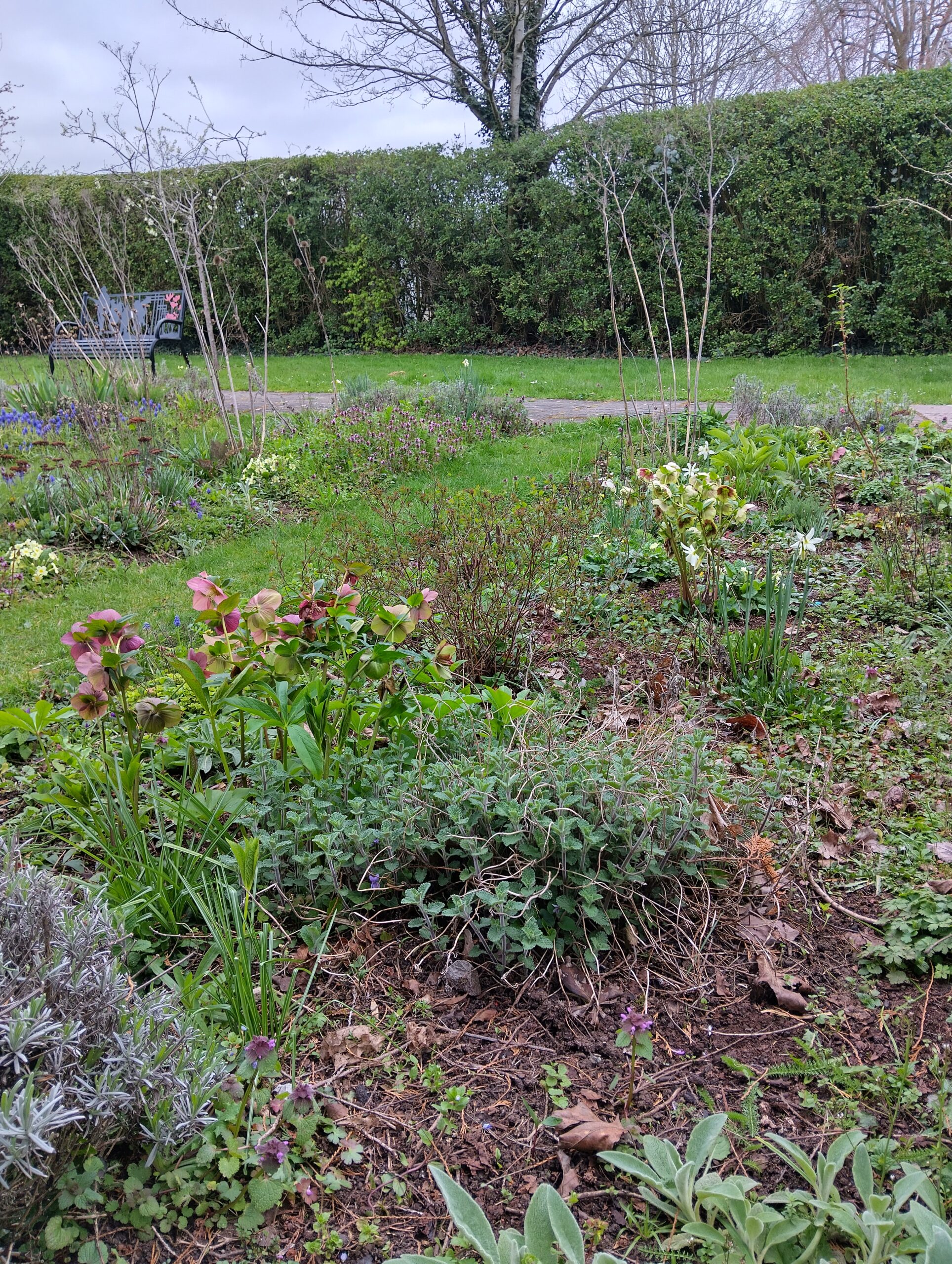
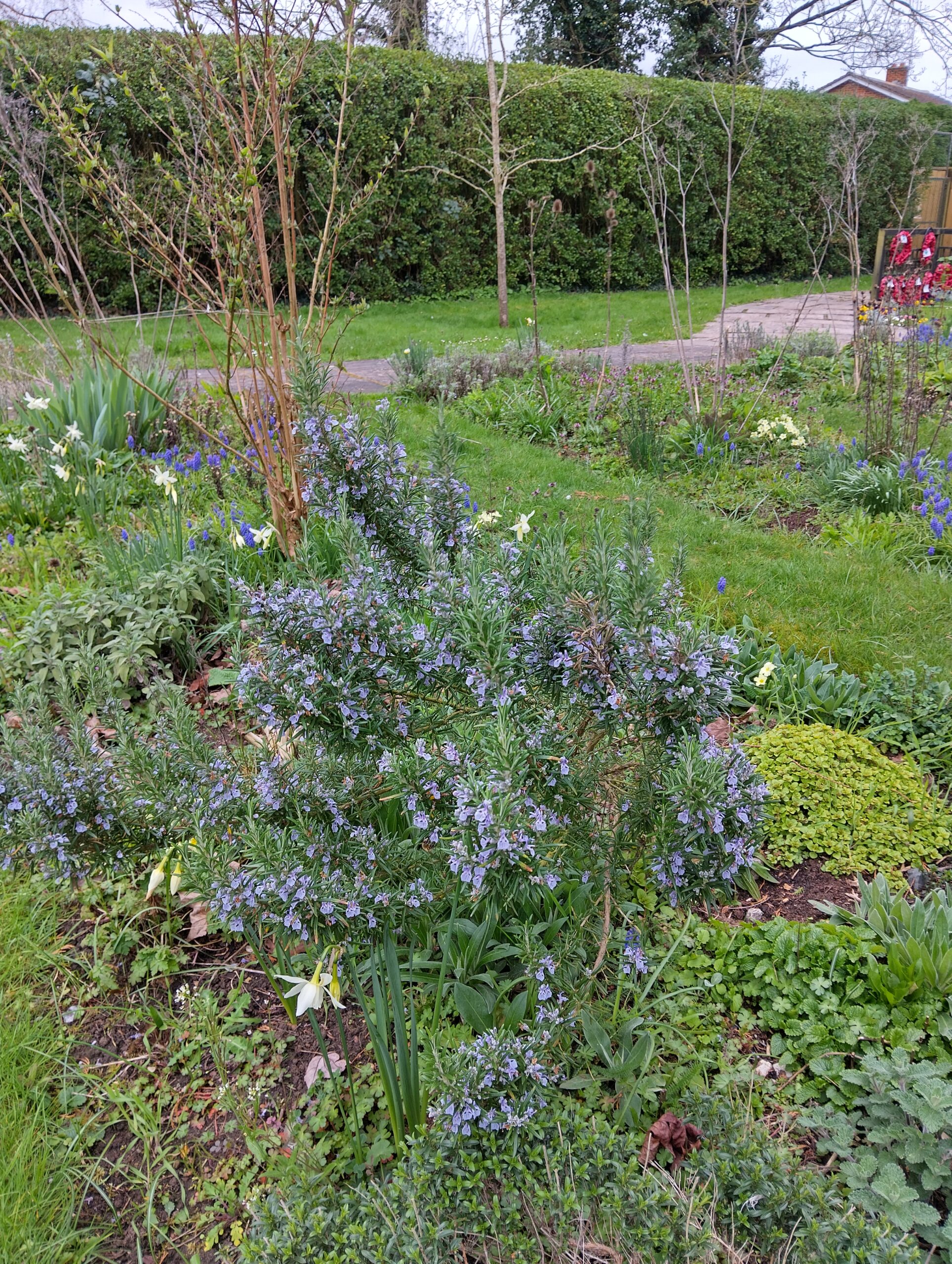
There are more flowers coming out all the time now – here are a few from this morning.

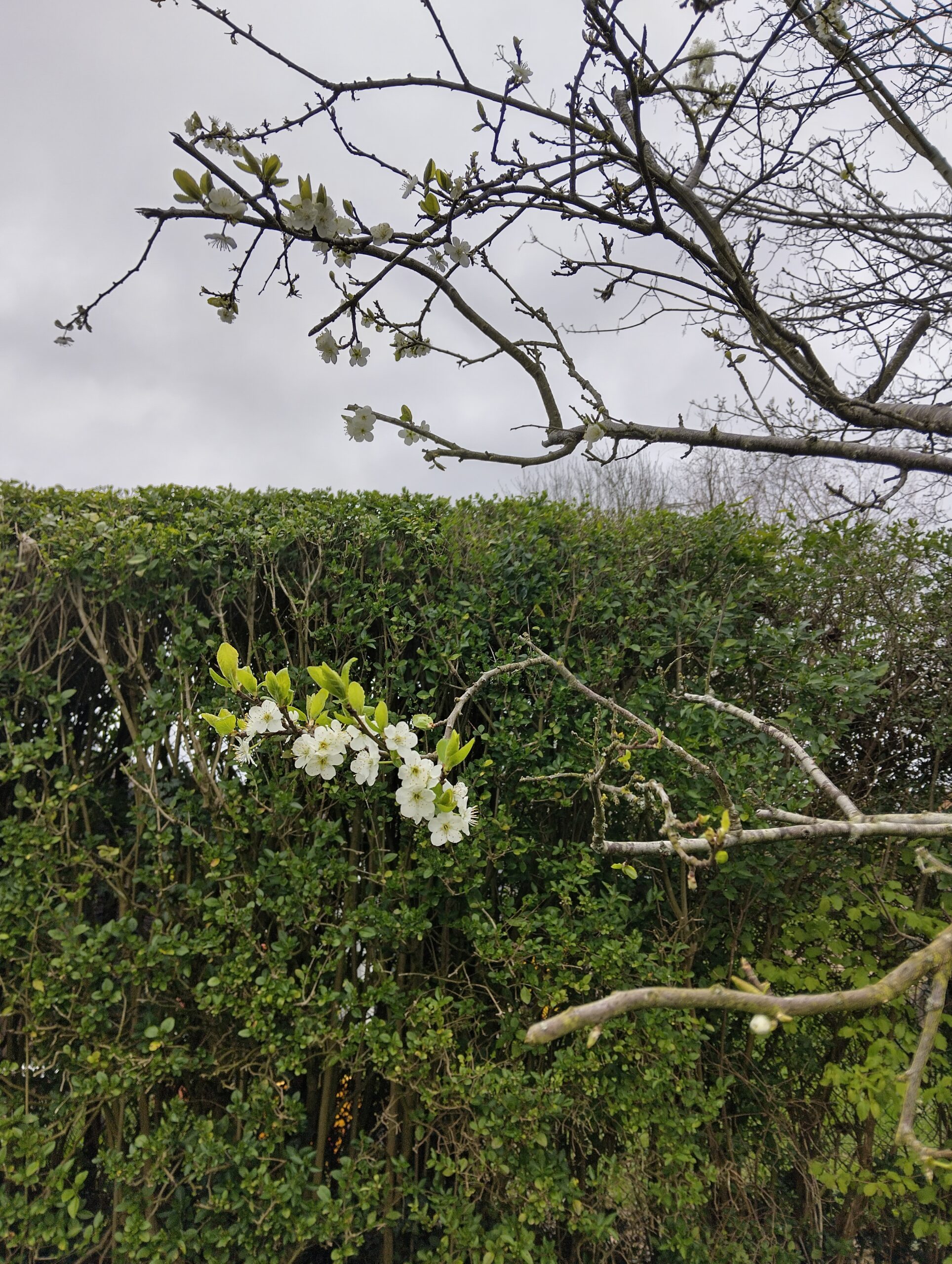
The plum blossom is pretty sparse, probably because the local wood pigeons could reach most of it.

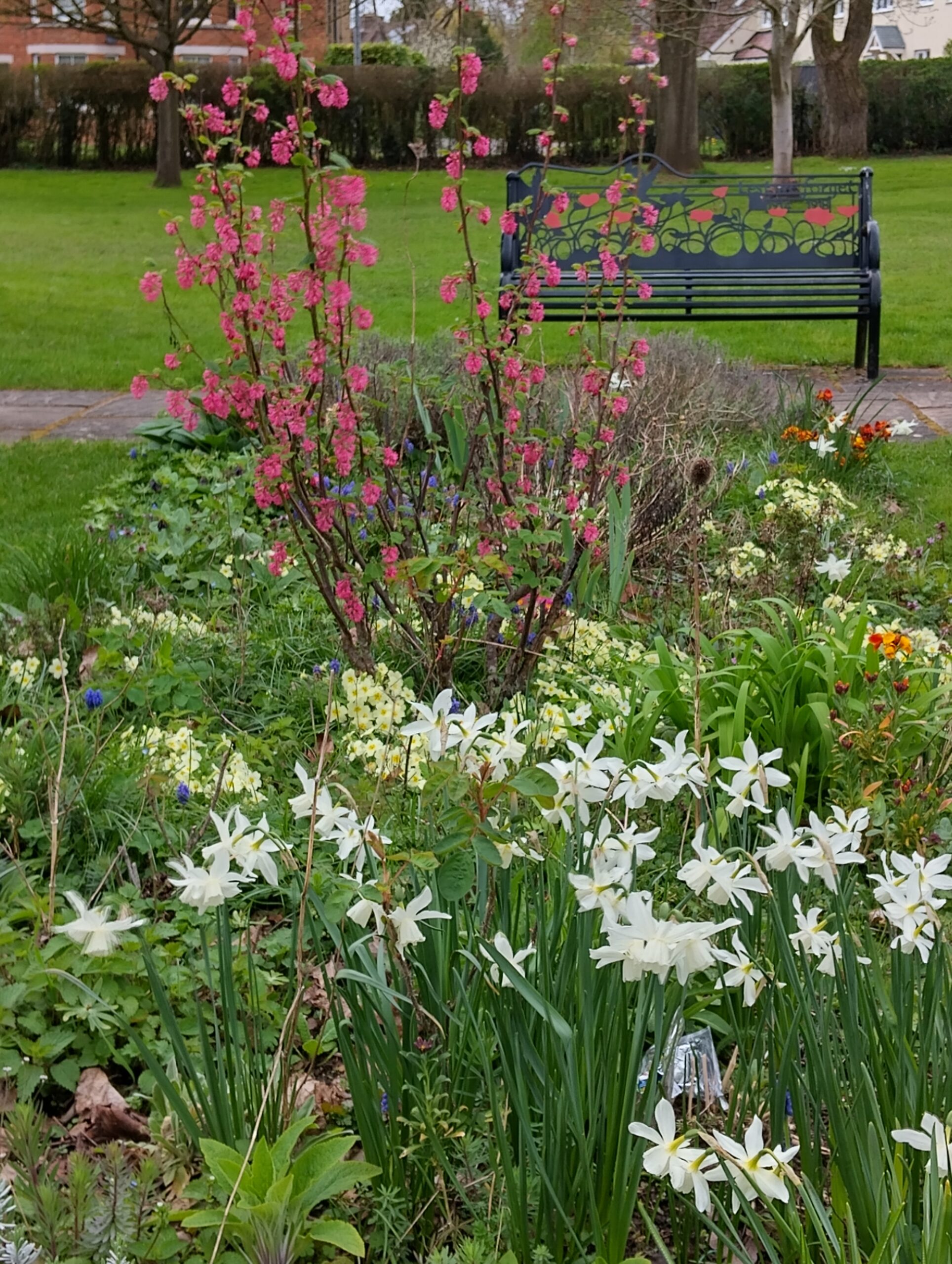
The flowering currant is dong well this year, as are the primroses we put round it some years ago. Over the years they’ve spread all over the gardens.

The hellebores have been flowering for a few weeks now, and the bees just love them.

The rosemary bush is in full flower, and it’s only March!

What have we been doing all winter?


19 March 2026

We haven’t posted much recently, but we’ve spent the long grey wet winter preparing the Gardens for this year’s flowers. There’s still plenty going on round at the gardens.
Now at last we’re seeing the sun, and seeing the effect on all the plants – not least the weeds, which have really started to grow. We’ll be starting to deal with over the next couple of weeks.And at last, we’re seeing the sun, and seeing the effect on all the plants – not least the weeds, which we’ll be starting to deal with them over the next couple of weeks.

A lot of what we do over the winter involves leaves and compost bins. When it’s not raining, we might be emptying one of the compost Daleks (bins) so we can turn the other bins into it; or we might be adding leaves to the leaf bin to make mulch – ‘black gold’ – to keep moisture in, and stop weeds growing.

And the Town Council’s Grounds Staff have added many large bags full of leaves to the bin – thank you very much! They’ll be put to good use.

We’ve also been nursing a lot of cuttings through the winter – it’s one of our main ways of increasing the number of plants here, without having to buy more. And when we grow our own, we know they haven’t had to be treated with pesticides to look good for sale, or with hormones to make them bloom earlier – neither of those are good for bees. They’ve had a tough time getting through this long wet winter, but they’re really beginning to take off now.

We’ve been asked a couple of times how we decide which weeds to take out, and which to leave – I’ll do a more detailed post on that in a week or so. But basically, what we’re doing now it trying to remove just those invasive plants that could be trouble later on, like ground elder, sheep sorrel, celandines and violets (lovely as they are, they run rampant and can choke other plants). We still want to leave a lot of ground cover for insects, for another couple of weeks till the soil warms up.

Then the fun bit starts, when we try to work out which seedling is a plant we really want, and which so isn’t!


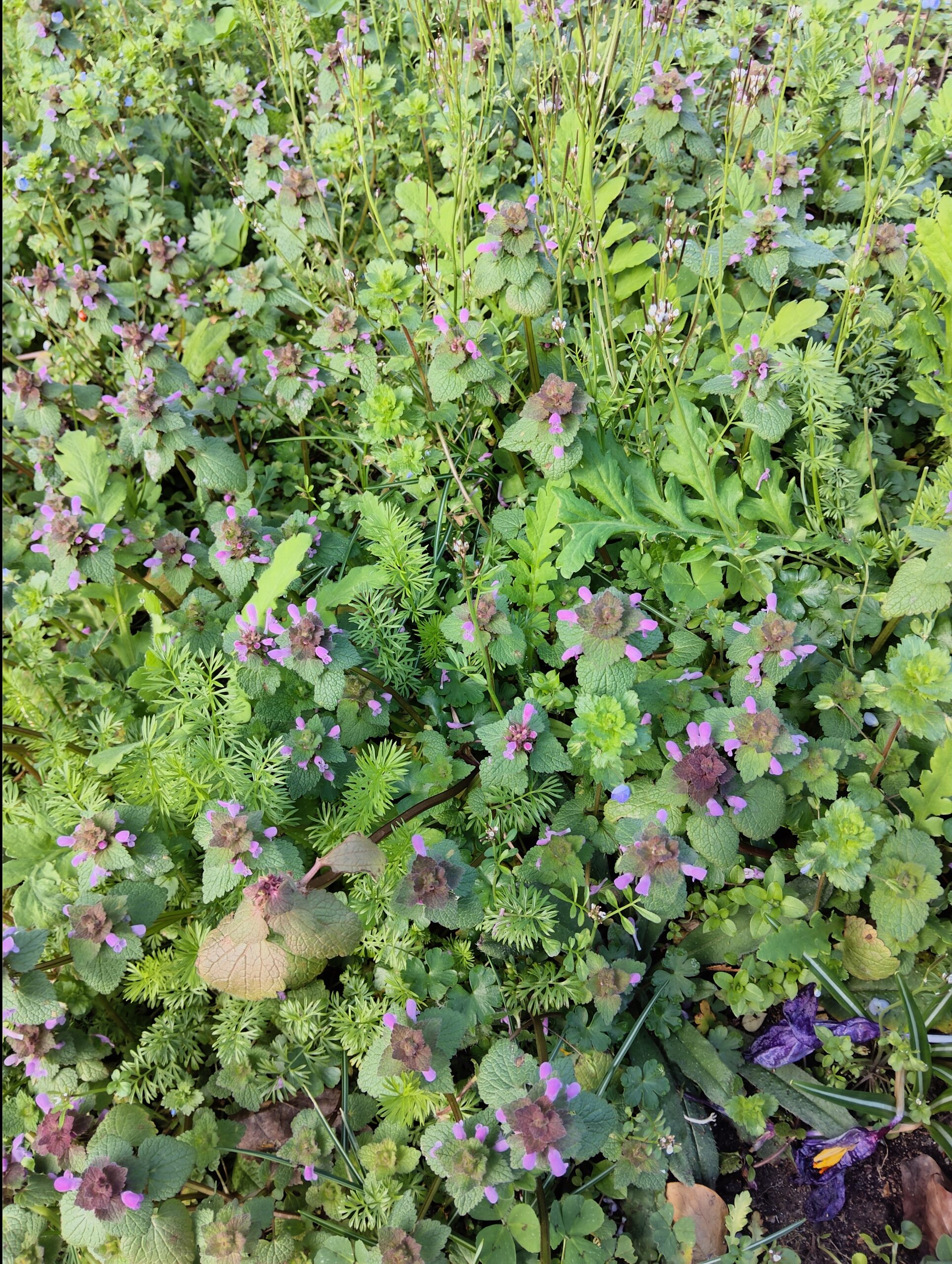
Sneak preview – here’s the first patch we’ll be untangling. A real haven for bees at the moment, they love red deadnettle as it’s full of nectar; but give it a couple more weeks, and it’d be a mess. That’s the balance we’ll be trying to sort out.

https://linsladememorialgardens.uk/2017/11

A few photos as spring arrives

12 March 2026

Here are a few photos of the Gardens, taken this week as primroses and hellebores take over from the winter aconites and crocuses.

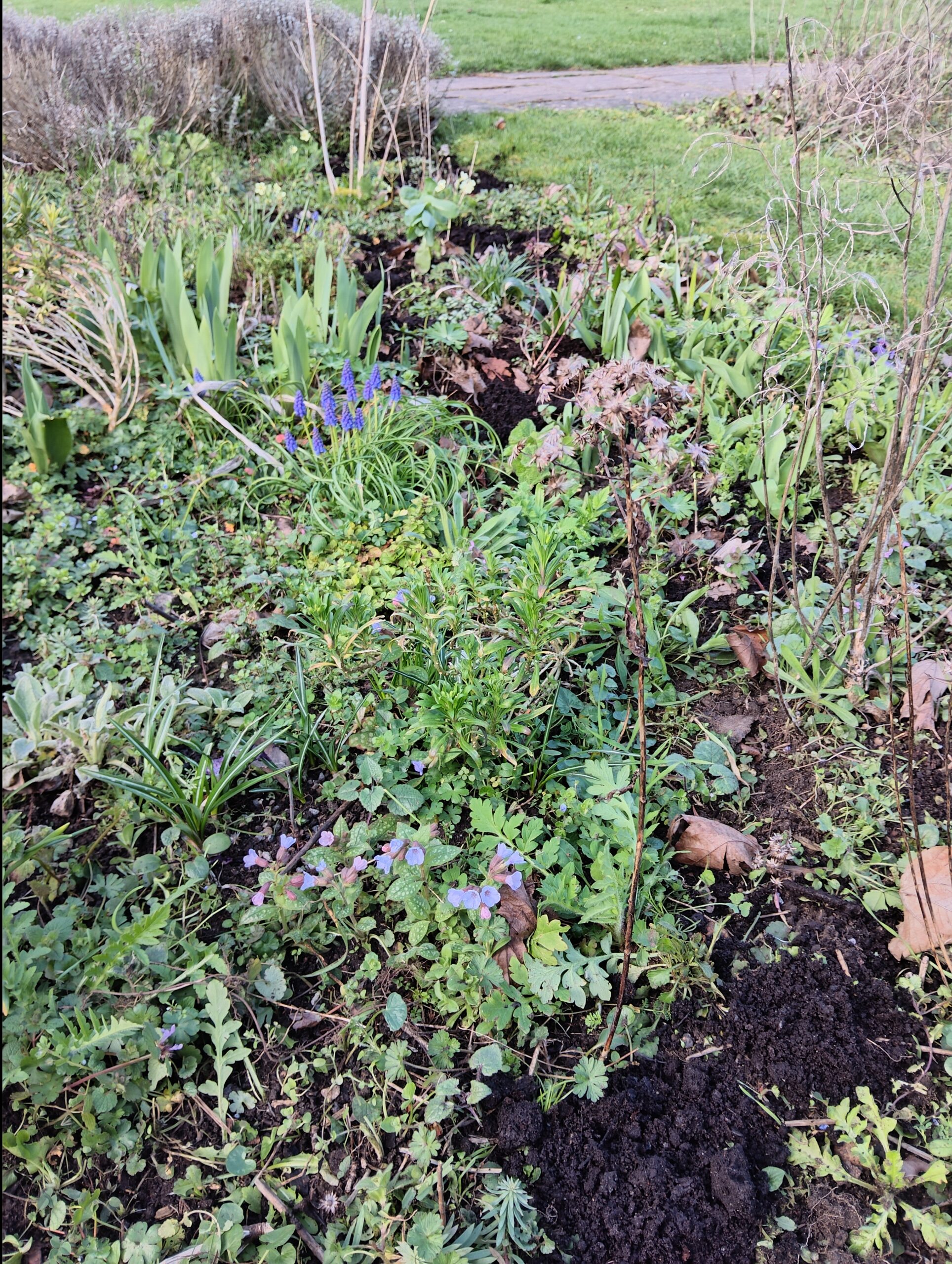
The crocuses don’t photograph well, which is a pity; over the last few years they’ve spread all over a couple of the beds. Bees are just starting to look for nectar and pollen, so it’s well timed! Here are a few photos of the other flowers in the garden at the moment:

The first flowers of pulmonaria and grape hyacinths – these two are real bee magnet flowers in early spring

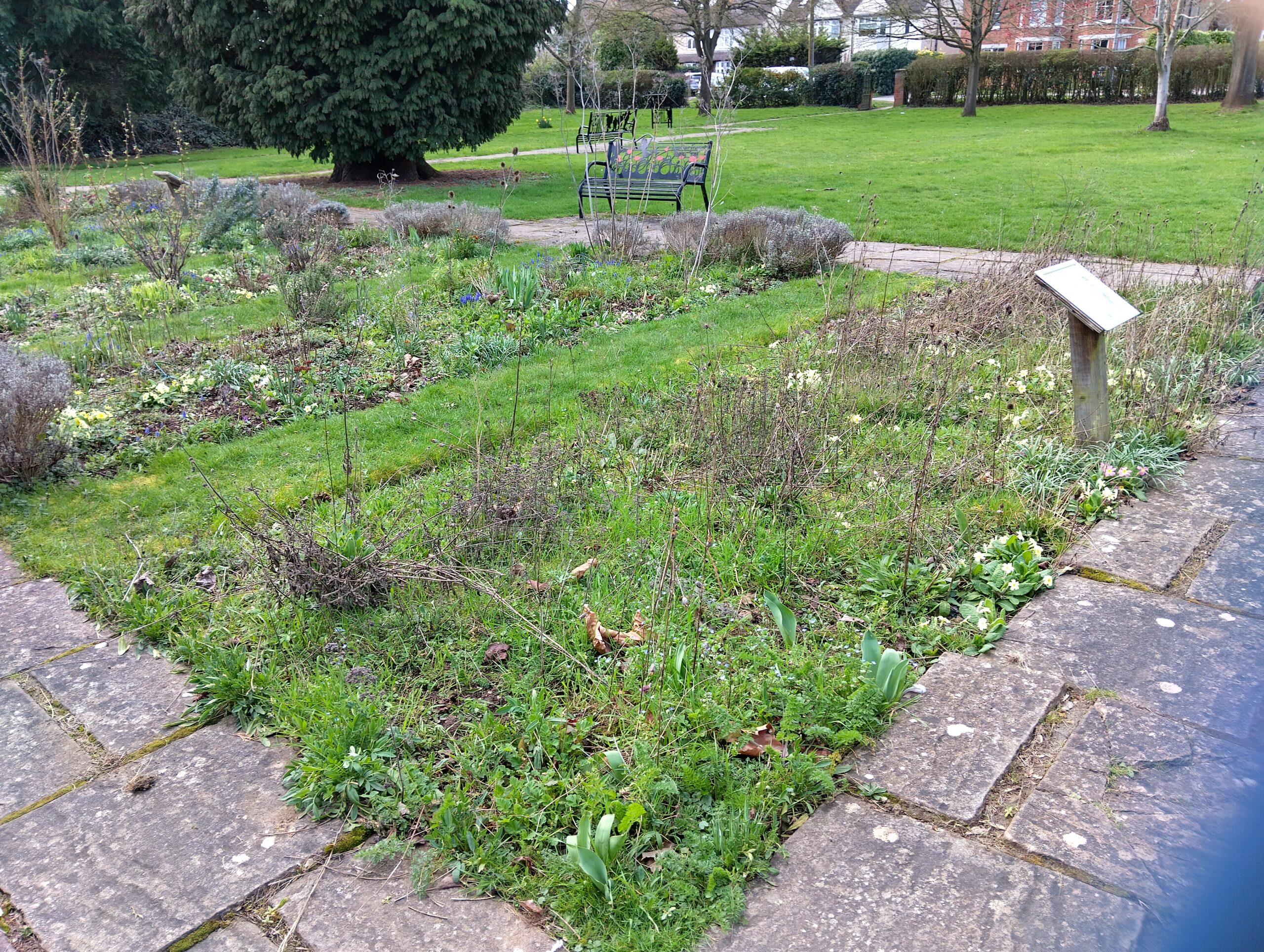
The primroses have spread all over the garden

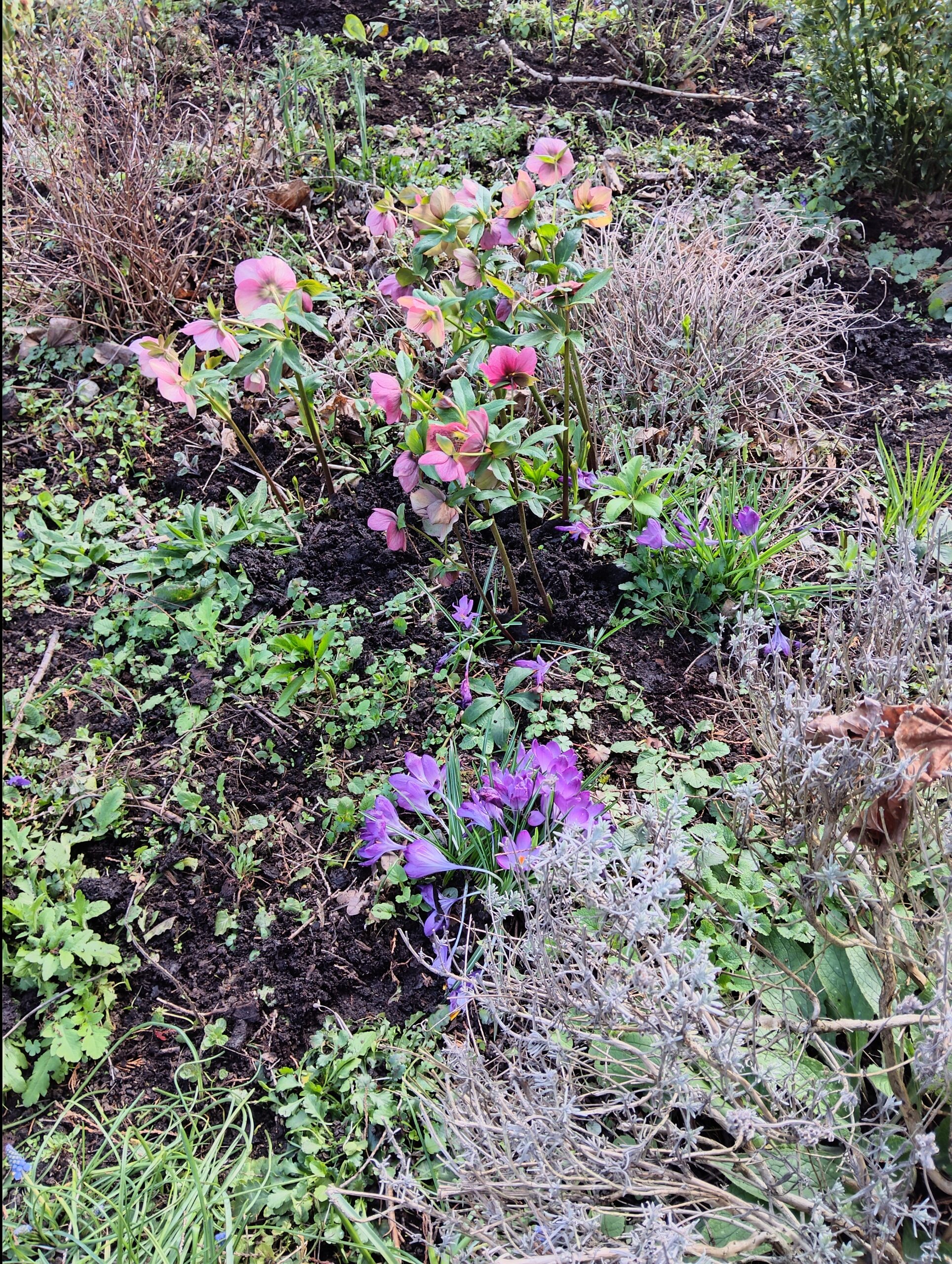
Hellebores and a clump of crocuses in one of the bottom beds

Protecting plants over winter

23 November 2025

A couple of blog posts ago [https://linsladememorialgardens.uk/2025/10/27/using-dead-leaves-in-the-gardens/] we mentioned that we’d be putting dead leaves directly onto the beds to protect plants over the winter. We’ve had a couple of sharp frosts this week; it was time to get started.

The frosts turn dahlia leaves and stems black and manky – not a good look for a public garden, and not particularly beneficial to insects for hibernation. So over the last couple of visits the team has cut them all down, added some of the dry stems from the wild flower bed and chopped them all up (to make them rot faster) and added them to the compost bins in the work area.

We’ve still left a lot of stems in the wild flower bed for hibernating insects, but leaving some airspace between the plants shows off the seed heads, and looks just a little more deliberate – and it gives us on-site Browns to add to the Greens that are (were?!) the dahlia stems. When we make compost we aim to have about the same volumes of Greens (leaves, stems, grass, coffee grounds) as of Browns (dry stems, broken-up sticks, cardboard, shredded paper, torn-up egg boxes). And we tear or chop things up so there are more broken surfaces, which rot down more quickly.

We emptied a few more bags of leaf mould over or round specific plants, then raked up a few trugs full of leaves from the grass and added them on top – this will help to protect the roots from the cold wet winter to come. A number of plants like dahlias and salvias can withstand frost, but they really hate cold, wet, poorly drained ground – which is exactly what we have here. Adding this extra organic matter should help; most of our dahlias have come back year after year.

Ready for Remembrance Day

07 November 2025

Ready for Remembrance Day

07 November 2025

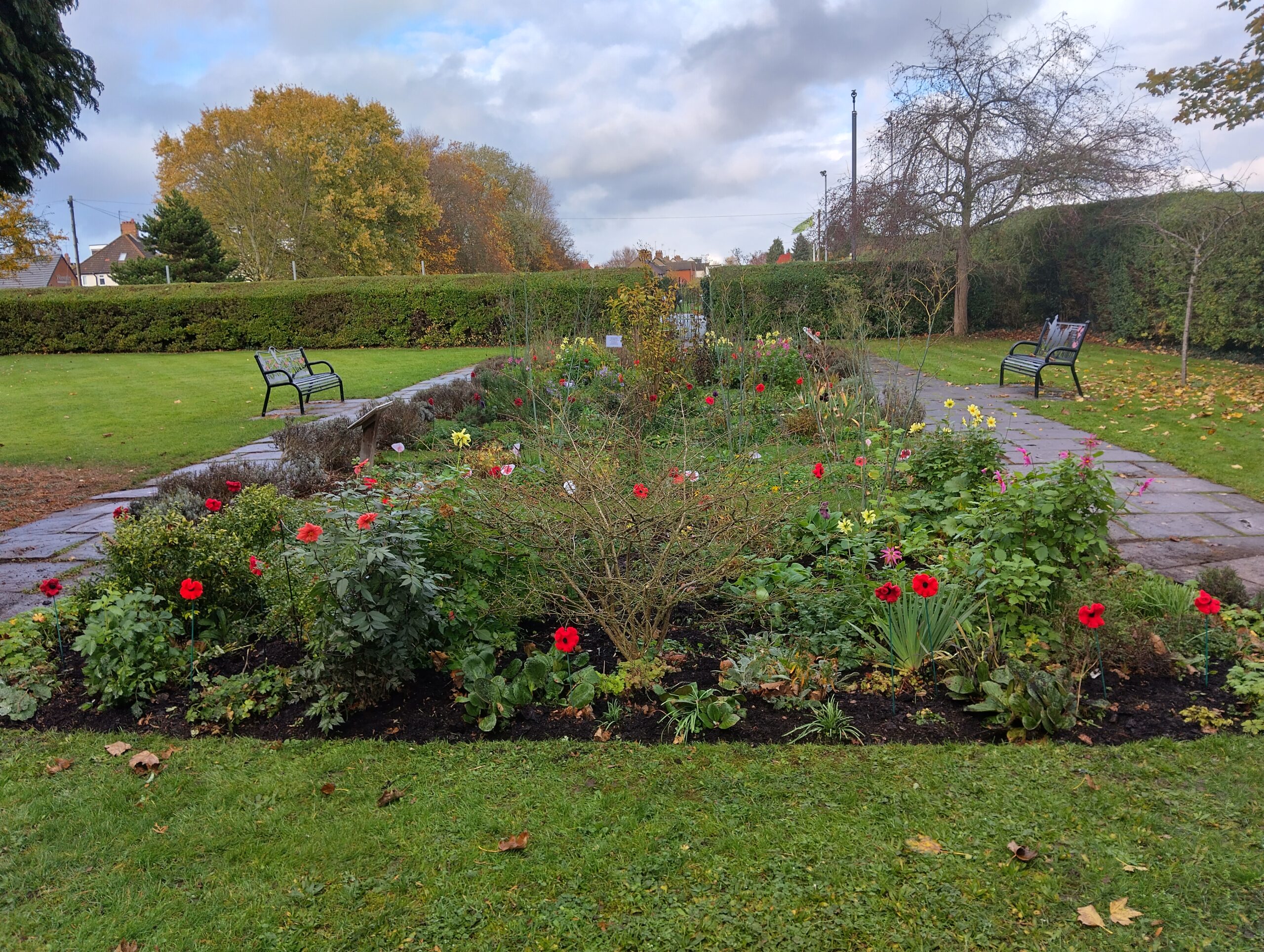
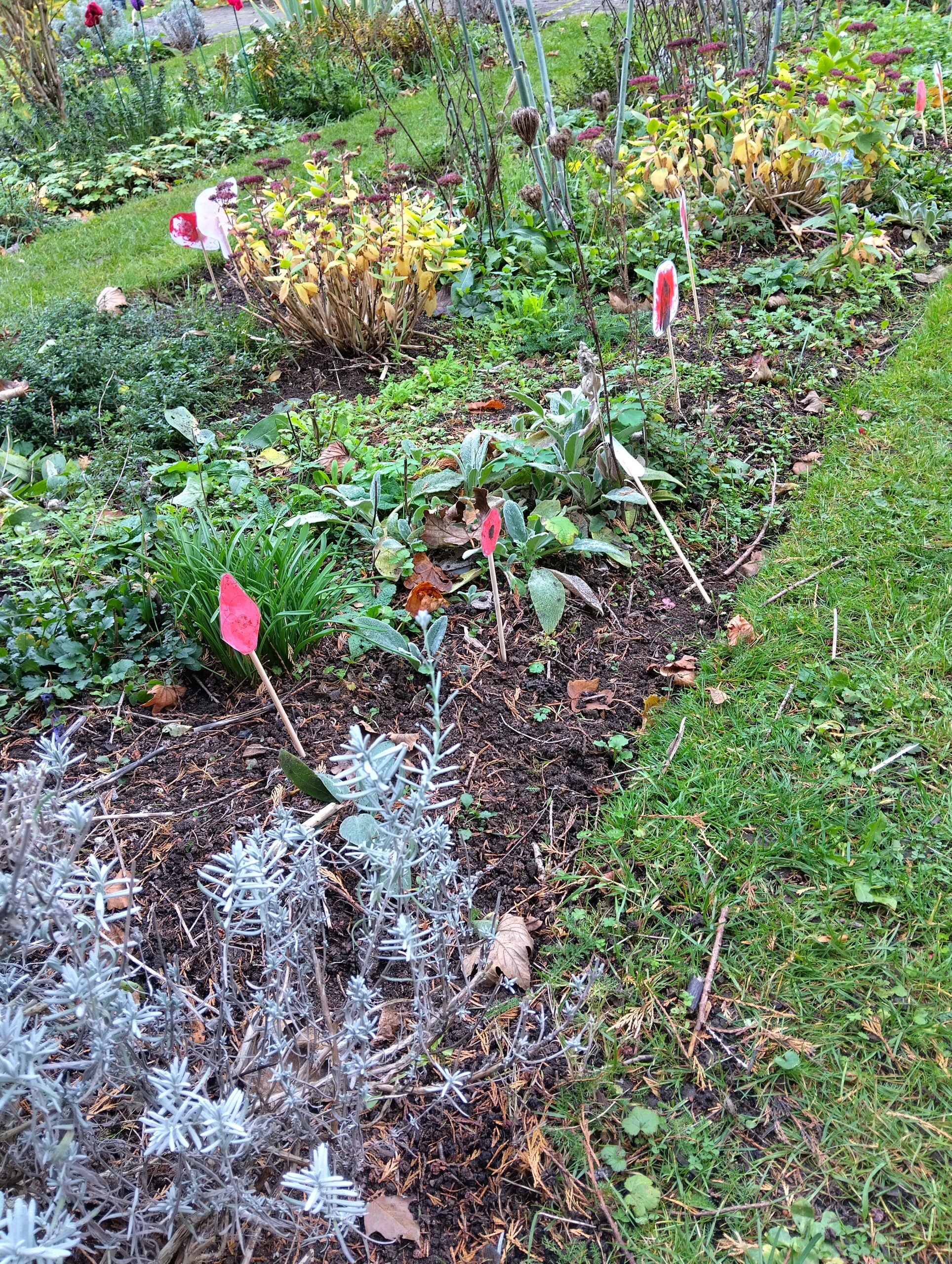
We put poppies out in the gardens this morning, and dressed the bottom bed with leaf mould.

It was good to arrive there this morning and find the children from Mentmore Road Under-Fives had already made poppies themselves and put them out in the their bed, so it seemed like a good idea to spread ours through the surrounding beds, to join them all up.

There’s an explanation here [https://linsladememorialgardens.uk/2024/10/ ]of the different coloured poppies mixed in with the red ones. We put out 61 red poppies – one for each of the names on the war memorial.

The Town Council’s panels of knitted poppies are also up now, on the frames at the back of the two flower beds next to the memorial:

This morning, we also dressed the bed nearest the memorial with leaf mould, so it looks particularly tidy ahead of the Royal British Legion’s Act of Remembrance on Sunday at about 12:45.

Sometimes we dress all the beds with leaf mould, to look smarter for Remembrance Day; but this year we had a bit of a dilemma. We’ve tried for years to get poppies to grow every year in the gardens – they like to grow in newly-disturbed soil, and there isn’t much of that round there any more. But we’ve kept sowing seeds in all the beds every spring and autumn, and last month we found a lot of tiny seedlings, in all the beds. If we cover them with leaf mould, they won’t grow! So we’ve compromised – we’ve managed to spread leaf mould round one or two of the larger poppy seedlings in the bottom bed, but we’ve left most of the poppies undisturbed, in the hope that they’ll thrive and flower next summer.

We hope that’s the right decision!