Tag Archives: leaf mould

Preschool peas on the way

7 April 2026

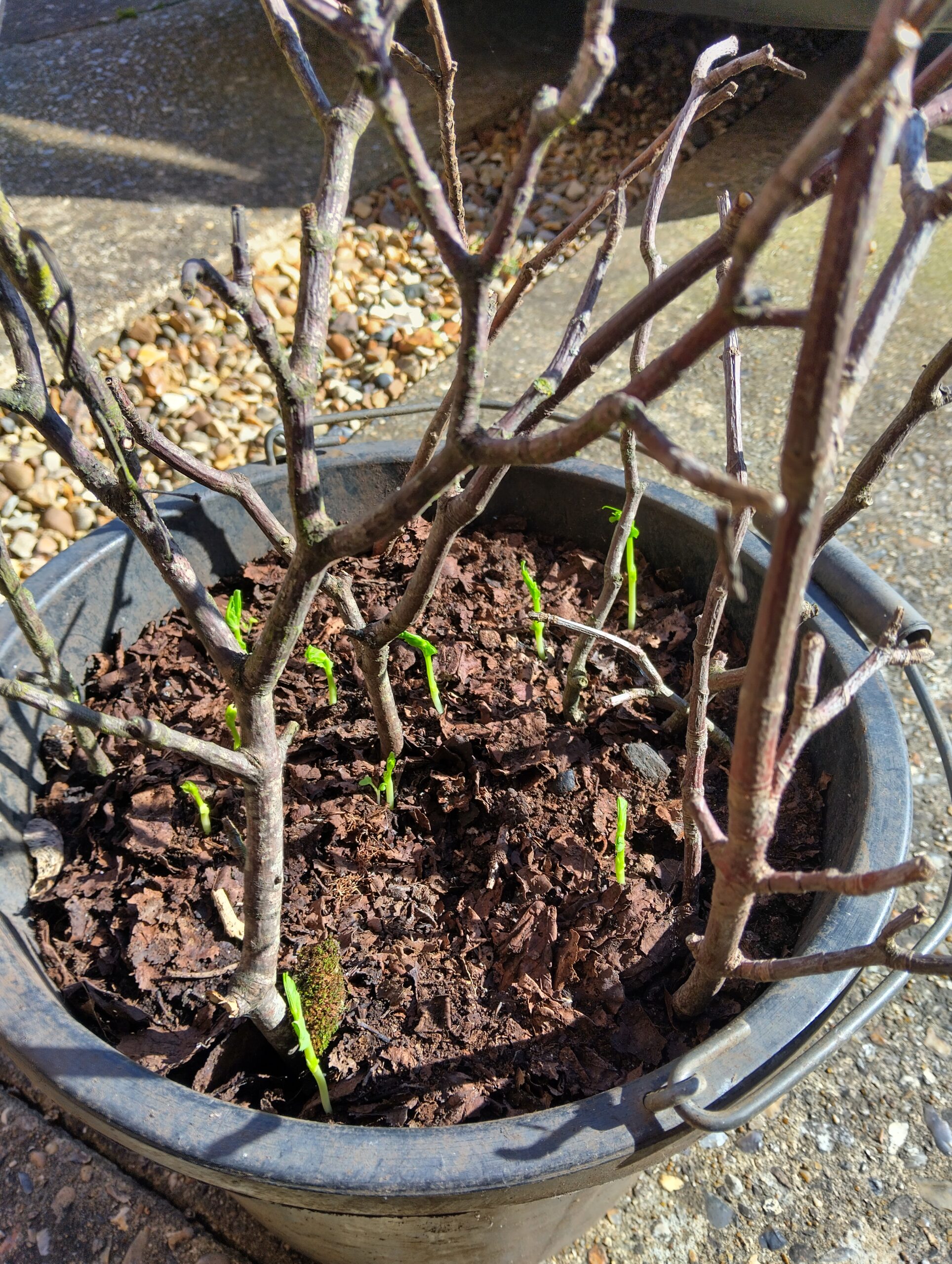
The children from the local preschool came round just before the end of term to sow a few peas; they’re just coming through now:

We’re not growing veg in their flower bed this year, as it hasn’t worked well. None of the available beds gets enough sun, and over the years it’s taken most of the compost we make just to improve the soil enough to grow a few baby carrots and peas.

The main problem is that we’d need to be watering three or four times a week in the hot, dry weather we tend to get now between April or May and July, when the peas would be ready. That’s not sustainable, either in terms of volunteer time, or the sheer amount of water needed to keep up with the way that large fir tree drains the beds. Much better to plant things that can cope.

But the children do love growing things they can eat! So this year, we’re experimenting with growing things in large containers (workmen’s buckets), with holes drilled in the bottom for drainage, and filled with a good rich mix of bought-in peat-free compost, home-made compost, and leaf mould. The children then sowed peas, topped up the container with leaf mould, and found sticks to put in to support the plants as the grow. Then the team can take the containers home to look after – much easier than trying to arrange watering visits – and bring them back for the children to see as they grow.

We’re going to do the same with radishes, carrots and probably lettuce. Watch this space!

What have we been doing all winter?


19 March 2026

We haven’t posted much recently, but we’ve spent the long grey wet winter preparing the Gardens for this year’s flowers. There’s still plenty going on round at the gardens.
Now at last we’re seeing the sun, and seeing the effect on all the plants – not least the weeds, which have really started to grow. We’ll be starting to deal with over the next couple of weeks.And at last, we’re seeing the sun, and seeing the effect on all the plants – not least the weeds, which we’ll be starting to deal with them over the next couple of weeks.

A lot of what we do over the winter involves leaves and compost bins. When it’s not raining, we might be emptying one of the compost Daleks (bins) so we can turn the other bins into it; or we might be adding leaves to the leaf bin to make mulch – ‘black gold’ – to keep moisture in, and stop weeds growing.

And the Town Council’s Grounds Staff have added many large bags full of leaves to the bin – thank you very much! They’ll be put to good use.

We’ve also been nursing a lot of cuttings through the winter – it’s one of our main ways of increasing the number of plants here, without having to buy more. And when we grow our own, we know they haven’t had to be treated with pesticides to look good for sale, or with hormones to make them bloom earlier – neither of those are good for bees. They’ve had a tough time getting through this long wet winter, but they’re really beginning to take off now.

We’ve been asked a couple of times how we decide which weeds to take out, and which to leave – I’ll do a more detailed post on that in a week or so. But basically, what we’re doing now it trying to remove just those invasive plants that could be trouble later on, like ground elder, sheep sorrel, celandines and violets (lovely as they are, they run rampant and can choke other plants). We still want to leave a lot of ground cover for insects, for another couple of weeks till the soil warms up.

Then the fun bit starts, when we try to work out which seedling is a plant we really want, and which so isn’t!


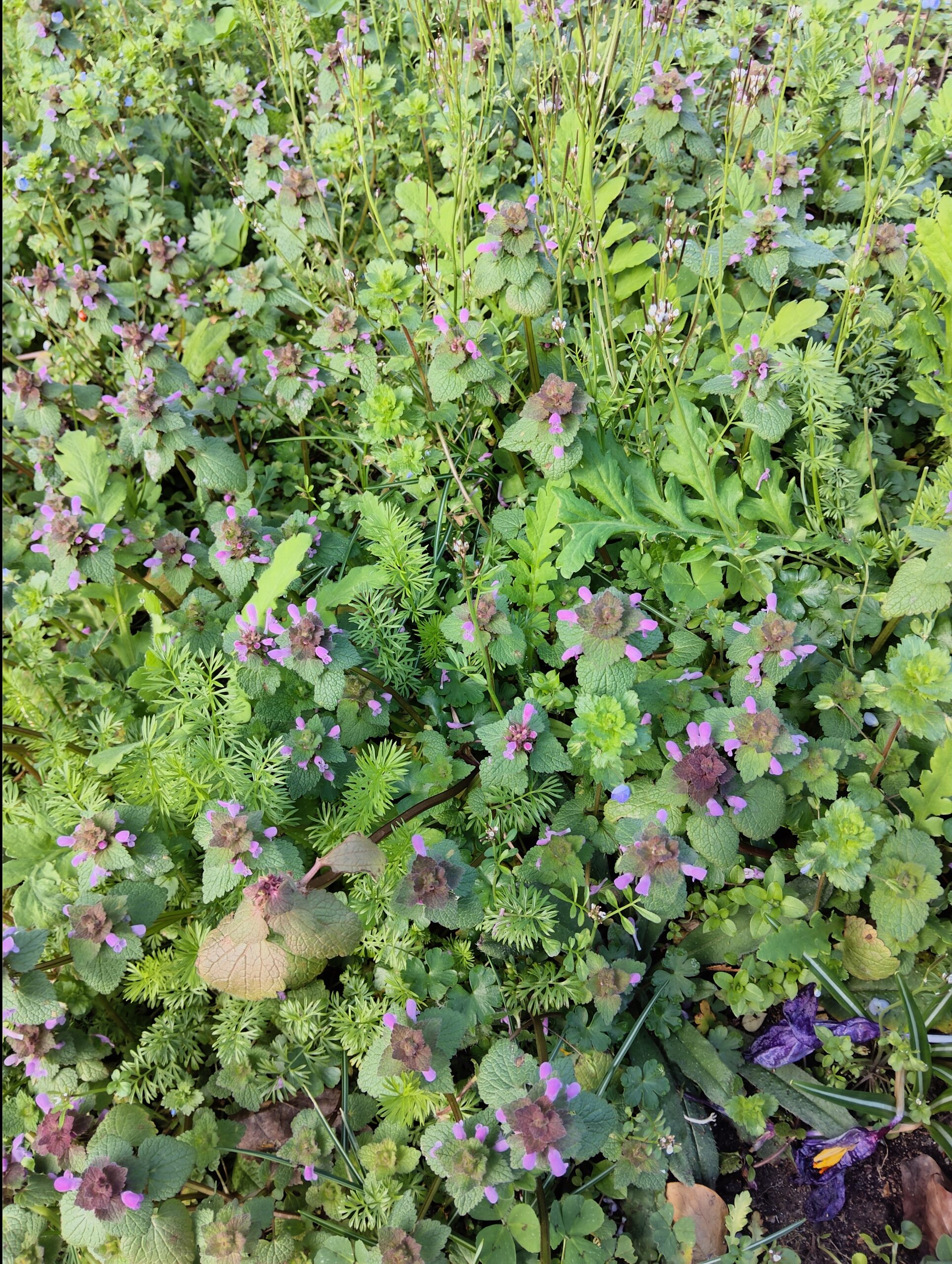
Sneak preview – here’s the first patch we’ll be untangling. A real haven for bees at the moment, they love red deadnettle as it’s full of nectar; but give it a couple more weeks, and it’d be a mess. That’s the balance we’ll be trying to sort out.

https://linsladememorialgardens.uk/2017/11

Protecting plants over winter

23 November 2025

A couple of blog posts ago [https://linsladememorialgardens.uk/2025/10/27/using-dead-leaves-in-the-gardens/] we mentioned that we’d be putting dead leaves directly onto the beds to protect plants over the winter. We’ve had a couple of sharp frosts this week; it was time to get started.

The frosts turn dahlia leaves and stems black and manky – not a good look for a public garden, and not particularly beneficial to insects for hibernation. So over the last couple of visits the team has cut them all down, added some of the dry stems from the wild flower bed and chopped them all up (to make them rot faster) and added them to the compost bins in the work area.

We’ve still left a lot of stems in the wild flower bed for hibernating insects, but leaving some airspace between the plants shows off the seed heads, and looks just a little more deliberate – and it gives us on-site Browns to add to the Greens that are (were?!) the dahlia stems. When we make compost we aim to have about the same volumes of Greens (leaves, stems, grass, coffee grounds) as of Browns (dry stems, broken-up sticks, cardboard, shredded paper, torn-up egg boxes). And we tear or chop things up so there are more broken surfaces, which rot down more quickly.

We emptied a few more bags of leaf mould over or round specific plants, then raked up a few trugs full of leaves from the grass and added them on top – this will help to protect the roots from the cold wet winter to come. A number of plants like dahlias and salvias can withstand frost, but they really hate cold, wet, poorly drained ground – which is exactly what we have here. Adding this extra organic matter should help; most of our dahlias have come back year after year.

Using dead leaves in the gardens

27 October 2025

We’ve just emptied the first bags of leaves into the leaf mould bin that we cleared a couple of weeks ago, it’s good to be back in that routine for a couple of months.

We’ll also be starting to empty bags onto the ground around plants soon, which keeps the soil covered and helps it hold moisture; it also makes the gardens look tidy ahead of Remembrance Day.

But a little later on we’ll also be putting leaves directly round many of the plants, to insulate the roots more by trapping air round them and keeping frost off them, and to provide more shelter for all the beetles and small creatures that have moved in over the decade we’ve been looking after these gardens. It’s a real balance between maintaining a wildlife-friendly garden, and keeping it looking tidy and respectful; and tucking dead leaves round plants doesn’t help the tidiness. So we wait till after the services, when everything’s dying back and the leaves don’t look out of place or scruffy.

These leaves will gradually rot down over the winter, adding organic matter to the soil, which will help it hold moisture – very important in the kind of summers we’re having now, with weeks on end without rain, with added heatwaves. This year we hardly had to water at all.

It’s been interesting to notice that mainstream garden writers and presenters are increasingly suggesting we put leaves directly round plants for the winter – what a long way we’ve all come since the general advice was to cut everything down and clear the ground for the winter. I seem to remember it was called ‘putting the garden to bed’ – well, I’d rather have a blanket over me when I’m in bed, and a blanket of leaves seems to suit plants better, too!

It’s that time of year again!

12 October 2025

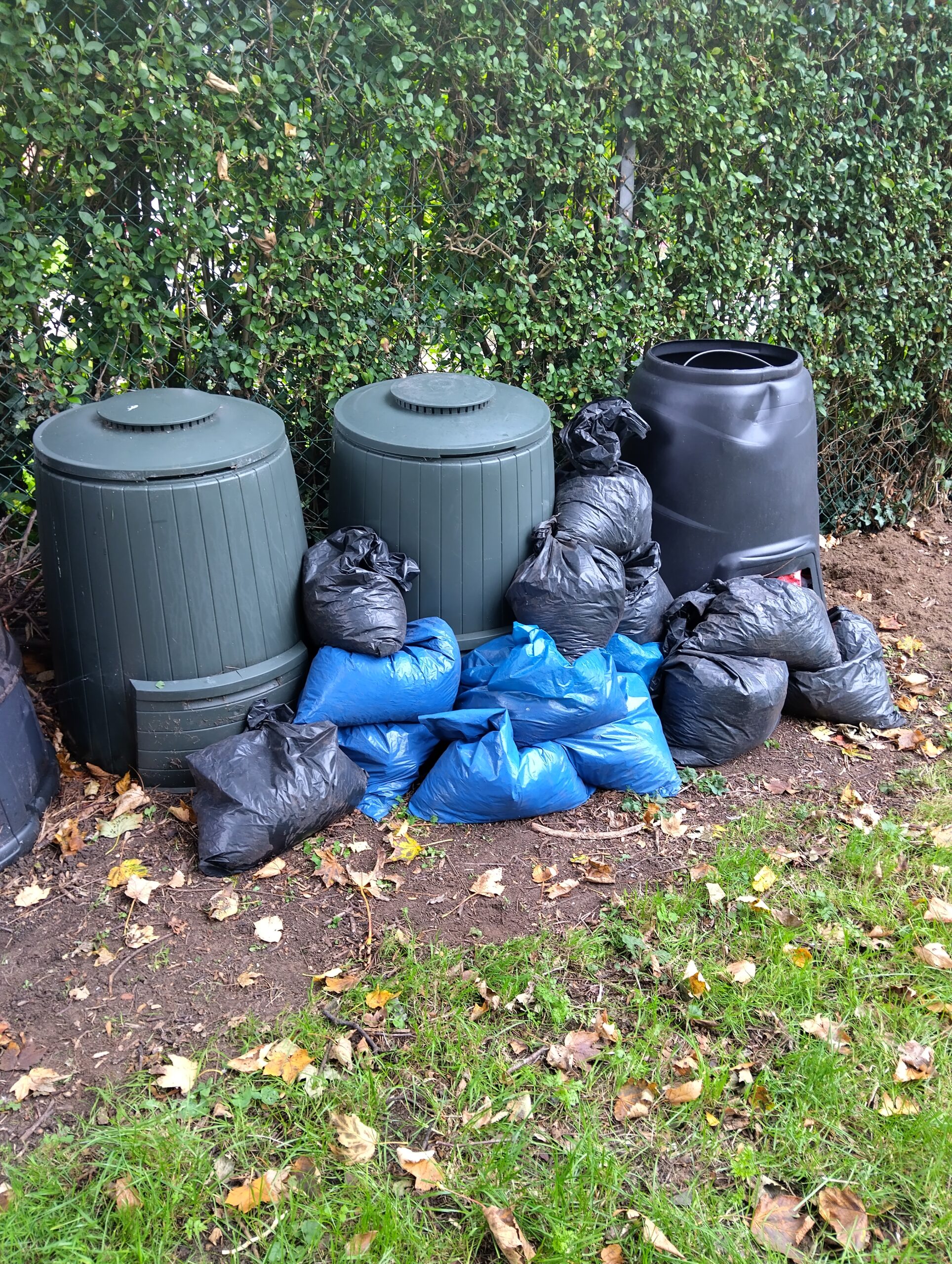
It’s nine years since we started collecting bags of leaf to make leaf mould. Originally we just emptied them into Dalek-type composters like these:

but we soon found we needed to construct a much larger bin, with two 2-metre cube compartments – one to collect that year’s leaves, and one to let the leaf mould rot down for a further year.

And now it’s that time of year again – if you’d like us to collect bagged-up leaves, drop us an email or message us on Facebook and we’ll come and pick them up and add them to the bin. We emptied it this morning, it’s all ready and waiting:

Gardening with the children from the local preschool

27 May 2019

 We’ve started trying to meet up more often with the children from Mentmore Road Under-Fives, as we all enjoy it and they remember things better after a couple of weeks than after a month! – particularly when they’ve been sowing seeds. This year they sowed peas in pots – getting the multipurpose compost into the pots was all part of the fun – and they’ve been out much more often to water them than we managed last year.

A couple of people who themselves run community gardens have asked for any advice about gardening with very young children. I wouldn’t say we’re experts! But from trial and error, we’ve found that watering is probably the very favourite activity, with digging around in earth or leaf mould a close runner-up.

For watering, we’ve learned a number of things that make it easier and more fun –using child-sized watering cans (ours were a couple of pounds each from the local Homebase) and having fewer cans than the number of children, it’s much easier to keep an eye on the children that way (water travels fast, and soaked feet / t-shirts / other children spoil the event for everyone). We only fill them half full, because that makes turns come round again faster, and there’s less water to be spilled. We’ve found that the newer children, the two- or three-year-olds are pretty good at waiting for just one or two other children to empty their cans before it’s their own turn. A couple of things that make a difference, that we’ve learned over time – 1) if the tap’s quite a way away, bring plenty of water over before the children arrive as it keeps one more adult in the mix for longer – we now take four ten-litre water containers round to the garden (because that’s what our wheelbarrow will hold comfortably) and fill them from the tap before the children arrive. Also, it’s much easier to fill tiny watering cans from one adult-sized watering can than directly from the containers.

Sometimes the children bring their own watering cans!

This last week we also thought of something for the children to do while waiting for their turn. We have a lot of leaf mould that we’ve gathered over the last couple of years, and store in our work area round the back; we bring in a compost-bag of this and decant some into a trug, then have the children sieve it into another trug. We can get four children round one trug comfortably, with room for adults to help too. Then when their friends have watered bits of the garden, they go along and put leaf mould out round the plants, like tucking in the plants under a blanket. This keeps the moisture in for longer, and keeps weeds down, too.


Mind, towards the end of the session we  let them just throw the leaf mould onto the flower beds, well away from the paths – most of it falls on the earth anyway, and any that doesn’t get shaken down pretty quickly. And they love it!

Supplying some of our sister sites – Bossard House in West St (2)

27 May 2019

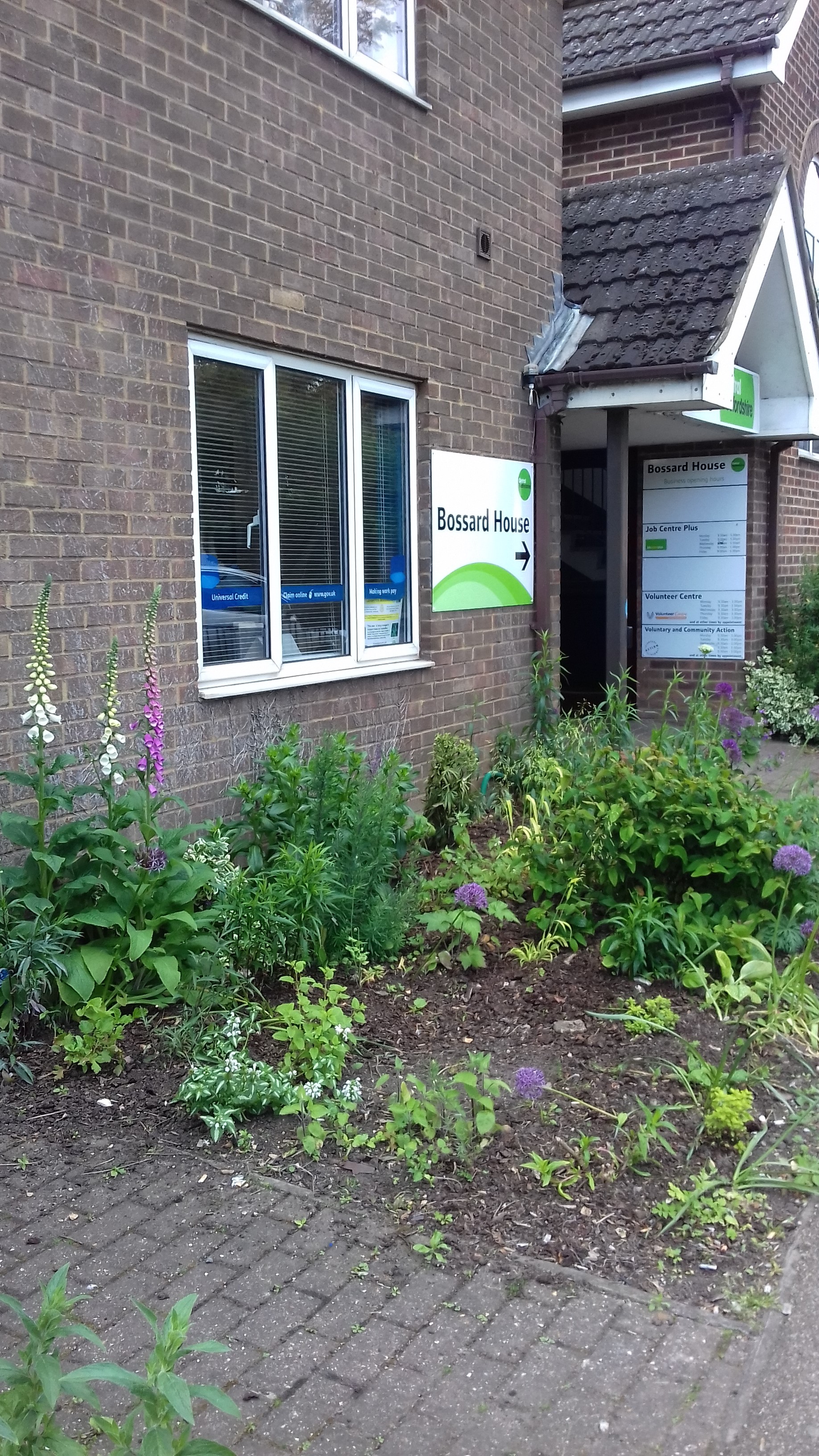
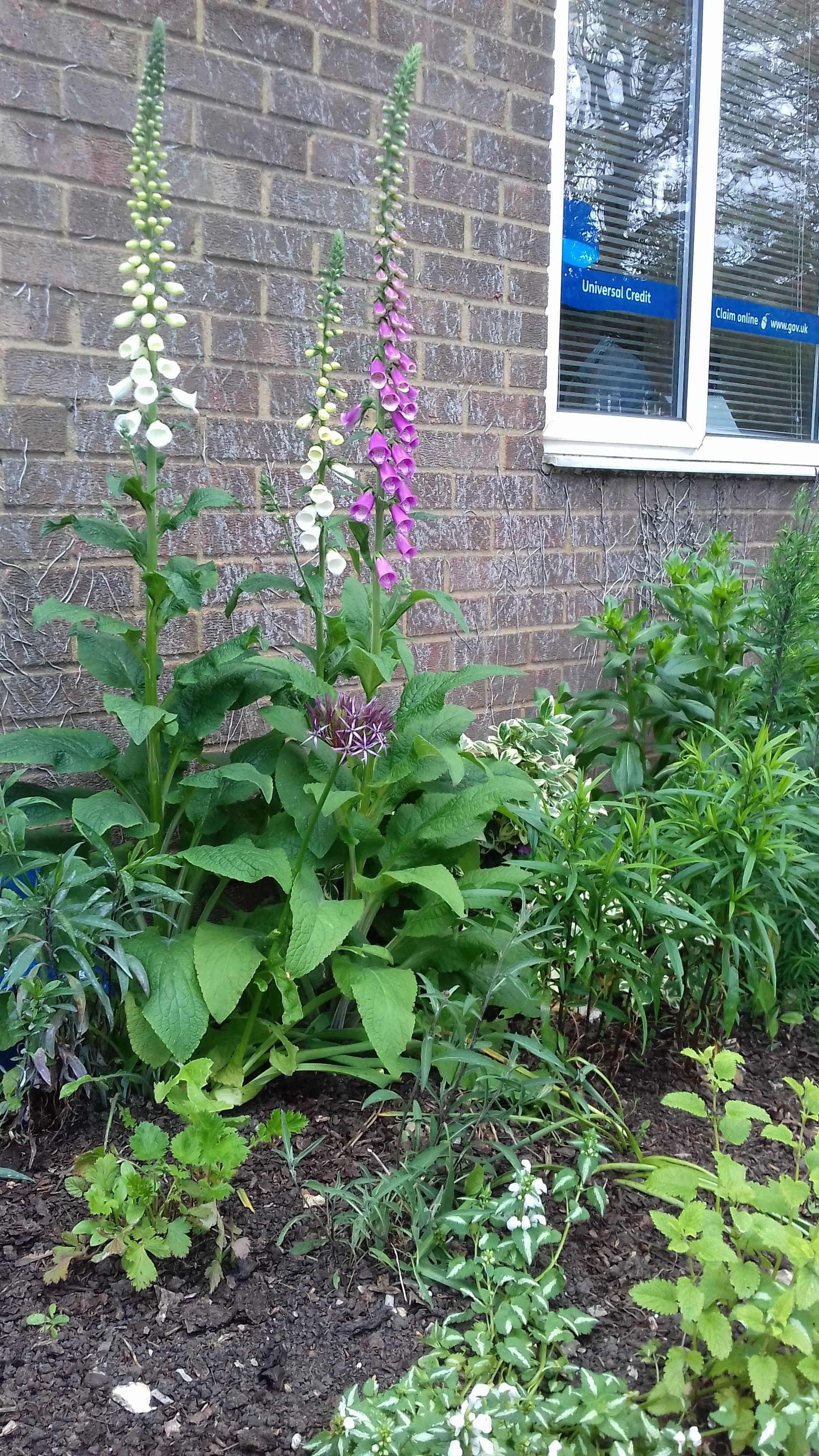
The alkanet began to take over, and while it looks really pretty in early spring, with its fresh green leaves and brilliant blue flowers, it’s one of the favourite foods of the scarlet tiger moth, which shreds its leaves – very good from an environmental point of view, less so in terms of how it looks. The plant also suppresses many other plants, so we’ve gradually removed it to take somewhere more appropriate, to replace it with other wild flowers to keep the site looking good all year.

This spring we’ve also added more of these wild flowers, as well as a few non-native plants that work well in an area of naturalistic planting like this one, such as raspberries, to give some height and structure (and bees just love them!), purple toadflax, geranium macrorrhizum, Michaelmas daisies and bugle. All of these were propagated from plants that had become congested at the Memorial Gardens. We also donated some seedlings of Bowles’ Golden Grass from one of our gardens, via the Pocket Park by the station, another of our sister sites. In this case, it’s not so much a source of nectar and pollen for bees, as the kind of habitat some of them need for nesting, as several species nest in clumps of long grass, including that one.


And so it continues – we’re now potting up some rudbeckia for a couple of months for autumn colour; we’ll plant it out in a couple of months when it’s developed a good root system, as that means we won’t have to spend so much volunteer time watering new plants to get them established.

And the last thing we’ve been able to share is some of our leaf mould, thanks to hours of work by the Memorial Gardens team and much-appreciated contributions of sacks of leaves from Leighton Buzzard Narrow Gauge Railway and many other residents and gardeners. We now have enough for any of our bee-friendly sites around Leighton Buzzard that need it – generally, we don’t improve the soil at all in wild flower areas, but at sites like this one, we need to add organic matter without adding the fertility that comes with compost or manure. We make sure the ground’s wet, then just put the leaf mould on top (not digging it in even with a trowel, as that disrupts the soil structure), and it starts holding in moisture at once and keeping weeds down by shutting out the light they need to germinate. Then worms start pulling it into the ground, and doing the hard work for us!

What has been really nice for us has been the appreciation of members of staff, who said they’d enjoyed watching what we’ve been doing, and they really like it!


Earthworms!

Earthworms!

15 March 2019

 Following on from the last post – it’s still been too cold for the children to sow any seeds, so when they wanted to come and help this week, we decided to go on an earthworm hunt. Over the last couple of years we’ve gradually increased the amount of organic matter in the soil by mulching (covering) it with layers of compost, when available, and leaf mould. The idea was to help the soil hold water better – very necessary last year in that long drought – and to help increase the many microoganisms that help make nutrients available to plants, and generally do a lot of our work for us. We thought it would also have increased the number of earthworms in the preschool bed, making it very likely they’d find some.

So last Monday, we again had two children helping to push a spade down into the bed, then pull backwards (with a little help from an adult holding the handle), so that a lump of earth rose out of the ground on the spade, and split slightly open to reveal a few wriggling earthworms inside it. Then we lowered it to the ground, and they dived in to find them, the bravest of them picking them up, the rest enjoying watching one on my hand. And once again, I’d thought they’d enjoy the digging and rifling through the soil, but I had no idea how entranced they’d be, just with the lump of ground rising up on the spade – there’s nothing like gardening with three-year-olds who are seeing these everyday things for the first time, for making you see them as wonderful, too.

And then they just wanted to dig until it was time to go back to the pavilion; some of them dug the earth along the edge of their bed, while a couple of others took turns to throw leaf mould from the trug onto the ground, which will help us repeat the cycle all over again.

In theory, we don’t dig the ground in the gardens, as it’s much better not to keep breaking up all the mycorrhizal fungi and bacteria under the surface; but this an exception that’s really worth making, just to watch the children’s delight in their gardening.

A long hot summer

02 October 2018

It’s nearly three months since we managed to post on this blog; I’m sorry for the long silence. This summer has really taxed us, with much more watering than usual both at the gardens and on our own allotments and the other gardens we look after. There’s been a knock-on effect too, as we couldn’t move any plants or try and establish new ones during the drought and unusual heat, so there’s been a backlog of work which we’re only just getting done. And now we’re running straight into the leaf-collecting season – though for the first batch we had help from the local preschool, who had a great time on Monday helping load leaves into bags (and run through them, and run around with those big-hand leaf collectors which a couple of the boys felt made them into mini Incredible Hulks).

Our original plan for this year was to consolidate the planting, and to try and reduce volunteer hours as we’d just be maintaining the gardens, rather than rescuing them from the invasive plants like white clover and self-heal which were choking the beds when we took over. This year, we said, we’ll just be able to do a bit of deadheading and move a couple of plants that would be happier in other places, and perhaps add a few more plants that we’ll have grown ourselves.

Well, along with the bit of deadheading we’ve had to do much more watering – we usually try to water as little as possible, partly so as not to waste a valuable resource, and partly because plants grown ‘hard’ (with all they need, but not overfed or overwatered) seem to thrive better. But we did end up watering many parts of the beds with a hose five times in the last five months, and using watering cans for specific plants that weren’t sufficiently established before the heatwave started. These include the five new roses, which need a proper soaking every week for the first year or so even in normal weather, to encourage their roots to get down into the soil; so we’ve given each of them a couple of cans of water every week. At least the thick mulch of leaf mould we put on in May has helped keep what moisture there is deep in the soil, and watering most of the gardens once a month is probably not too bad for this year.

We didn’t manage to sow many hardy annuals as the ground was just too dry and we’d have been watering them every couple of days, though we did raise a few tomato plants with the preschool (and the fruits are just beginning to ripen now). Their peas and carrots didn’t survive the heat, though, and we’re rethinking what we do in their bit of the garden – for a start, we’re adding more herbs and some lamb’s ears (Stachys byzantina) as they love the smells of rosemary, mint and fennel, and the softness of the lamb’s ears leaves.

At least with the combination of heat that stopped many weeds from germinating, and mulch that kept light away from those that were there, we haven’t needed to weed the beds since July, just before the In Bloom competition this year. We had a lovely sunny day for the judges’ visit, with the preschool children out in force demonstrating just how much they love watering anything and everything. The whole team came along, too, including our invaluable Duke of Edinburgh’s award student Miles, who’s helped us so much this year.

And in September we heard that Leighton Buzzard had been awarded 12 Golds, 2 Silver Gilts, and two ‘Best in the region’ awards (for Linslade Wood and for the Tactic youth project). The gardens are part of Mentmore Road park, which was one of the sites awarded a Gold – it’s good to know we’re all on the right track!
Dead leaves

 7 July 2018

We’ve been asked a couple of times why there are so many dead leaves on the flower beds at the moment.

They’re there for two reasons; the first is that we’re using them as a mulch, to try and keep moisture in the soil, while adding more organic matter without overfeeding the beds. We recycle all the material we take off the beds as compost, which we add to the beds in autumn to increase soil organic matter, which in turn helps the soil retain more moisture, as well as feeding it. We don’t have any compost available yet, but we clearly needed to do something to make the most of whatever water we’re putting on the beds as it’s been so much hotter and drier than usual, and the heatwave started so early – we’d only just got used to the fact that the freezing wet winter and spring had finally given way to summer!

So even though we wouldn’t expect to be able to use leaves for a year or two after we’ve started a leaf mould bin, we did start rifling through our new bin in the work area behind the Memorial Gardens to see if enough leaves had rotted sufficiently to be put out on the beds to help keep in any moisture there is in the ground. We’d put quite a few new plants in, grown from seed or from cuttings, and we weren’t able to water them every day to establish them; this way we can water them just once or twice a week while they establish. We hope it doesn’t look too untidy! The mulch is making a real difference, everything looks much fresher than we’d expect in this heat and drought, and most plants are still growing on well. We’d still like a few good heavy showers, though!

And the second reason? It’s a great substitute for bare earth when you’re three years old and want to just dig something with a trowel. Last week when the children from the local preschool came over to help us water, we dug up some of the potatoes they’d planted before Easter and found that their second favourite activity (after watering) was digging with a trowel. Problem – there isn’t enough clear soil to let them dig. Solution – we filled a large flexible trug with leaf mould, put it next to the flower beds, and let them dig it out and put it on the earth around the plants, and let them get on with it. Result – happy children and some very well-mulched flower beds!