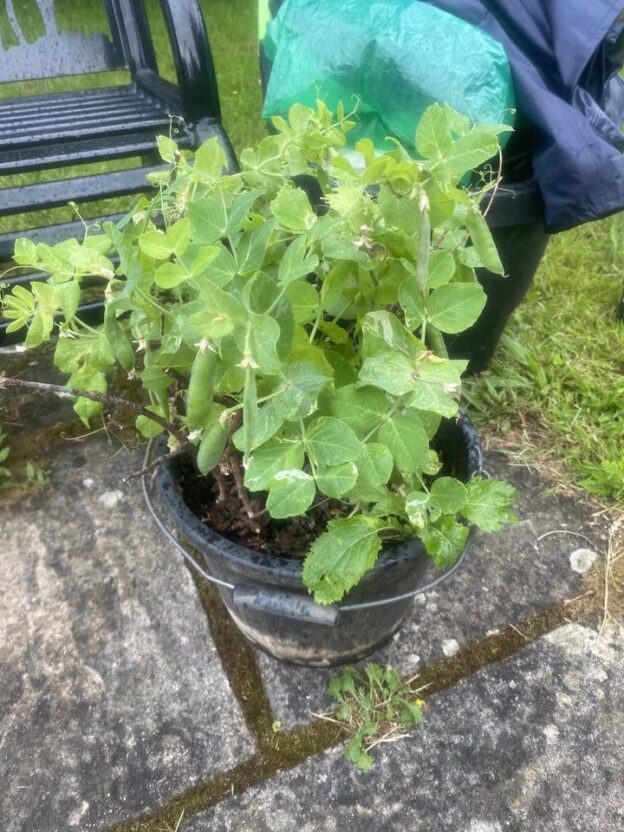
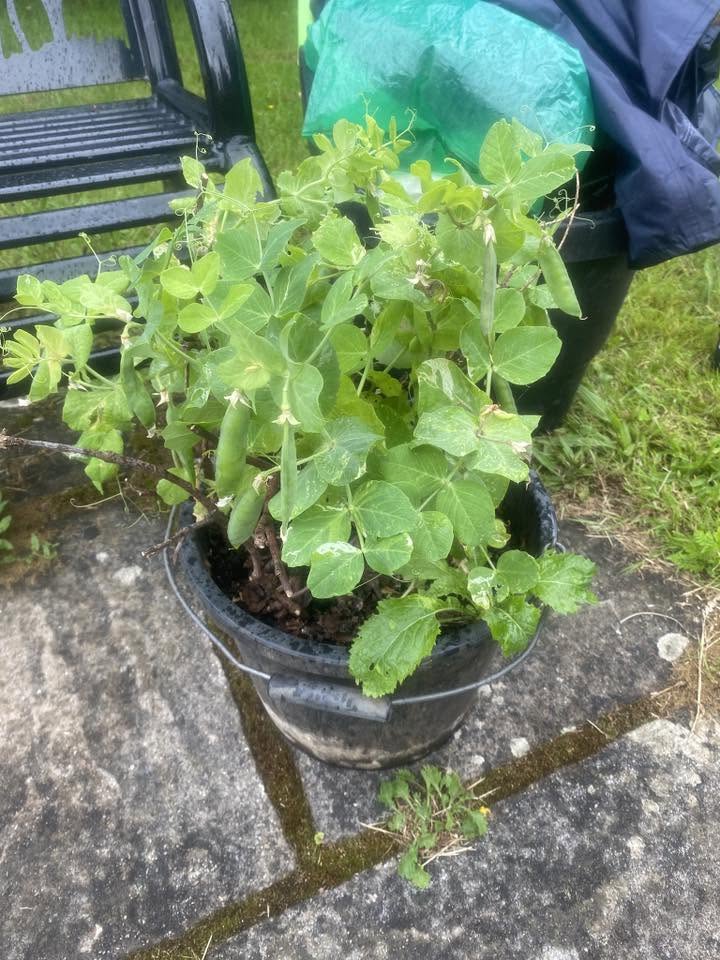
Sorry it’s been such a long time since the last blog post – in fact, there’s been time for the peas to grow, flower, and fill the pods with peas.
Peas!
Unfortunately the children hadn’t been able to come round when we were working there over the last few weeks, so this is the first time they’ve seen their plants since they first came through the soil; but it was worth waiting for.
We took the bucket of peas round to the gardens and met some of the children there, where they picked some of the pods and discovered that small raw peas are very tasty. They left some for their friends back at the Pavillion, too.
We’ll do this again next year, with two or three buckets. It’s much more successful when members of the gardening team can look after the plants when they’re in their own gardens.
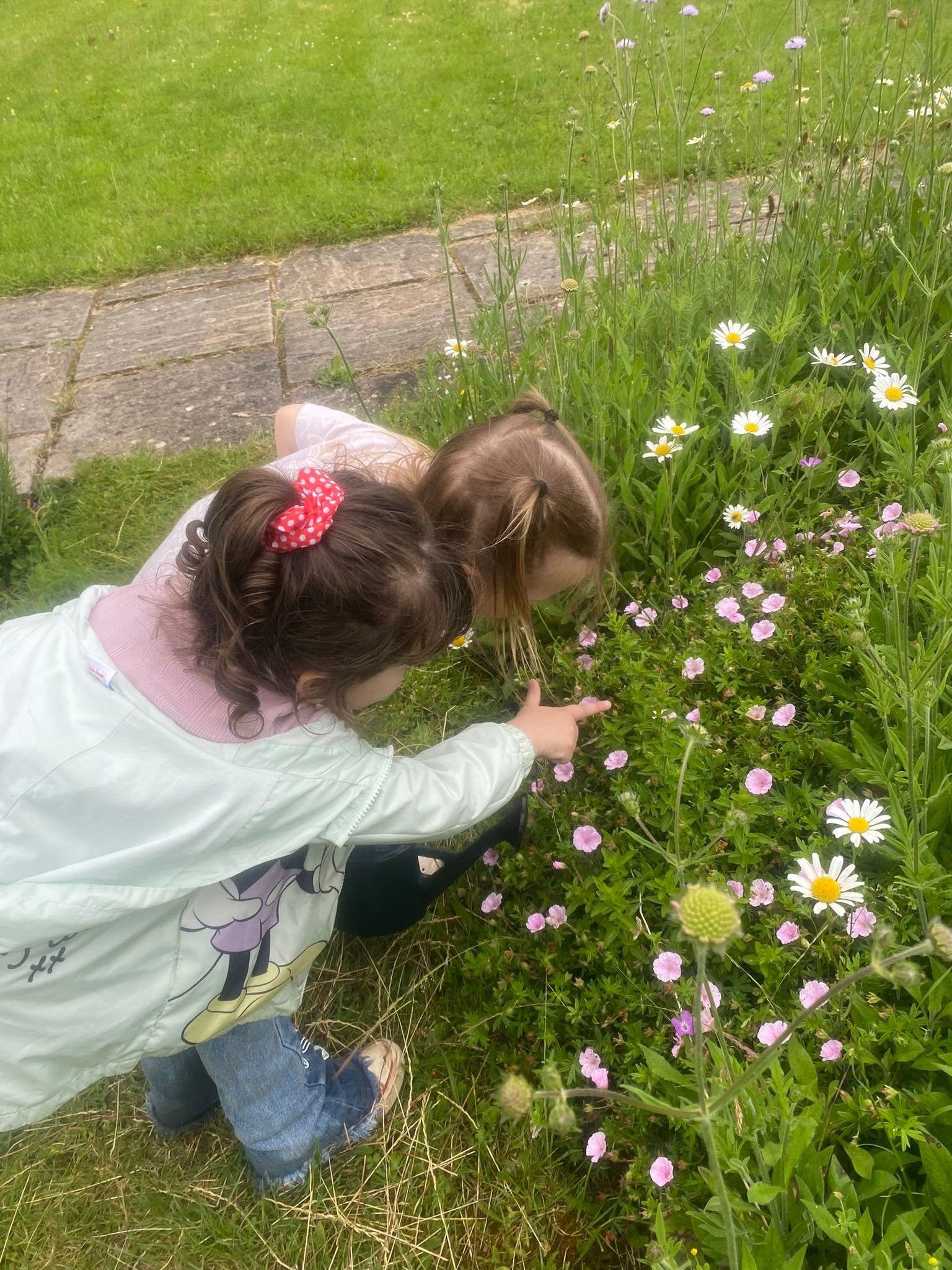
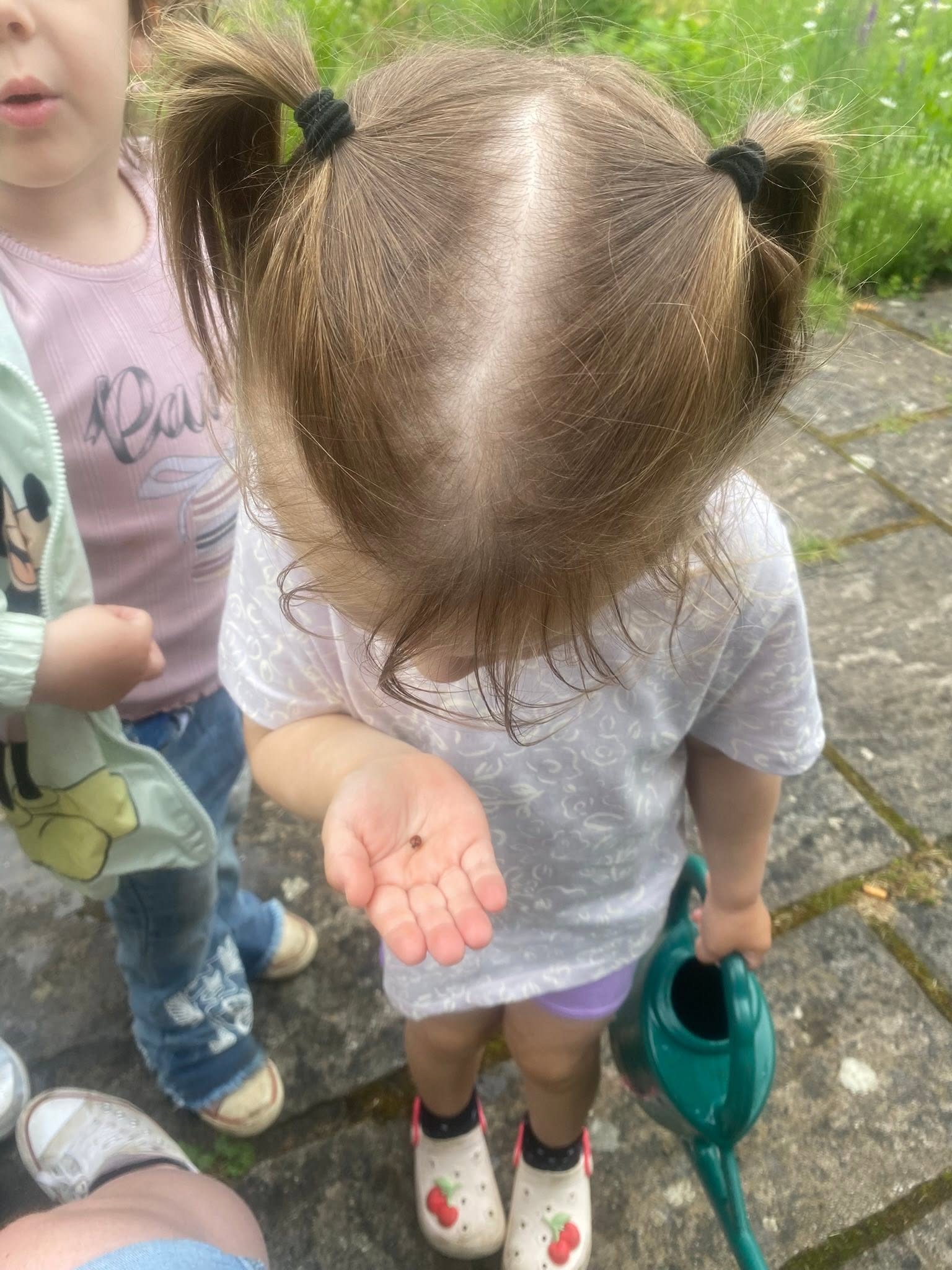
Some of the children went searching for ladybirds, and found quite a few:
Checking for ladybirdsFound one!
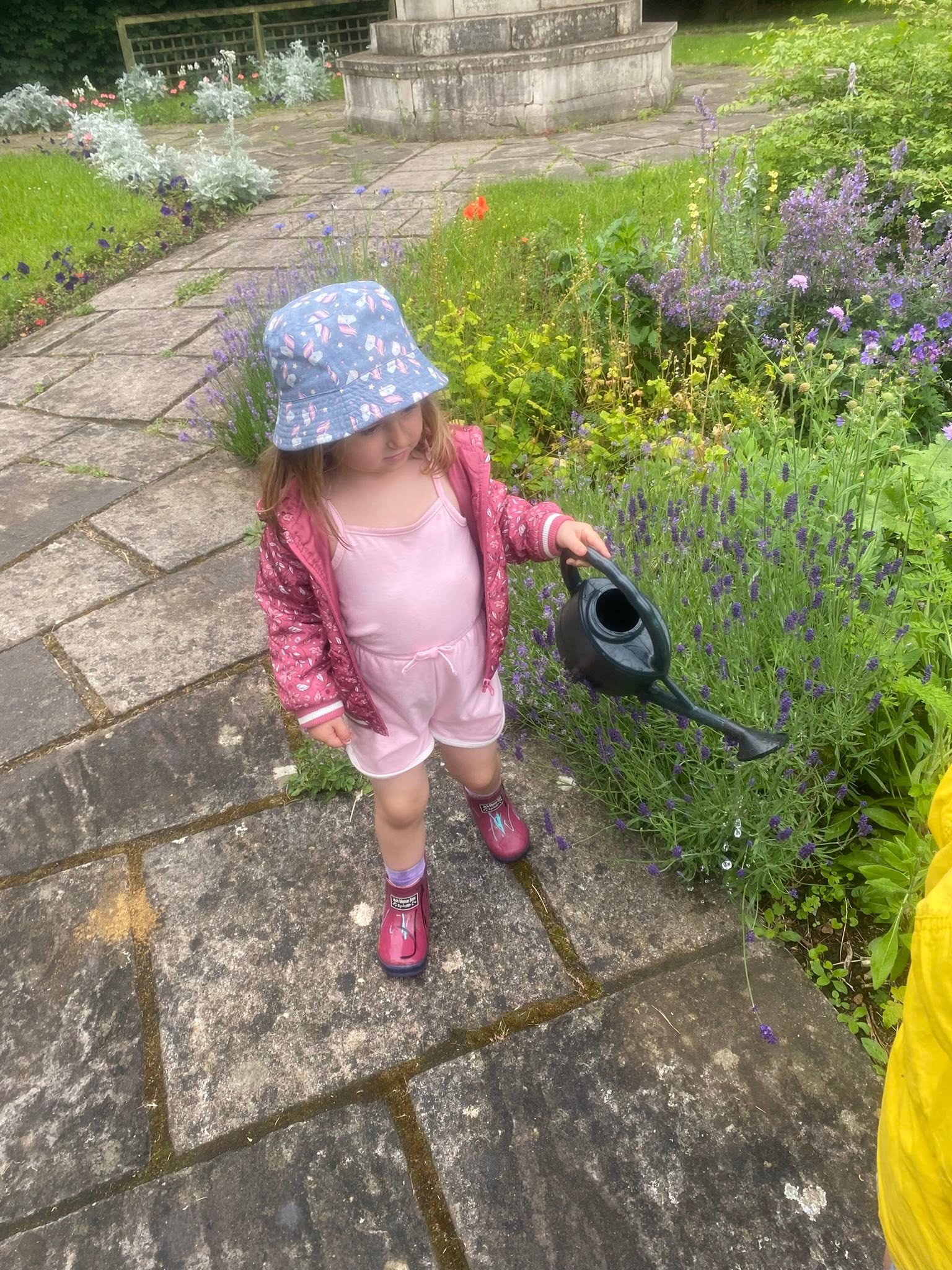
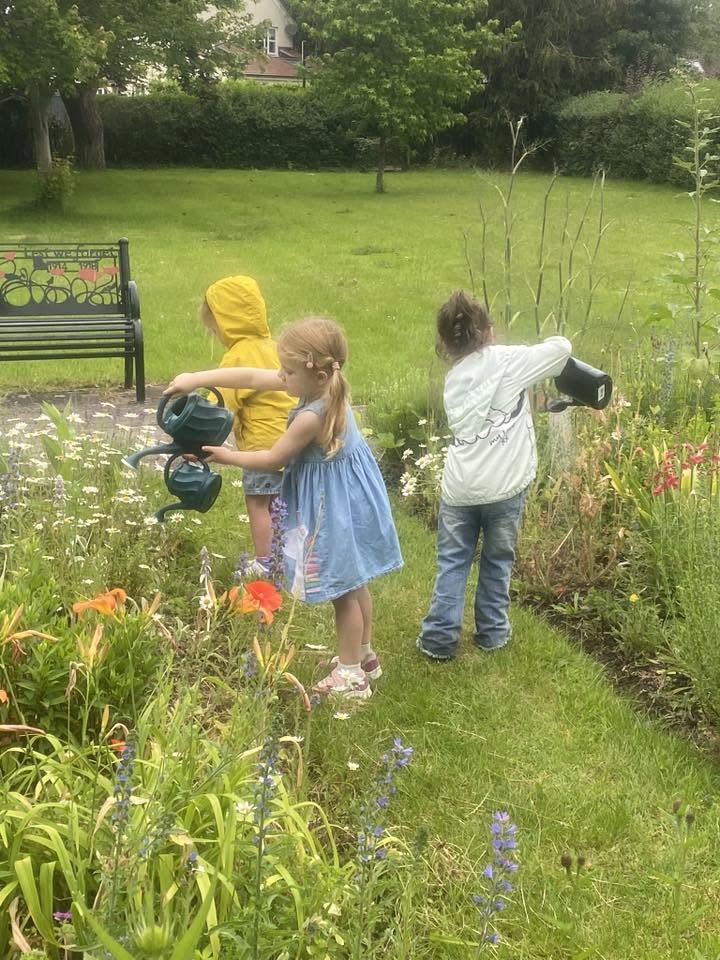
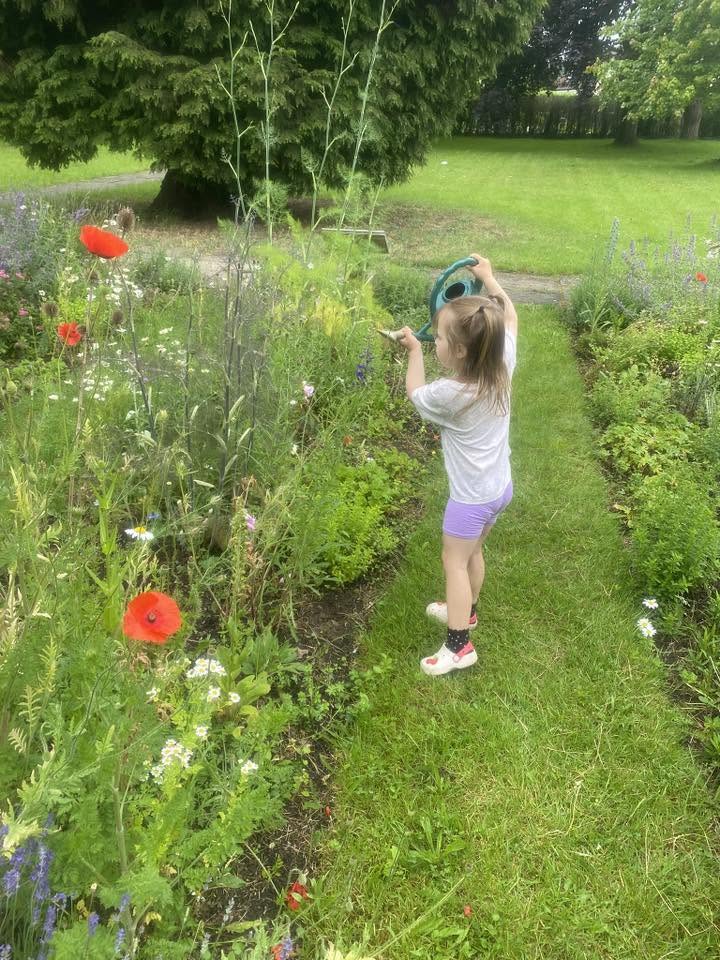
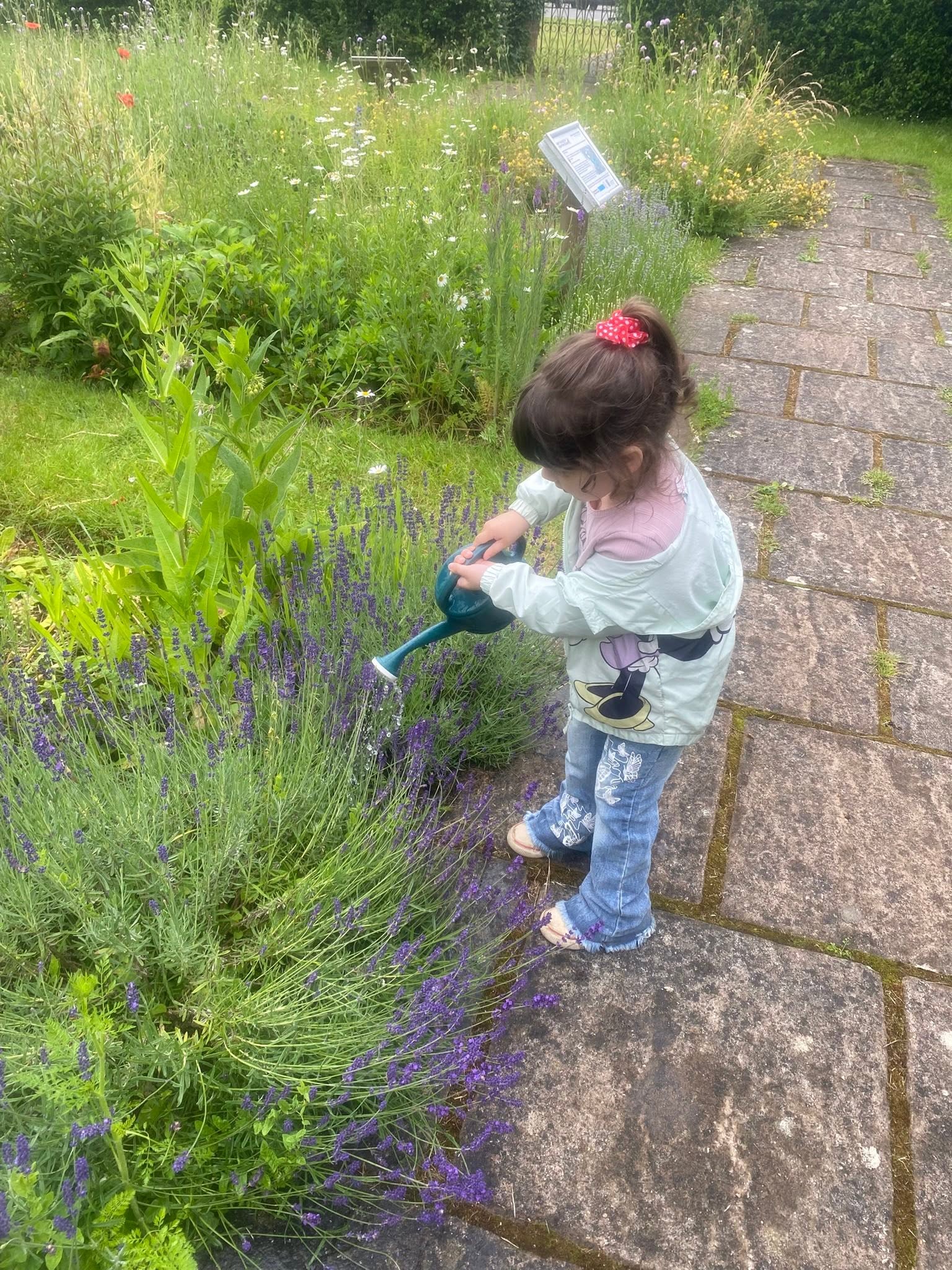
It’s been quite warm this week, and dry, so the gardens really benefited from all the watering the children did next – happier plants, a few damp feet, and smiles all round.
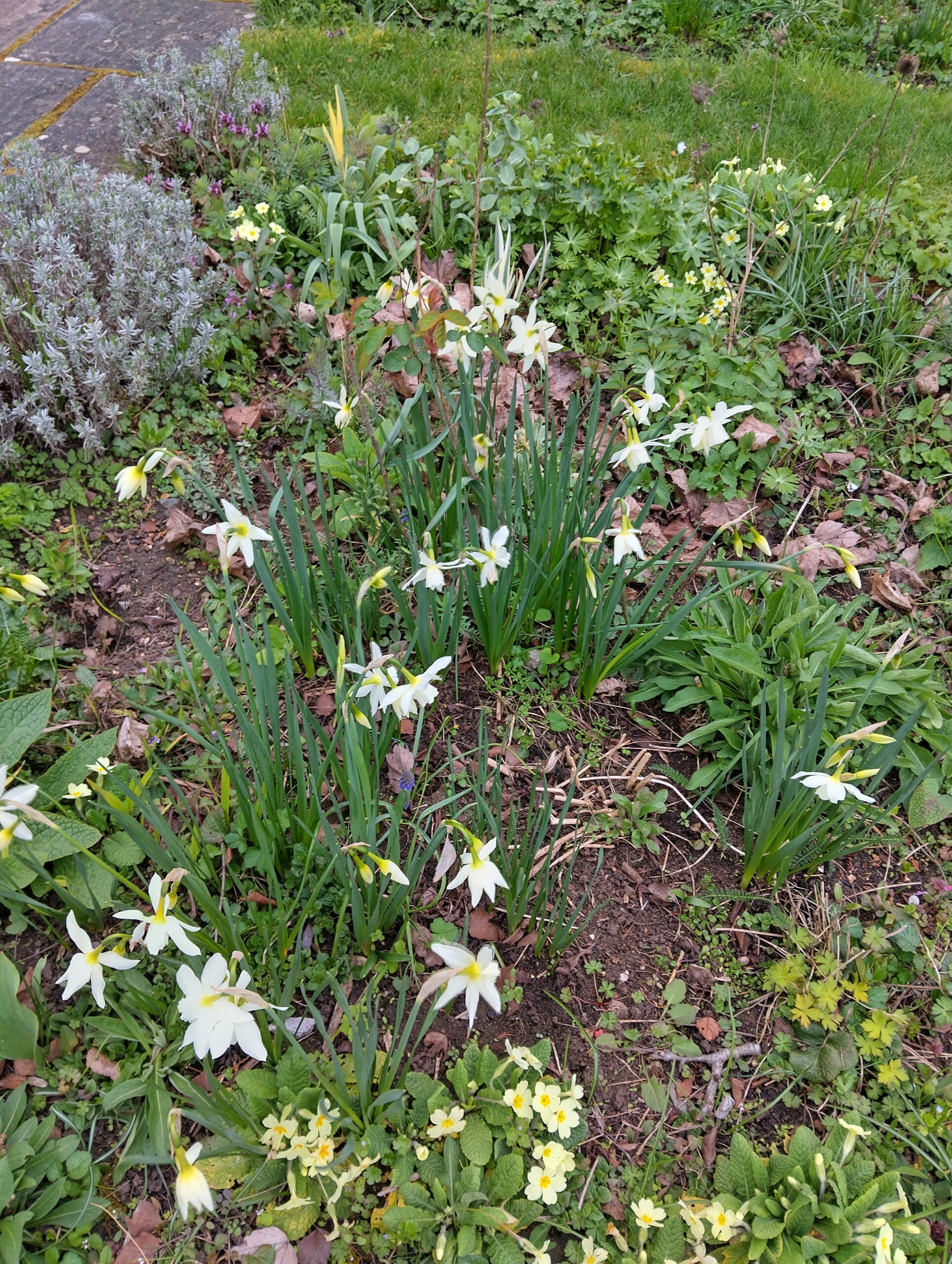
I’ve been asked what variety our white daffodils are – they’re Thalia.
We learned some time ago that bees don’t generally go for daffodils, which have been bred for many things, but not for producing nectar and pollen. On the other hand, bees do like these, so we grow them; and they seem to like the garden, as they’ve spread out from most of the places we planted them.
They used to be really difficult to buy bulbs for, but over the last few years I’ve noticed that gardening articles, social media and TV gardeners have been recommending them, and many more suppliers stock them.
We haven’t posted much recently, but we’ve spent the long grey wet winter preparing the Gardens for this year’s flowers. There’s still plenty going on round at the gardens. Now at last we’re seeing the sun, and seeing the effect on all the plants – not least the weeds, which have really started to grow. We’ll be starting to deal with over the next couple of weeks.And at last, we’re seeing the sun, and seeing the effect on all the plants – not least the weeds, which we’ll be starting to deal with them over the next couple of weeks.
A lot of what we do over the winter involves leaves and compost bins. When it’s not raining, we might be emptying one of the compost Daleks (bins) so we can turn the other bins into it; or we might be adding leaves to the leaf bin to make mulch – ‘black gold’ – to keep moisture in, and stop weeds growing.
And the Town Council’s Grounds Staff have added many large bags full of leaves to the bin – thank you very much! They’ll be put to good use.
We’ve also been nursing a lot of cuttings through the winter – it’s one of our main ways of increasing the number of plants here, without having to buy more. And when we grow our own, we know they haven’t had to be treated with pesticides to look good for sale, or with hormones to make them bloom earlier – neither of those are good for bees. They’ve had a tough time getting through this long wet winter, but they’re really beginning to take off now.
We’ve been asked a couple of times how we decide which weeds to take out, and which to leave – I’ll do a more detailed post on that in a week or so. But basically, what we’re doing now it trying to remove just those invasive plants that could be trouble later on, like ground elder, sheep sorrel, celandines and violets (lovely as they are, they run rampant and can choke other plants). We still want to leave a lot of ground cover for insects, for another couple of weeks till the soil warms up.
Then the fun bit starts, when we try to work out which seedling is a plant we really want, and which so isn’t!
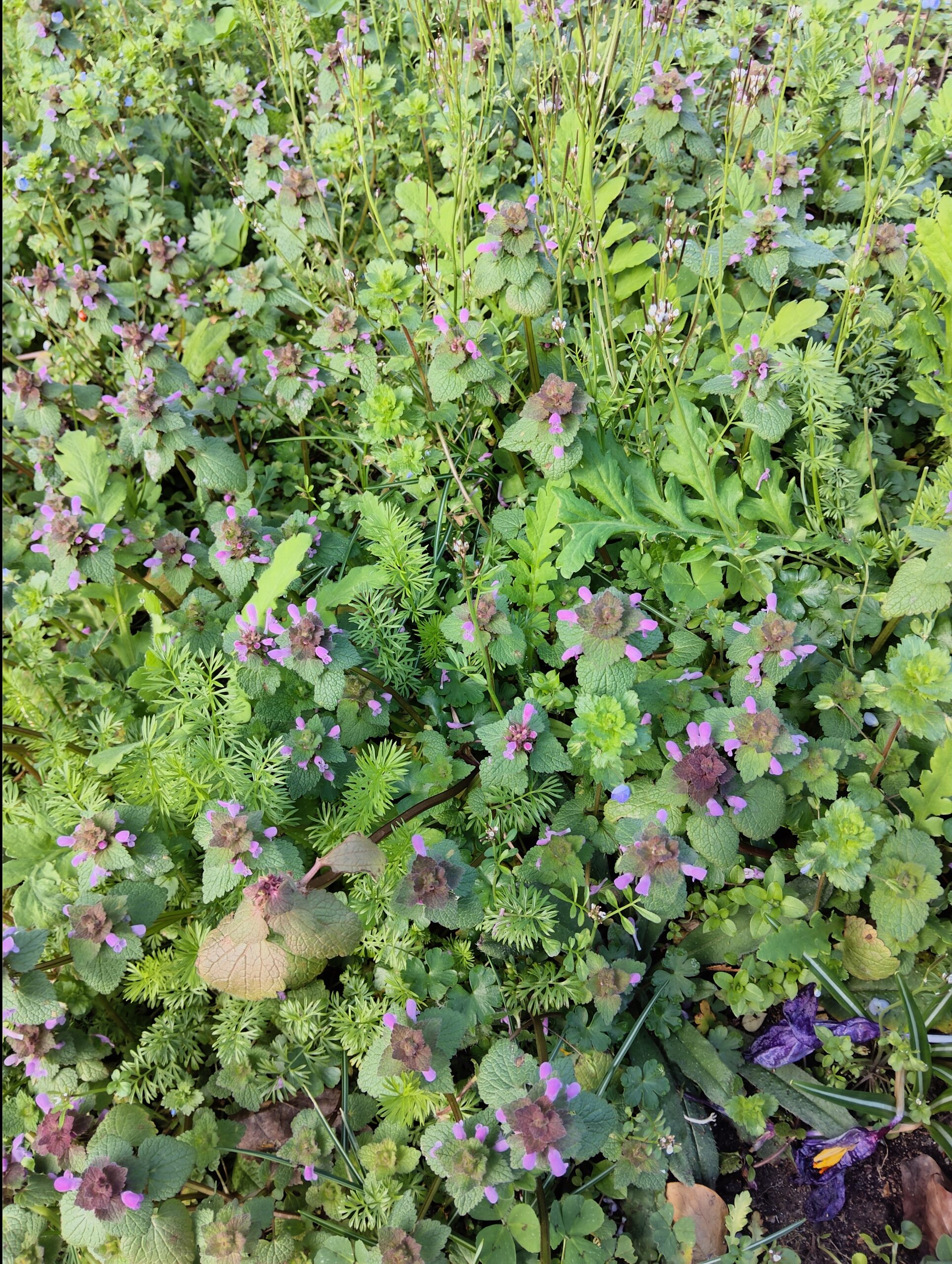
Sneak preview – here’s the first patch we’ll be untangling. A real haven for bees at the moment, they love red deadnettle as it’s full of nectar; but give it a couple more weeks, and it’d be a mess. That’s the balance we’ll be trying to sort out.
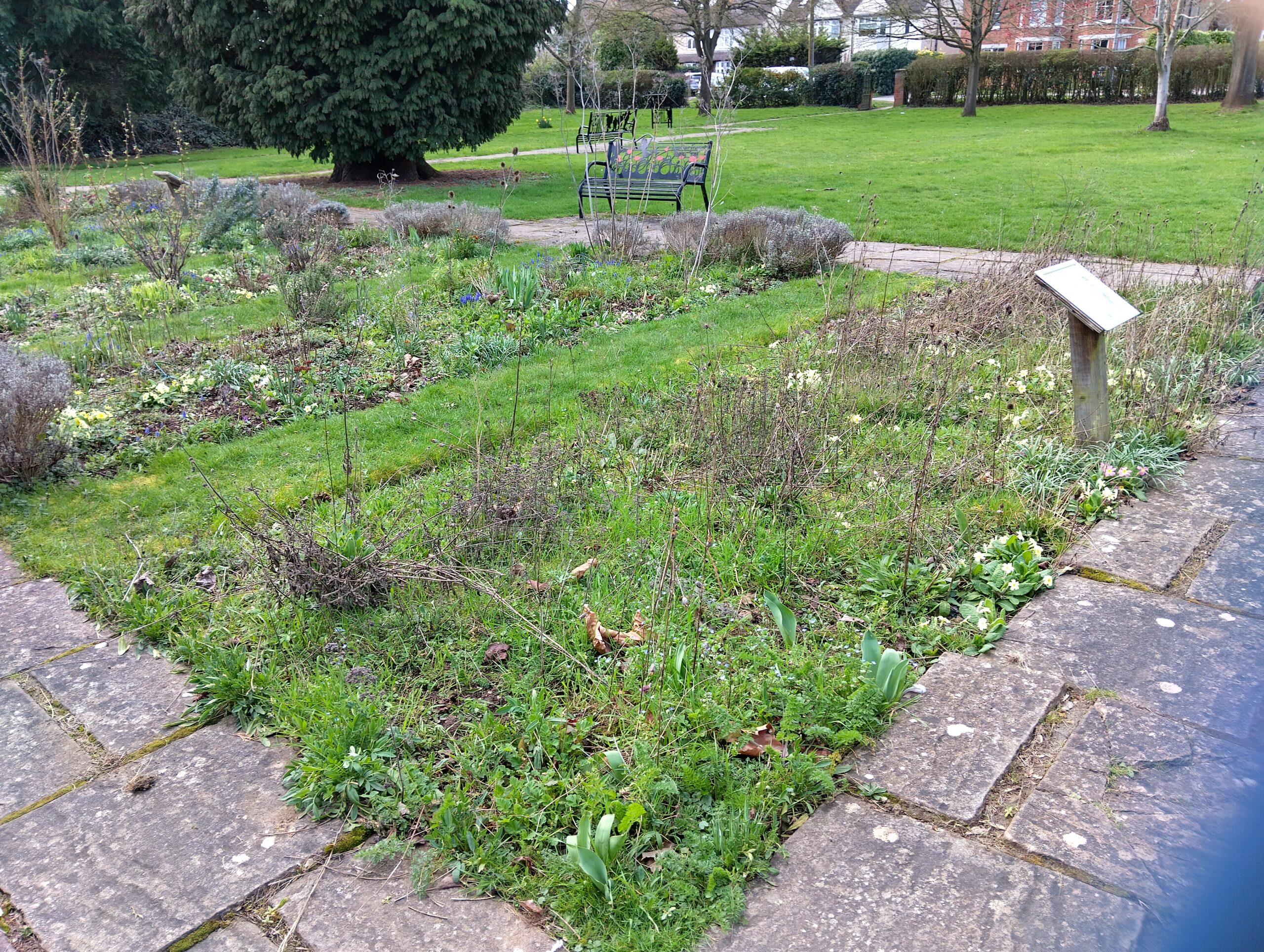
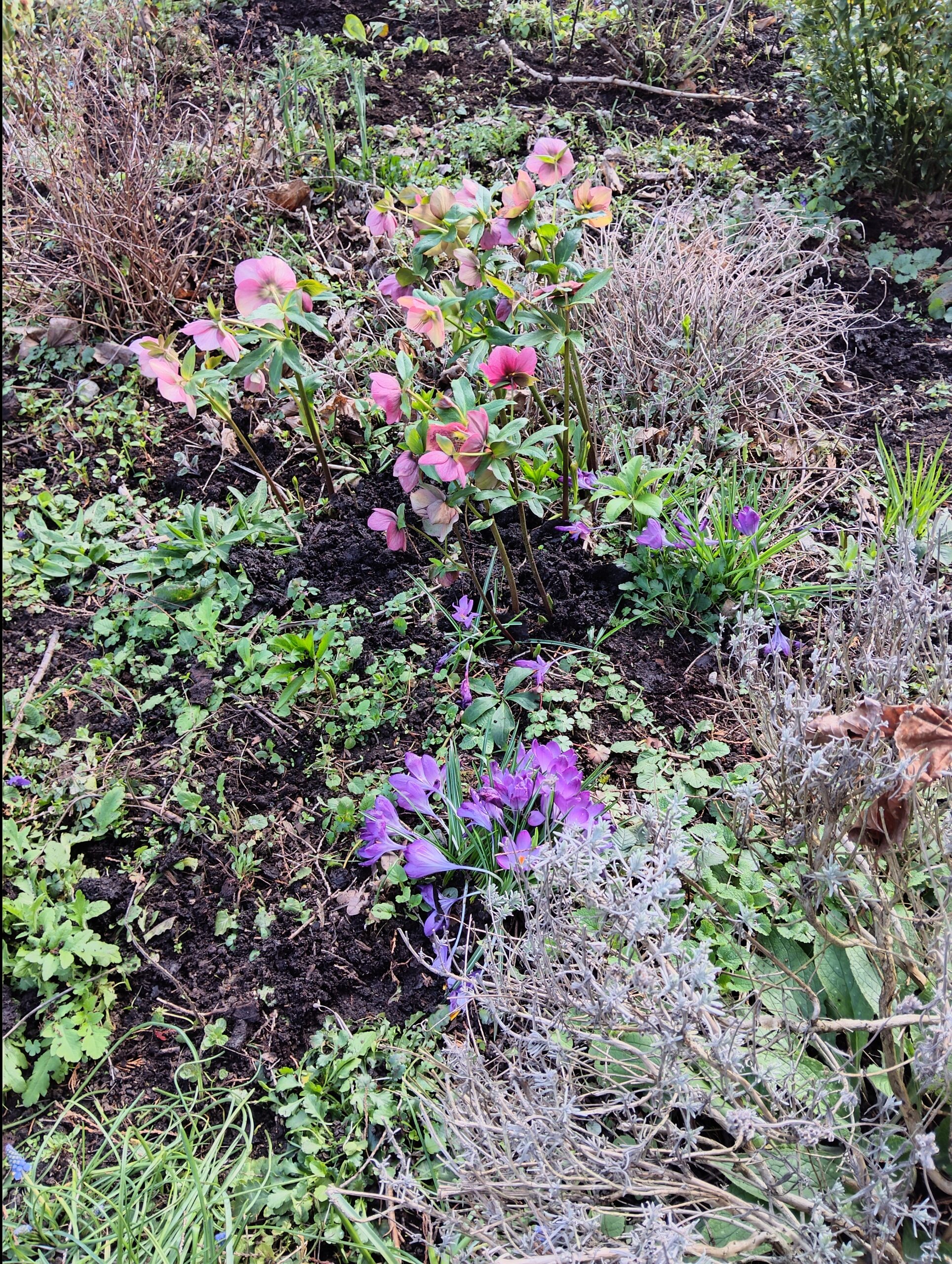
Here are a few photos of the Gardens, taken this week as primroses and hellebores take over from the winter aconites and crocuses.
The crocuses don’t photograph well, which is a pity; over the last few years they’ve spread all over a couple of the beds. Bees are just starting to look for nectar and pollen, so it’s well timed! Here are a few photos of the other flowers in the garden at the moment:
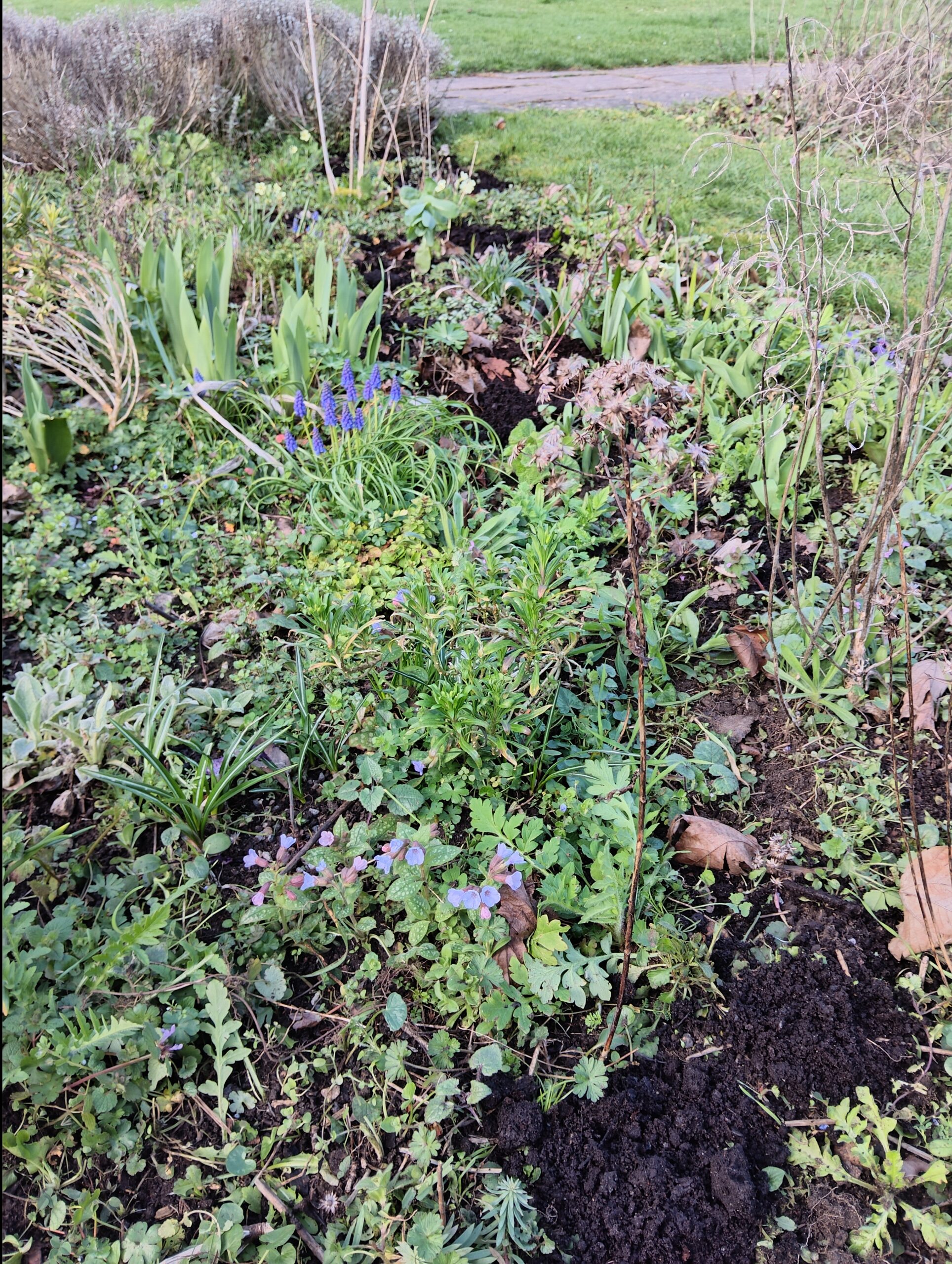
The first flowers of pulmonaria and grape hyacinths – these two are real bee magnet flowers in early spring
The primroses have spread all over the garden
Hellebores and a clump of crocuses in one of the bottom beds
The frosts turn dahlia leaves and stems black and manky – not a good look for a public garden, and not particularly beneficial to insects for hibernation. So over the last couple of visits the team has cut them all down, added some of the dry stems from the wild flower bed and chopped them all up (to make them rot faster) and added them to the compost bins in the work area.
We’ve still left a lot of stems in the wild flower bed for hibernating insects, but leaving some airspace between the plants shows off the seed heads, and looks just a little more deliberate – and it gives us on-site Browns to add to the Greens that are (were?!) the dahlia stems. When we make compost we aim to have about the same volumes of Greens (leaves, stems, grass, coffee grounds) as of Browns (dry stems, broken-up sticks, cardboard, shredded paper, torn-up egg boxes). And we tear or chop things up so there are more broken surfaces, which rot down more quickly.
We emptied a few more bags of leaf mould over or round specific plants, then raked up a few trugs full of leaves from the grass and added them on top – this will help to protect the roots from the cold wet winter to come. A number of plants like dahlias and salvias can withstand frost, but they really hate cold, wet, poorly drained ground – which is exactly what we have here. Adding this extra organic matter should help; most of our dahlias have come back year after year.
That sounds a bit dramatic, but insect populations really have crashed over the last few years – many of us have noticed that there are fewer bees and other flying insects around, and we don’t have to clean insects off the car windscreen any more.
A recent paper reports a 75% decline over just 27 years.
And of course, without insects, we have far fewer birds. It’s been particularly noticeable here in the Memorial Gardens, where we have the just odd bluetit or robin, and hardly any blackbirds; we used to have far more of them around us when we were working.
There are a number of reasons for this decline – loss of habitat, use of pesticides, erratic weather – but this year the long cold wet spring has made it much worse, as many species haven’t been able to breed as much or as often as they usually do.
How can we help them recover? – Well, in the long term, we need to support measures like the Town Council’s Biodiversity Plan (on their Climate Emergency page, and Central Bedfordshire Council’s local Nature Recovery Strategy.
It really helps when people email councillors to show your support for these plans, and encourage them to see that they get acted on.
But more locally, we can always do more here in the Memorial Gardens. We’ve noticed more different types of beetles, bees and moths since we started managing these flower beds about ten years ago, but there’s still more we can do. We’ve started changing what we do in the autumn – tidying the beds without being too tidy! We tuck leaves between plants to provide shelter and hibernation sites, and we’ve tucked a few small log piles around, too. We’re also adding a greater variety of plants, as some insects are specialists, and need particular flowers, at a particular time, which takes more thinking about than just putting in open-flowered plants that bees visit. Night-flying insects are important pollinators too, so we’ll add some of the flowers they like – we have some evening primroses and phlox growing on, which we’re hoping to put out this side of the cold weather. And of course, the fuller the beds are, the better the shelter for insects, small mammals like voles, and reptiles – we’re always getting surprised by frogs jumping out from their hiding places as we work!
“Why are you cutting down our bees’ lavender?” said a voice behind me while I was pruning the lavender bushes along the paths. The voice belonged to one of the older children from the local preschool, who often come and help us and watch the bees, dragonflies and other insects as they visit the different flowers – clearly the message had got through!
I explained that the flowers were over for this year, and we needed to trim the plants back so that they’d produce lots more flowers next year. ‘Next year’ is probably quite a vague idea when you’re not yet five, but fortunately the explanation was accepted. Bees visit many other flowers at the moment (we try to have at least two ‘bee magnets’ in flower at any time throughout the year), but it’s true that they go straight for the lavender when it’s out.
The lavender border was started a couple of years ago, when we realised that we needed more structure in the gardens so that they carried on looking good after most of the flowers had faded, particularly as we tend to leave seed heads for insects to hibernate in over winter, and just to look good when there’s not much else happening in the dark cold days. This could look untidy without the more formal structure of the lavender border. Most of the plants are compact varieties – Hidcote, Munstead, Dwarf Blue, Little Lady, Arctic Snow – as although the larger varieties attract more bees, they’re also much harder to keep in check, and would soon take over the paths as well as the beds.
The standard memory aid for pruning lavender is ‘8:8:8’ – prune the bush to eight inches on the eighth day of the eighth month. Not quite so effective if you think in metric! But the general rule applies – trim the plants as soon as they’ve finished flowering, to roughly 20cm all round. Hopefully, we still have a couple of months of warm weather to encourage them to put out new shoots and fill out a little before they stop growing for the winter.
However, to mollify the child who was worried about the bees having no lavender to visit for nectar, we’ve left a few of the later flowers for them!
Yesterday we spent the morning tidying away the plants that were killed by the previous night’s frost – the blackened dahlias in the bottom two beds, the deep red Cosmos that had been flowering in several of the beds right up till then, and the runner beans planted and harvested by the children from Mentmore Road Under Fives Preschool. It all looks a bit emptier now! We’d already weeded the new lavender edging and tidied the edges of the beds, so the only thing left to do was to dead-head any plants we think will carry on for a bit longer, and stake some of the verbena bonariensis and linaria that were flopping over. We’ll need to mulch the dahlia tubers with leaf mould to protect them from any sharper frosts, but we want to wait until after Sunday as the leaf mould isn’t completely rotted and it’ll look untidy for a while at first.
It’s a difficult balance to get right. If we strip out everything except the shrubs and perennials, the garden may look more tightly managed on Sunday, but we’d lose a lot of the early flowers like deadnettles and forget-me-nots that make a large contribution to the nectar and pollen needed by bees emerging in the spring (or whenever it’s warm enough right through the winter). If we cut down all the dead stems and seed heads, we remove shelter for predatory insects over the winter, particularly ladybirds – and they did a great job this year in cleaning any aphids off the roses, for example. Many of the seed heads look great in frosty weather, too, adding to the interest in the gardens when most of the plants are dormant. We’ve also left a lot of seedlings which we’ll edit down to a few plants later on, when they’re bigger; I hope they don’t look as if we just haven’t weeded the beds!
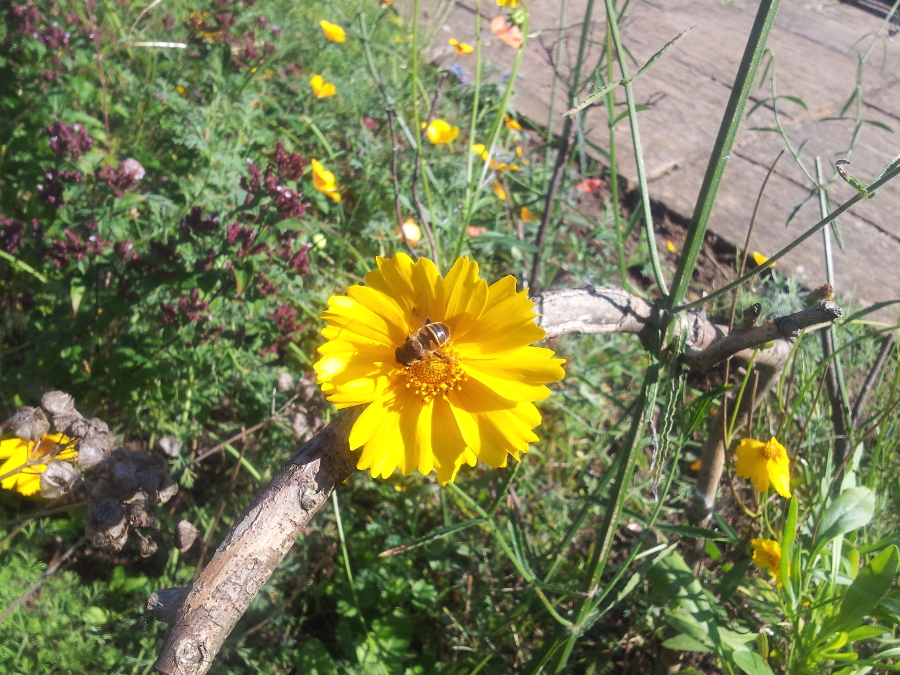
There are still a lot of bees in the garden – here’s one enjoying the coreopsis:
We’ve had very little rain for the last couple of months, and the ground’s dried out again very quickly even after a whole day of it. We’d never claim to be a ‘drought garden’, but we do try not to use more water than we really need to. Even in this very dry summer we haven’t (yet!) had to use the hose this year, but the gardens don’t look particularly dry. This is thanks partly to the amount of mulching we did last year (putting leaf mould or compost on top of wet ground to hold the moisture in), and partly due to our choice of plants – garden perennials and many wild flowers need much less watering than annual bedding plants, for example. We use watering cans for a couple of weeks when we move plants or put new ones in, to get them established, then mulch them well and leave them to get on with it.
The exception is the vegetable bed where the children from the local preschool are growing peas, beans and carrots this year, where we’ve been using the watering cans a lot, particularly before the children broke up for the summer – they love watering things, and the runner beans probably had such a good start that they’ll survive any number of dry weeks now!
The mulch used for the bottom two beds (nearest the war memorial) last year was a proprietary compost made from wool and bracken, which has also kept weeds down for over a year and is still making a difference. We’re just beginning to notice a few weeds creeping back now, but it’s saved us a lot of time. It forms a bit of a crust, which does make the soil quite hard to work in the second year, so we haven’t used it this year in the other beds where we’re still moving a lot of plants round; there, we’re using garden compost round individual plants that need more feeding, or leaf mould where we just want to cover the ground over the winter, which is better for the soil. We’ve noticed a lot of ladybirds and other predators rooting around in it, which is good as we want to encourage them as much as possible around the gardens – this year they did a great job of seeing off any aphids that did try to colonise the plants!.
It’s a difficult balance at the moment – if we cover too much of the ground too early on, we’ll stifle all the self-sown Californian poppies, cornflowers and others that we’d welcome, but this is exactly the time when a lot of weeds start germinating, and we don’t want our volunteers to have to keep weeding the same patch again and again.