June 16 2023
We’re managing the gardens in a slightly different way this year while we take stock of the effects of last year’s very hot dry summer, followed by a very hard frost early in December, followed by an exceptionally wet few weeks. A lot for plants to cope with!
Unsurprisingly, we’ve lost a few plants, but not as many as we feared. We’d put a couple of salvias in the two beds next to the wildflower one by the car park, and we lost both, which is a pity as they were bright red and bright pink, and they sparkled amongst all the blues and pale colours. But we were prepared for it and took cuttings, so we’ll be able to replant at least one of them this autumn, and more next spring. We don’t plant things out in summer, they’d take a lot of volunteer time and water to keep going, and we’re trying to be sustainable here!
Salvias tend to feature on lists of ‘plants that are good in dry conditions’, but it’s often not mentioned that they also hate having their roots in cold wet soil, which makes them a bit difficult to manage in the more extreme weather we’re getting now in the UK.
Similarly, penstemons are borderline hardy (that means they might survive frost, or they might not …) so we weren’t surprised when we didn’t see any new shoots on the lovely bright red one in one of the central beds. Then this week I noticed one of the preschool children carefully watering a few green shoots, and it’s off! So we may plant out more of those from cuttings I took last year.
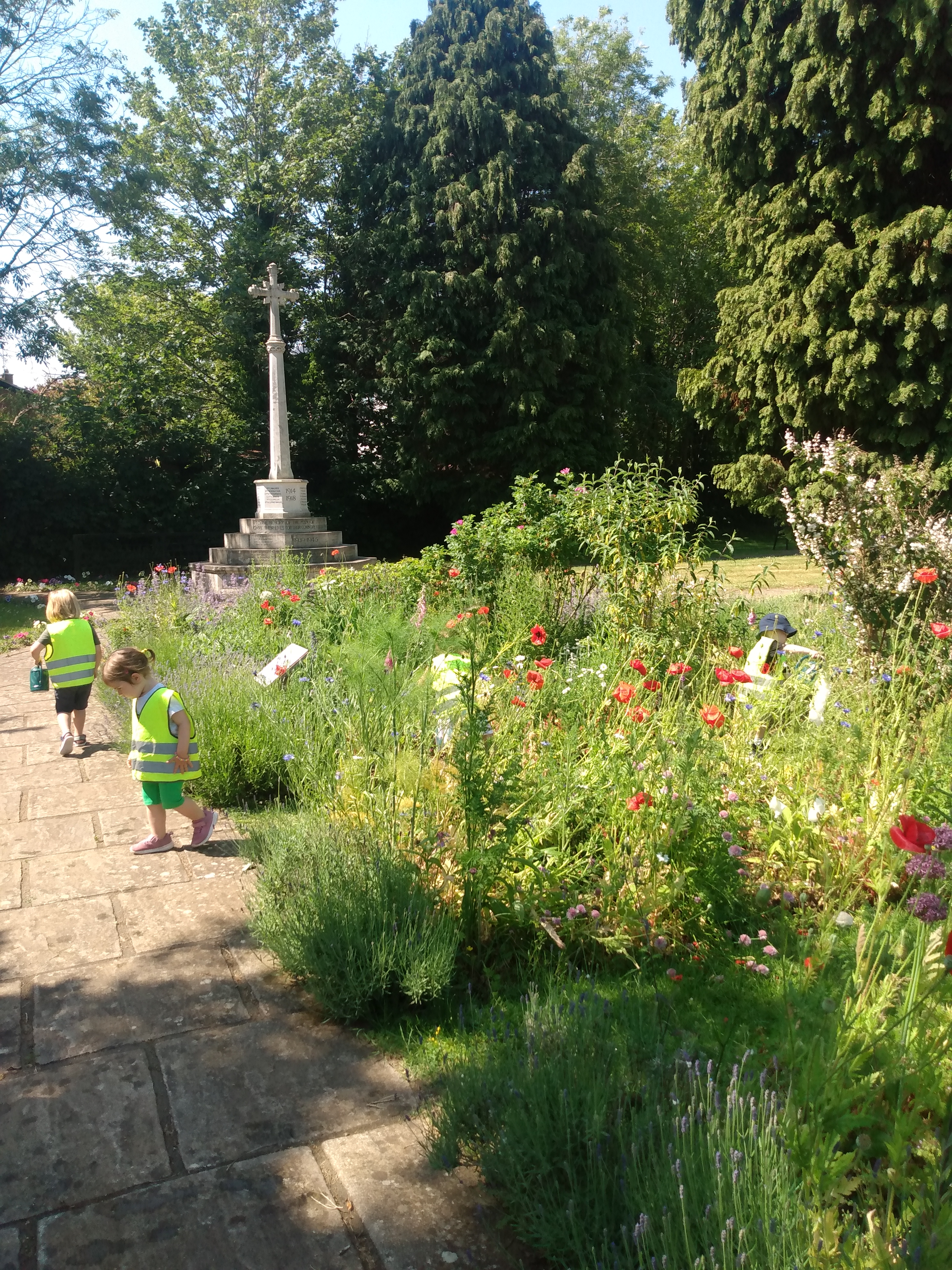
Preschoo9l helpers watering plants taller than they are!
And of course the irises’ flowering season was cut short by someone tearing off all their flower stalks, and those of other tall flowers like foxgloves. They’ll flower next year, and in the meantime we’ll split them and plant them in a few places around the gardens, so that if anyone wants to tear them off next year, at least they’ll get some exercise doing it!
So this year, although we’re planning to keep the framework of shrubs and perennials, and we’re investigating plants that will cope with the weather extremes we can expect now, we decided to let the self-sown annuals and biennials do their thing – bright red poppies all round the gardens, pot marigolds and French marigolds, foxgloves, hollyhocks and the amazing Viper’s Bugloss that’s such a bee magnet. It’s a bit untidier and less structured than usual, but it’s lush and full and colourful, and we’ve had ever so many compliments on it already.
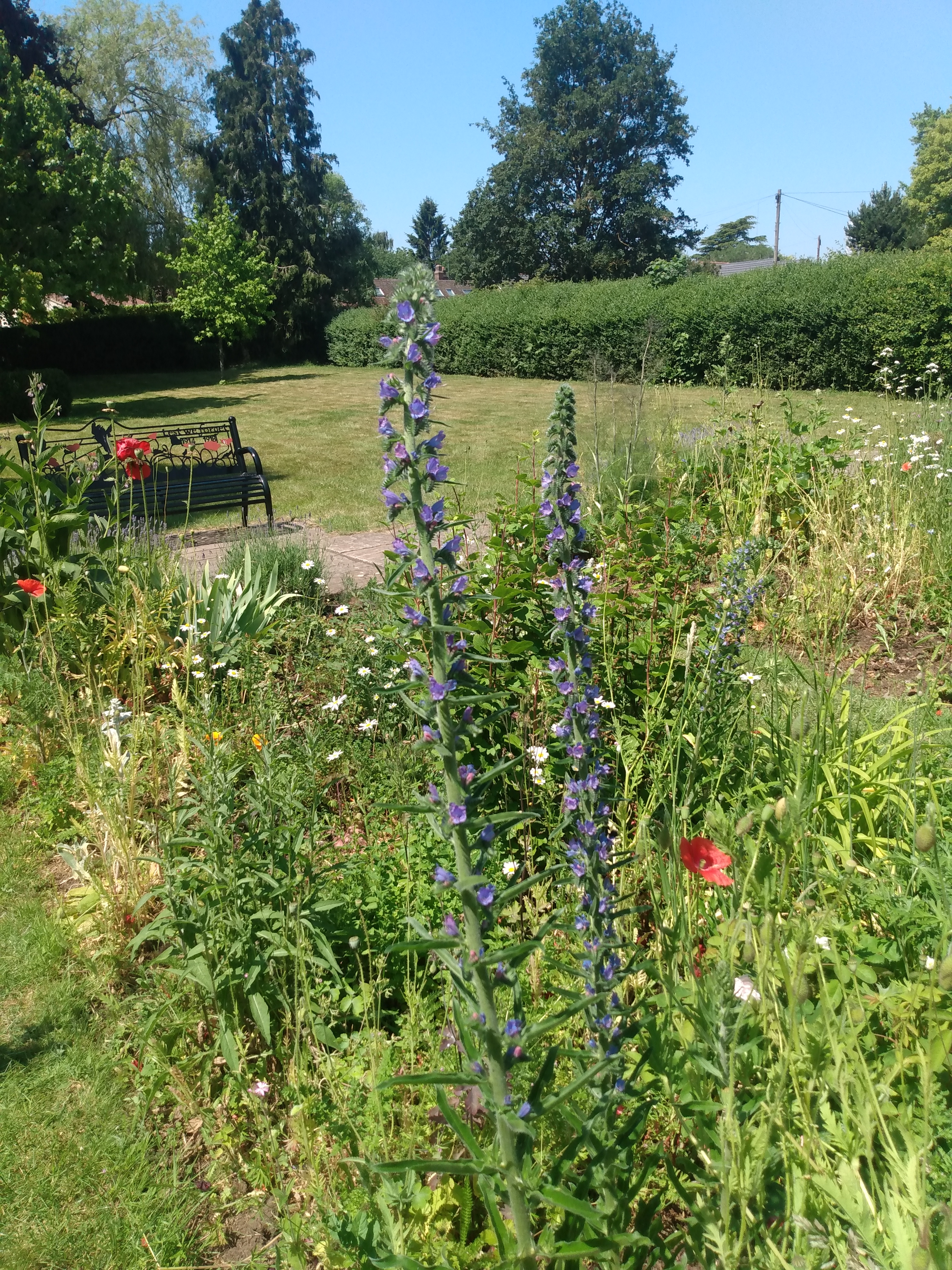
Viper’s bugloss (Echium vulgare)