21 February 2024
Save the date – we’re having a plant sale in the Memorial Gardens, on the morning of Saturday April 20!
We have a lot of spare plants that are all good for pollinators; we’ve been potting them up and growing them on over the winter, and now they’re ready to be planted out. Here’s a list of what we have at the moment – and what we’re likely to have later in the year, too – so have a browse, and come along and buy some that morning, from about 10 am.
The plants are generally small-flowered and unshowy, but they do attract bees and other pollinators, and most of them are perennials (that means they’ll go on growing in your garden / window box / other container) for several years. The ones that aren’t perennial are foxgloves, which are biennial – that means they spend the first year making a rosette of leaves, which produces a flower spike (or two) the following year, in about May-June. If you let the seeds ripen you’ll have more than enough to start the whole cycle over again, so although they’re not perennial, if they like where you put them, they should keep going for years.
We have a couple of annual plants too – that means they’ll flower, set seed and die in the same year, You can collect the seed and sow it in the autumn or spring to flower next year; or you may just find lots of seedlings around where the original plant was.
Perennials
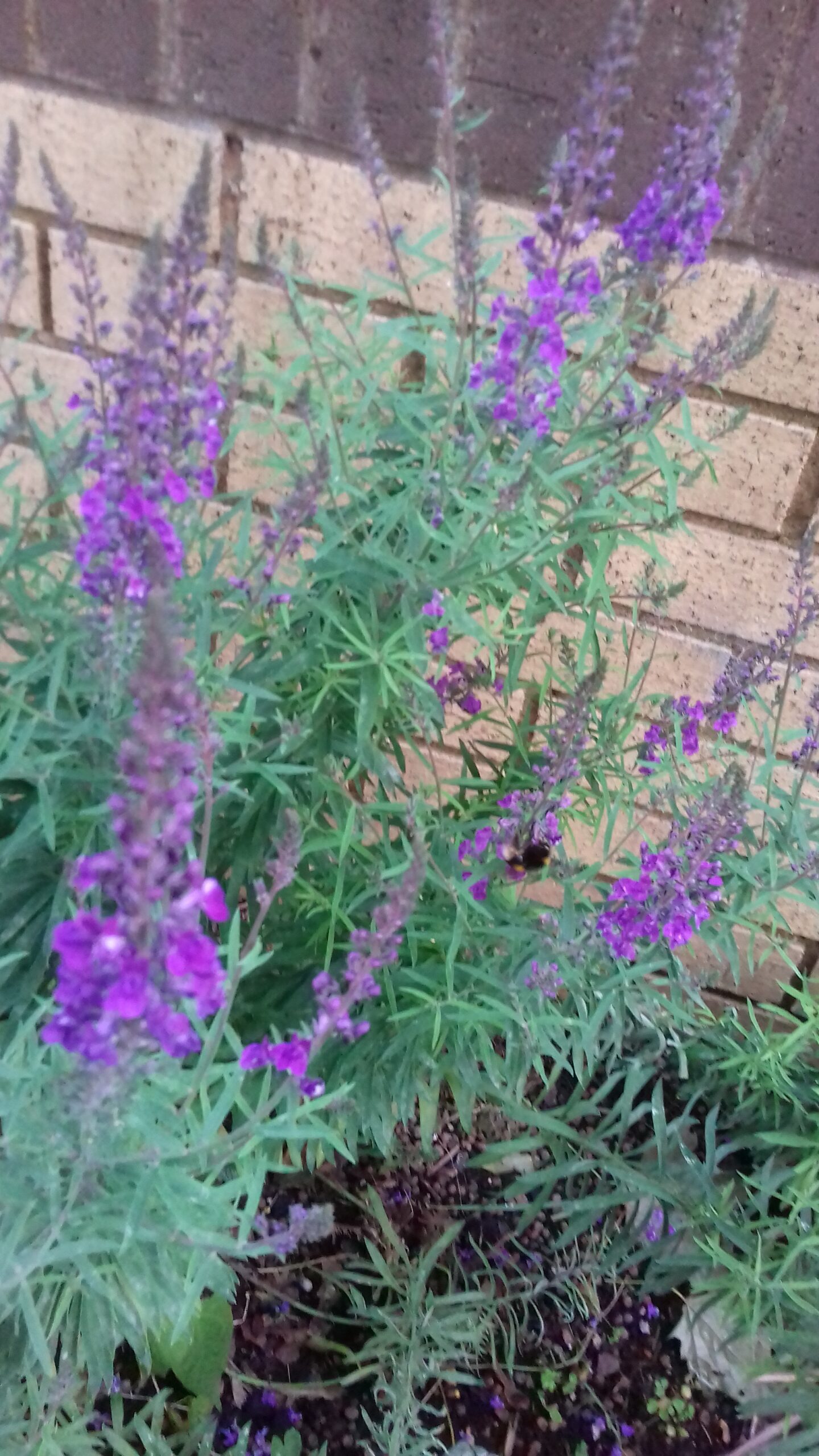
Purple toadflax (Linaria purpurea) – not a UK native
Height 0.5 – 1 metre; stems with small grey-green leaves, with tiny ‘snapdragon’-like purple flowers (sometimes pink) from May or so, until the autumn. The plant may also seed itself round freely.
Prefers full sun.
Bees really love the flowers.
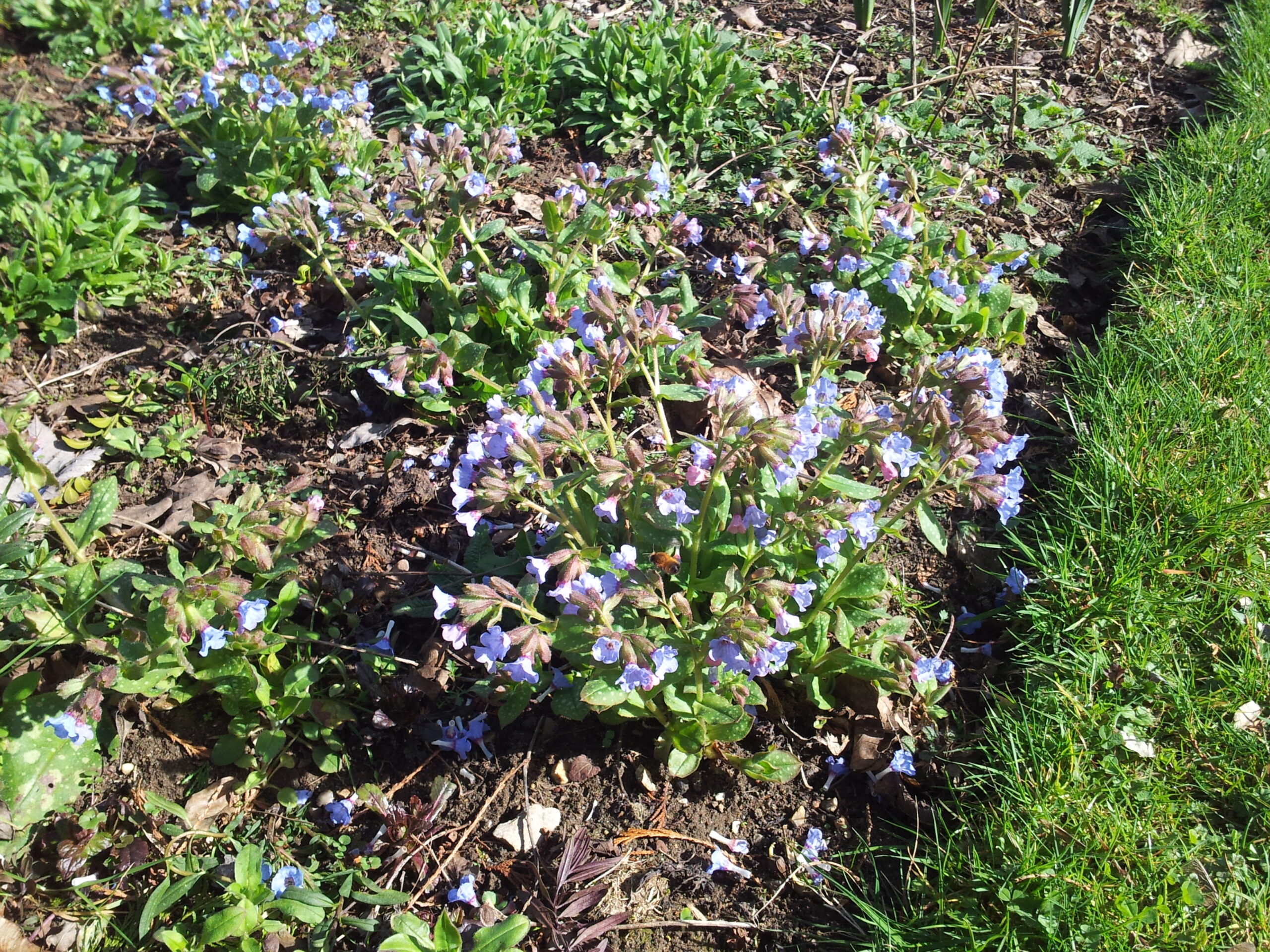
Common lungwort (pulmonaria officinalis) – not a UK native
Low-growing, clump-forming, one of the earliest plants to flower, with blue and pink cowslip-like flowers from February to about April. (The one we’re selling has white flowers; we may have the more common blue ones for sale later in the year).
Likes light shade; dislikes drying out.
Geranium macrorrhizum – not a UK native
Low-growing ground cover hardy geranium, with pink flowers on stems about 20cm high in April-May. This is another bee magnet, with lovely fresh green foliage the rest of the year (we’ve found frogs sheltering under it at the Gardens).
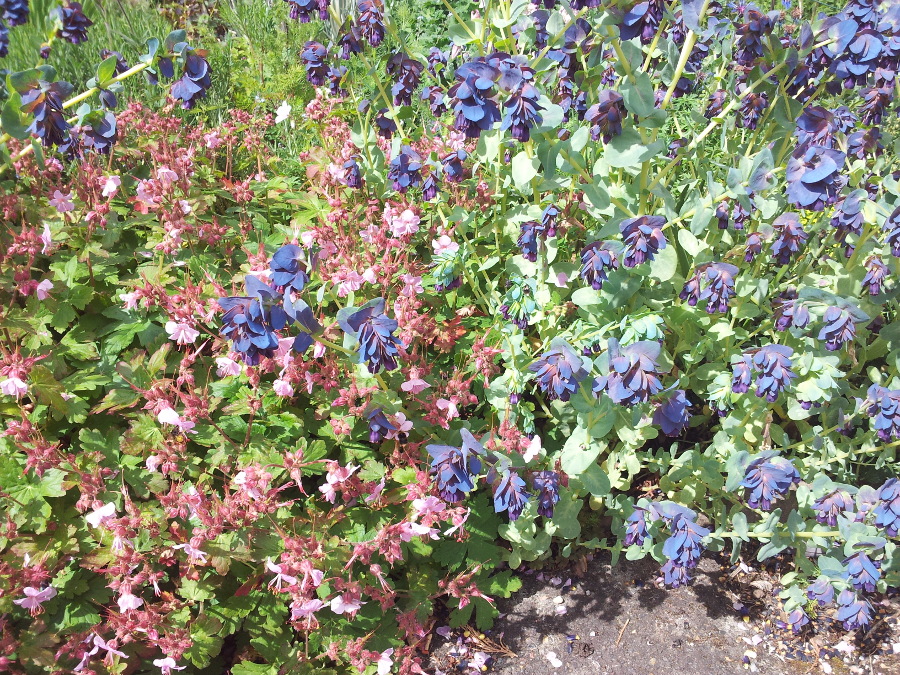
Honeywort (Cerinthe major) – not a UK native
The other plant in this photo is honeywort, also known as cerinthe. It’s an annual that seeds itself around freely; or you can collect the seeds and sow them where you want.
It has large, sprawling, large stems that make it a bit unwieldy, but it’s very very attractive to bees.
Biennial
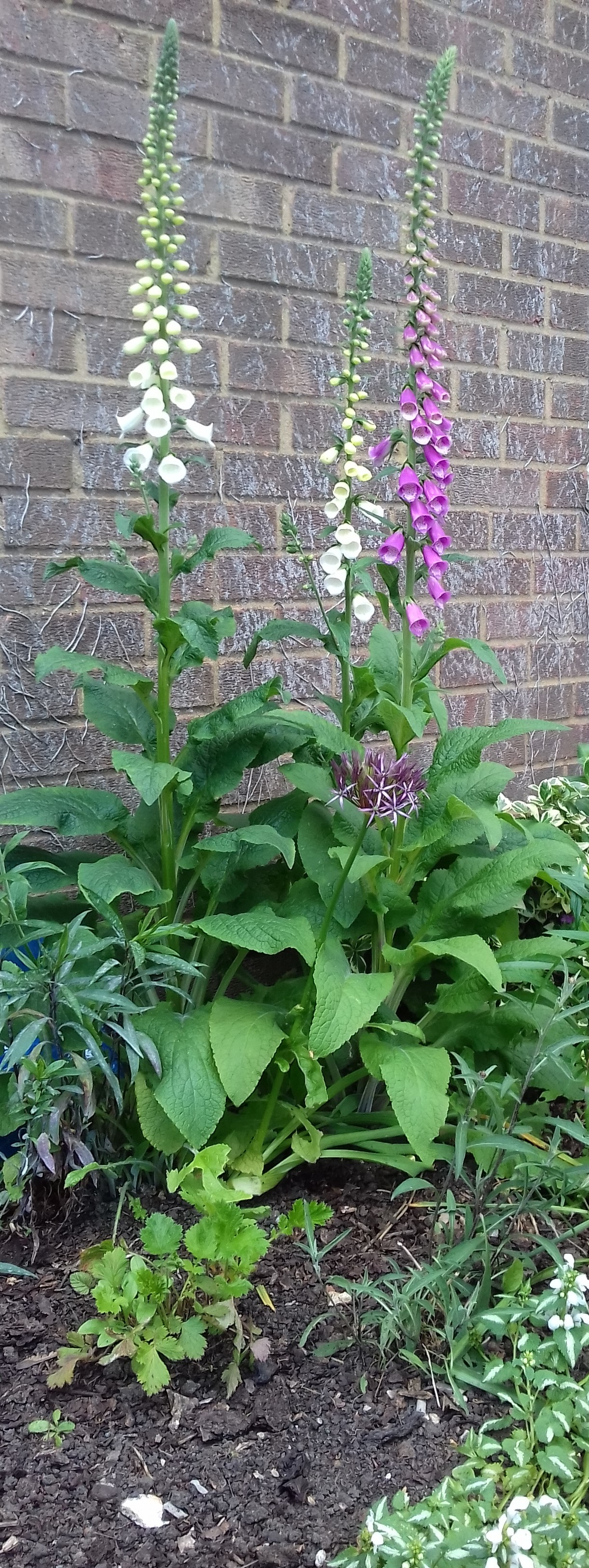
Foxglove (Digitalis purpurea) – UK native
Can be quite tall, up to a couple of metres, but usually much shorter. Purple or white flowers (it’s difficult to tell which they’ll be at the leaf stage).
Prefers light or dappled shade, and reasonably good soil.
Later on, we’ll have more plants, including Verbena bonariensis and asters, and hopefully, some rosemary and thyme plants grown from cuttings.