08 November 2026

08 November 2026
06 November 2026
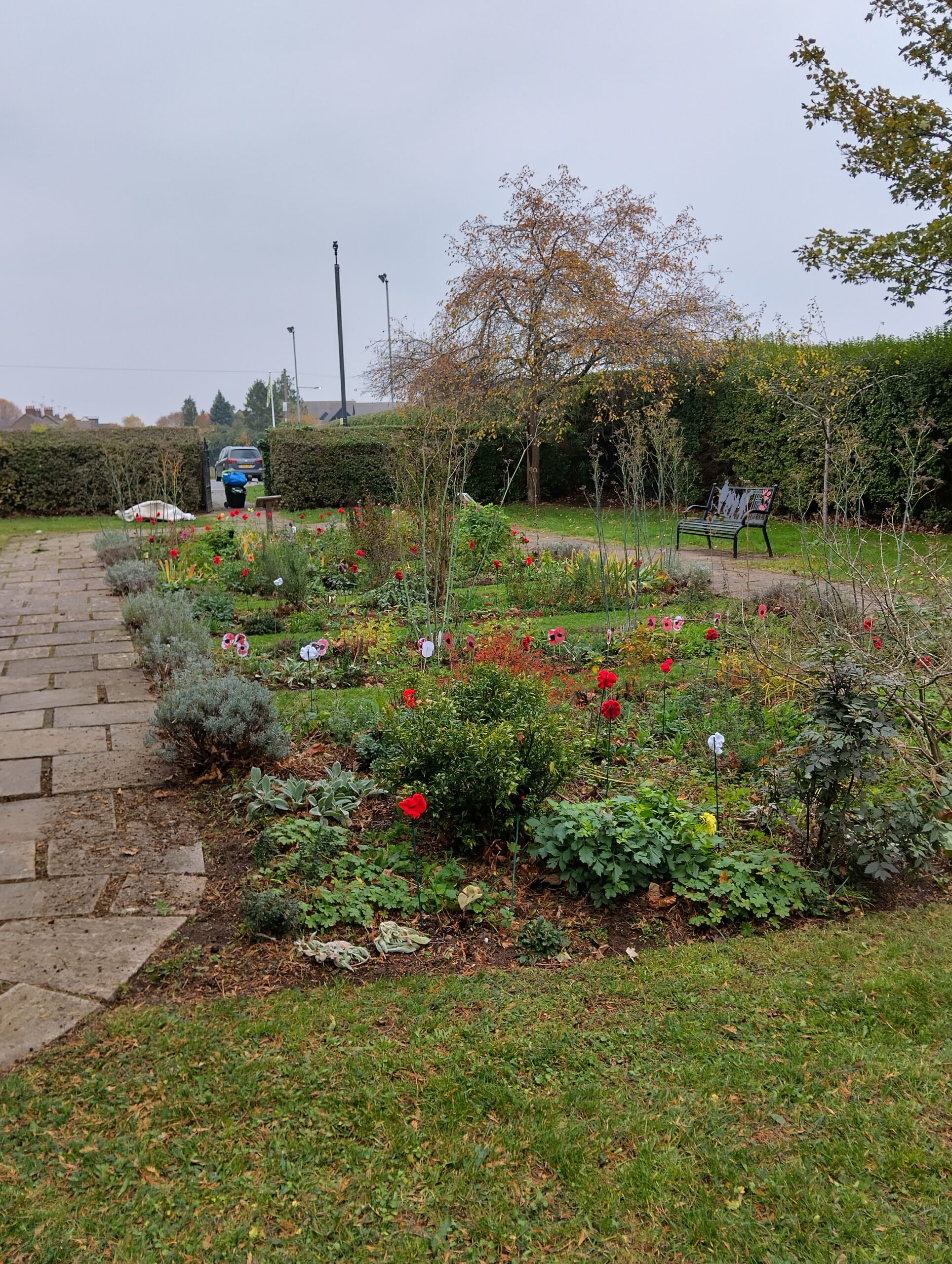
We put out the knitted and crocheted poppies this morning, ahead of the Act of Remembrance on Sunday. There are sixty-one red poppies – one for each name on the war memorial. There’s an explanation of the different colours here
The children from Mentmore Road :Under-5/s had also put poppies out, in the bed they used to look after:

13 October 2026
Well, this isn’t the post I was intending to write after ‘Gardening in more extreme weather – 1’ at the end of July. We’d had a little very light rain, and we really thought there’d be more, and that the summer would turn a bit cooler, and we wouldn’t need to water much at all – how wrong could you be!
We didn’t know then that we’d have another two months of heat and drought. There’s been a little misty rain, which at least cools leaves down, but it doesn’t get more than a centimetre down into the soil, if that. Over the whole summer, there’s been five official heatwaves, with well over thirty degrees, for days at a time. At the end of July, we’d hardly started!
Back in August, someone asked us how we managed to keep the garden alive and fairly green, which was a new perspective for those of us who’d been watching plants’ leaves get drier, if not actually shrivel up. They’d noticed other gardens round the town all shrivelled up, and though this site was surviving better. Flattering, though worrying; this garden’s just part of the town’s biodiversity, and we can’t afford to lose any of the links
We thought it must be the amount of leaf mould and compost we’ve put into some areas, particularly round shrubs, which would hold more moisture, and would protect roots a bit. But a lot of our plants did get scorched from the heat alne as they’re just not appropriate any more for days of extreme (for the UK) heat, and no amount of organic matter would prevent that.
In fact, most of the plants we put in in April and May did survive, but just stood still, with no growth at all. The dahlias didn’t shrivel up; but they didn’t put on any extra leaves, and certainly no sign of flower buds. And of course, no flowers; they just started flowering a couple of weeks ago.
We did keep watering the new plants every couple of weeks, as well as a few that were visibly wilting, but mostly, we’ve been just waiting for rain, and noticing which plants did best, and which shrivelled up in the heat, even when watered; we’ll probably replace them this autumn.
And now we’re moving into the storm season, where the problem is having too much heavy rain in too short a time (it washes nutrients away, and damages the soil structure). It never rains but it pours, as the saying goes.
22 September 2026
I wasn’t expecting to be writing this in drought still. We’ve still had no rain to speak of, though the occasional light showers we’ve had – more mist than rain – have done a good job of cooling down scorched plants.
To us, the gardens look parched, though only a couple of specific plants have been wilting in between waterings. But we were heartened by a comment from someone sitting on the bench watching us last week; she said she ‘d started coming down to sit in the Memorial Gardens because they were the only place that still had a lot of green in them, . And when we looked round, she was right. All a question of perspective!
We’ve spent a lot of the last ten years or so trying to make the gardens more resilient, particularly in terms of needing less watering. We try to stop any moisture in the soil from evaporating too quickly, both by mulching a lot through the year with either leaf mould or compost, and by trying to grow plants close together and keep the ground covered, with as little bare soil as possible.
‘Mulching’ just means putting something on top of the soil. It could be slate chips, or gravel, or woodchip; or something organic that will be incorporated into the soil and improve the moisture-holding, as well as protecting it by covering it.
We mainly use the leaf mould we’ve made every autumn, as it doesn’t add too many nutrients; it sounds counterintuitive, but we don’t want plants to put on too much leafy growth, or they won’t stand up to tougher conditions if they have to. The leaf mould gradually gets taken down into the soil by worms.
We also use the compost we make from weeds and cut-up stems. We just use it round the shrubs, dahlias and one or two other plants, to give them a slow-release boost.
We’ve also started growing plants closer together, and leaving far more self-seeded ones between them too. That way, we can weed out seedlings we don’t want, to let the others grow on strongly, but during the hottest part of the year, the ground’s well covered, and we don’t have to water so often.
Unfortunately neither of these methods is effective enough to protect plants in the kind of heat we’ve had over the last few years. We’ve lost several plants that used to survive before summers got hotter; we’re working out what to use in their place. It’s actually a very difficult site – light, sandy soil on top of a pan of compacted clay, which means nutrients wash out of reach of plants’ roots, but drainage is poor and many plants die when they’re wet and cold through autumn and winter. A challenge!
26 July 2026
Today we had a little very light rain, the first in many weeks; and it’s cooler, only 26 degrees this afternoon. The forecast is for 31 degrees in a couple of days, with no likelihood of any more rain in the next couple of weeks. Apparently, this is the new normal.
So we need to adapt how we garden, both for drought and heatwaves any time after March or April, and for wetter, milder winters.
One way that we’ve been changing the way we garden has been accepting that some plants just won’t thrive in these conditions. In particular, roses don’t do well in heat, and we can’t just replace them with the Mediterranean plants we’re advised to use, as they don’t like our claggy cold wet soil in winter.
Instead, we’re encouraging the ones that self-seed, as they seem to thrive better when they’ve chosen where they’re going to grow, which in turn leads to less need for watering. We have wonderful tall fennels, wild carrots, teasels, geraniums, foxgloves and musk mallows. We’re still using dahlias and asters a lot, for more vivid colour, and to reassure people that we’re not just letting the gardens run wild.
We do have a good structure for the gardens as a whole – a lavender border down both sides, with flowering shrubs in most of the beds.
The lavender’s actually a bit tricky, we’ve lost quite a few plants over wet winters, but we take cuttings every spring and have (almost) enough plants to fill the gaps. There are several different varieties of lavender in those borders, and some seem to be more resilient to winter wet and cold soil, so those are the ones we’re taking cuttings from.
And we’re also trying not to waste any water in these hot, dry summers! Or exhaust our volunteers. We use watering cans anyway, so the current hosepipe ban doesn’t affect us, but we’re just watering plants that haven’t yet got established; and the ones that are flowering their socks off for us, like the penstemons and dahlias. We need to spend half an hour watering a little more often than once a week.
Fortunately, the soil holds much more moisture than it used to when we started work here, thanks to all the leaf mould and garden compost we’ve added to some of the beds, but we still need to water in this kind of heat and drought .
But like most of the country at the moment, we’re still hoping for rain to keep everything alive and thriving into autumn.
17 June 2026
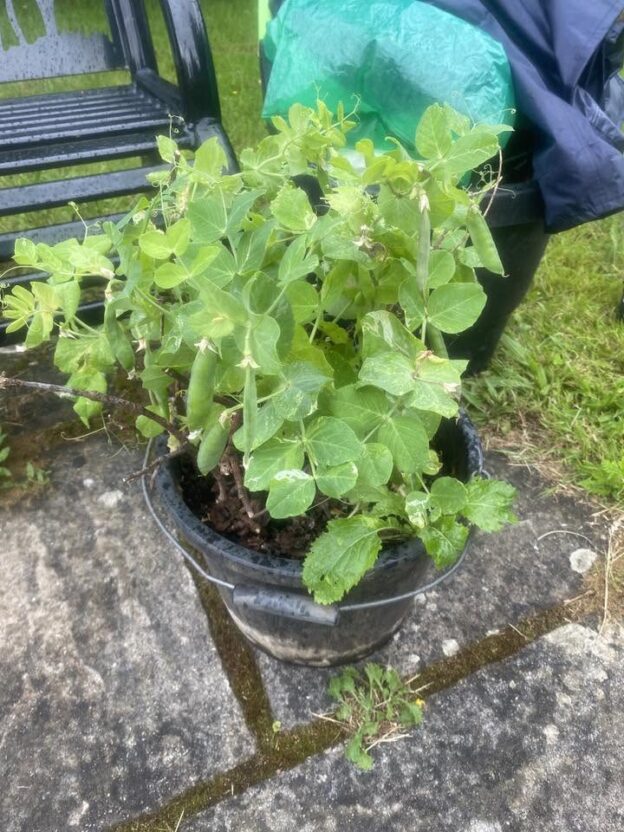
Sorry it’s been such a long time since the last blog post – in fact, there’s been time for the peas to grow, flower, and fill the pods with peas.
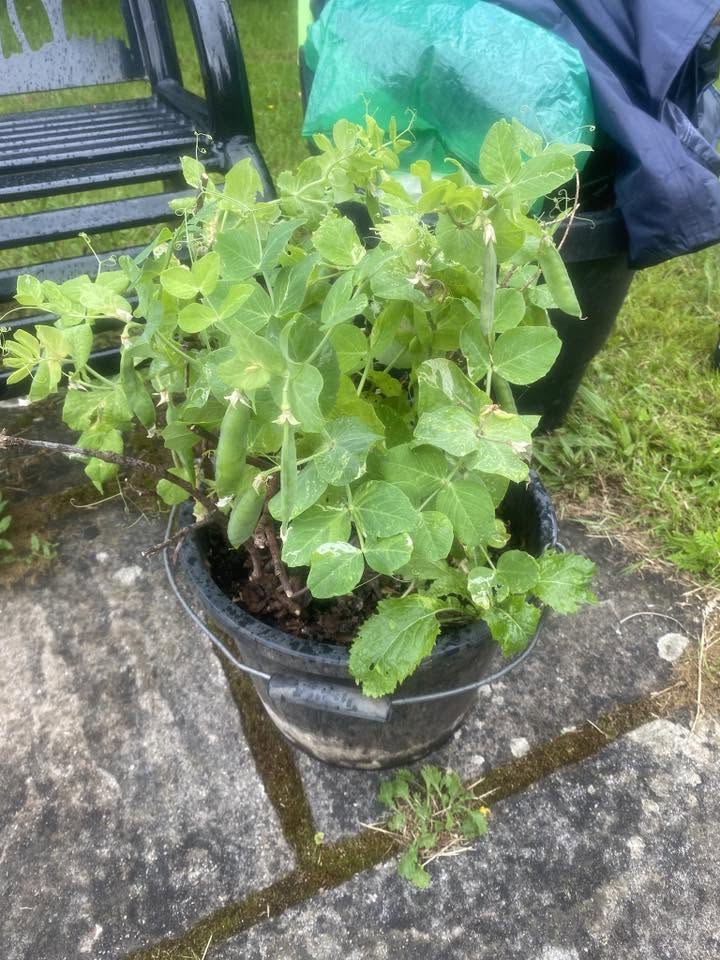
Unfortunately the children hadn’t been able to come round when we were working there over the last few weeks, so this is the first time they’ve seen their plants since they first came through the soil; but it was worth waiting for.
We took the bucket of peas round to the gardens and met some of the children there, where they picked some of the pods and discovered that small raw peas are very tasty. They left some for their friends back at the Pavillion, too.
We’ll do this again next year, with two or three buckets. It’s much more successful when members of the gardening team can look after the plants when they’re in their own gardens.
Some of the children went searching for ladybirds, and found quite a few:
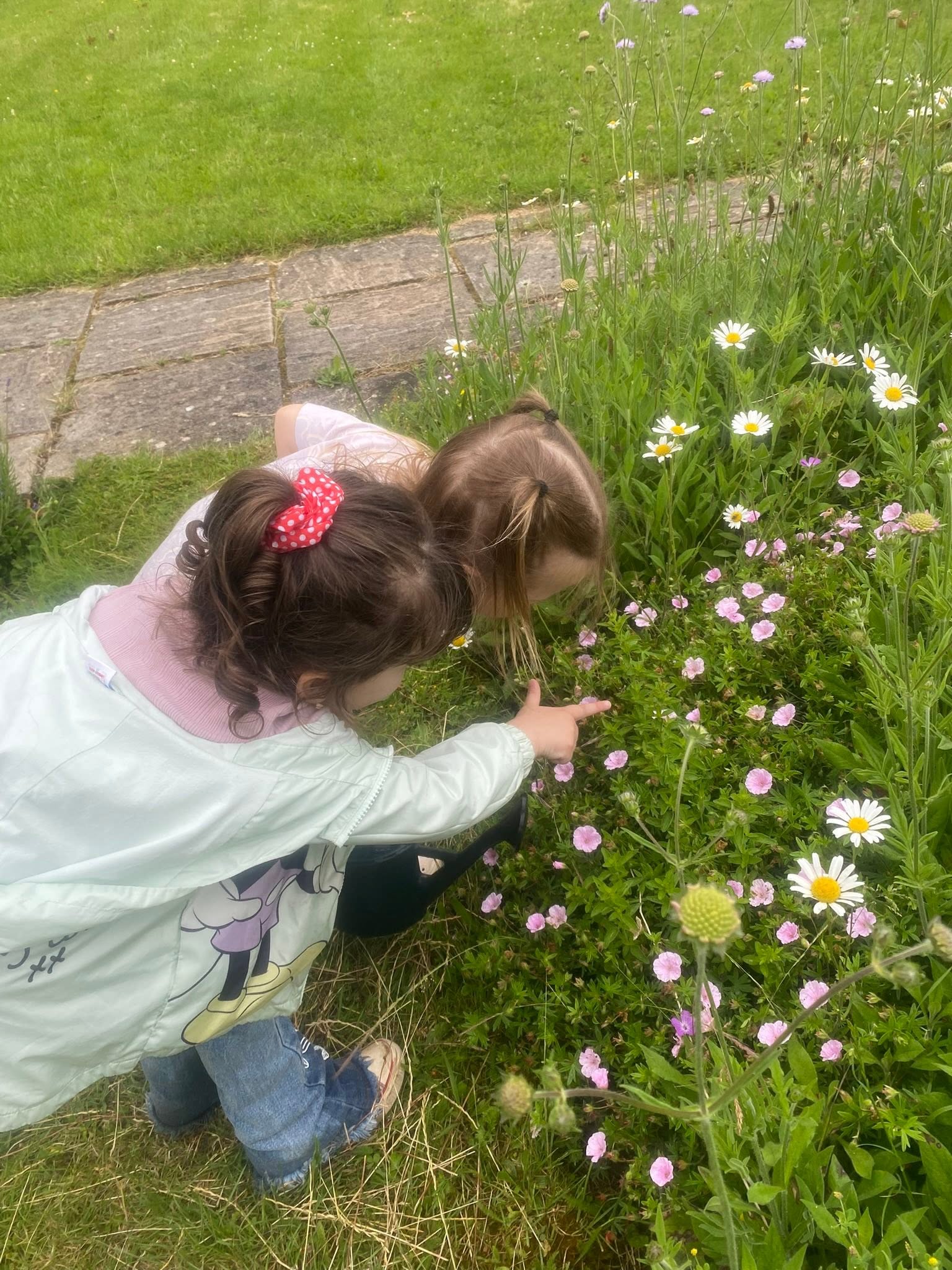
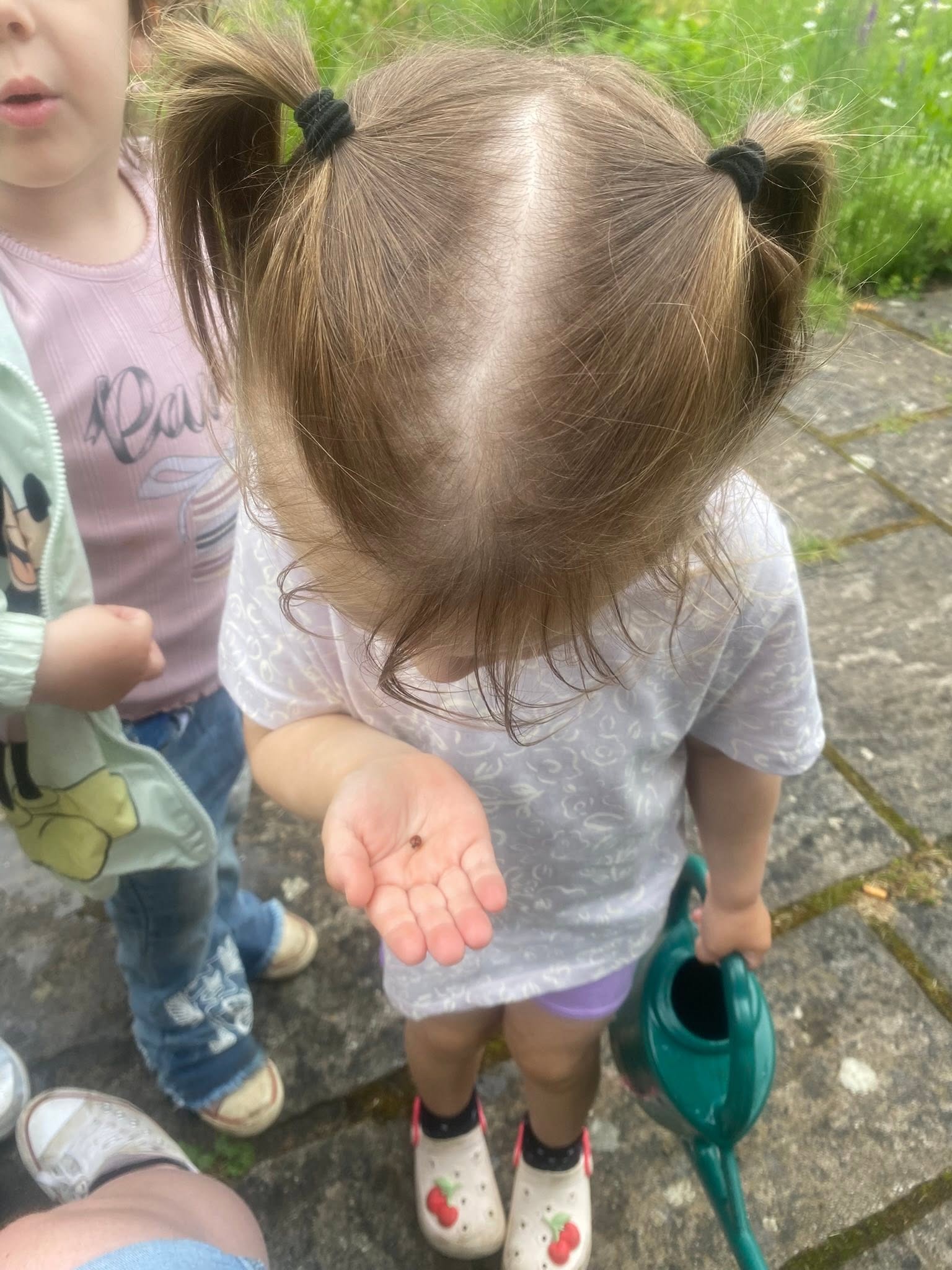
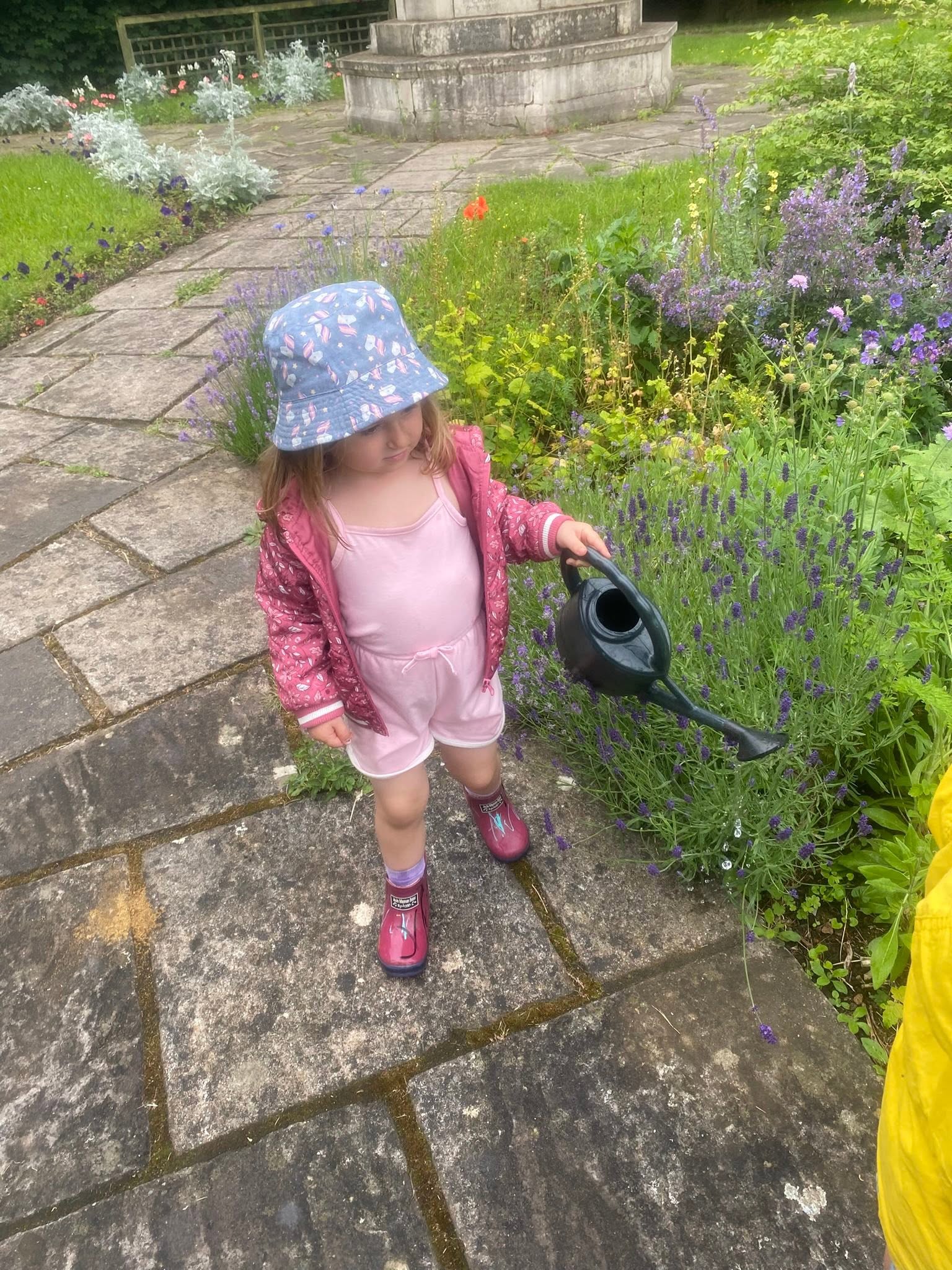
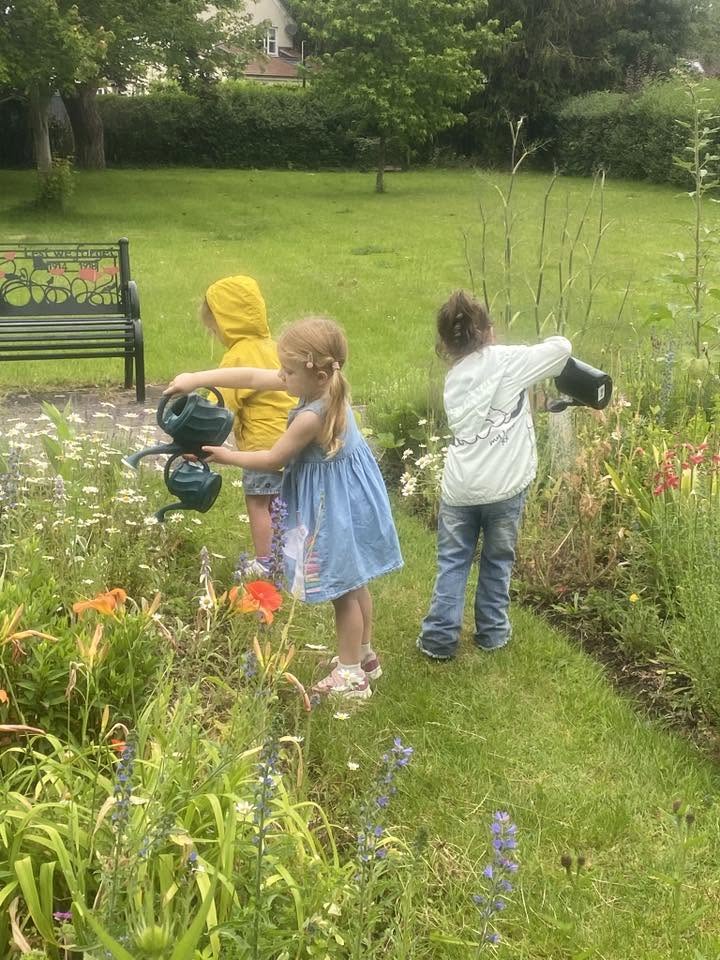
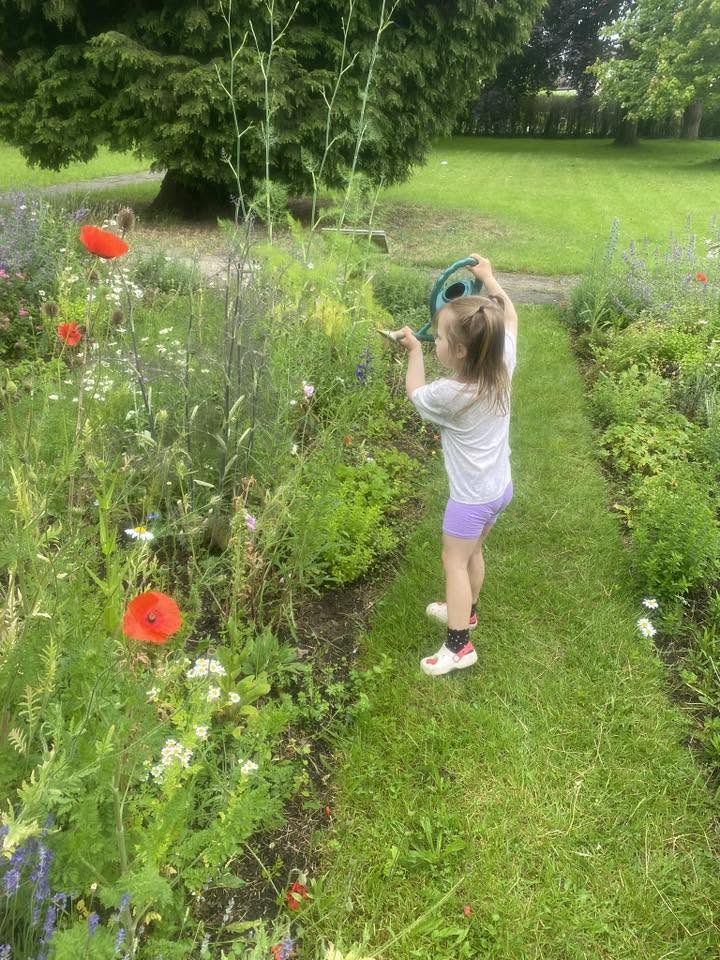
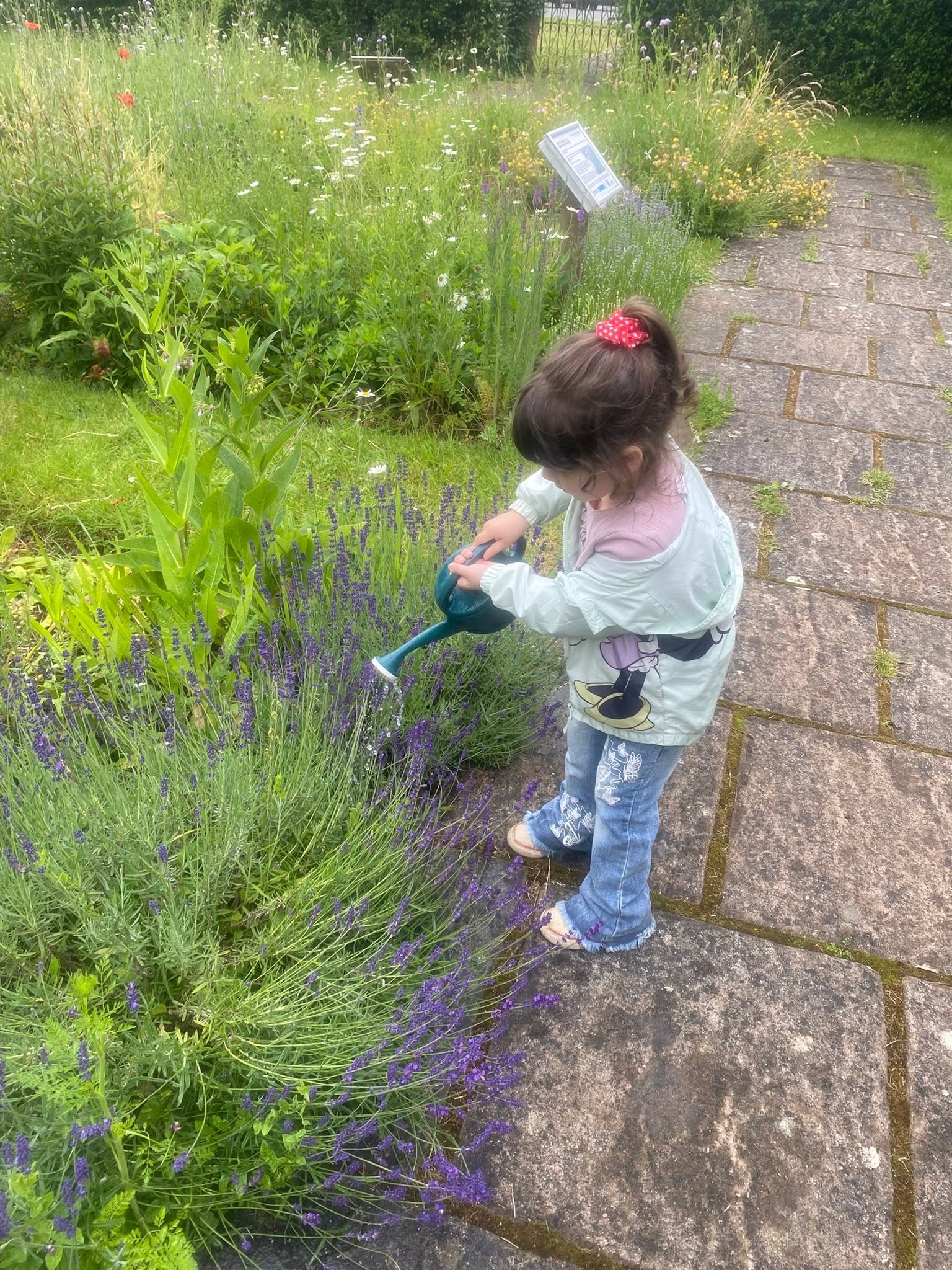
It’s been quite warm this week, and dry, so the gardens really benefited from all the watering the children did next – happier plants, a few damp feet, and smiles all round.
7 April 2026
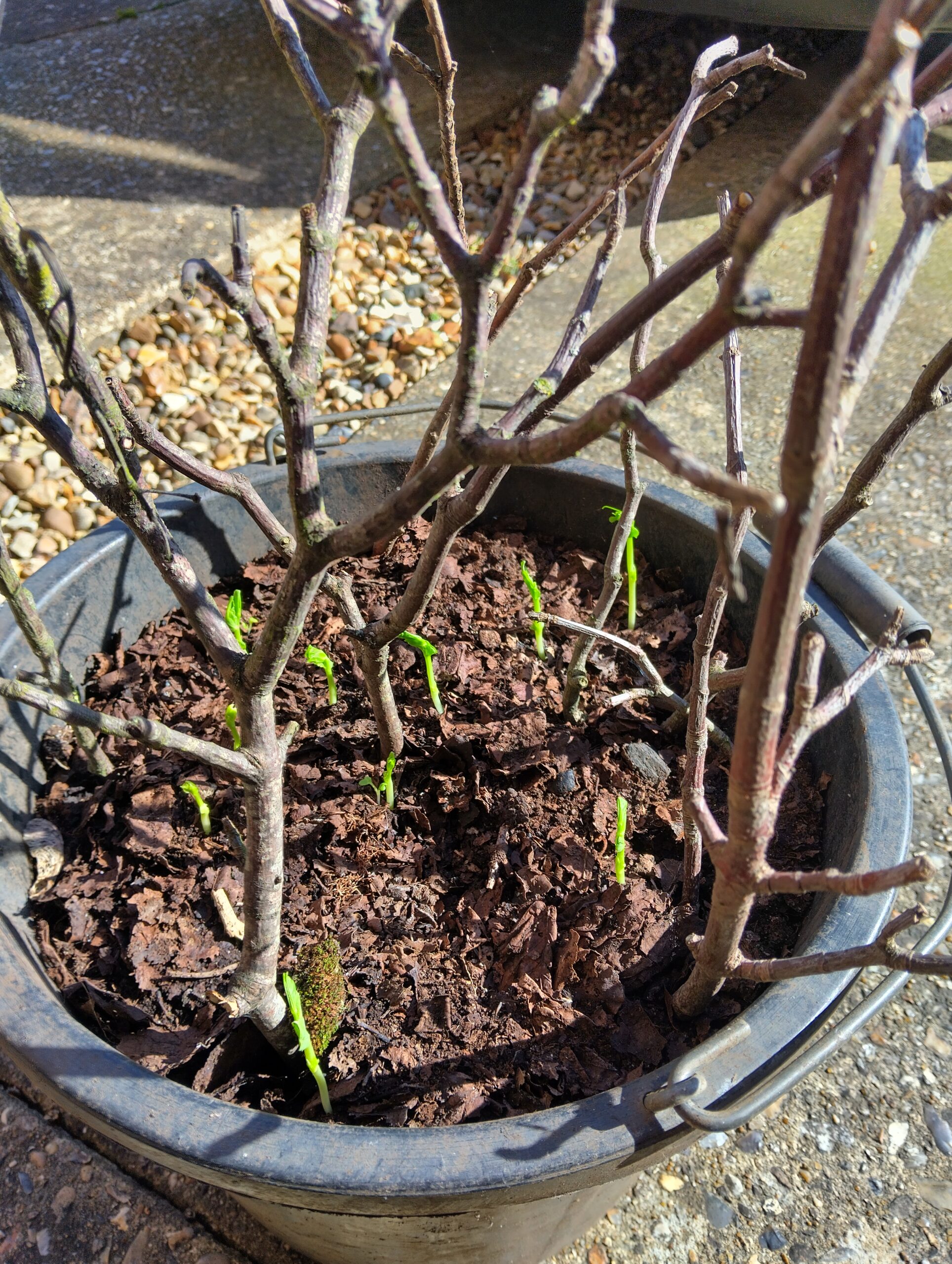
The children from the local preschool came round just before the end of term to sow a few peas; they’re just coming through now:
We’re not growing veg in their flower bed this year, as it hasn’t worked well. None of the available beds gets enough sun, and over the years it’s taken most of the compost we make just to improve the soil enough to grow a few baby carrots and peas.
The main problem is that we’d need to be watering three or four times a week in the hot, dry weather we tend to get now between April or May and July, when the peas would be ready. That’s not sustainable, either in terms of volunteer time, or the sheer amount of water needed to keep up with the way that large fir tree drains the beds. Much better to plant things that can cope.
But the children do love growing things they can eat! So this year, we’re experimenting with growing things in large containers (workmen’s buckets), with holes drilled in the bottom for drainage, and filled with a good rich mix of bought-in peat-free compost, home-made compost, and leaf mould. The children then sowed peas, topped up the container with leaf mould, and found sticks to put in to support the plants as the grow. Then the team can take the containers home to look after – much easier than trying to arrange watering visits – and bring them back for the children to see as they grow.
We’re going to do the same with radishes, carrots and probably lettuce. Watch this space!
3 April, 2026
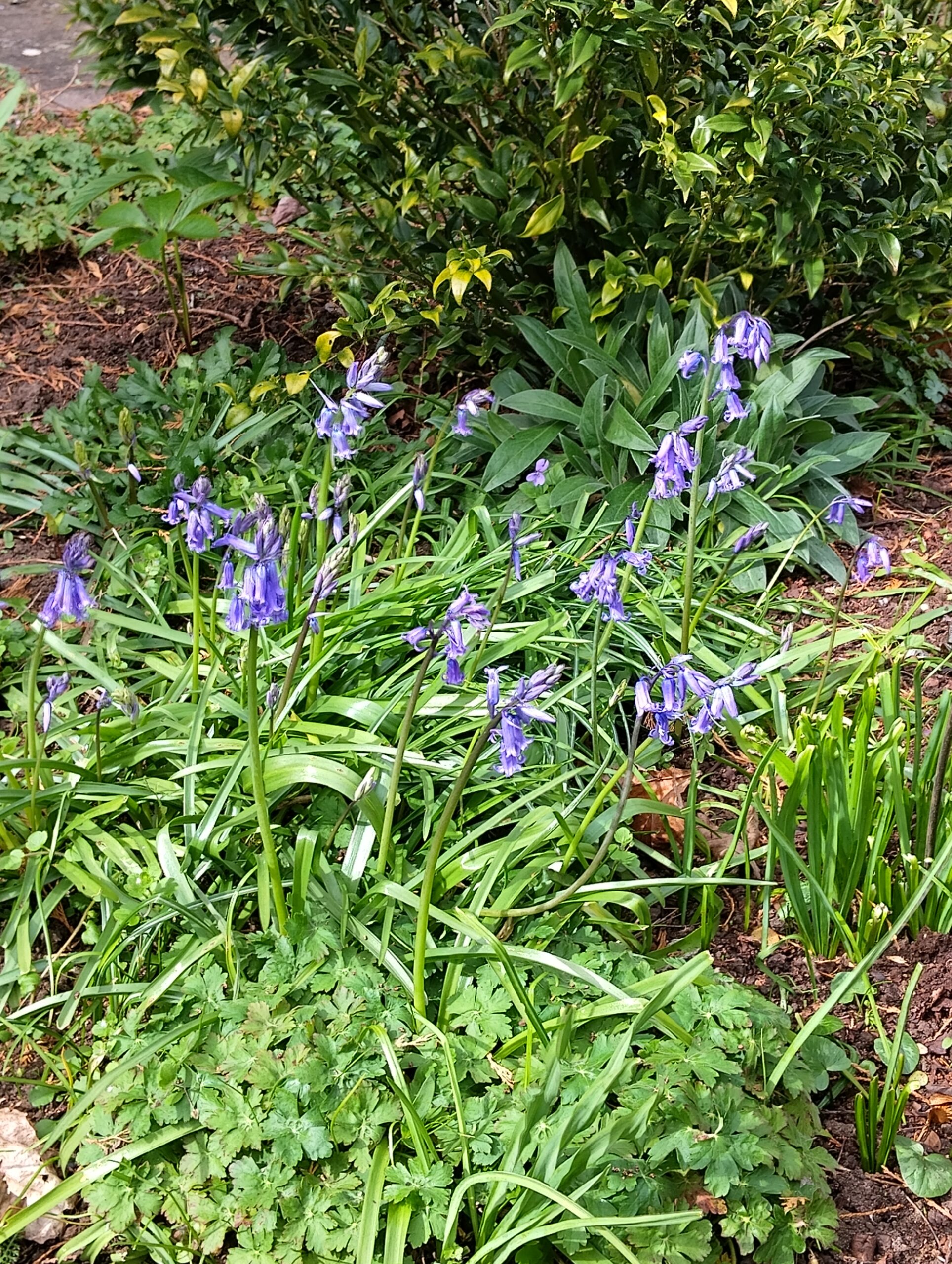
The English bluebells are almost out in the bottom bed (nearest the war memorial). Always a welcome sign that spring is really here.
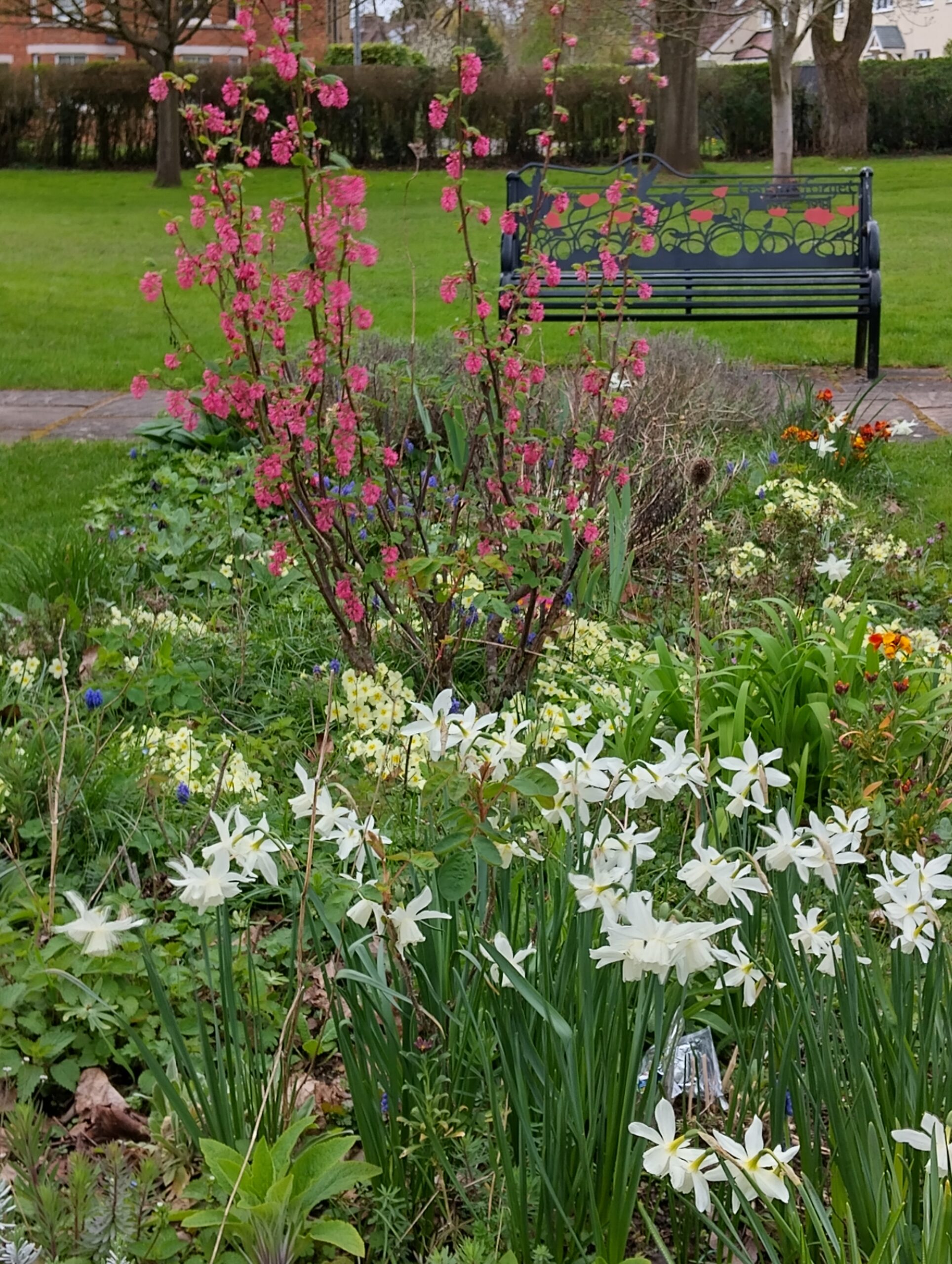
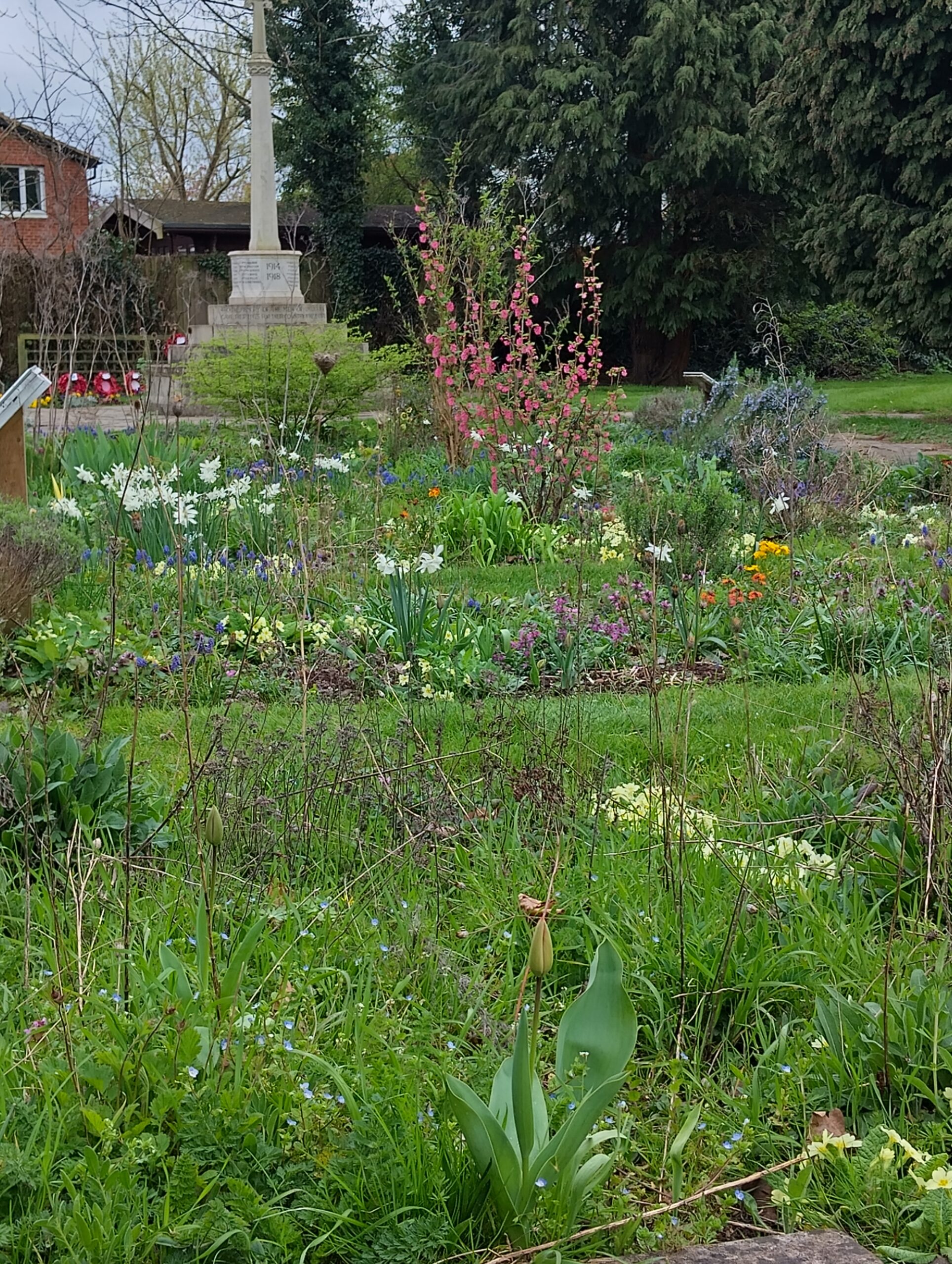
And a lot more flowers are coming out in the other beds, too:

25 March 2026
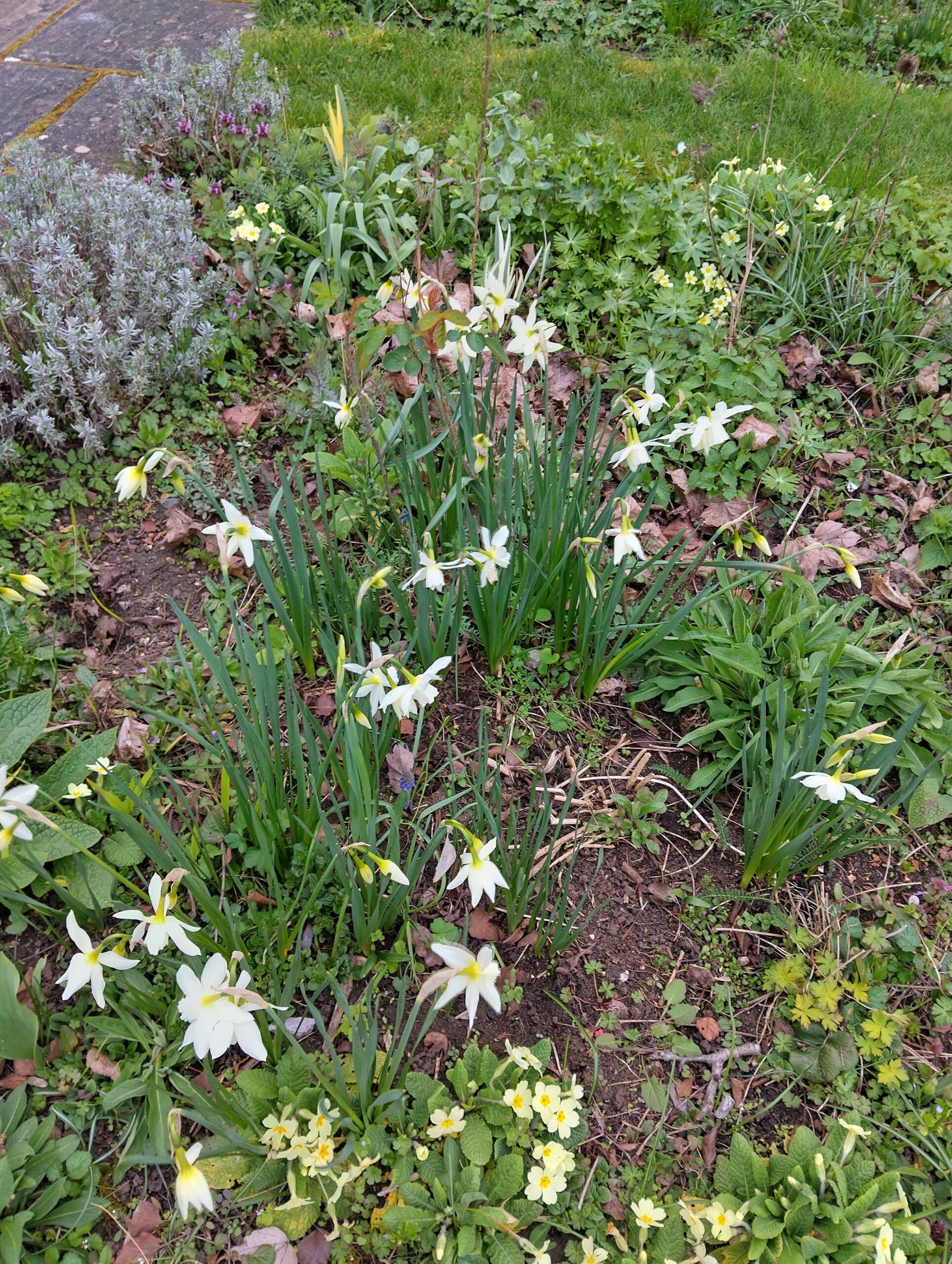
I’ve been asked what variety our white daffodils are – they’re Thalia.
We learned some time ago that bees don’t generally go for daffodils, which have been bred for many things, but not for producing nectar and pollen. On the other hand, bees do like these, so we grow them; and they seem to like the garden, as they’ve spread out from most of the places we planted them.
They used to be really difficult to buy bulbs for, but over the last few years I’ve noticed that gardening articles, social media and TV gardeners have been recommending them, and many more suppliers stock them.
24 March 2026
There are more flowers coming out all the time now – here are a few from this morning.
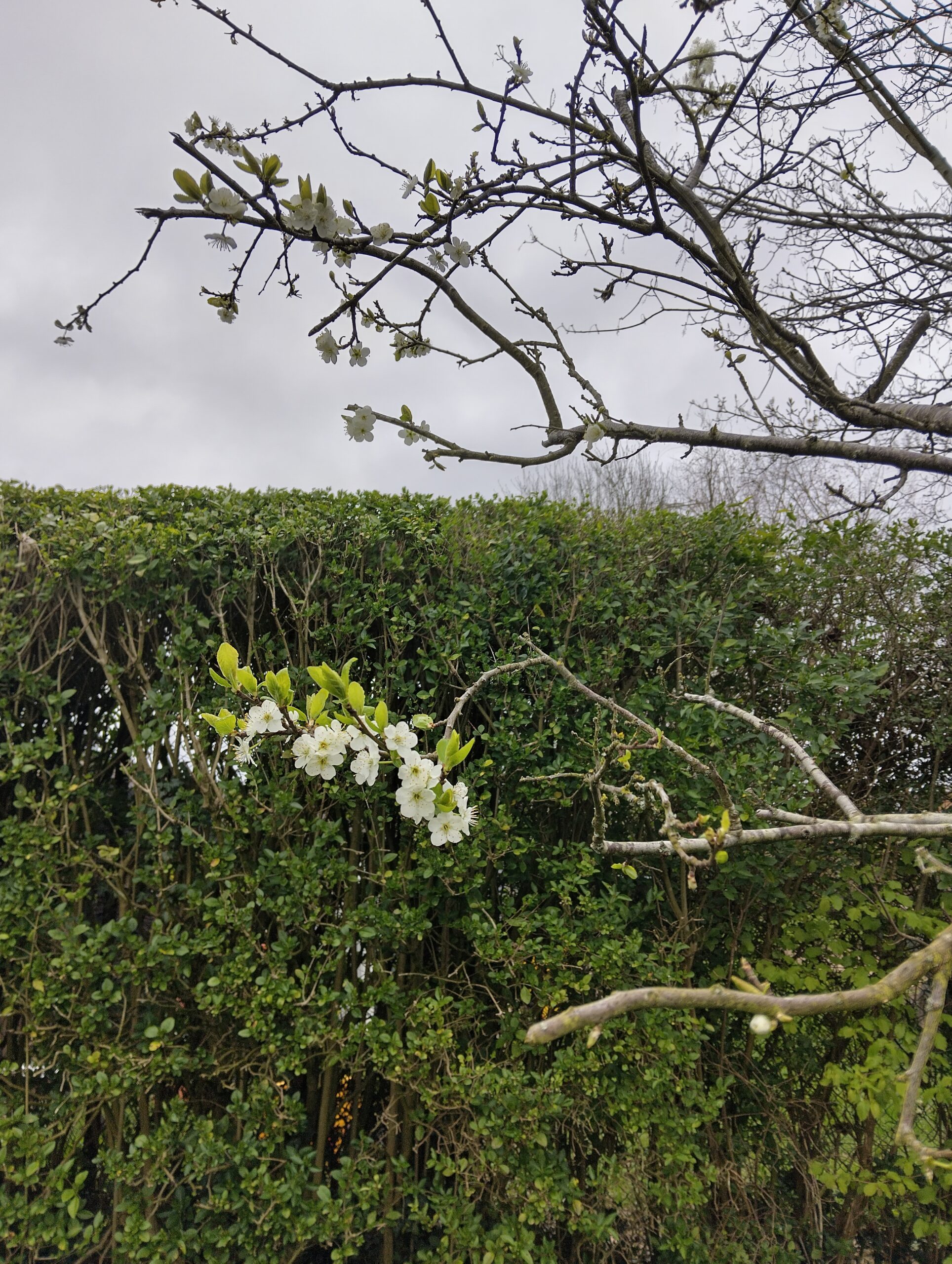
The plum blossom is pretty sparse, probably because the local wood pigeons could reach most of it.
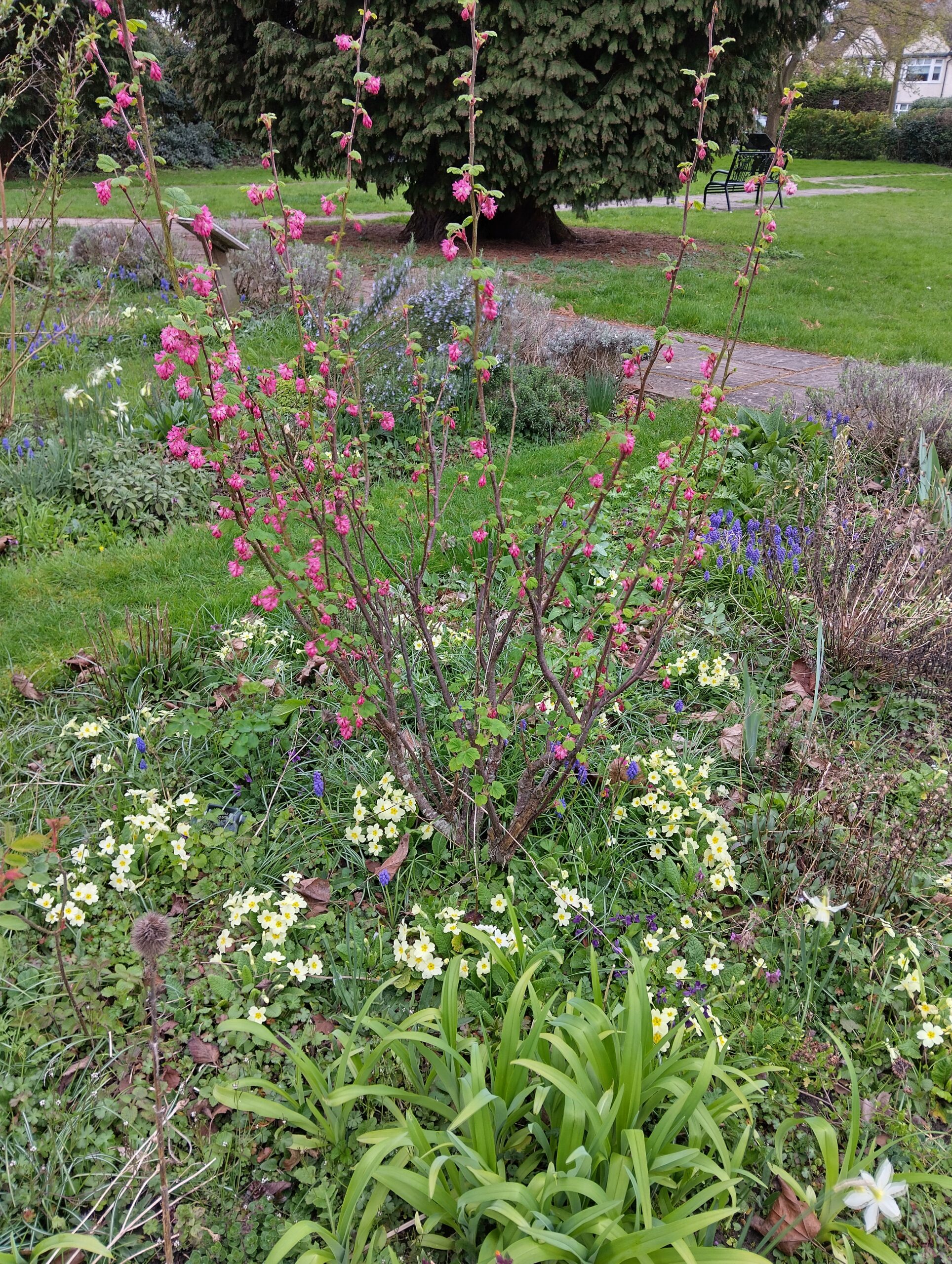
The flowering currant is dong well this year, as are the primroses we put round it some years ago. Over the years they’ve spread all over the gardens.
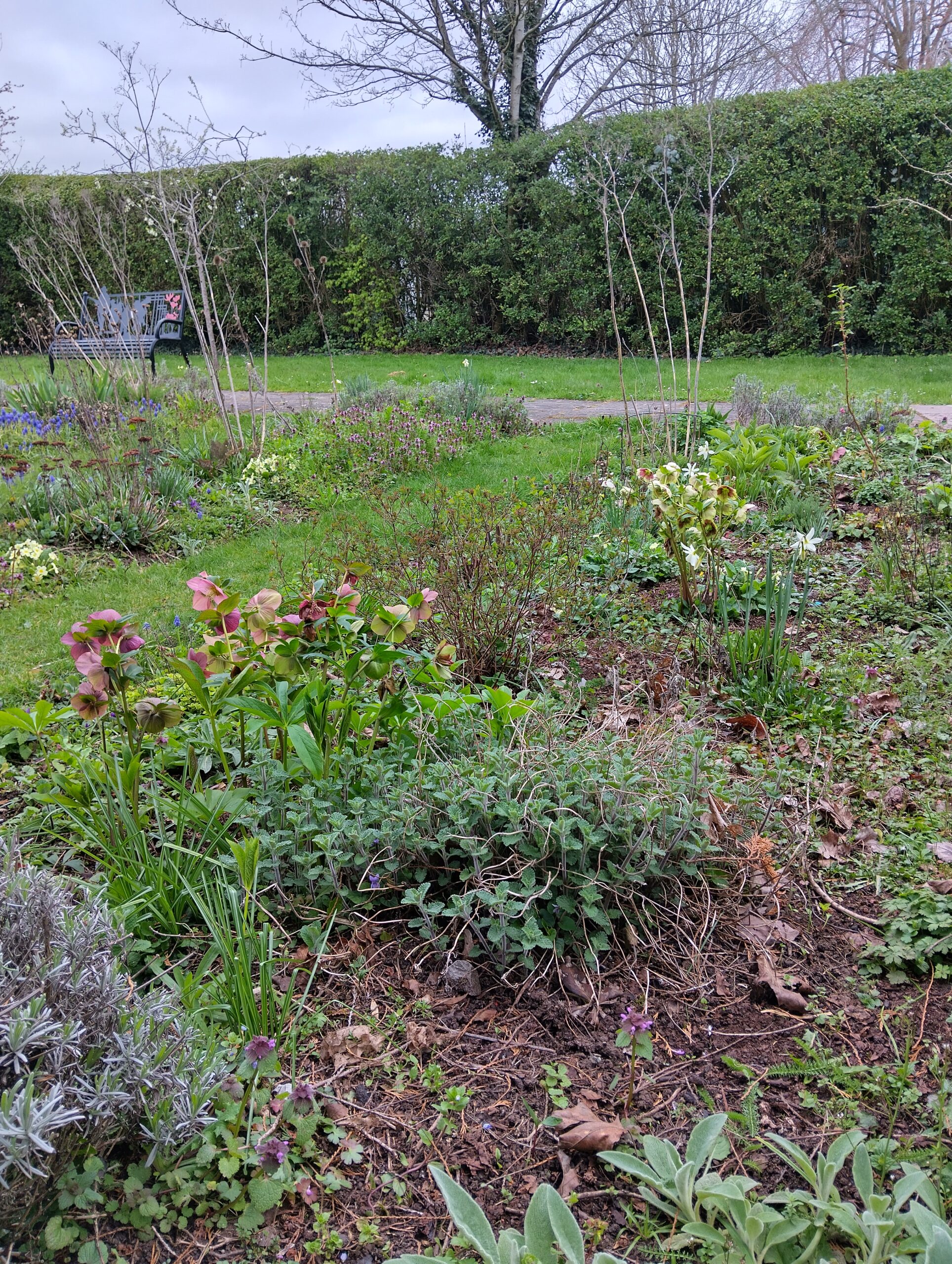
The hellebores have been flowering for a few weeks now, and the bees just love them.
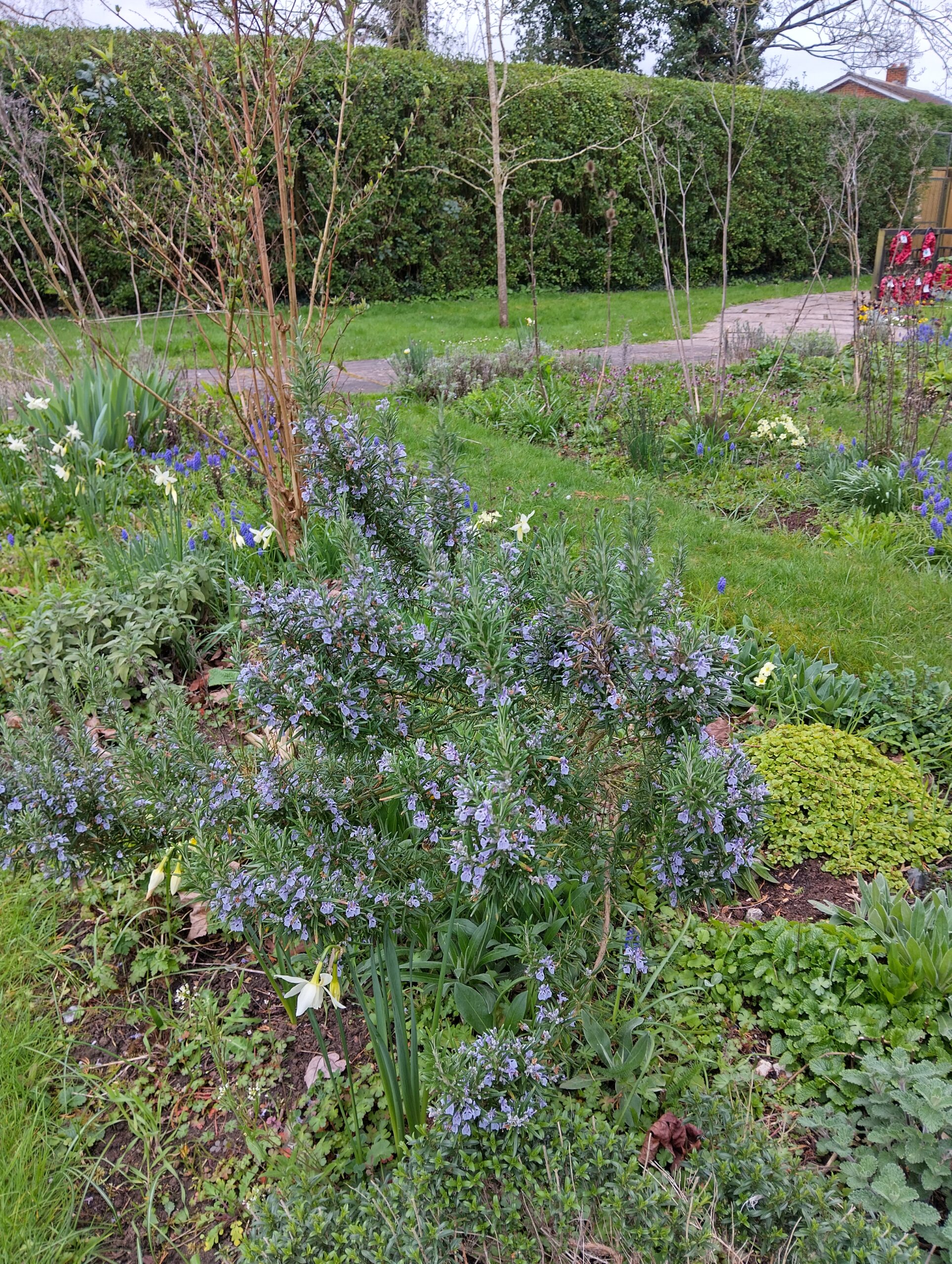
The rosemary bush is in full flower, and it’s only March!