Using dead leaves in the gardens

27 October 2025

We’ve just emptied the first bags of leaves into the leaf mould bin that we cleared a couple of weeks ago, it’s good to be back in that routine for a couple of months.

We’ll also be starting to empty bags onto the ground around plants soon, which keeps the soil covered and helps it hold moisture; it also makes the gardens look tidy ahead of Remembrance Day.

But a little later on we’ll also be putting leaves directly round many of the plants, to insulate the roots more by trapping air round them and keeping frost off them, and to provide more shelter for all the beetles and small creatures that have moved in over the decade we’ve been looking after these gardens. It’s a real balance between maintaining a wildlife-friendly garden, and keeping it looking tidy and respectful; and tucking dead leaves round plants doesn’t help the tidiness. So we wait till after the services, when everything’s dying back and the leaves don’t look out of place or scruffy.

These leaves will gradually rot down over the winter, adding organic matter to the soil, which will help it hold moisture – very important in the kind of summers we’re having now, with weeks on end without rain, with added heatwaves. This year we hardly had to water at all.

It’s been interesting to notice that mainstream garden writers and presenters are increasingly suggesting we put leaves directly round plants for the winter – what a long way we’ve all come since the general advice was to cut everything down and clear the ground for the winter. I seem to remember it was called ‘putting the garden to bed’ – well, I’d rather have a blanket over me when I’m in bed, and a blanket of leaves seems to suit plants better, too!
It’s that time of year again!

12 October 2025

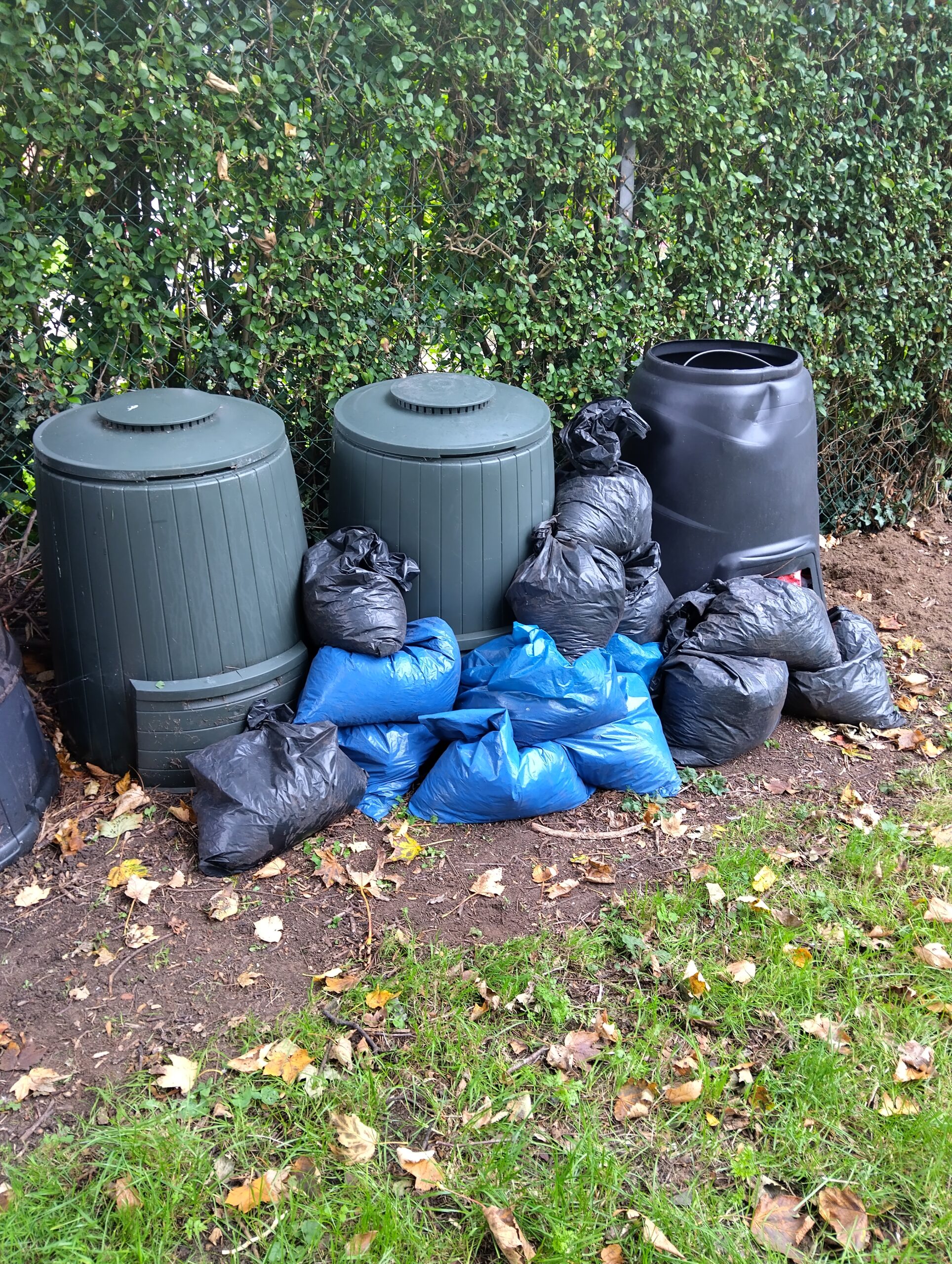
It’s nine years since we started collecting bags of leaf to make leaf mould. Originally we just emptied them into Dalek-type composters like these:

but we soon found we needed to construct a much larger bin, with two 2-metre cube compartments – one to collect that year’s leaves, and one to let the leaf mould rot down for a further year.

And now it’s that time of year again – if you’d like us to collect bagged-up leaves, drop us an email or message us on Facebook and we’ll come and pick them up and add them to the bin. We emptied it this morning, it’s all ready and waiting:

More on the Plant Sale at the end of this month

12 April 2025

These are the plants we have already for our Plant Sale on April 26 (on the verge between the car park for the Linslade Memorial Gardens, and the Gardens’ hedge).

The plants are generally small-flowered and unshowy, but they do attract bees and other pollinators, and most of them are perennials (that means they’ll go on growing in your garden / window box / other container) for several years.

The ones that aren’t perennial are foxgloves and verbascum, which are biennial – that means they spend the first year making a rosette of leaves, which produces a flower spike (or two) the following year, in about May-June. If you let the seeds ripen you’ll have more than enough to start the whole cycle over again, so although they’re not perennial, if they like where you put them, they should keep going for years.

Garden flowers:

Bearded Iris; Iris pallida; Hardy geraniums – Geranium macrorrhizum, Geranium ‘Kashmir White’, Geranium ‘Cloud Nine’, Blue species geranium; Geranium ‘Bill Wallis’; Purple toadflax (Linaria purpurea); Sisyrinchium; Lambs’ ears (Stachys byzantina); Mullein (Verbascum); Verbena ‘Bampton’; Veronica spicata ‘Red Fox’; White pulmonaria.

You can find details and photos of these plants on the RHS website

Herbs:

Oregano; Golden oregano; Lemon balm; Garden mint;

Wild flowers:

Cowslip; primrose; foxglove; Water avens (Geum rivale); Mush mallow

Others:

Bowles’ Golden Grass (Millium effusum) – we need grasses too in a wildlife bed; some of the solitary and bumble bees nest in grass, and it provides cover for insects and small mammals. This one glows bright green for most of the year, lighting up the flower bed in winter.

Aloe vera – not a bee magnet, not even good for habitat, just an addition as a blatant fund raiser, they’re popular house plants but can be hard to find

Weeding and tidying up

08 April 2025

Or rather, why we haven’t done it yet.

Last year about this time, we explained why we don’t cut back all the old plant stems in the autumn, as people used to do to make their flowerbeds look emptier and tidier over the winter (spoiler: it’s because insects and small mammals need places to hibernate in, and dead leaves on the ground and hollow stems in the air seem to be just the thing).

We have cut most of the old stems down now, but we’re still not weeding thoroughly – this isn’t just laziness! A lot of the flowers we encourage here are ones that have self-seeded, and too many of them haven’t germinated yet. So if we weed to bare soil between plants, we’re destroying a lot of plants we might like to keep.

The warm weather over the last couple of weeks has really brought a lot of plants on faster than usual, so we’ll be starting to tidy up in earnest for the rest of this month, and sowing seeds where we find any bare patches.

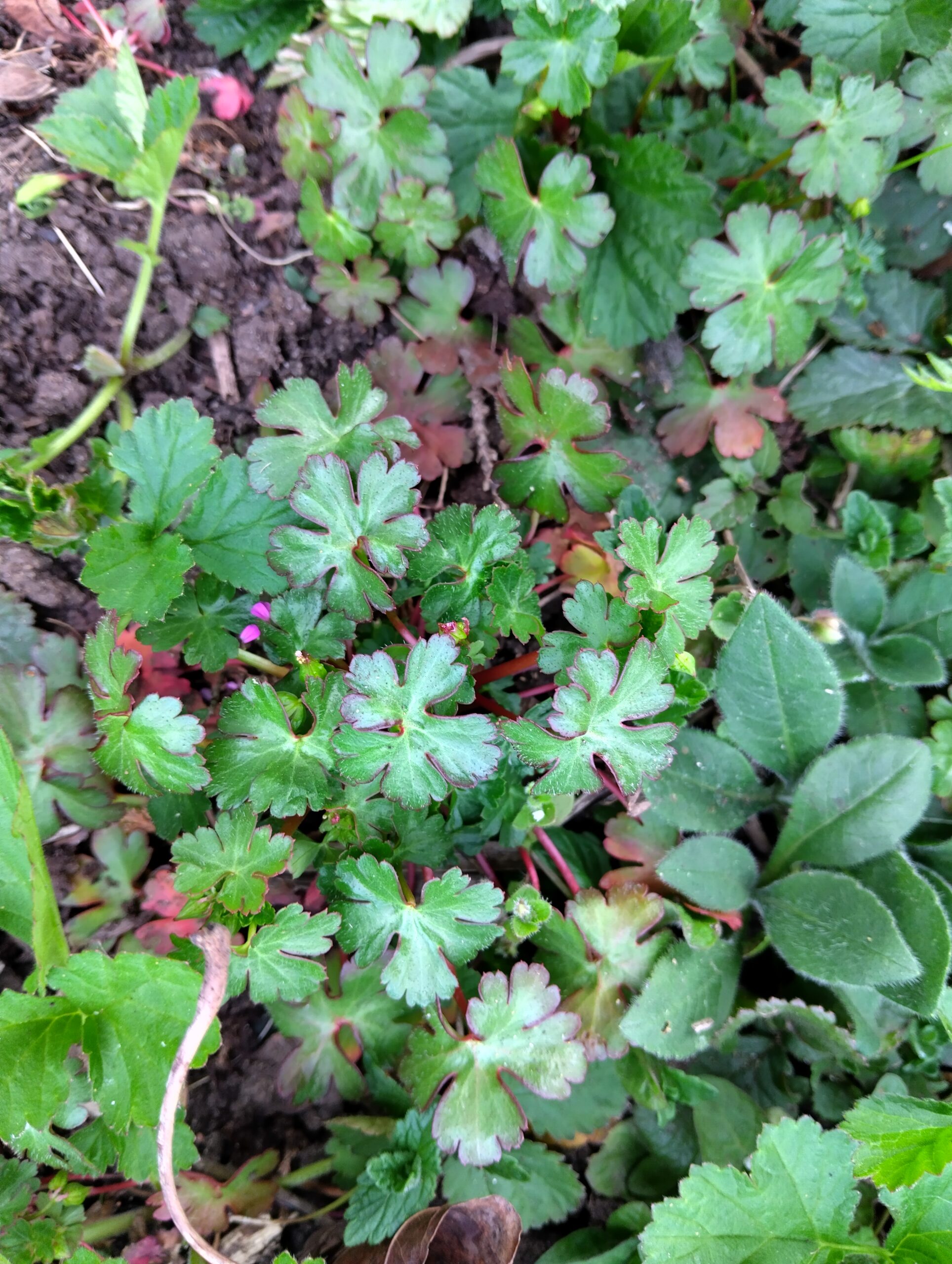
And perhaps most importantly, we’ll be lifting even the useful wild flowers like Geranium lucidum [find photo] in the third bed up from the memorial itself – that’s the bed the preschool children will be planting their peas out in when they come back after the Easter holidays, and we need it to be ready for them then.

Geranium lucidum in the preschool bed
Geranium lucidum

We’ll leave a couple of plants – there’s a large viper’s bugloss which will be a real bee magnet later in the year – but mostly we’ll be clearing more space for them. It’s a big ask to avoid digging up lots of plants by mistake when you’re only 2 or 3 years old!

Save the Date again!

12 March 2025

Last year’s plant sale was really fun, so we’re doing it again this year on Saturday April 26, from 10:30 to 12:30.

The Town Council would prefer us not to hold it in the Memorial Gardens themselves, but have said we can use the wide grass verge between the hedge and the car park.

There’ll be pretty much the same mix of plants as last year – many perennials (herbs like golden and common oregano, and thyme; bee magnets like purple toadflax and foxgloves; and geraniums, irises and a couple of ornamental grasses.

Like last year, we’ll have tea and coffee, and many gardeners on hand if you’re not sure what’ll work in your own garden.

A visit from our new MP

November 28 2024

Alex Mayer, our new MP, visited Leighton Buzzard last week to meet members of the ‘United for Warm Homes’ campaign; South Beds Friends of the Earth are one of the organisations involved.

After that meeting, she wanted to see some of our wildlife-friendly sites First was the flowering hedge we helped to plant a couple of years ago, up by the boundary of The Wharf; then she came down to see Linslade Garden of Remembrance. Sorry, we don’t have any of the photos yet.

She commented on how neat the place was – I think that’s a first! But we do try to keep the path edges cut, and of course they’d been done extra carefully a couple of weeks ago, for Remembrance Day. And we scrape a trowel along the edge of the bed, which keeps weeds down, stops grass and plants invading from the paths, and makes a nice dark contrast of bare soil against the path edge – which makes the beds look particularly neat at this time of year, in low sunlight.

What goes on inside the beds is much less formal, though; Alex Mayer really liked all the tall plant stems we leave, with seed for birds (goldfinches were feeding when we went round to meet her) and places for insects to hide. She was interested in how we look after it, and in the support we have from the community, in many ways. And of course, she was impressed with the help we have from the preschool children, who were out this morning helping us gather leaves – more on that in our next post.

Preparing for Remembrance Day

30 October 2024

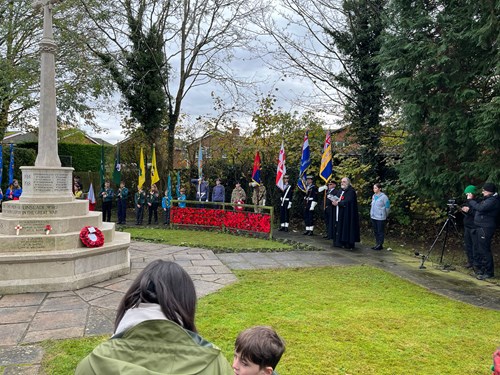
Remembrance service at Linslade Garden of Remembrance 2023 (photo courtesy of the Royal British Legion website, used with permission)

During the week before Remembrance Day and Remembrance Sunday we’ll be putting out knitted poppies in the wildflower bed again.

This year, there’ll be 61 red poppies again – one for each name on the war memorial – but there’ll also be small groups of three other colours of poppies, too. Here’s an explanation of what they each represent.

Red poppy

The red poppy represents all those who lost their lives on active service, from the beginning of the First World War right up to present day.

It also honours the contribution of civilian services and the uniformed services which contribute to national peace and security and acknowledges innocent civilians who have lost their lives in conflict and acts of terrorism.

(from the Royal British Legion’s website – see ’11 things you might not know about the poppy’)

Black poppy

The black poppy was introduced in 2010. It reminds us of the forgotten black African, Caribbean and other indigenous peoples from colonised nations in the British Empire who served in many British conflicts over several hundred years.

There’s much more information on the Black Poppy Rose website, along with many examples of just what many of those contributions were. And the blog post ‘Why the Black Poppy Rose really matters’ describes why Selena Carty started the campaign in 2010 to honour the wartime efforts of black soldiers and their families.

White poppy

The white poppy represents remembrance for all victims of war, a commitment to peace and a challenge to attempts to glamorise or celebrate war.

The white poppy was introduced over ninety years ago in 1933, by the Women’s Co-operative Guild, as a pacifist alternative to the British Legion’s annual red poppy appeal. The Guild closed in 2016 (after 133 years); more information about white poppies can be found on the website of the Peace Pledge Union, who work for removal of all causes of war.

Purple poppy

The purple poppy was introduced in 2006 by the Animal Aid charity, to commemorate the animal victims of war – no other organisation seemed to be addressing the issue. Their aim was to make it clear that animals used in warfare are indeed victims, not heroes. They do not give their lives; their lives are taken from them.

Many horses were commandeered from farms and businesses in the local area at the start of World War 1, For example, a report in the Bedfordshire Times (14 August 1914) headed ‘The Purchase of Horses for the Army’ said ‘No little commotion has been caused in agricultural and commercial circles by the so-called commandeering of horses and vehicles by the military authorities.’
By 1917, Britain had one million horses and mules in service. Over over 484,000 of them were lost in the war.

More information from the Animal Aid website

Replanting some of the wildflower bed

21 September 2024

The wildflower bed’s looking a bit different after this week, as we’ve cleared a lot of the plants out.

Garden writers and presenters tell us to ‘leave things a bit untidy’, and ‘don’t cut plants back till spring’ and that’s usually what we do here – so why have we changed the plan this year?

There were two main issues. One was that the bed had become extremely untidy, and we are mindful that we’re approaching Remembrance Day in a few weeks. We want to keep it wild and maintain the ecosystem that’s developed here, but also keep it more respectful, in keeping with its surroundings. It’s a difficult balance, and we’re very appreciative of the Town Council and the British Legion for giving us the chance to do it.

The other issue is that scabious and knapweed have begun to dominate the bed and crowd out many of the other plants that flower at different times of the year. That in itself has been restricting the biodiversity we’ve been trying to increase.

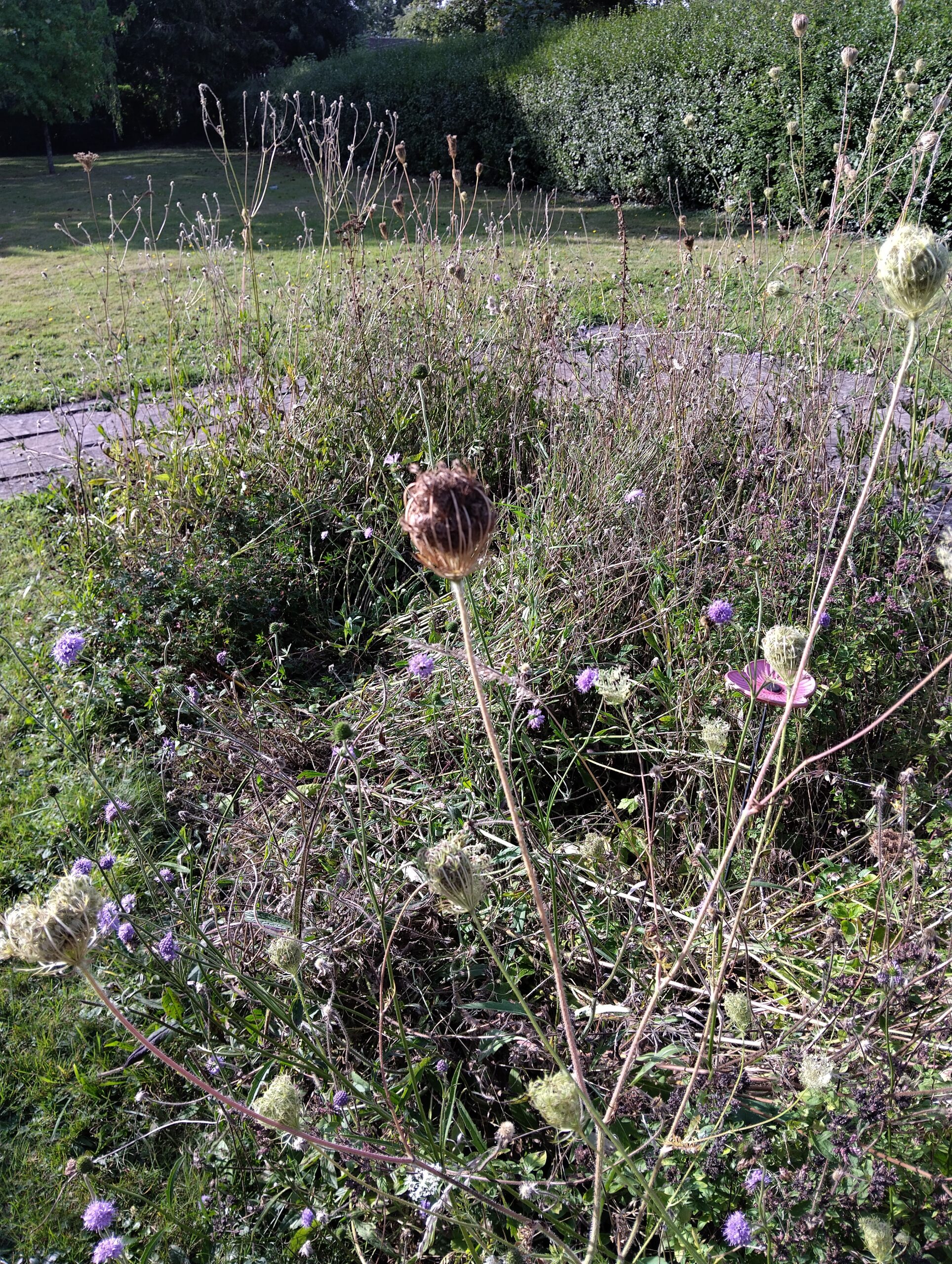
A corner of the wildflower bed last week, before clearing – the larger plants are crowding out the smaller ones

When we started managing the site, the wildflower bed was just sown with cornfield annuals – poppies, oxeye daisies and cornflowers, which provided pollen and nectar for a few weeks. Over time we’ve also encouraged any native plants that just arrived in that bed as well – black medick, self-heal, the odd foxglove, things like that.

A few years ago we added scabious and knapweed as they’re perennial plants that would flower every year, but the soil’s really too fertile for them; they’ve grown massive and crowded out many smaller plants that provide nectar and pollen earlier in the season. When you see them in their natural environment – on Ivinghoe Beacon, for example – they grow knee-high, not shoulder-high!

We want to keep some of them, but we need to let more light and air in immediately – so this year, we’ve cut the stems down, so we can see what’s growing where, and where we need to replant. There are still plenty of wild carrot seedheads in that bed, and plenty of undergrowth in the other beds in the gardens, providing habitat for insects and our resident frogs.

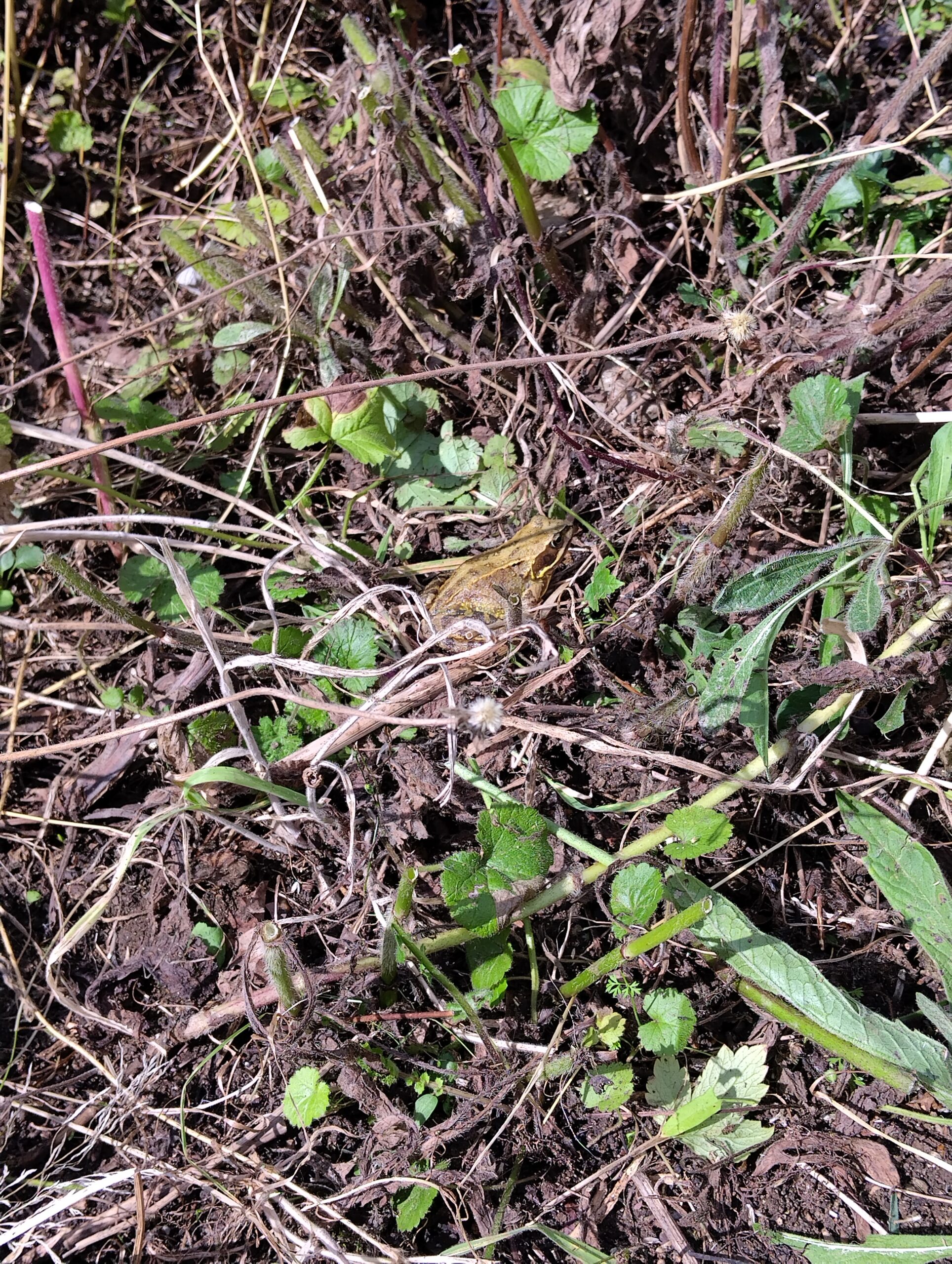
A slightly confused frog, wondering what happened to all the ground cover (there’s still plenty left, just a metre or so away, it found it)

We’ve also removed the stems rather than letting them compost down as usual, as that increases soil fertility – which is great for cornfield annuals like poppies and cornflowers, but not good for other natives.

We’ve left a few areas uncleared for the moment, so as not to disturb too much of the resident insect population, and we’ve started putting in a few more plants – water avens in the soggiest corner (nearest the flowering cherry tree), more foxgloves, red deadnettle, viper’s bugloss, primroses and cowslips; and we’ll be sowing more foxgloves, birdsfoot trefoil, and field poppies and Welsh poppies too.

The same corner of the wildflower bed after a bit of clearing.

This wildflower gardening is very complicated! But worth it.

Insectageddon!

20 August 2024

Insectageddon!

20 August 2024

That sounds a bit dramatic, but insect populations really have crashed over the last few years – many of us have noticed that there are fewer bees and other flying insects around, and we don’t have to clean insects off the car windscreen any more.

A recent paper reports a 75% decline over just 27 years.

And of course, without insects, we have far fewer birds. It’s been particularly noticeable here in the Memorial Gardens, where we have the just odd bluetit or robin, and hardly any blackbirds; we used to have far more of them around us when we were working.

There are a number of reasons for this decline – loss of habitat, use of pesticides, erratic weather – but this year the long cold wet spring has made it much worse, as many species haven’t been able to breed as much or as often as they usually do.

How can we help them recover? – Well, in the long term, we need to support measures like the Town Council’s Biodiversity Plan (on their Climate Emergency page, and Central Bedfordshire Council’s local Nature Recovery Strategy.

It really helps when people email councillors to show your support for these plans, and encourage them to see that they get acted on.

But more locally, we can always do more here in the Memorial Gardens. We’ve noticed more different types of beetles, bees and moths since we started managing these flower beds about ten years ago, but there’s still more we can do. We’ve started changing what we do in the autumn – tidying the beds without being too tidy! We tuck leaves between plants to provide shelter and hibernation sites, and we’ve tucked a few small log piles around, too. We’re also adding a greater variety of plants, as some insects are specialists, and need particular flowers, at a particular time, which takes more thinking about than just putting in open-flowered plants that bees visit. Night-flying insects are important pollinators too, so we’ll add some of the flowers they like – we have some evening primroses and phlox growing on, which we’re hoping to put out this side of the cold weather. And of course, the fuller the beds are, the better the shelter for insects, small mammals like voles, and reptiles – we’re always getting surprised by frogs jumping out from their hiding places as we work!

July colour

8 July 2024

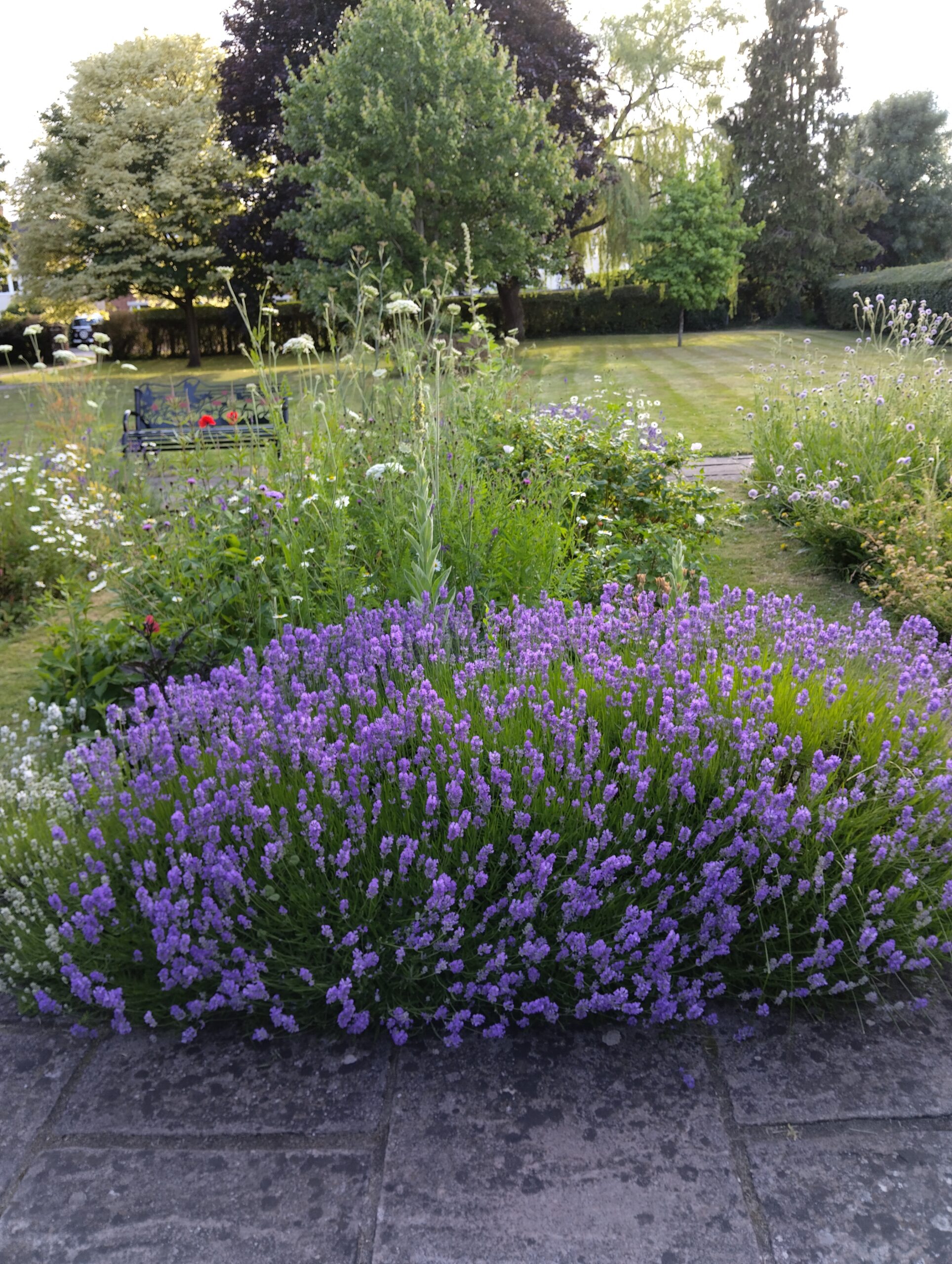
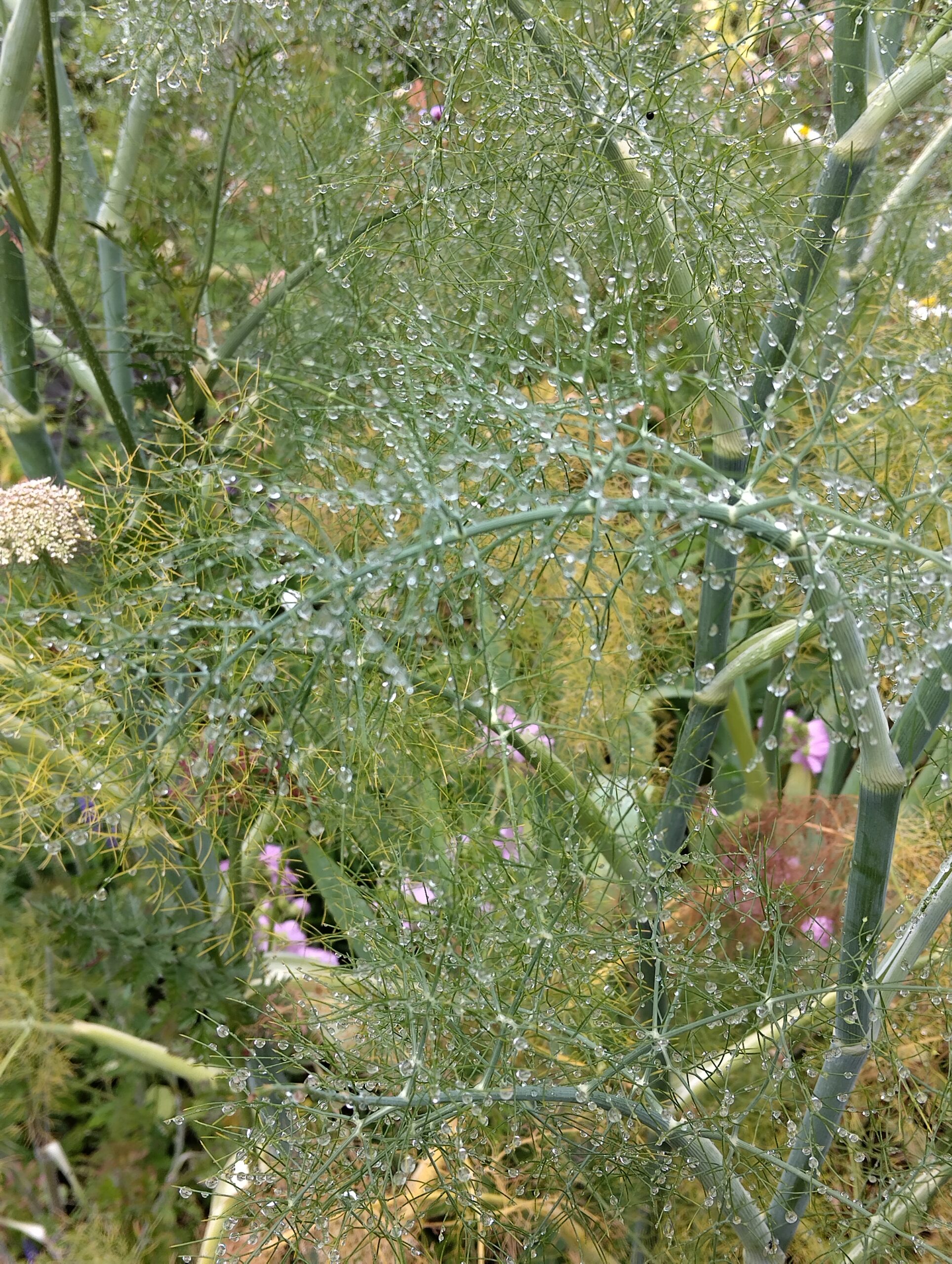
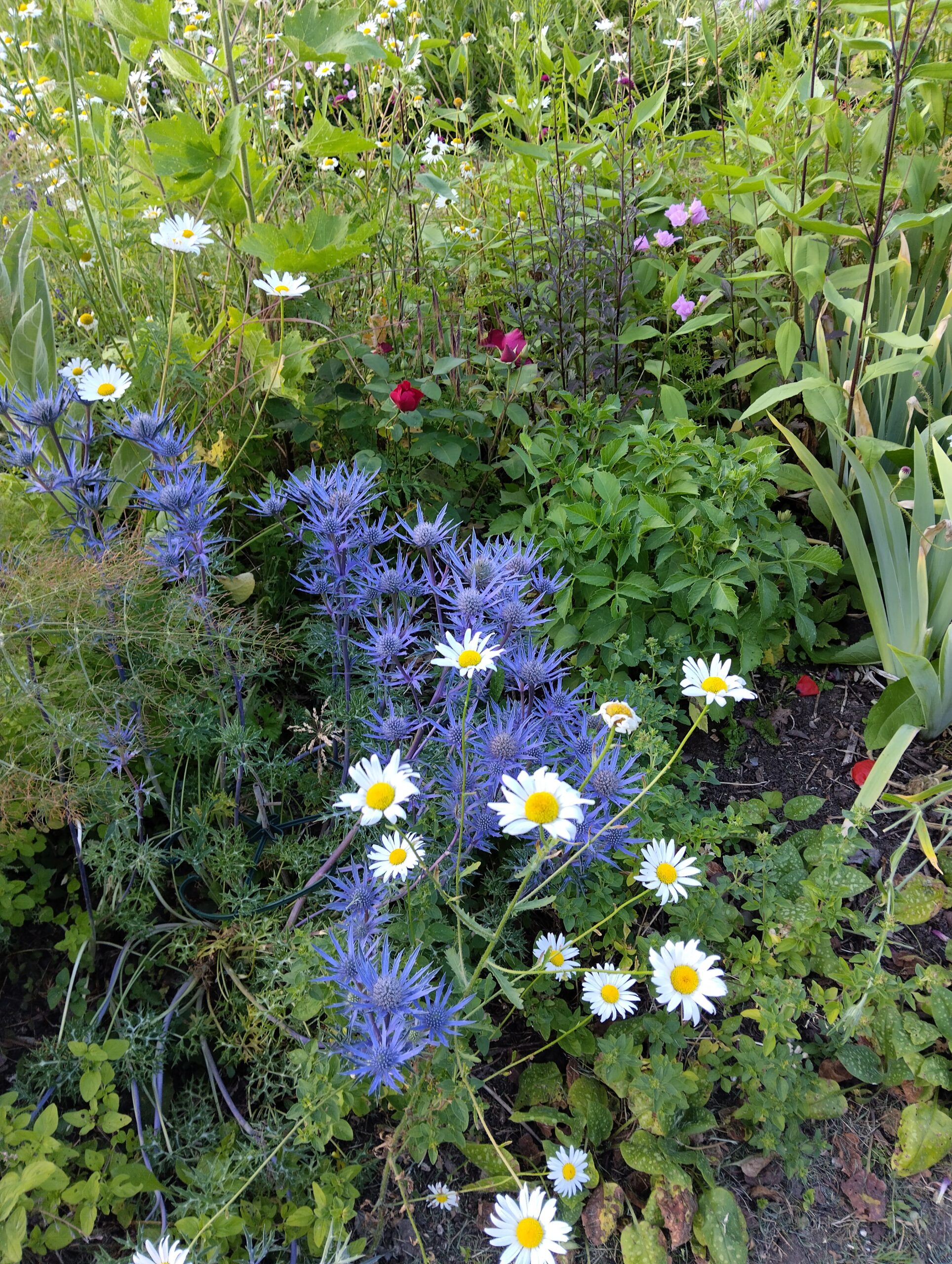
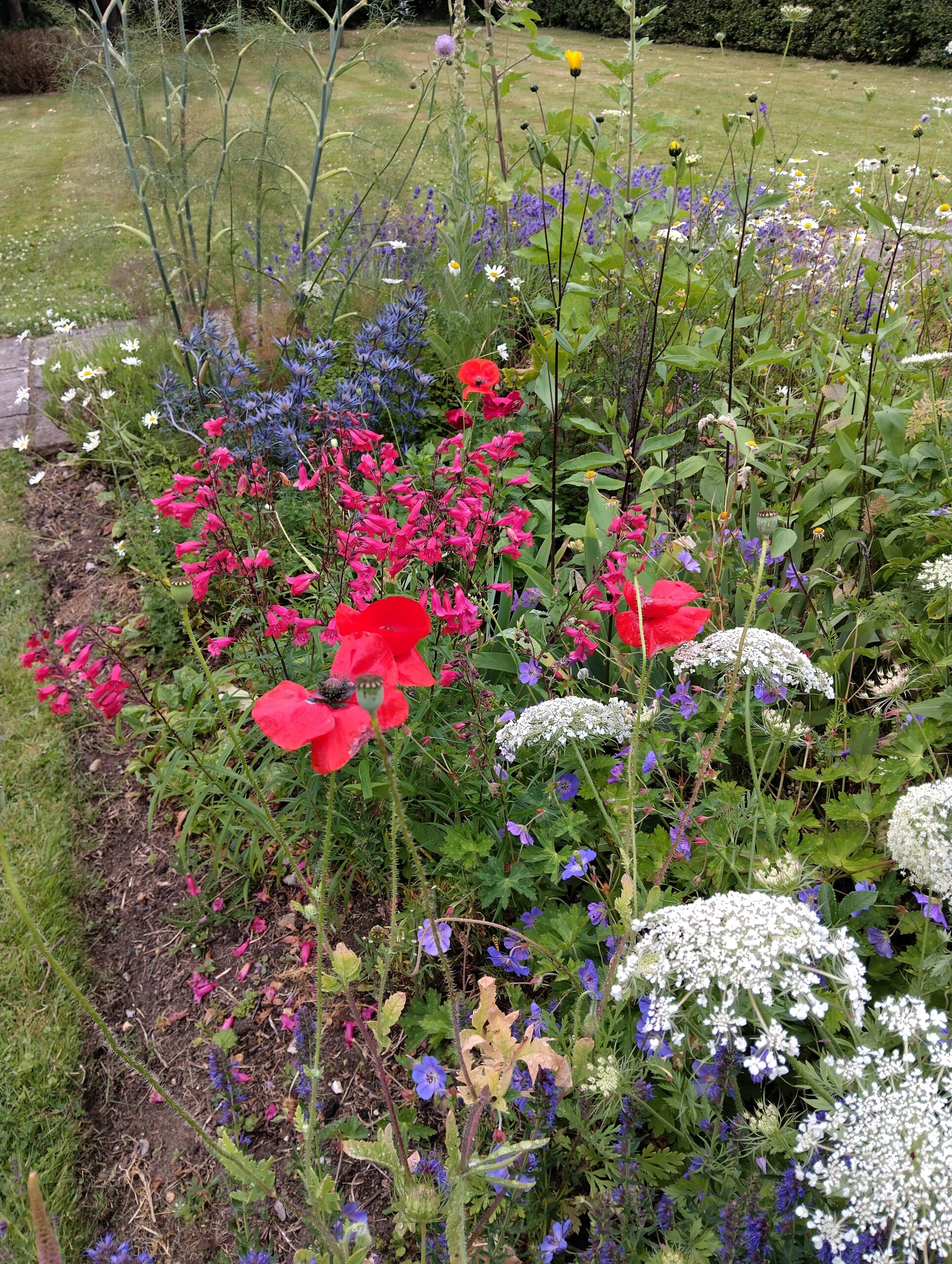
All that rain has at least helped the plants make good growth and flower profusely – here are a few photos taken yesterday, when it was (briefly!) sunny.


One of the lavender borders near the car park. This variety is called ‘Little Lady’ – it’s a beautiful colour, flowers for a long time, and doesn’t flop around.

Raindrops on one of the tall fennel plants

Blue eryngium and white oxeye daisies in one of the top beds

Red poppies and penstemon, white wild carrot, and blue eryngium and lavender