21 September 2024
The wildflower bed’s looking a bit different after this week, as we’ve cleared a lot of the plants out.
Garden writers and presenters tell us to ‘leave things a bit untidy’, and ‘don’t cut plants back till spring’ and that’s usually what we do here – so why have we changed the plan this year?
There were two main issues. One was that the bed had become extremely untidy, and we are mindful that we’re approaching Remembrance Day in a few weeks. We want to keep it wild and maintain the ecosystem that’s developed here, but also keep it more respectful, in keeping with its surroundings. It’s a difficult balance, and we’re very appreciative of the Town Council and the British Legion for giving us the chance to do it.
The other issue is that scabious and knapweed have begun to dominate the bed and crowd out many of the other plants that flower at different times of the year. That in itself has been restricting the biodiversity we’ve been trying to increase.
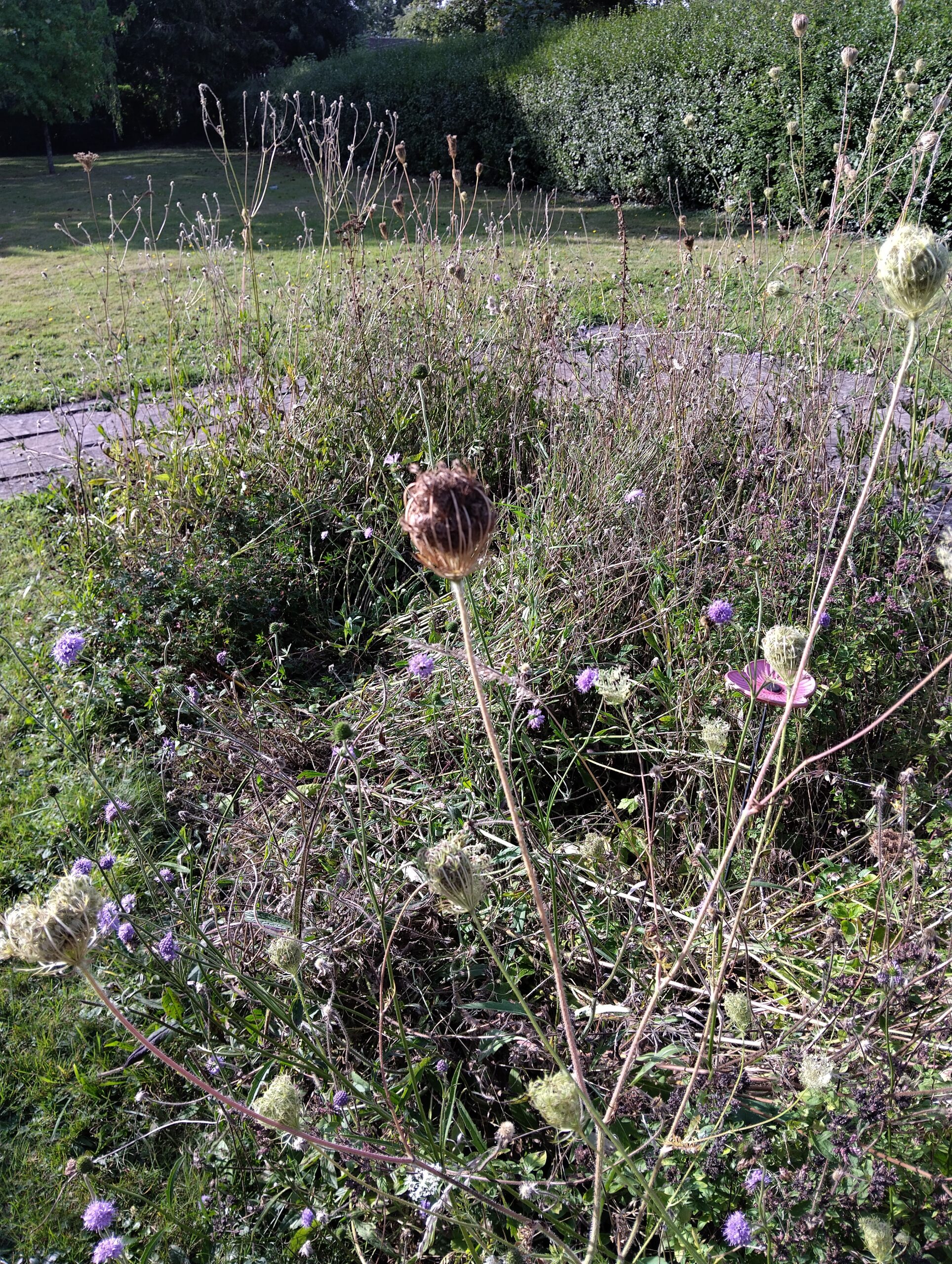
A corner of the wildflower bed last week, before clearing – the larger plants are crowding out the smaller ones
When we started managing the site, the wildflower bed was just sown with cornfield annuals – poppies, oxeye daisies and cornflowers, which provided pollen and nectar for a few weeks. Over time we’ve also encouraged any native plants that just arrived in that bed as well – black medick, self-heal, the odd foxglove, things like that.
A few years ago we added scabious and knapweed as they’re perennial plants that would flower every year, but the soil’s really too fertile for them; they’ve grown massive and crowded out many smaller plants that provide nectar and pollen earlier in the season. When you see them in their natural environment – on Ivinghoe Beacon, for example – they grow knee-high, not shoulder-high!
We want to keep some of them, but we need to let more light and air in immediately – so this year, we’ve cut the stems down, so we can see what’s growing where, and where we need to replant. There are still plenty of wild carrot seedheads in that bed, and plenty of undergrowth in the other beds in the gardens, providing habitat for insects and our resident frogs.
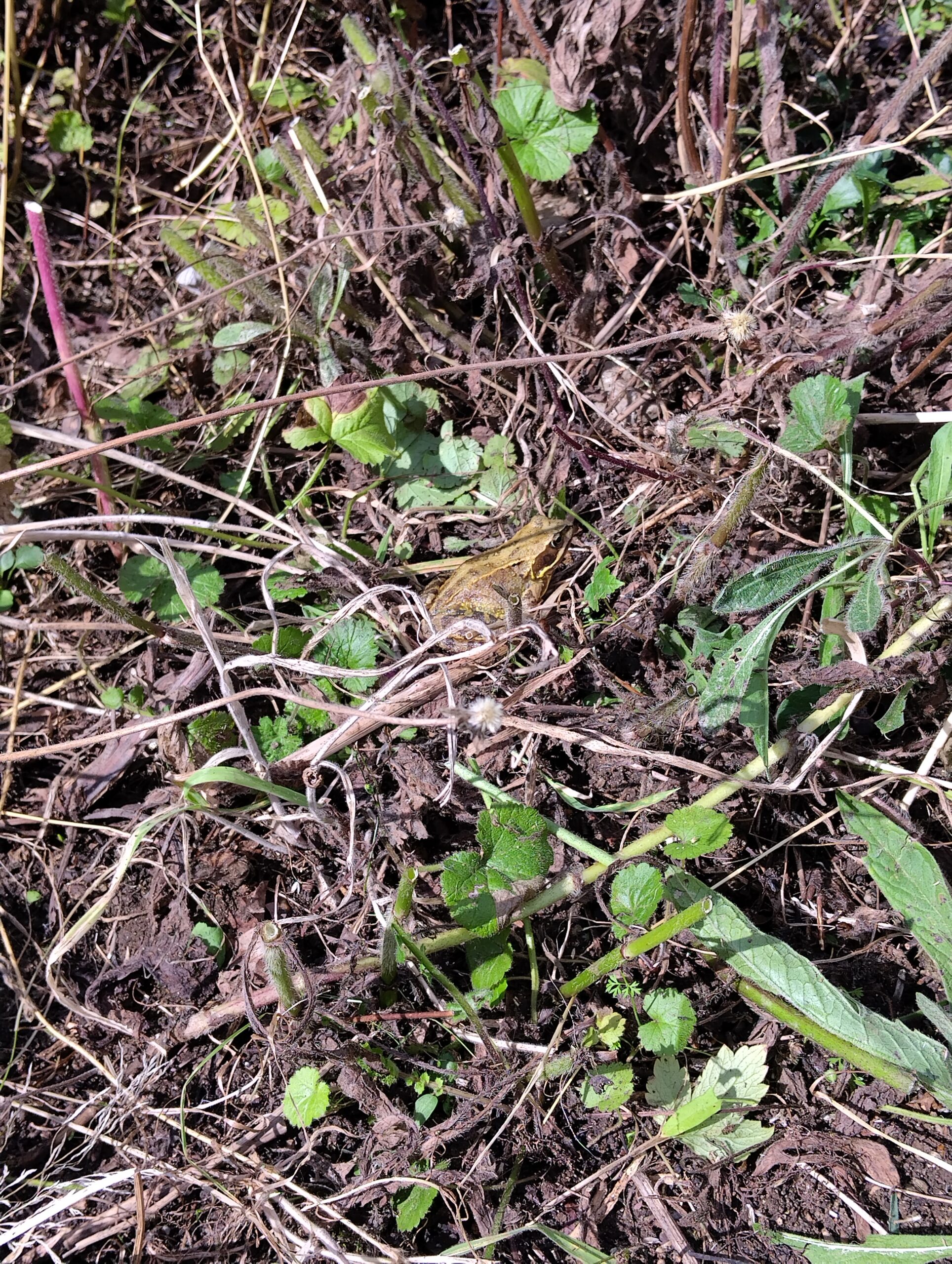
A slightly confused frog, wondering what happened to all the ground cover (there’s still plenty left, just a metre or so away, it found it)
We’ve also removed the stems rather than letting them compost down as usual, as that increases soil fertility – which is great for cornfield annuals like poppies and cornflowers, but not good for other natives.
We’ve left a few areas uncleared for the moment, so as not to disturb too much of the resident insect population, and we’ve started putting in a few more plants – water avens in the soggiest corner (nearest the flowering cherry tree), more foxgloves, red deadnettle, viper’s bugloss, primroses and cowslips; and we’ll be sowing more foxgloves, birdsfoot trefoil, and field poppies and Welsh poppies too.

The same corner of the wildflower bed after a bit of clearing.
This wildflower gardening is very complicated! But worth it.