30 October 2024
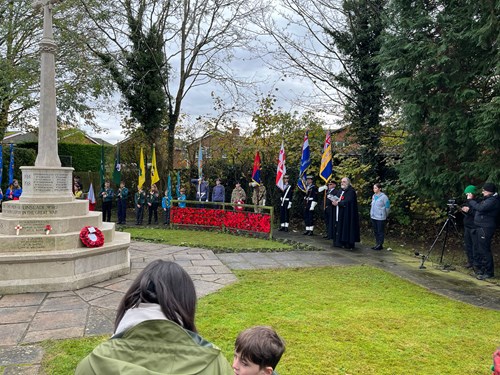
Remembrance service at Linslade Garden of Remembrance 2023 (photo courtesy of the Royal British Legion website, used with permission)
During the week before Remembrance Day and Remembrance Sunday we’ll be putting out knitted poppies in the wildflower bed again.
This year, there’ll be 61 red poppies again – one for each name on the war memorial – but there’ll also be small groups of three other colours of poppies, too. Here’s an explanation of what they each represent.
Red poppy
The red poppy represents all those who lost their lives on active service, from the beginning of the First World War right up to present day.
It also honours the contribution of civilian services and the uniformed services which contribute to national peace and security and acknowledges innocent civilians who have lost their lives in conflict and acts of terrorism.
(from the Royal British Legion’s website – see ’11 things you might not know about the poppy’)
Black poppy
The black poppy was introduced in 2010. It reminds us of the forgotten black African, Caribbean and other indigenous peoples from colonised nations in the British Empire who served in many British conflicts over several hundred years.
There’s much more information on the Black Poppy Rose website, along with many examples of just what many of those contributions were. And the blog post ‘Why the Black Poppy Rose really matters’ describes why Selena Carty started the campaign in 2010 to honour the wartime efforts of black soldiers and their families.
White poppy
The white poppy represents remembrance for all victims of war, a commitment to peace and a challenge to attempts to glamorise or celebrate war.
The white poppy was introduced over ninety years ago in 1933, by the Women’s Co-operative Guild, as a pacifist alternative to the British Legion’s annual red poppy appeal. The Guild closed in 2016 (after 133 years); more information about white poppies can be found on the website of the Peace Pledge Union, who work for removal of all causes of war.
Purple poppy
The purple poppy was introduced in 2006 by the Animal Aid charity, to commemorate the animal victims of war – no other organisation seemed to be addressing the issue. Their aim was to make it clear that animals used in warfare are indeed victims, not heroes. They do not give their lives; their lives are taken from them.
Many horses were commandeered from farms and businesses in the local area at the start of World War 1, For example, a report in the Bedfordshire Times (14 August 1914) headed ‘The Purchase of Horses for the Army’ said ‘No little commotion has been caused in agricultural and commercial circles by the so-called commandeering of horses and vehicles by the military authorities.’
By 1917, Britain had one million horses and mules in service. Over over 484,000 of them were lost in the war.
More information from the Animal Aid website