3 April, 2026
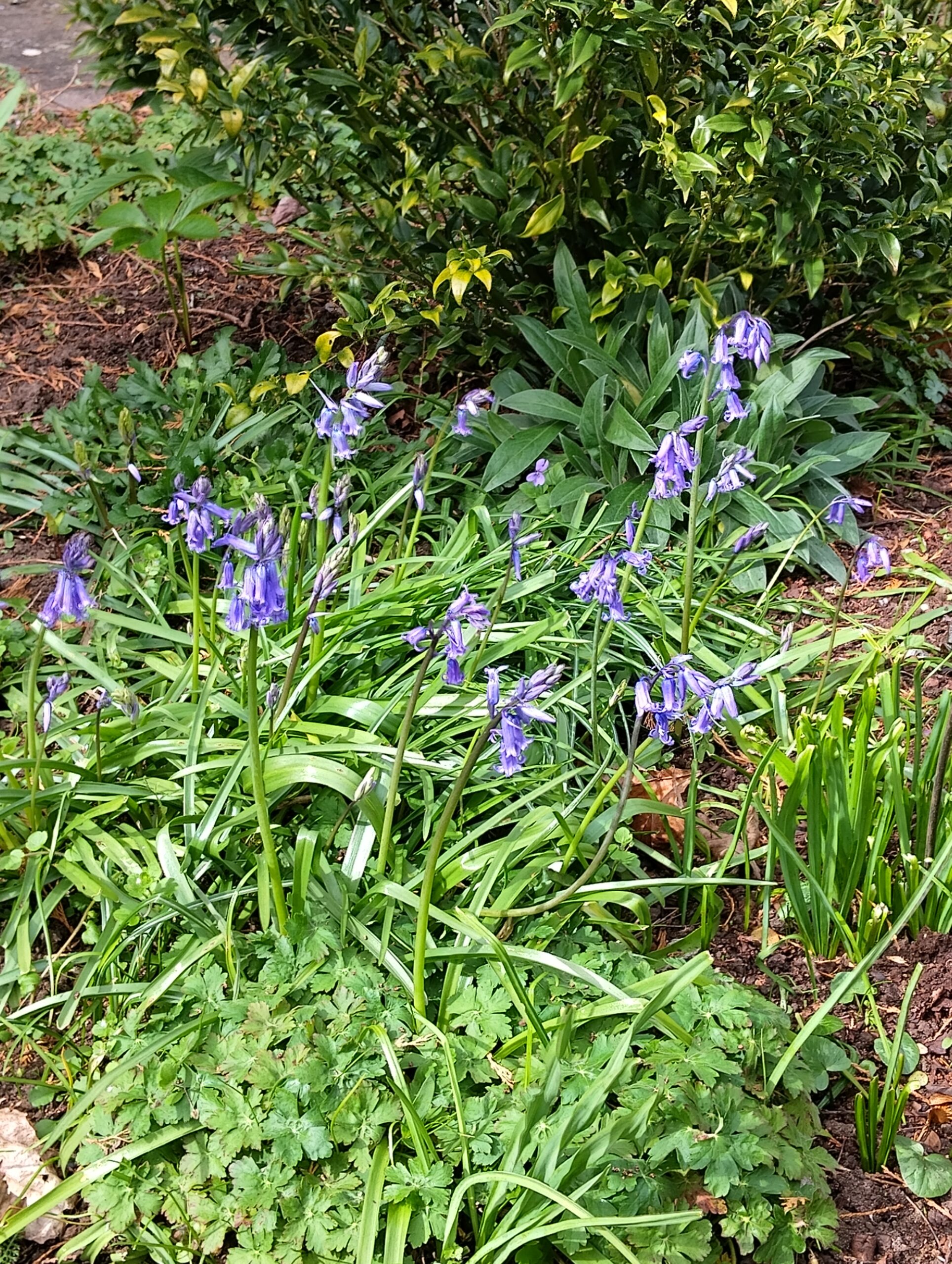
The English bluebells are almost out in the bottom bed (nearest the war memorial). Always a welcome sign that spring is really here.
And a lot more flowers are coming out in the other beds, too:
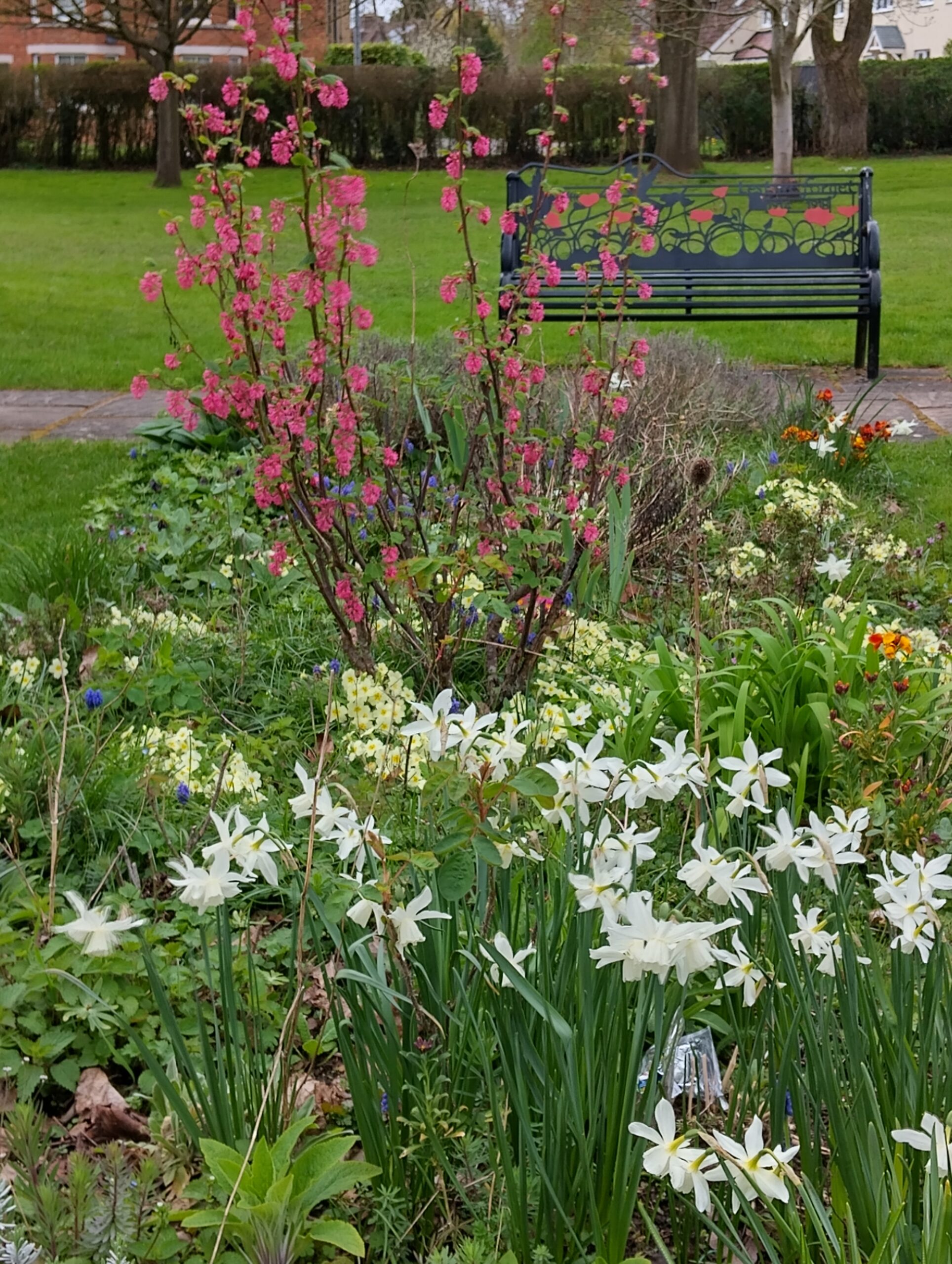

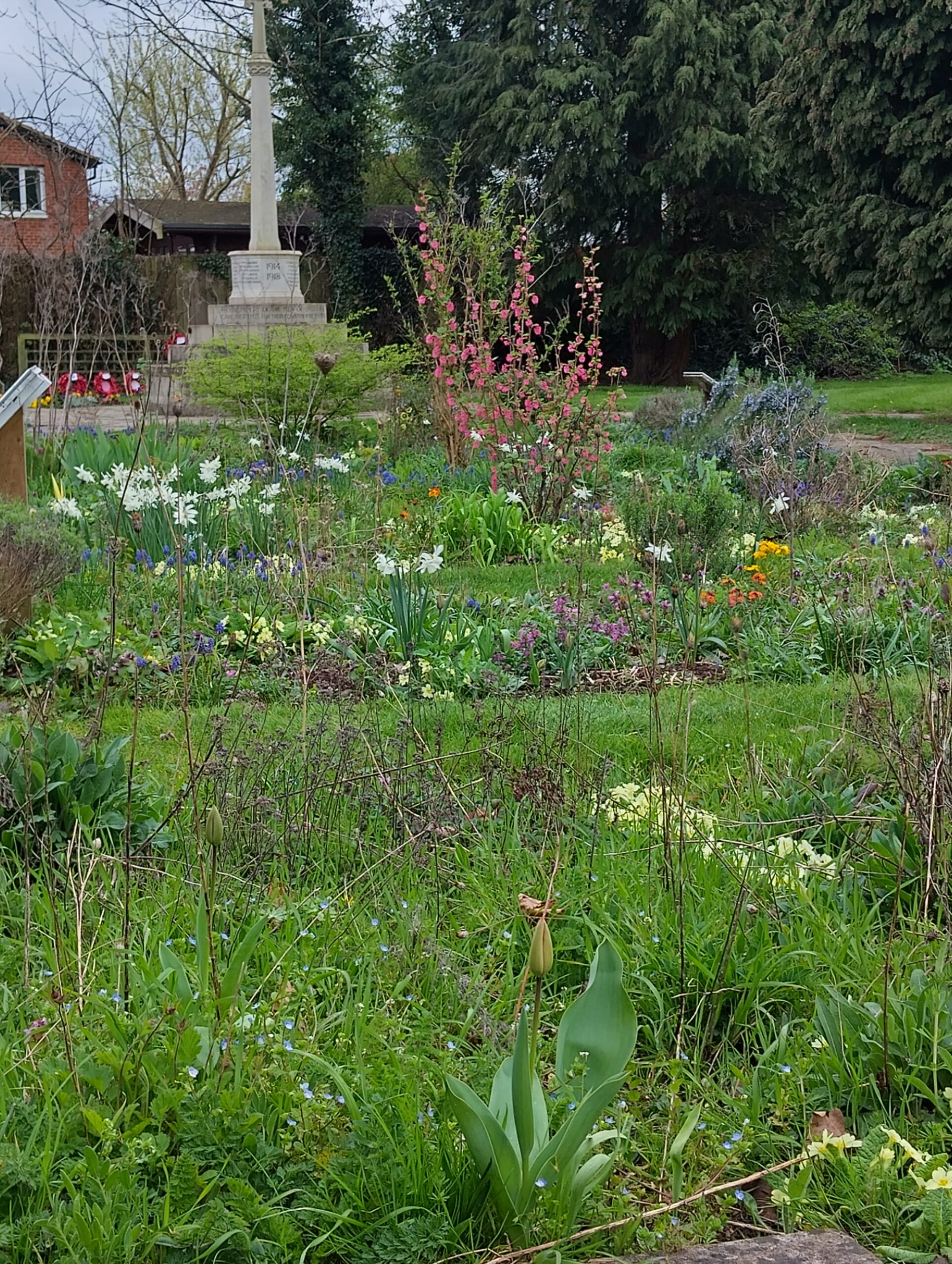
3 April, 2026
The English bluebells are almost out in the bottom bed (nearest the war memorial). Always a welcome sign that spring is really here.
And a lot more flowers are coming out in the other beds, too:
19 March 2026
We haven’t posted much recently, but we’ve spent the long grey wet winter preparing the Gardens for this year’s flowers. There’s still plenty going on round at the gardens.
Now at last we’re seeing the sun, and seeing the effect on all the plants – not least the weeds, which have really started to grow. We’ll be starting to deal with over the next couple of weeks.And at last, we’re seeing the sun, and seeing the effect on all the plants – not least the weeds, which we’ll be starting to deal with them over the next couple of weeks.
A lot of what we do over the winter involves leaves and compost bins. When it’s not raining, we might be emptying one of the compost Daleks (bins) so we can turn the other bins into it; or we might be adding leaves to the leaf bin to make mulch – ‘black gold’ – to keep moisture in, and stop weeds growing.
And the Town Council’s Grounds Staff have added many large bags full of leaves to the bin – thank you very much! They’ll be put to good use.
We’ve also been nursing a lot of cuttings through the winter – it’s one of our main ways of increasing the number of plants here, without having to buy more. And when we grow our own, we know they haven’t had to be treated with pesticides to look good for sale, or with hormones to make them bloom earlier – neither of those are good for bees. They’ve had a tough time getting through this long wet winter, but they’re really beginning to take off now.
We’ve been asked a couple of times how we decide which weeds to take out, and which to leave – I’ll do a more detailed post on that in a week or so. But basically, what we’re doing now it trying to remove just those invasive plants that could be trouble later on, like ground elder, sheep sorrel, celandines and violets (lovely as they are, they run rampant and can choke other plants). We still want to leave a lot of ground cover for insects, for another couple of weeks till the soil warms up.
Then the fun bit starts, when we try to work out which seedling is a plant we really want, and which so isn’t!
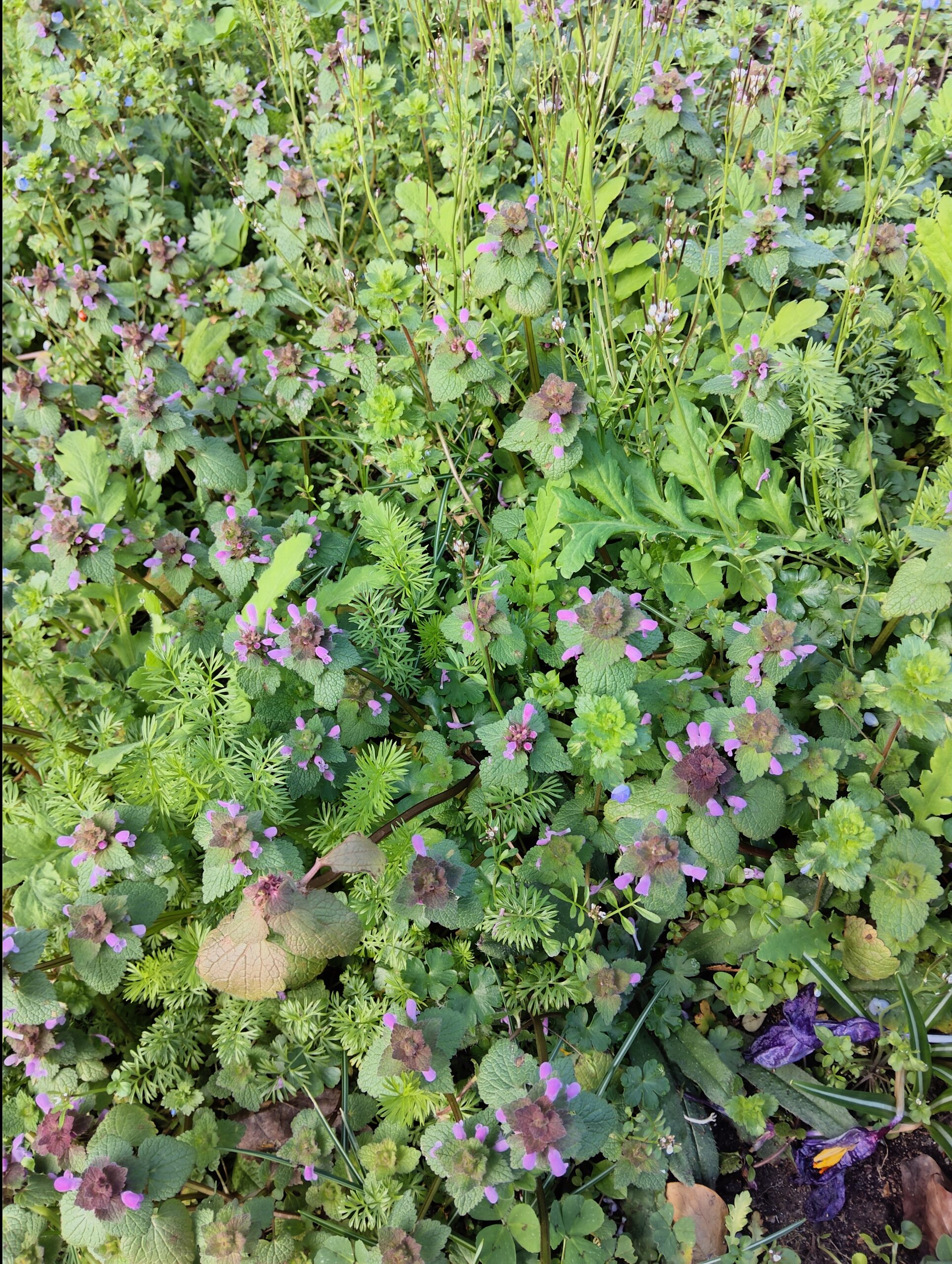
Sneak preview – here’s the first patch we’ll be untangling. A real haven for bees at the moment, they love red deadnettle as it’s full of nectar; but give it a couple more weeks, and it’d be a mess. That’s the balance we’ll be trying to sort out.
21 September 2024
The wildflower bed’s looking a bit different after this week, as we’ve cleared a lot of the plants out.
Garden writers and presenters tell us to ‘leave things a bit untidy’, and ‘don’t cut plants back till spring’ and that’s usually what we do here – so why have we changed the plan this year?
There were two main issues. One was that the bed had become extremely untidy, and we are mindful that we’re approaching Remembrance Day in a few weeks. We want to keep it wild and maintain the ecosystem that’s developed here, but also keep it more respectful, in keeping with its surroundings. It’s a difficult balance, and we’re very appreciative of the Town Council and the British Legion for giving us the chance to do it.
The other issue is that scabious and knapweed have begun to dominate the bed and crowd out many of the other plants that flower at different times of the year. That in itself has been restricting the biodiversity we’ve been trying to increase.
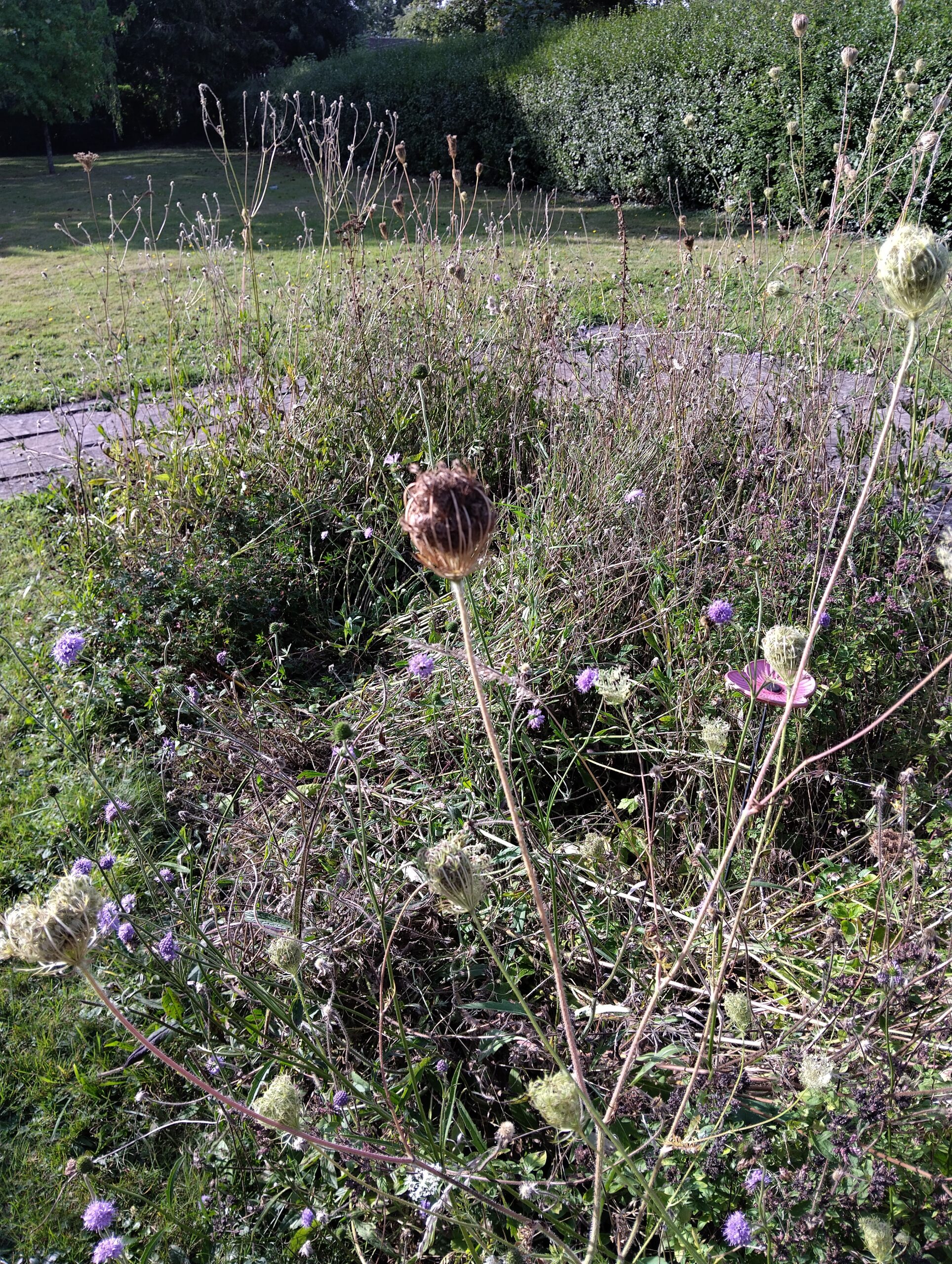
A corner of the wildflower bed last week, before clearing – the larger plants are crowding out the smaller ones
When we started managing the site, the wildflower bed was just sown with cornfield annuals – poppies, oxeye daisies and cornflowers, which provided pollen and nectar for a few weeks. Over time we’ve also encouraged any native plants that just arrived in that bed as well – black medick, self-heal, the odd foxglove, things like that.
A few years ago we added scabious and knapweed as they’re perennial plants that would flower every year, but the soil’s really too fertile for them; they’ve grown massive and crowded out many smaller plants that provide nectar and pollen earlier in the season. When you see them in their natural environment – on Ivinghoe Beacon, for example – they grow knee-high, not shoulder-high!
We want to keep some of them, but we need to let more light and air in immediately – so this year, we’ve cut the stems down, so we can see what’s growing where, and where we need to replant. There are still plenty of wild carrot seedheads in that bed, and plenty of undergrowth in the other beds in the gardens, providing habitat for insects and our resident frogs.
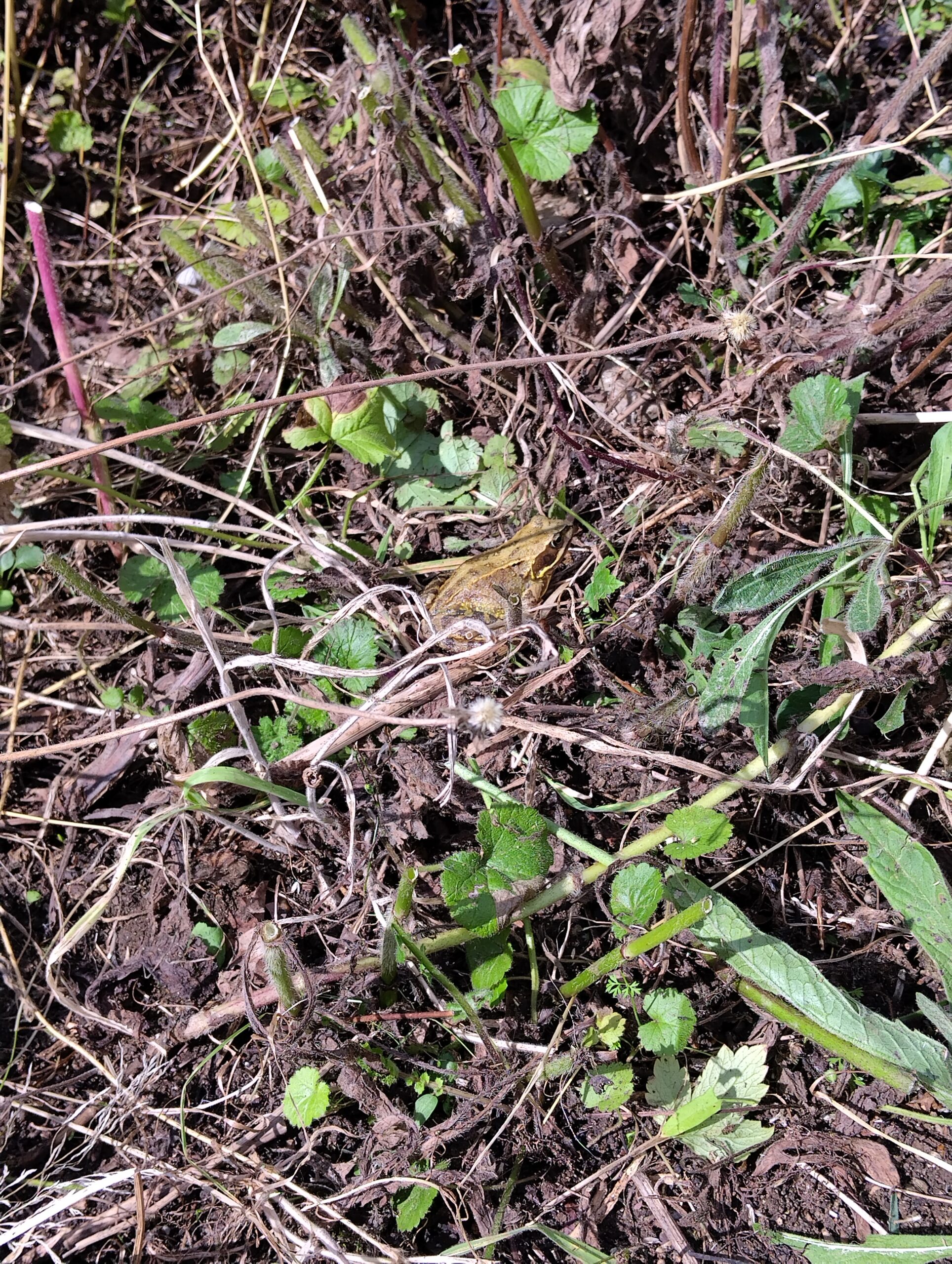
A slightly confused frog, wondering what happened to all the ground cover (there’s still plenty left, just a metre or so away, it found it)
We’ve also removed the stems rather than letting them compost down as usual, as that increases soil fertility – which is great for cornfield annuals like poppies and cornflowers, but not good for other natives.
We’ve left a few areas uncleared for the moment, so as not to disturb too much of the resident insect population, and we’ve started putting in a few more plants – water avens in the soggiest corner (nearest the flowering cherry tree), more foxgloves, red deadnettle, viper’s bugloss, primroses and cowslips; and we’ll be sowing more foxgloves, birdsfoot trefoil, and field poppies and Welsh poppies too.

The same corner of the wildflower bed after a bit of clearing.
This wildflower gardening is very complicated! But worth it.
09 April 2024
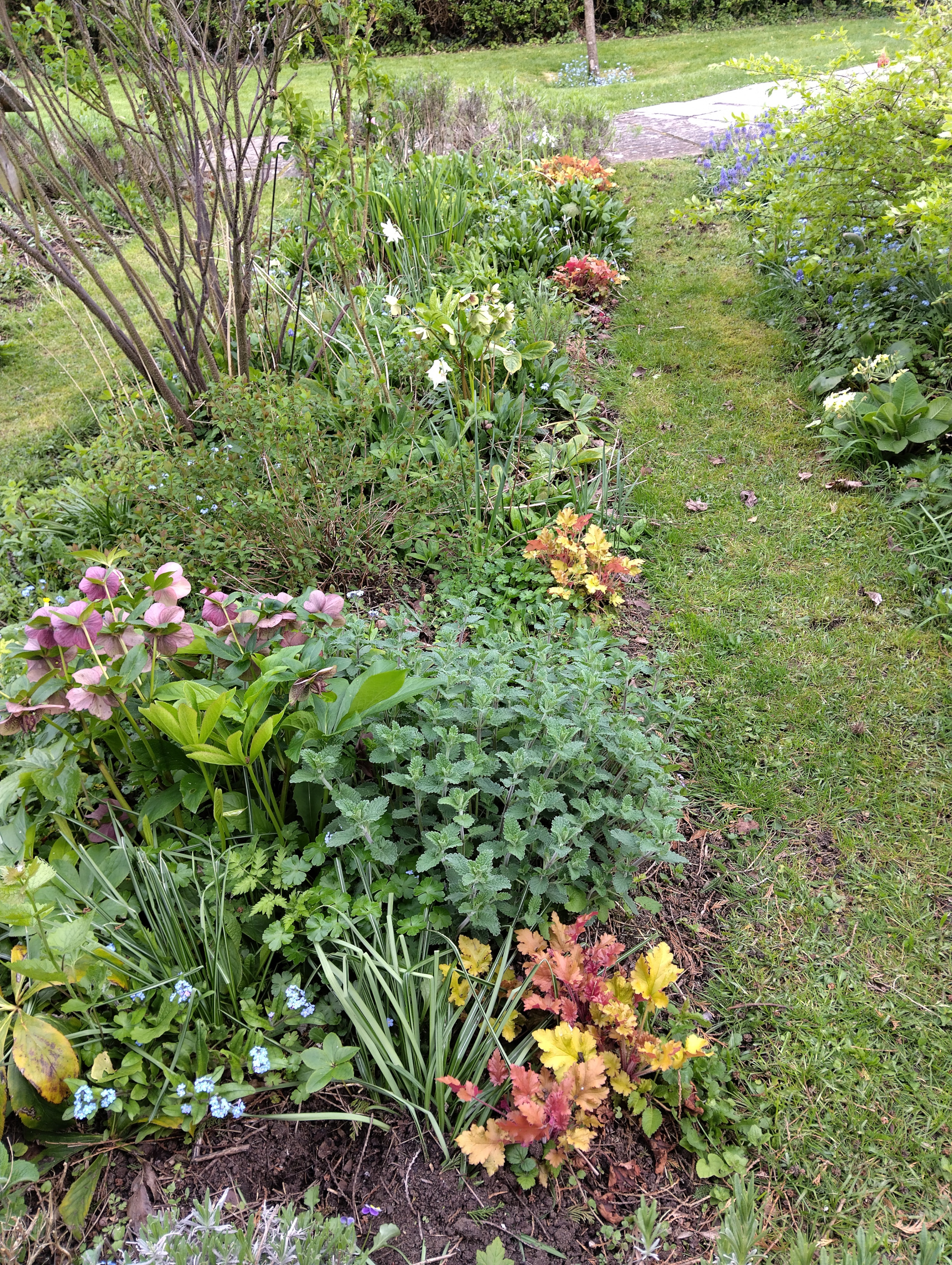
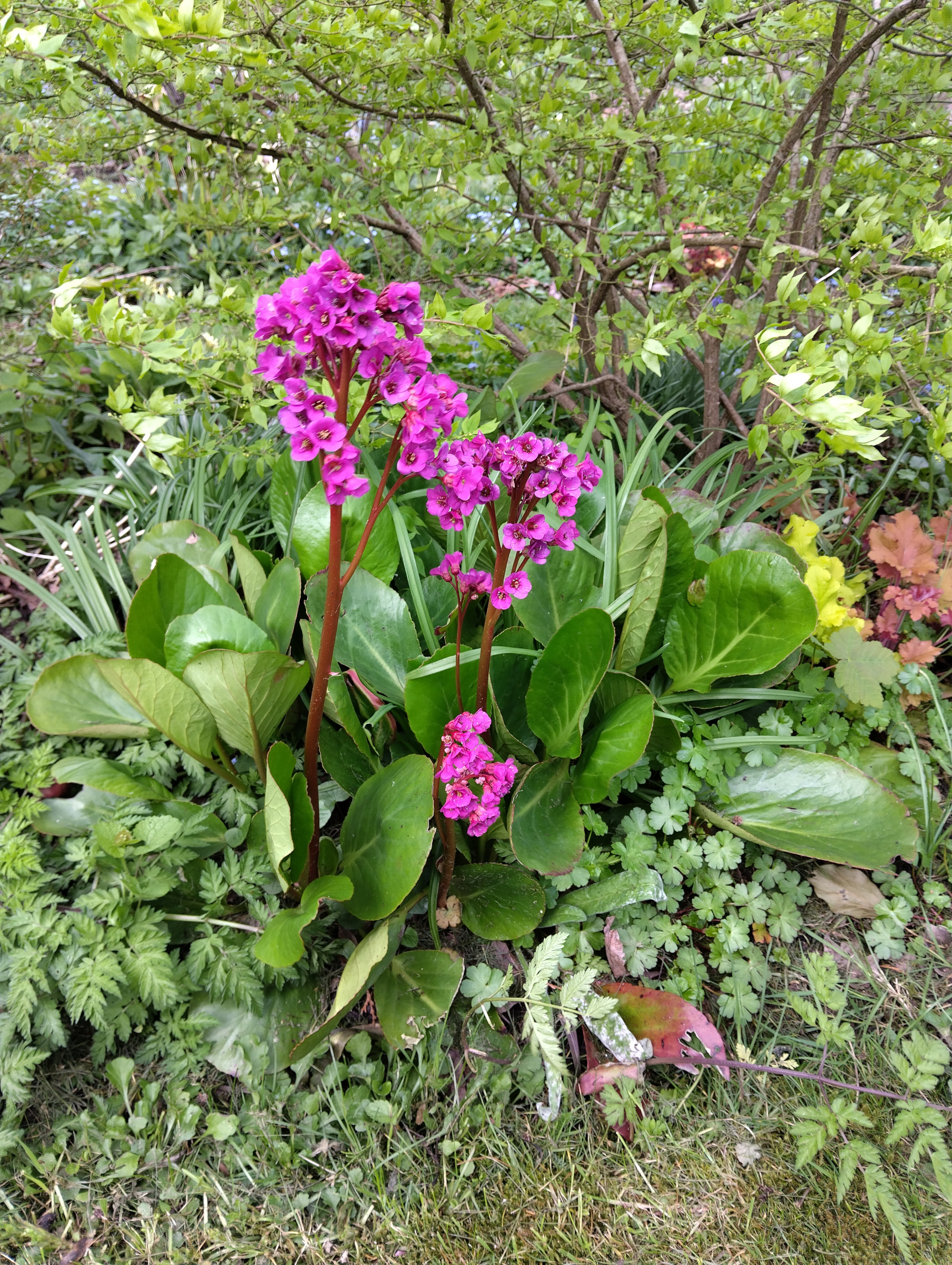
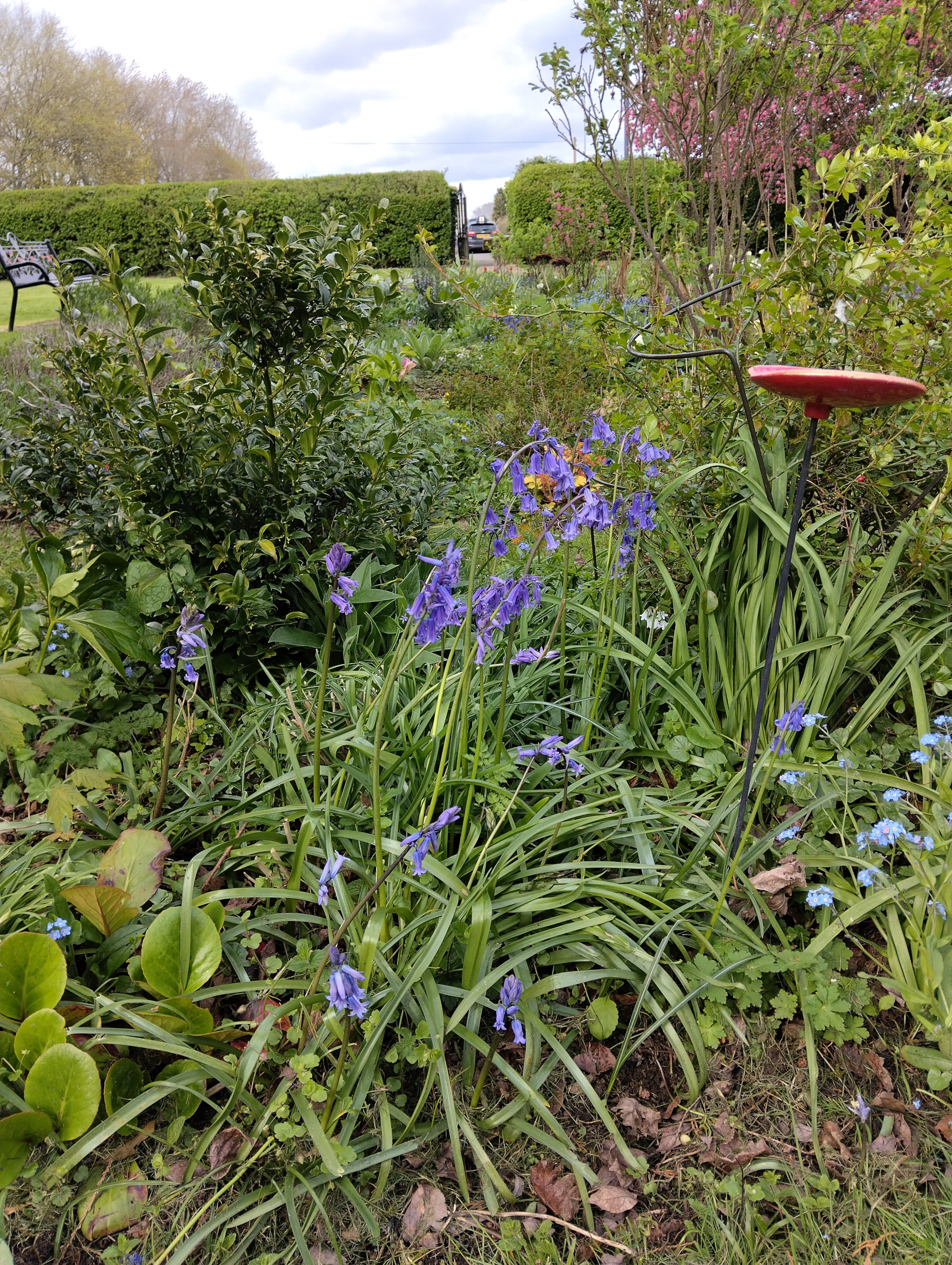
Plenty of colour in the gardens today, from both leaves and flowers:
10 July 2019
As I mentioned in the last post, we’re experimenting with growing a few perennial UK native plants, to take over from the poppies and cornflowers as they fade.
At the moment, the small scabious and knapweed are taking over at the same height as the poppies and cornflowers
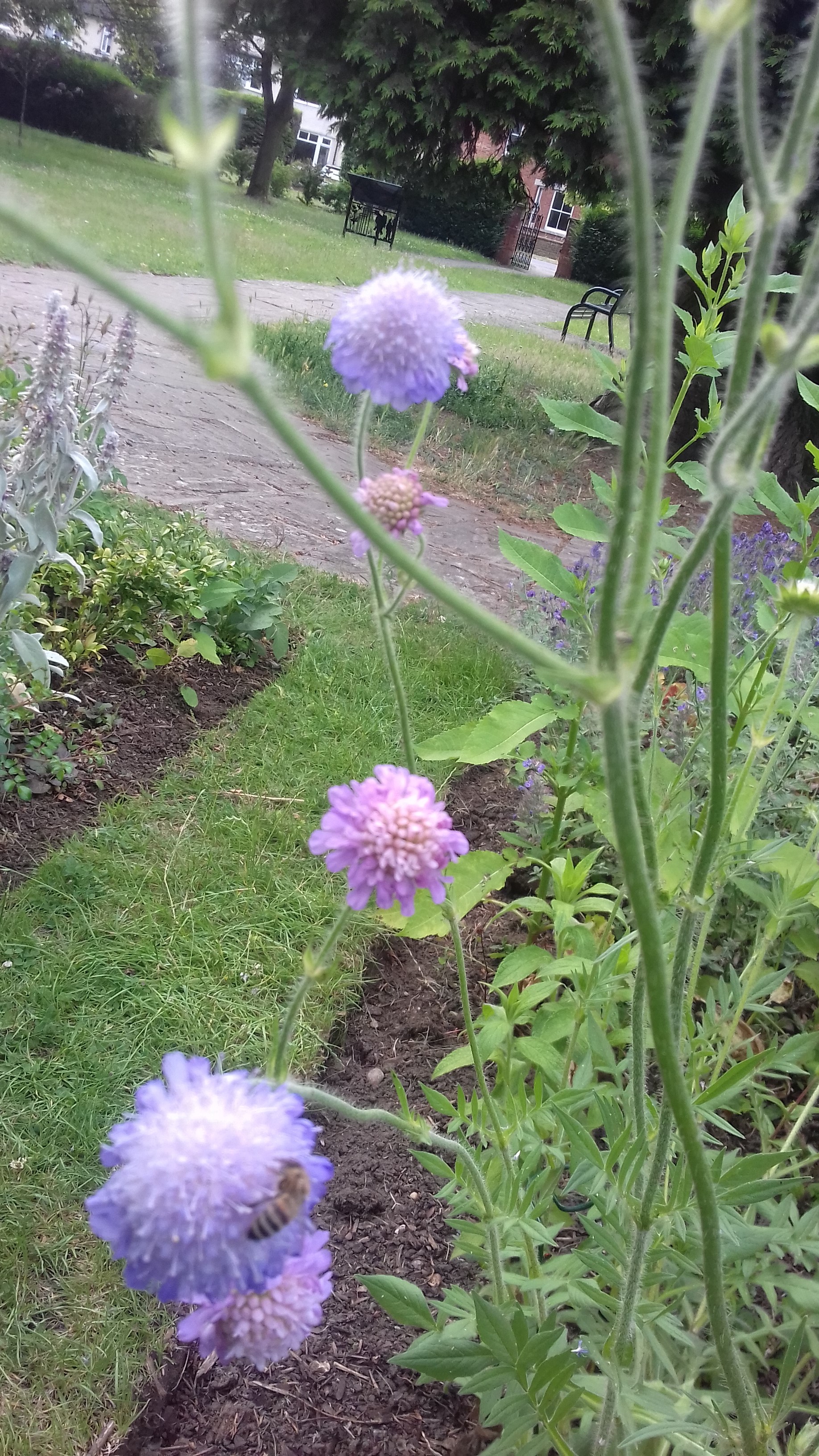
Small scabious in another bed
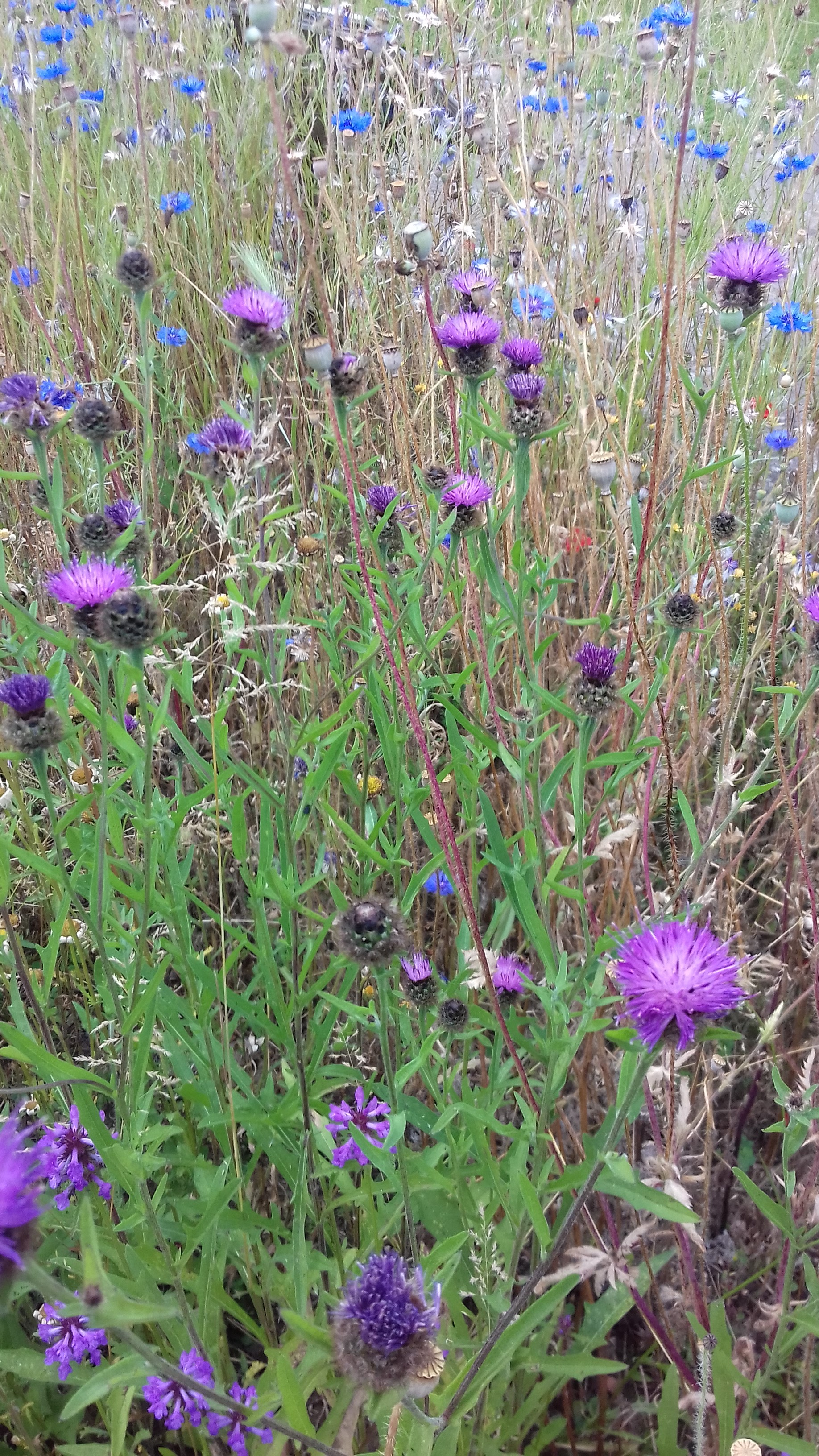
Knapweed
while nearer the ground we have geranium sanguineum and yarrow keeping the show going:
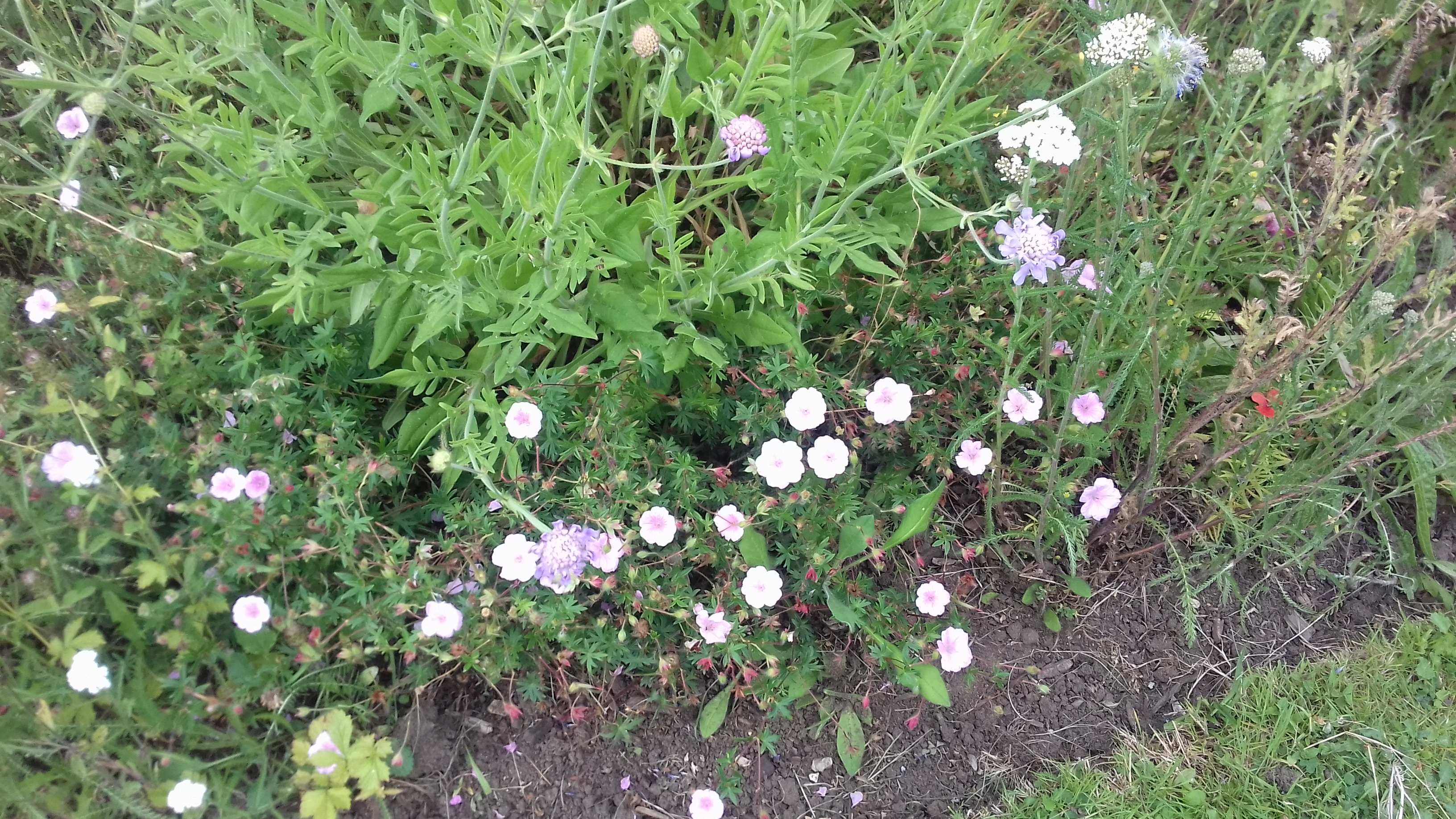
Geranium sanguineum (small pink flower) and yarrow (taller white one)
In a previous post I mentioned that poppies in particular grow best in newly-disturbed soil, which is why we’ve emptied that end bed in the autumn in previous years and forked it over. However, there have been a number of really great displays of poppies just growing in grass this year, as on Soulbury Road grassy bank, so we’re going to try something different this year – we’ll add a few more clumps of perennial wild flowers through more of that end bed, hoe between them to disturb the soil a little, and sow the poppy and cornflower seeds there. That should distribute the flowers more evenly while still keeping the display going through the whole bed.
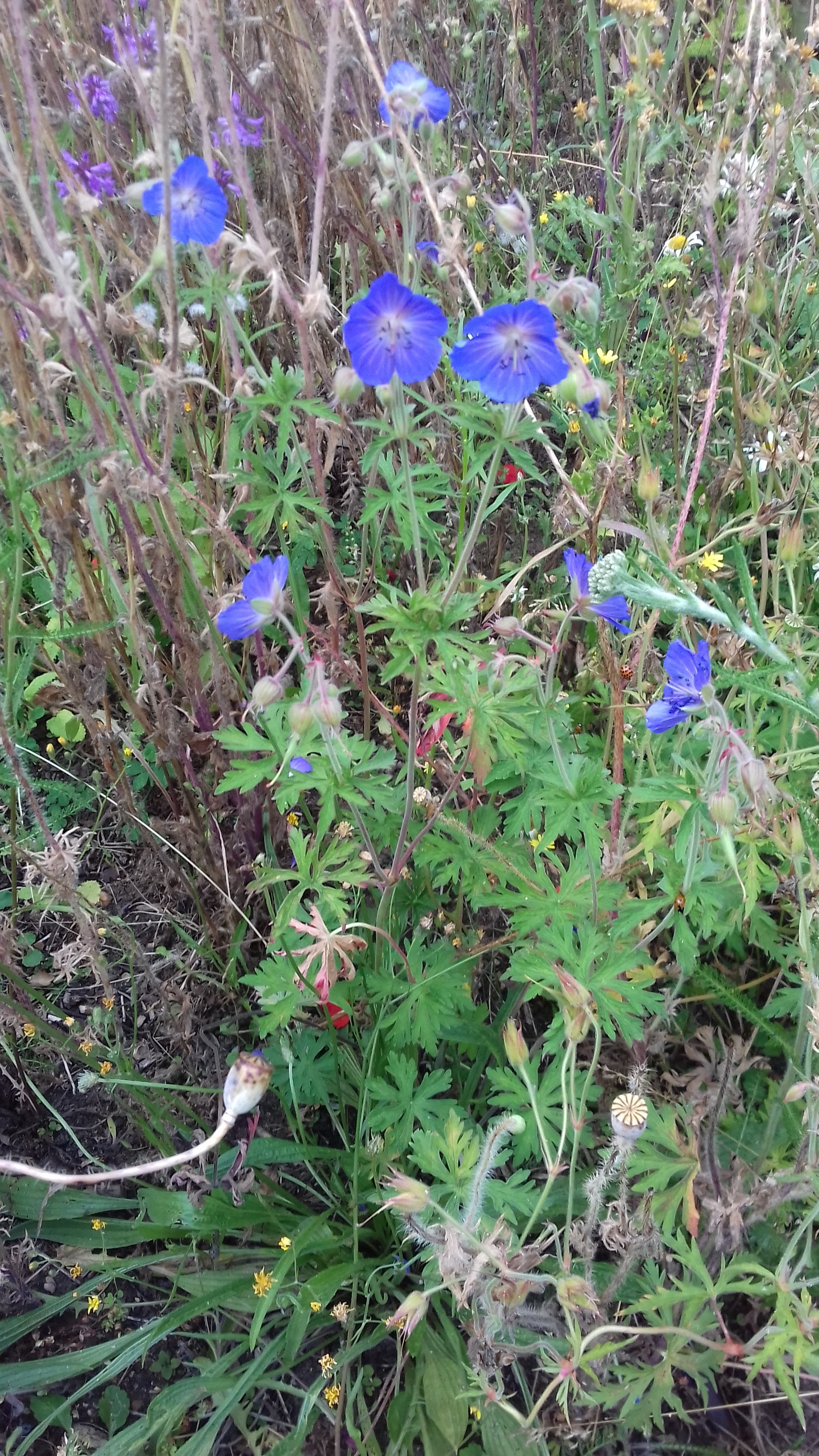
Meadow cranesbill
We also have a couple of meadow cranesbill plants at the Bowls Club end of that bed, and some tall wild carrots, some of whose flower heads are just beginning their characteristic turning inside out, to form urn-shaped seed heads that will last well into winter.
But we will still keep a poppies-only strip at the front – we have to have poppies here in front of the war memorial, and where better than a great display just as you come in from the car park?
08 July 2019
There’s been some discussion in various local Facebook groups recently about the wild flowers that have been planted on road verges, particularly prompted by Rotherham’s planting eight miles of pictorial meadows (i.e. flowers that aren’t necessarily native to the UK, but which fit in American native species like phacelia, gillia and Californian poppies. One discussion (I can’t find the thread again – Facebook discussions can be very transitory!) asked Central Beds council why they didn’t do it, to which they replied, amongst other things, that they did help us (South Beds Friends of the Earth, the Greensand Trust, and Leighton-Linslade Town Council) to create 19 bee-friendly areas around the town. It’s nice to have the appreciation! but of course these areas are only part of the story, and probably aren’t what most people have in mind when they think of the large areas of planting along roadside verges.
In SBFOE’s bee-friendly sites we’re trying to provide food and nesting sites for bees and other pollinators, rather than producing a colourful display – we do try to do both, of course, but the focus is different. We need a framework of permanent planting, with patches of the bright cornfield annuals that many people think of as ‘wild flowers’. And this is where it starts getting complicated. Those cornfield annuals only flower for a few weeks a year, and if we want them to set seed so there will be flowers next year, we have to leave the dying stands for a couple of months after that. That can look very untidy and people can feel it looks untended, as if we haven’t bothered to weed it.
And those roadside verges and similar beds can take a lot maintenance, even if they do save on mowing costs. In many places, the grasses and oxeye daisies begin to overwhelm all the other, weaker, annuals like poppies and cornflowers, so that by the third year or so you just have long grass with white daisies in – like the verges and banks around new roads after a couple of years. And docks and thistles creep in and often take over – they’re very valuable in terms of wild life, but perhaps not what many people want to see.
You can extend the idea of ‘wild flowers’ from ‘UK native flowers’ to ‘something that looks natural, like a wild flower’, or ‘native to other countries in the northern hemisphere’, like the phacelia, gilias and Californian poppies that make many ‘cultivated meadows’ look so good.
And here’s a photo of one of our sites – the grassy bank along Soulbury Road. Photo courtesy of Brian Snowdon.
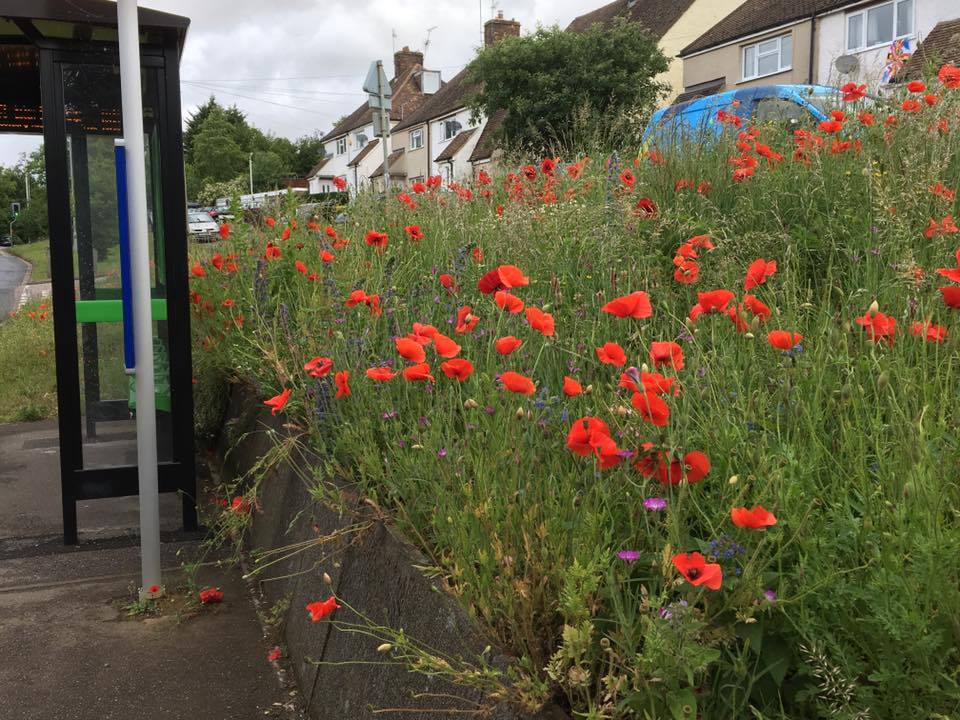
Photo courtesy of Brian Snowdon
28 May 2019
We’ve had one or two poppies and cornflowers out for a week or so, but suddenly this morning, here they are!
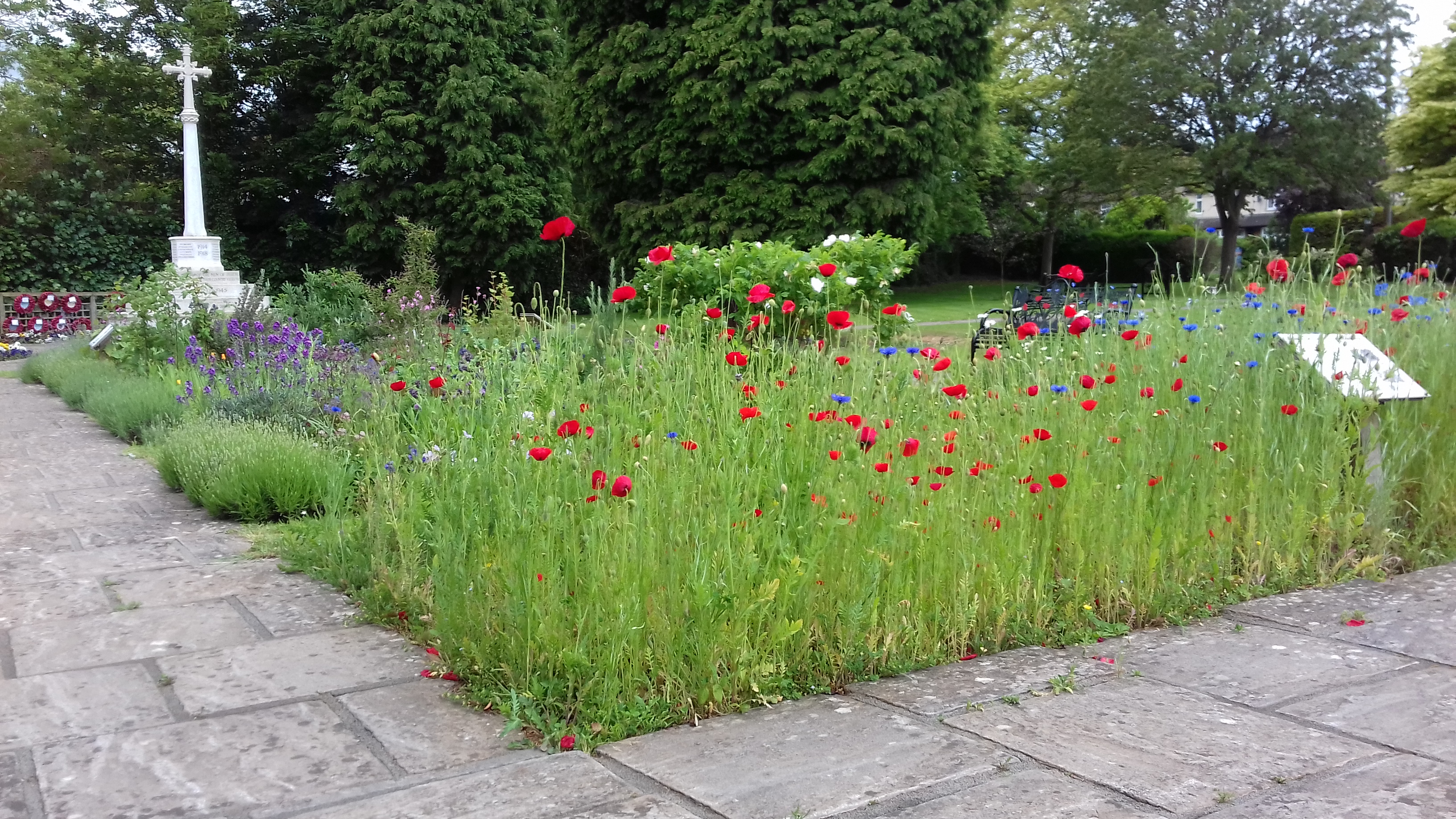
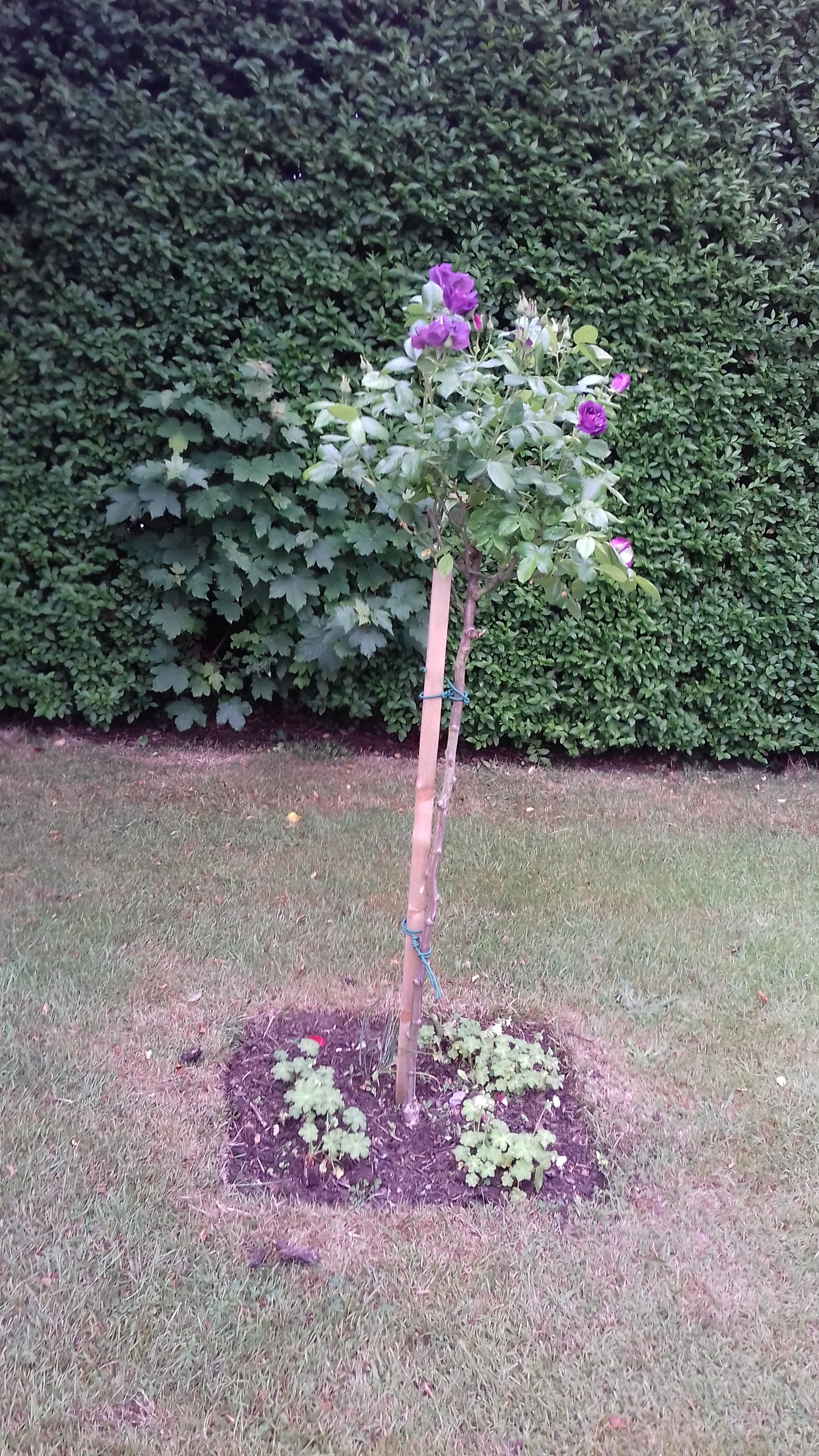
And one of the standard roses (Rhapsody in Blue) has joined them, too:
20 August 2016
It’s about a year since we started refocusing here in the gardens, using more garden flowers to allow us to provide nectar and pollen for bees over a longer period than we could with only wild flowers, while respecting the setting of a semi-formal memorial garden. We thought it would take a couple of full seasons for the new plan to mature, so it seems a good time to look at how the gardens are doing.
When the current team started work on the beds about a year ago, we inherited some shrubs planted along the centre of the bed nearest the war memorial and down the centre of some of the other beds, and a couple of roses planted right next to the paths between the beds. We moved the roses out of the way of the paths, and we’ve gradually added lavender plants along the edges of most of the beds, to make an informal hedge and to provide structure through the winter when most of the annuals and herbaceous perennials die back. All the plants we’ve put in are establishing well and developing into a good framework for the more informal planting inside the beds.
This year the bulbs, pulmonaria and perennial wallflower provided plenty of nectar in early spring for bees as they emerged from hibernation and started nesting, while the other perennials and annuals gradually took over from them, including peas and runner beans planted by the children from the local preschool. We had a great display of poppies, cornflowers and oxeye daises in the top bed (nearest the car park). We try to have at least two of the bees’ favourite plants in flower at any time between February to November, and so far we’ve managed that. Right now the bees’ favourite flowers are the blue hyssops in the second bed down from the car park, and the yellow daisy-like coreopsis at the other end of the bed:

Now we’re getting ready for the start of the gardening year in the autumn. We won’t be cutting and clearing until the spring, so that we don’t leave too many places where bare earth will be exposed to heavy rain, which damages soil structure and leaches nutrients away. We leave stems when they don’t look too messy, to provide shelter for overwintering insects, and we also add leaf mould to protect the soil from winter weather and to start getting more organic matter into it – that’s ‘organic’ meaning a necessary component of all soil, rather than meaning a particular way of gardening.
We’re also adding a few more plants and moving others around to places where they’ll grow best, and we’ll also sow seeds of annuals like the bright orange Californian poppies that looked so good earlier in the year. And our other main job is to clear the wild flower bed (nearest the car park) and re-sow poppies and cornflowers for next year; they grow best on ground that’s been cultivated, so we need to turn it over every year.