3 April, 2026
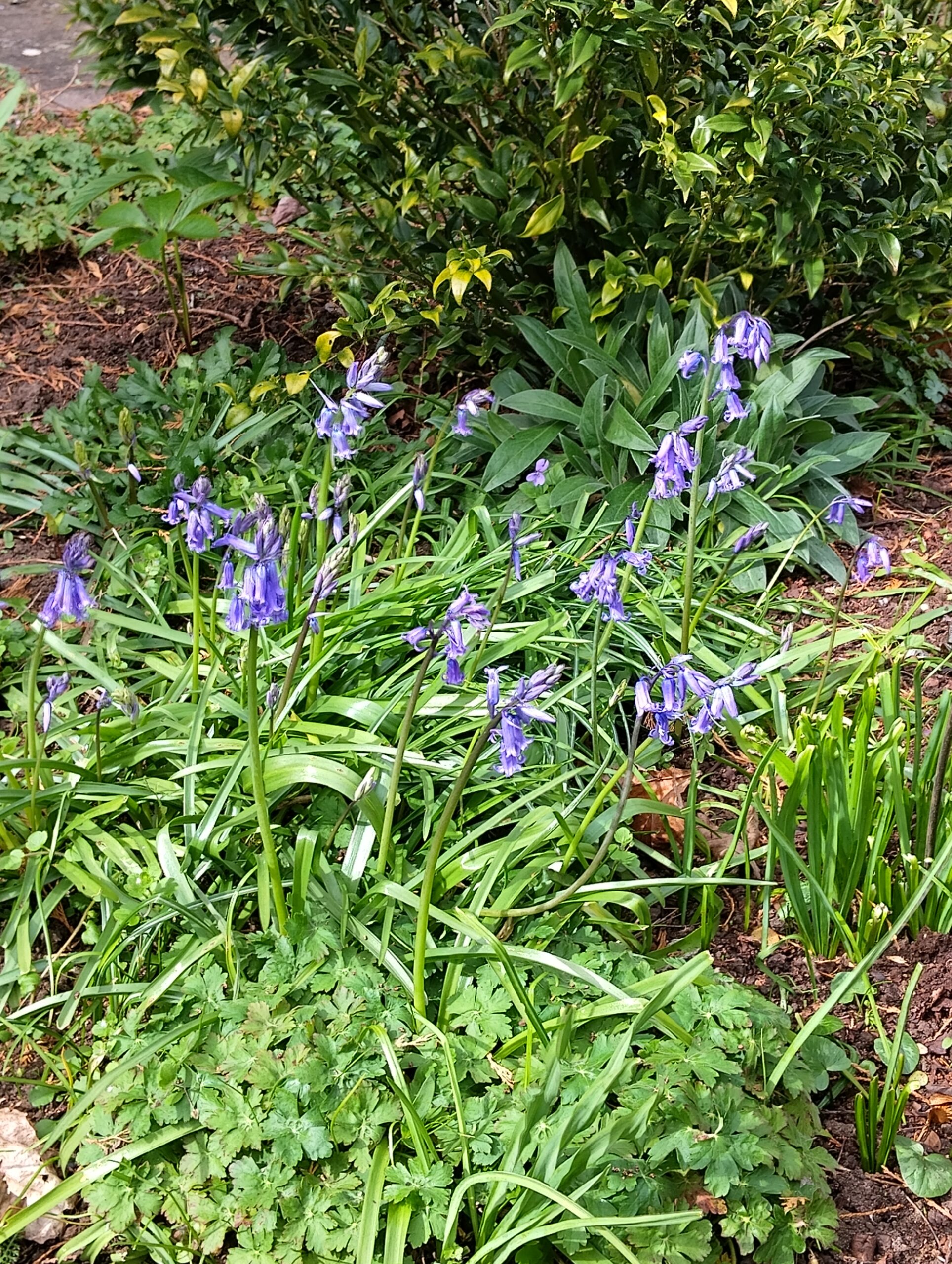
The English bluebells are almost out in the bottom bed (nearest the war memorial). Always a welcome sign that spring is really here.
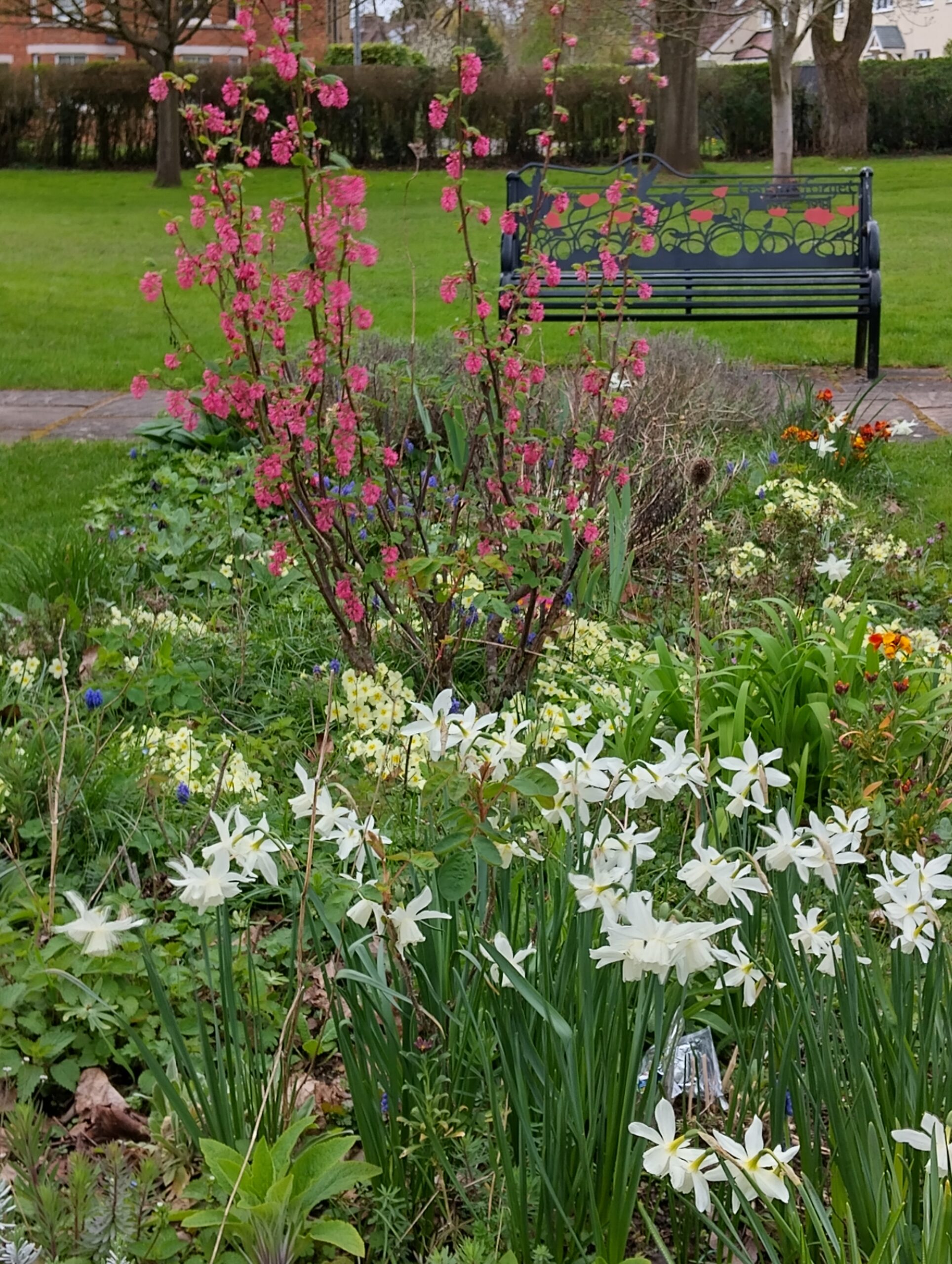
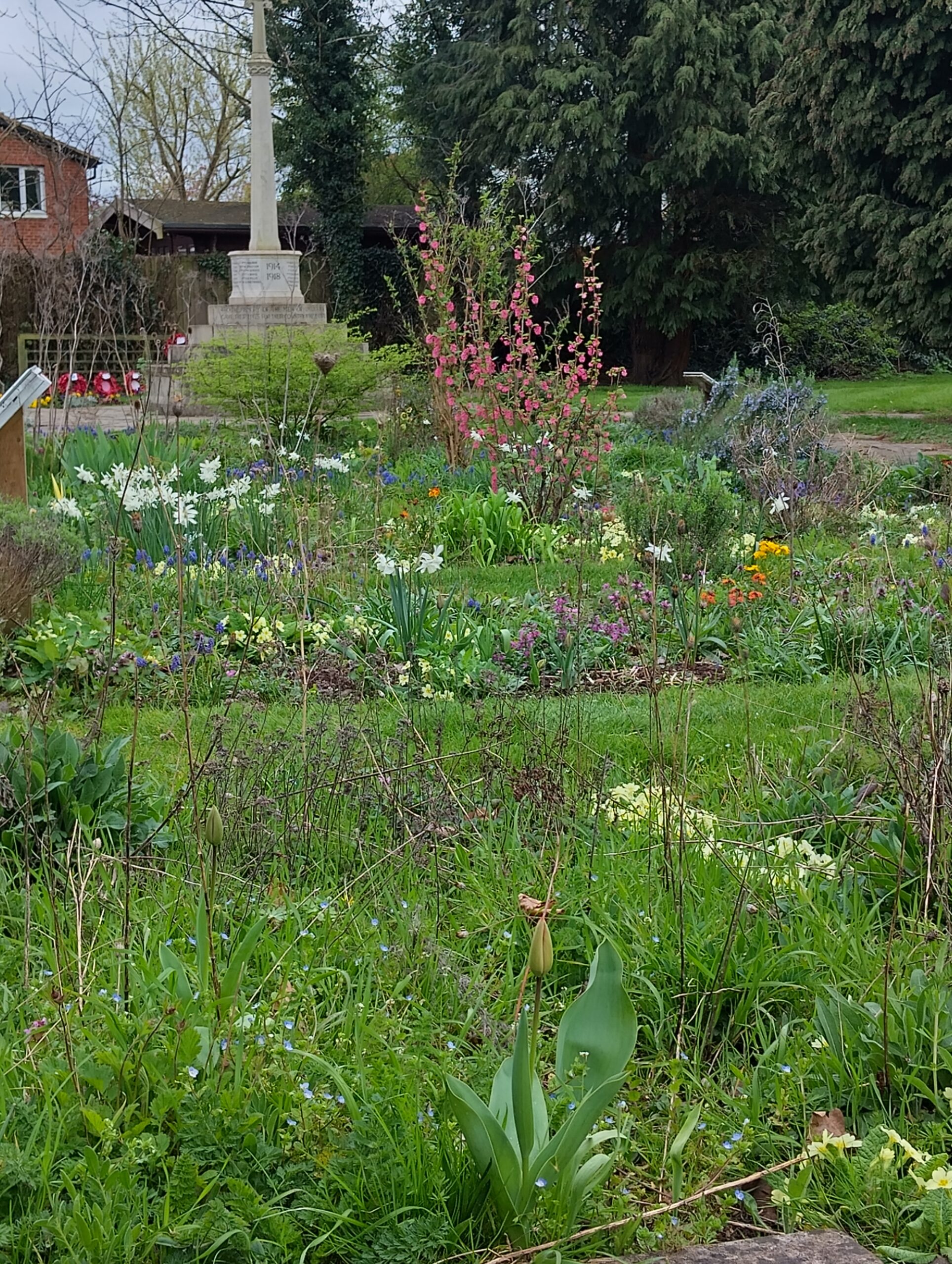
And a lot more flowers are coming out in the other beds, too:

3 April, 2026
The English bluebells are almost out in the bottom bed (nearest the war memorial). Always a welcome sign that spring is really here.
And a lot more flowers are coming out in the other beds, too:
25 March 2026
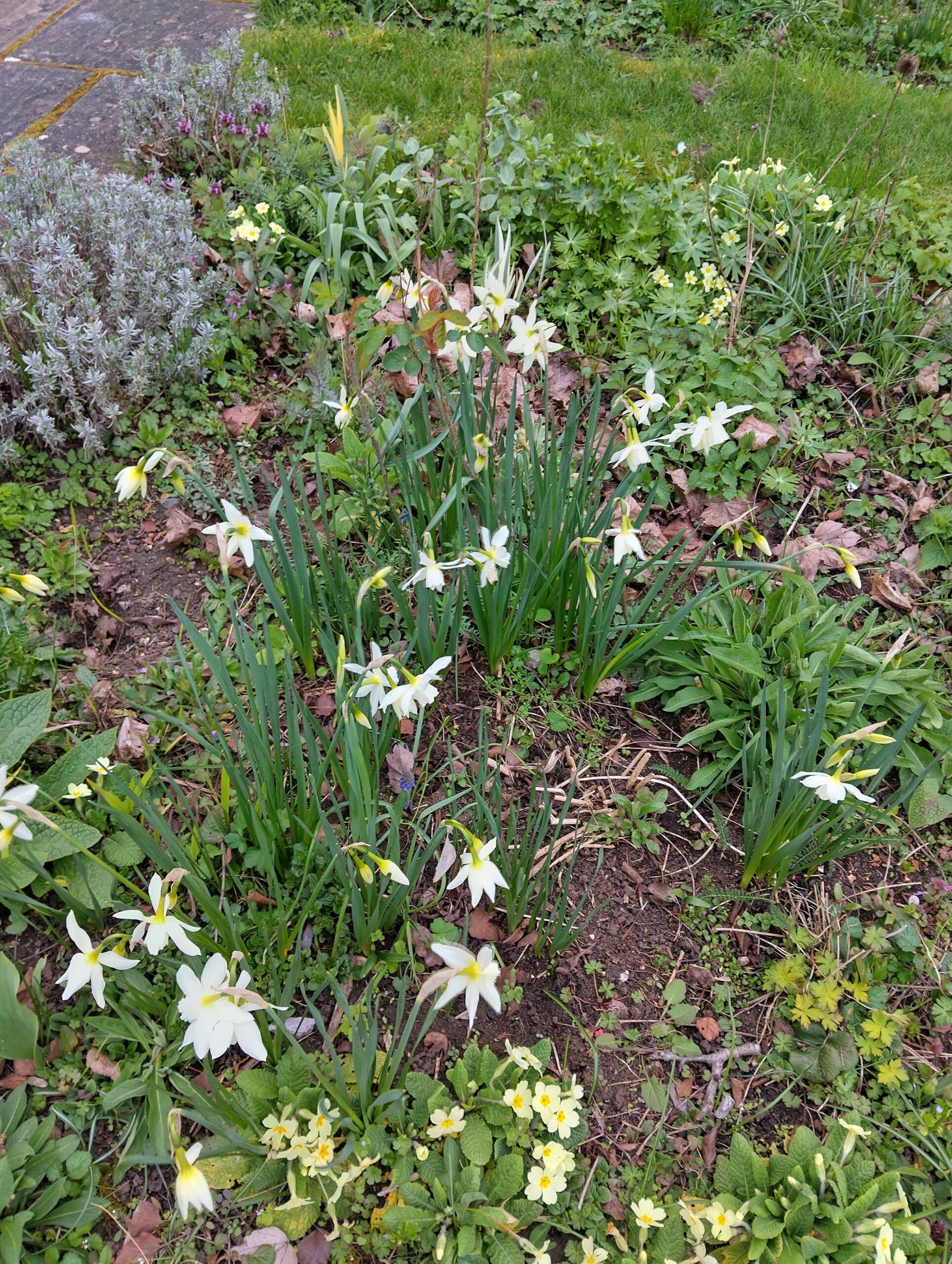
I’ve been asked what variety our white daffodils are – they’re Thalia.
We learned some time ago that bees don’t generally go for daffodils, which have been bred for many things, but not for producing nectar and pollen. On the other hand, bees do like these, so we grow them; and they seem to like the garden, as they’ve spread out from most of the places we planted them.
They used to be really difficult to buy bulbs for, but over the last few years I’ve noticed that gardening articles, social media and TV gardeners have been recommending them, and many more suppliers stock them.
19 March 2026
We haven’t posted much recently, but we’ve spent the long grey wet winter preparing the Gardens for this year’s flowers. There’s still plenty going on round at the gardens.
Now at last we’re seeing the sun, and seeing the effect on all the plants – not least the weeds, which have really started to grow. We’ll be starting to deal with over the next couple of weeks.And at last, we’re seeing the sun, and seeing the effect on all the plants – not least the weeds, which we’ll be starting to deal with them over the next couple of weeks.
A lot of what we do over the winter involves leaves and compost bins. When it’s not raining, we might be emptying one of the compost Daleks (bins) so we can turn the other bins into it; or we might be adding leaves to the leaf bin to make mulch – ‘black gold’ – to keep moisture in, and stop weeds growing.
And the Town Council’s Grounds Staff have added many large bags full of leaves to the bin – thank you very much! They’ll be put to good use.
We’ve also been nursing a lot of cuttings through the winter – it’s one of our main ways of increasing the number of plants here, without having to buy more. And when we grow our own, we know they haven’t had to be treated with pesticides to look good for sale, or with hormones to make them bloom earlier – neither of those are good for bees. They’ve had a tough time getting through this long wet winter, but they’re really beginning to take off now.
We’ve been asked a couple of times how we decide which weeds to take out, and which to leave – I’ll do a more detailed post on that in a week or so. But basically, what we’re doing now it trying to remove just those invasive plants that could be trouble later on, like ground elder, sheep sorrel, celandines and violets (lovely as they are, they run rampant and can choke other plants). We still want to leave a lot of ground cover for insects, for another couple of weeks till the soil warms up.
Then the fun bit starts, when we try to work out which seedling is a plant we really want, and which so isn’t!
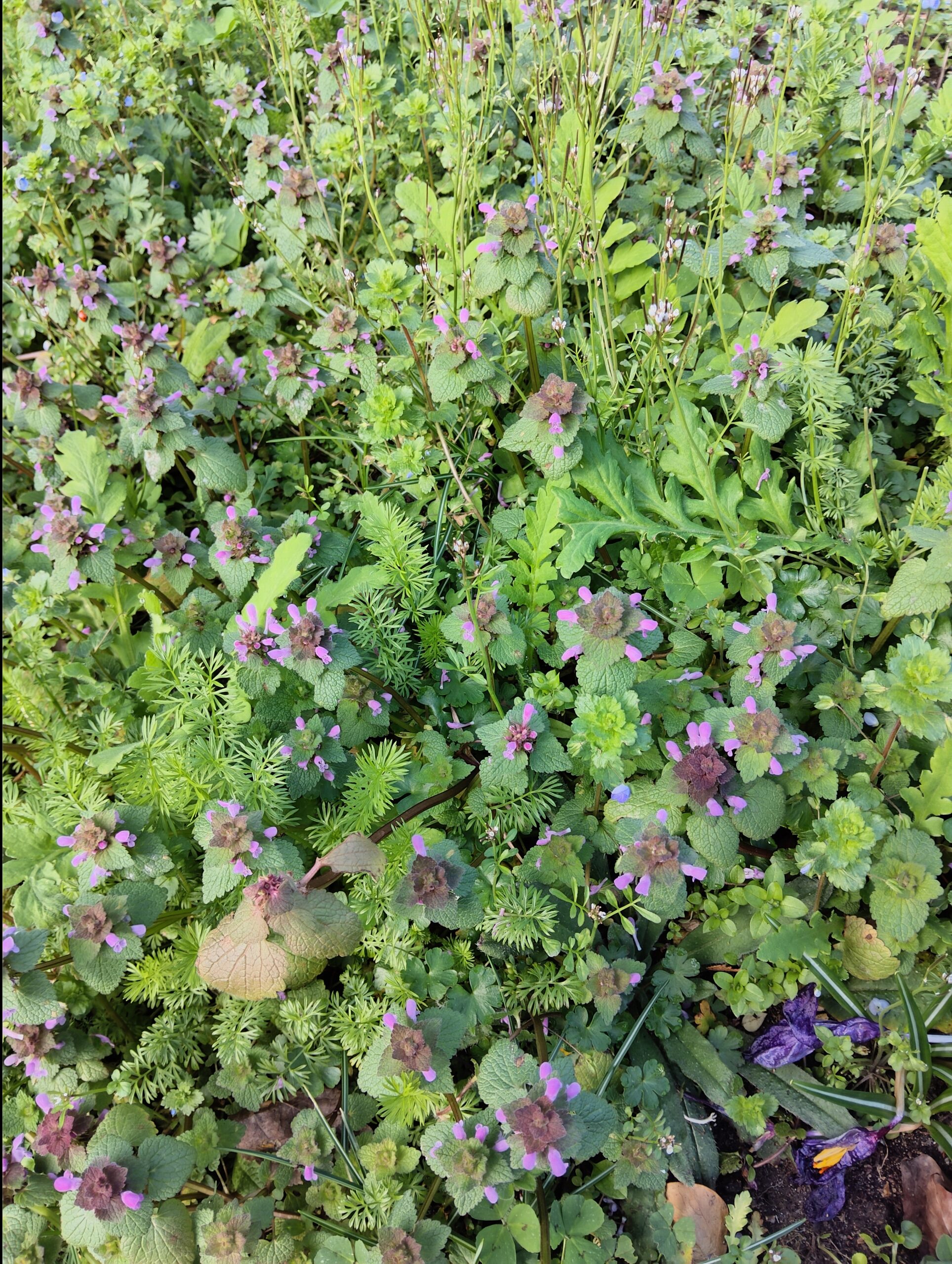
Sneak preview – here’s the first patch we’ll be untangling. A real haven for bees at the moment, they love red deadnettle as it’s full of nectar; but give it a couple more weeks, and it’d be a mess. That’s the balance we’ll be trying to sort out.
12 March 2026
Here are a few photos of the Gardens, taken this week as primroses and hellebores take over from the winter aconites and crocuses.
The crocuses don’t photograph well, which is a pity; over the last few years they’ve spread all over a couple of the beds. Bees are just starting to look for nectar and pollen, so it’s well timed! Here are a few photos of the other flowers in the garden at the moment:
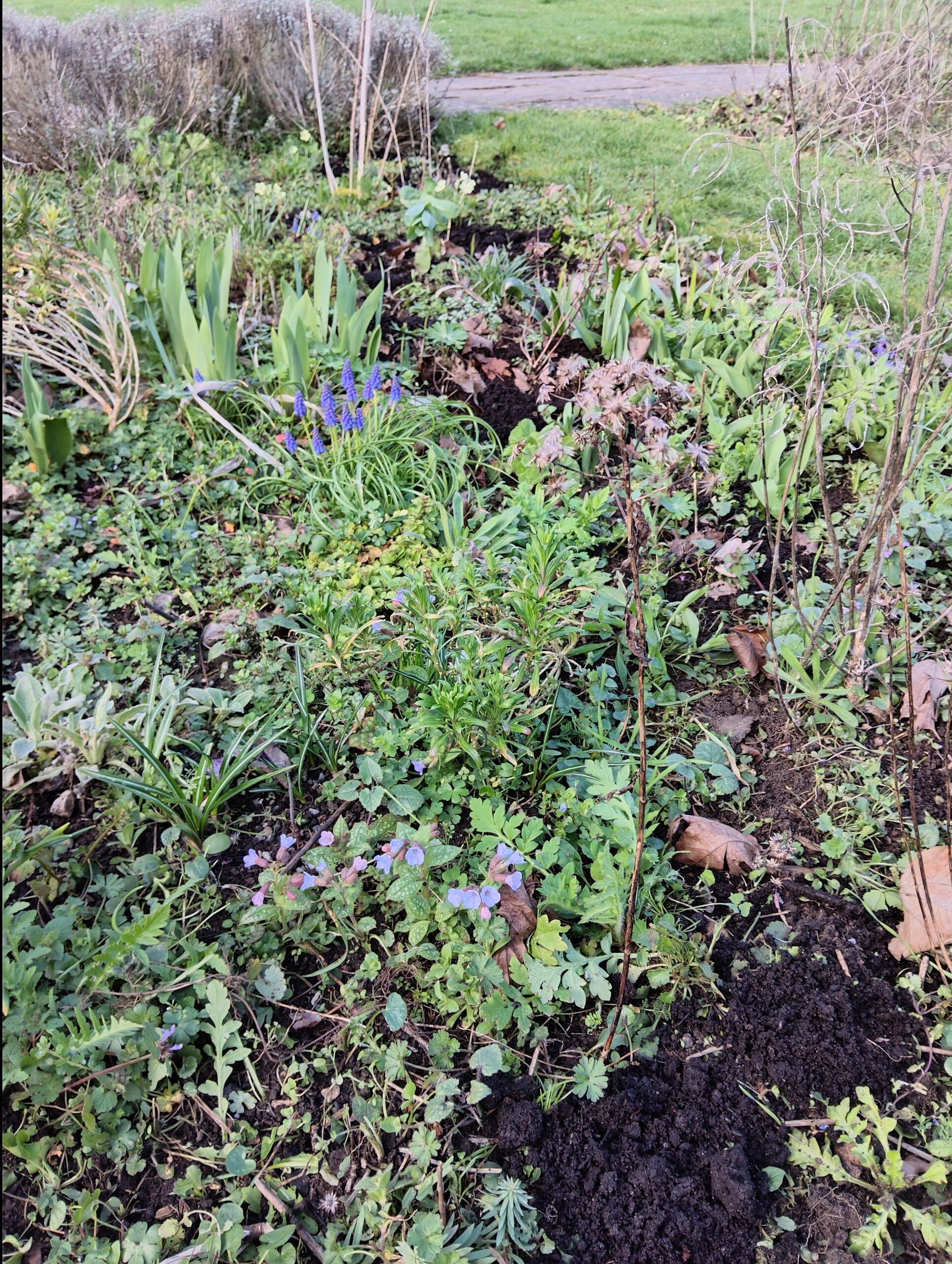
The first flowers of pulmonaria and grape hyacinths – these two are real bee magnet flowers in early spring
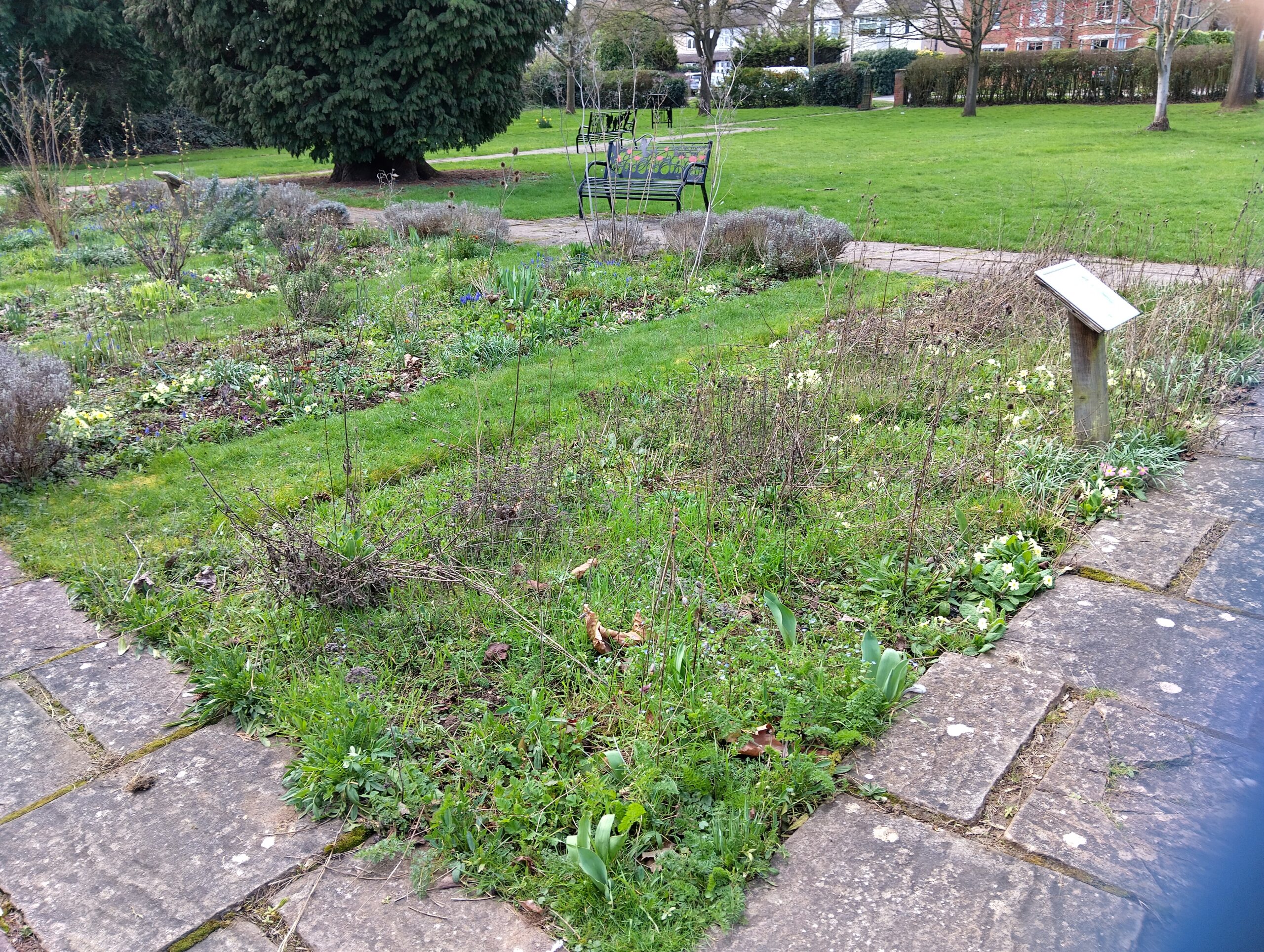
The primroses have spread all over the garden
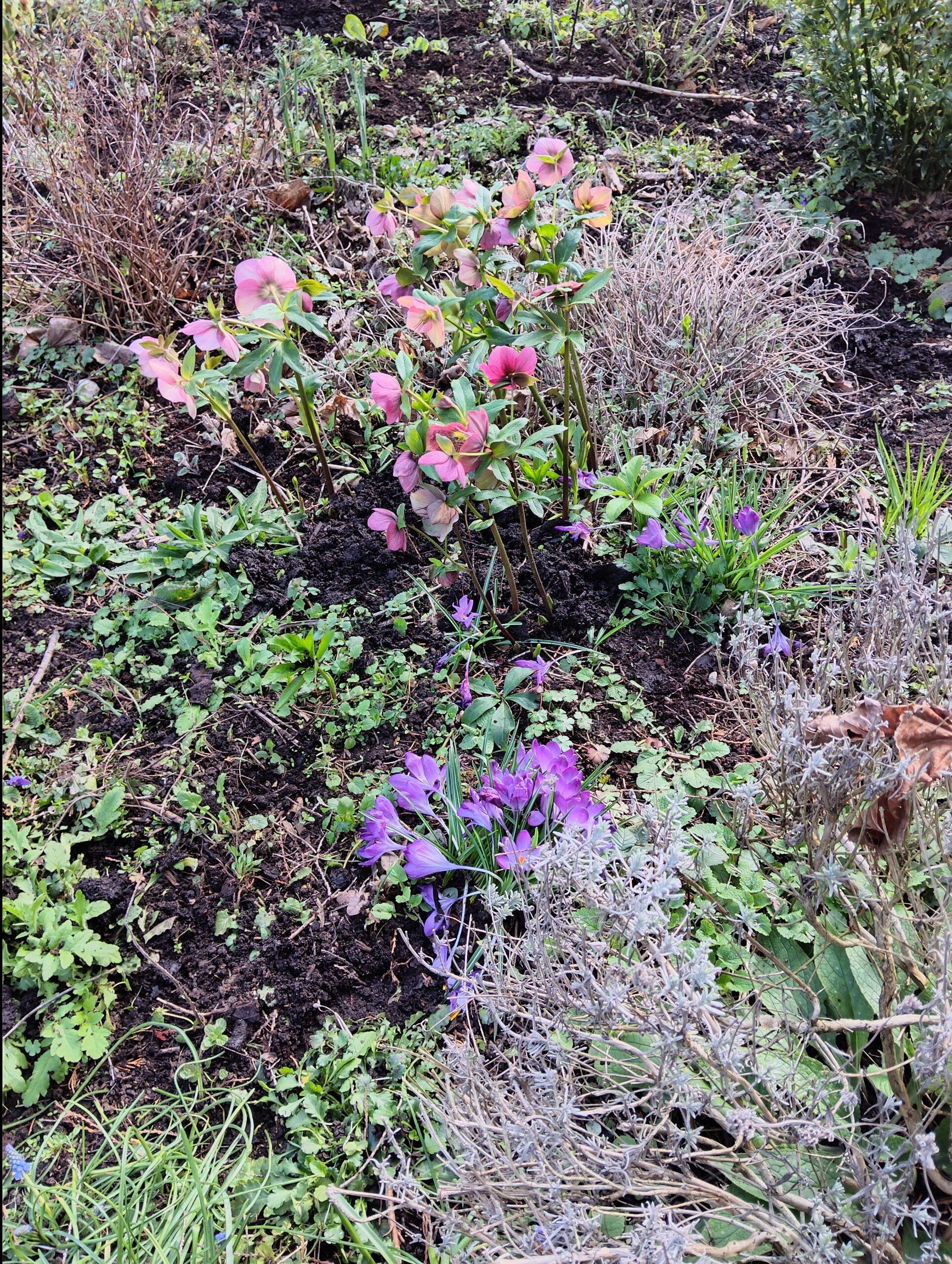
Hellebores and a clump of crocuses in one of the bottom beds
08 April 2025
Or rather, why we haven’t done it yet.
Last year about this time, we explained why we don’t cut back all the old plant stems in the autumn, as people used to do to make their flowerbeds look emptier and tidier over the winter (spoiler: it’s because insects and small mammals need places to hibernate in, and dead leaves on the ground and hollow stems in the air seem to be just the thing).
We have cut most of the old stems down now, but we’re still not weeding thoroughly – this isn’t just laziness! A lot of the flowers we encourage here are ones that have self-seeded, and too many of them haven’t germinated yet. So if we weed to bare soil between plants, we’re destroying a lot of plants we might like to keep.
The warm weather over the last couple of weeks has really brought a lot of plants on faster than usual, so we’ll be starting to tidy up in earnest for the rest of this month, and sowing seeds where we find any bare patches.
And perhaps most importantly, we’ll be lifting even the useful wild flowers like Geranium lucidum [find photo] in the third bed up from the memorial itself – that’s the bed the preschool children will be planting their peas out in when they come back after the Easter holidays, and we need it to be ready for them then.
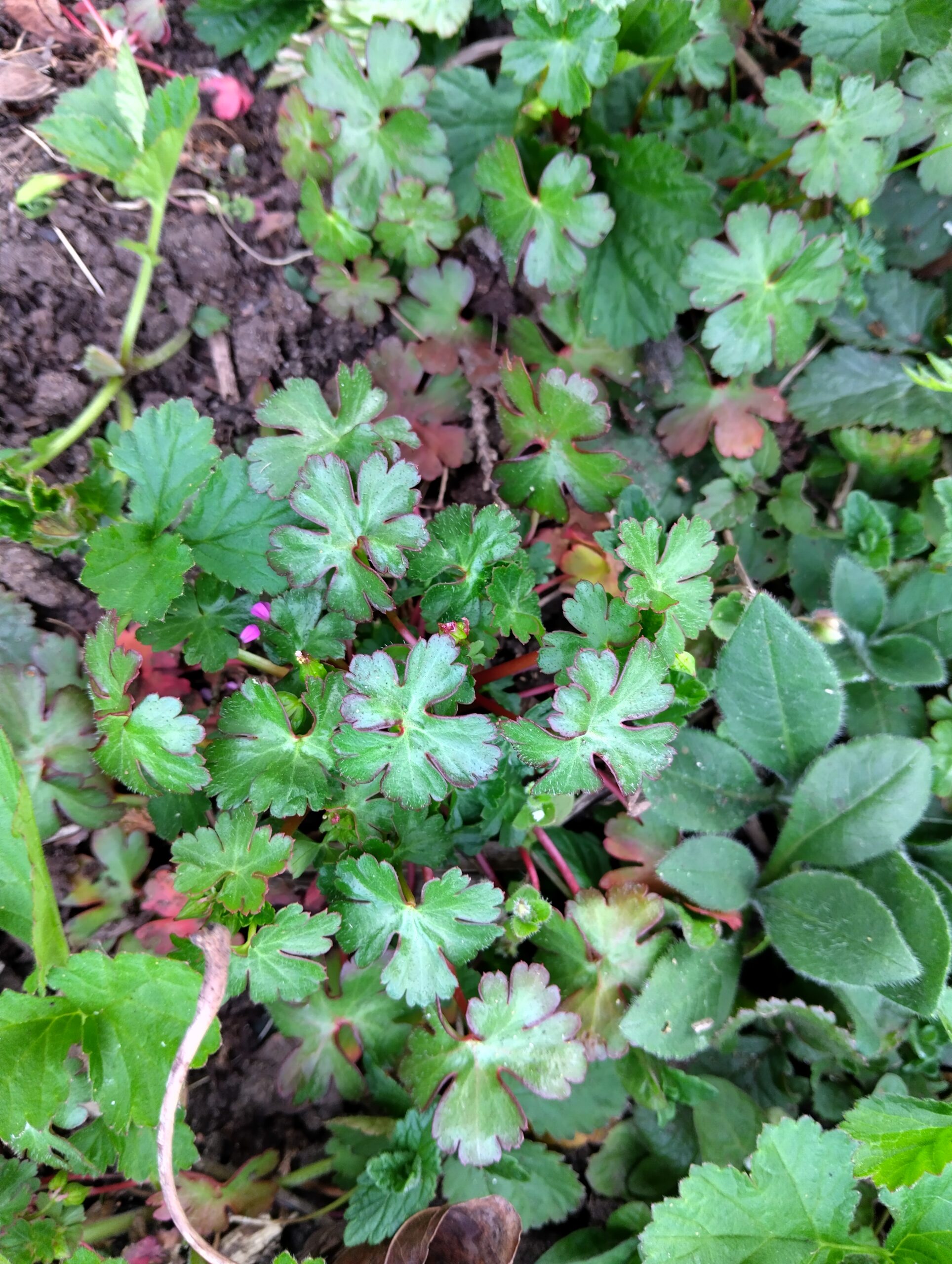
We’ll leave a couple of plants – there’s a large viper’s bugloss which will be a real bee magnet later in the year – but mostly we’ll be clearing more space for them. It’s a big ask to avoid digging up lots of plants by mistake when you’re only 2 or 3 years old!
12 March 2025
Last year’s plant sale was really fun, so we’re doing it again this year on Saturday April 26, from 10:30 to 12:30.
The Town Council would prefer us not to hold it in the Memorial Gardens themselves, but have said we can use the wide grass verge between the hedge and the car park.
There’ll be pretty much the same mix of plants as last year – many perennials (herbs like golden and common oregano, and thyme; bee magnets like purple toadflax and foxgloves; and geraniums, irises and a couple of ornamental grasses.
Like last year, we’ll have tea and coffee, and many gardeners on hand if you’re not sure what’ll work in your own garden.
09 April 2024
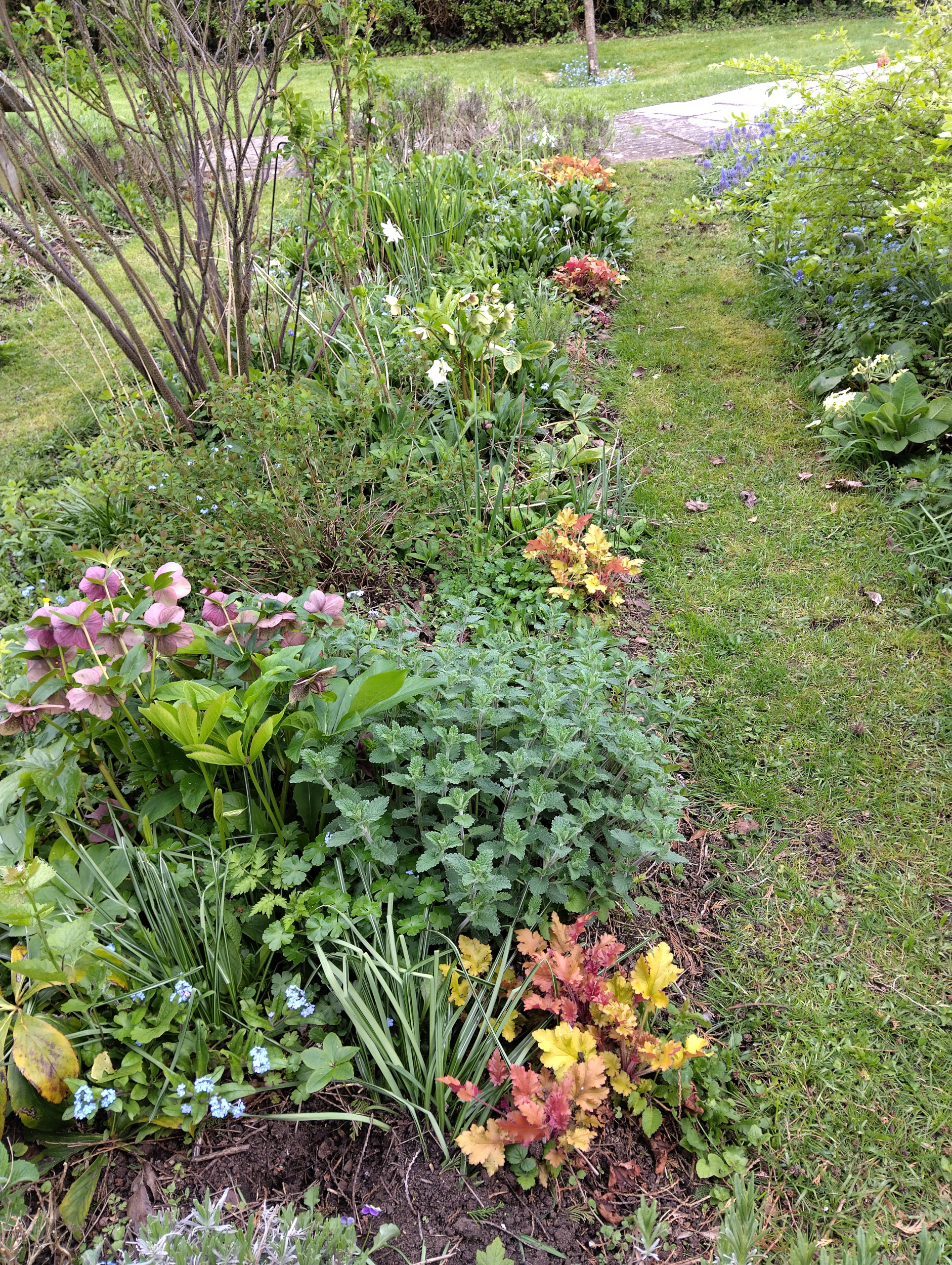
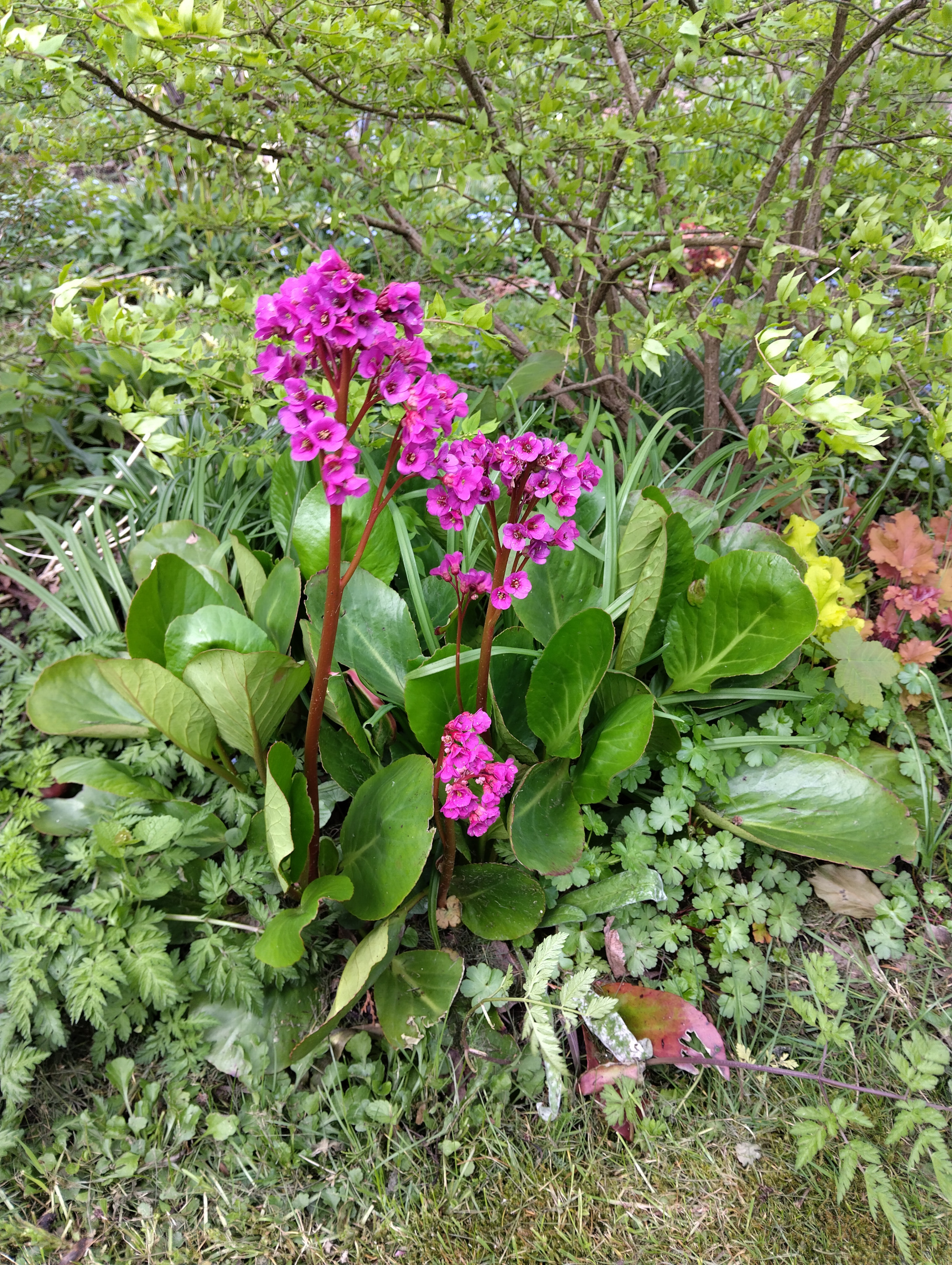
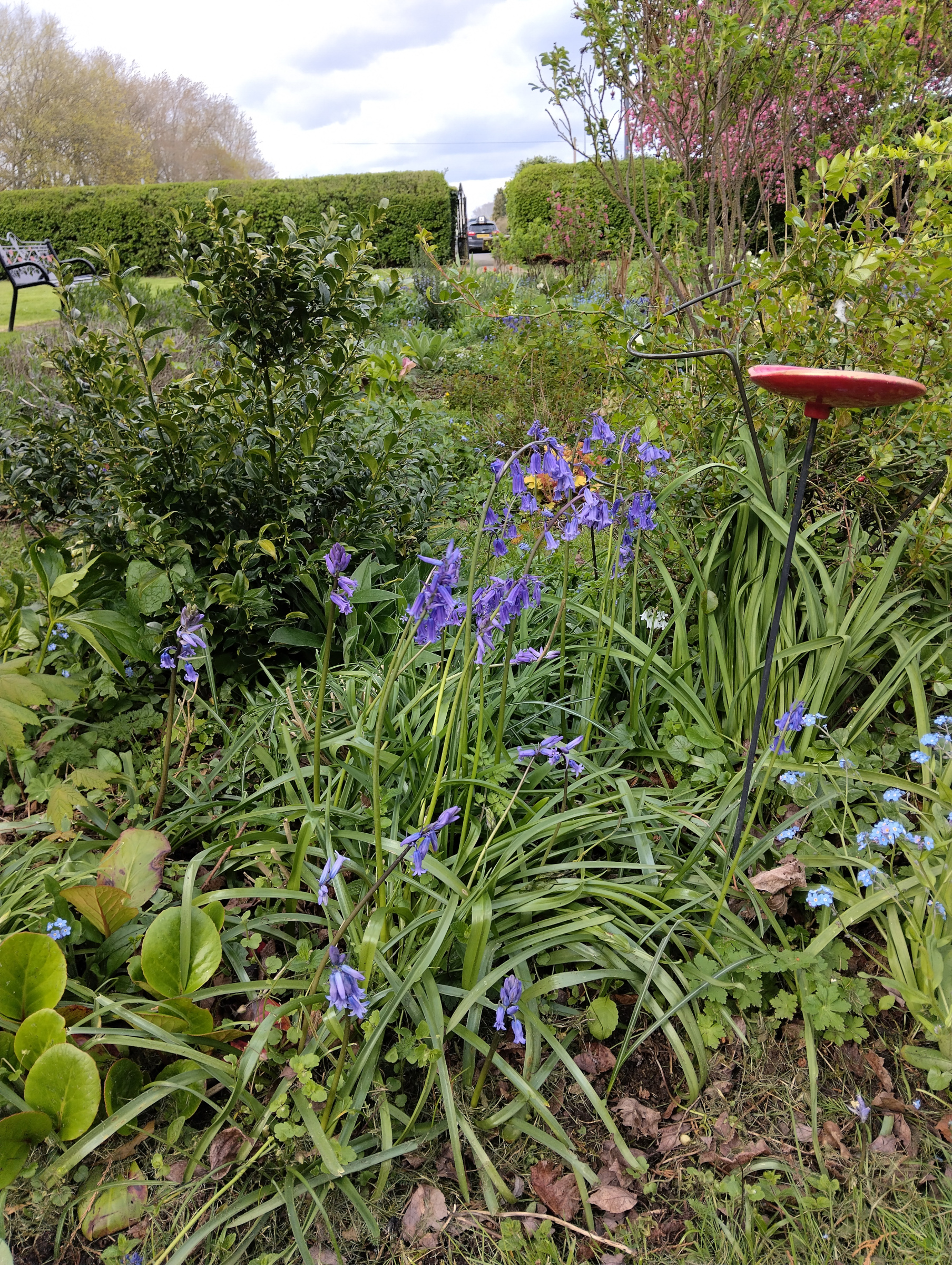
Plenty of colour in the gardens today, from both leaves and flowers:
08 April 2024
A quick reminder that we’re having a plant sale in the Memorial Gardens on Saturday 20 April, from 10:30 to 12:30. We’ll be selling (mainly) pollinator-friendly plants, most of them ones that we grow here in the gardens so you’ll be able to see what they look like in an actual garden.
One other point many of these will have been lifted a few weeks ago, so they may need a bit more TLC to start with than plants grown in pots from the start. This just means putting a bit of water in the planting hole before you put the plant in; then watering it in; then keeping an eye on it for a couple of weeks to see if it needs more water while it grows more roots.
Watering the planting hole not only helps the plant settle into its new home; it encourages it to grow roots further down, which is really helpful if we have a long hot summer (if only!).
31 May 2018
We keep tweaking the wild flower bed.
When the new beds were dug in the Memorial Gardens over the winter of 2013-4, there were many different plans for them, but the one thing everyone agreed on was that the bed nearest the car park should have a great display of poppies. This was broadened to include the standard cornfield annuals mixture to make the display last longer, with a band of poppies first, then cornflowers, then oxeye daisies. This was spectacular that first year, and the poppies were allowed to seed and regrow the second year, when they made a great display again. The stalks and seedheads were left as food for birds and insects, and for insects to hibernate in, which led to a few complaints that the gardens looked messy and disrespectful of its setting, particularly for the services on Remembrance Sunday.
So we began to manage the gardens in a slightly different way, but always kept that first bed for the poppy display, letting some of the seed fall on the ground, and resowing in the autumn and spring (because we don’t quite trust ourselves, and there’s only one chance to get it right for the display every year). A couple of regular passers-by congratulated us this week for managing to get the poppies flowering four years running – apparently it’s notoriously difficult to get them to come back year after year. They don’t just like disturbed ground, they like newly-disturbed ground (the best displays are round the edges of road-building sites). And of course, poppies became a symbol of remembrance after the first world war, as they covered the ground that had been battlefields in northern France and Belgium.
We also followed the usual advice for bee-friendly native plants, and sowed other cornfield annuals, mainly cornflowers and oxeye daisies. Usually they’ve all done well, especially the oxeyes which do tend to take over, as a trip along the M25 to Heathrow reminded me this week – white daisies everywhere, but nothing else left from the wild flowers they sowed. This year, the cornflowers suffered with the cold wet winter, and the few tiny plants that did make it through were mostly finished off by the cold snap in April. We’ve been experimenting with more perennial wild flowers in the other half of the bed, but that’s for another post.
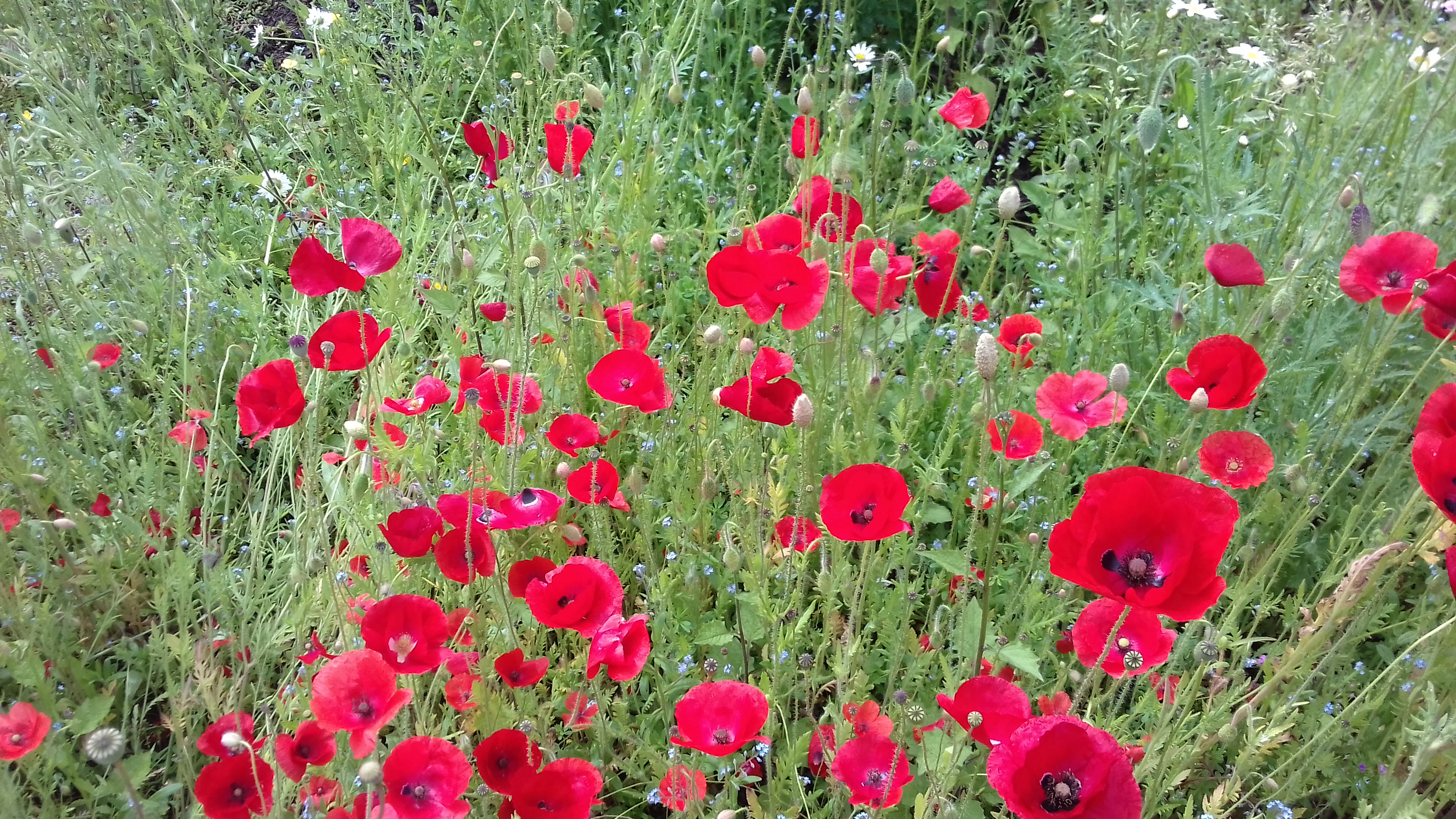
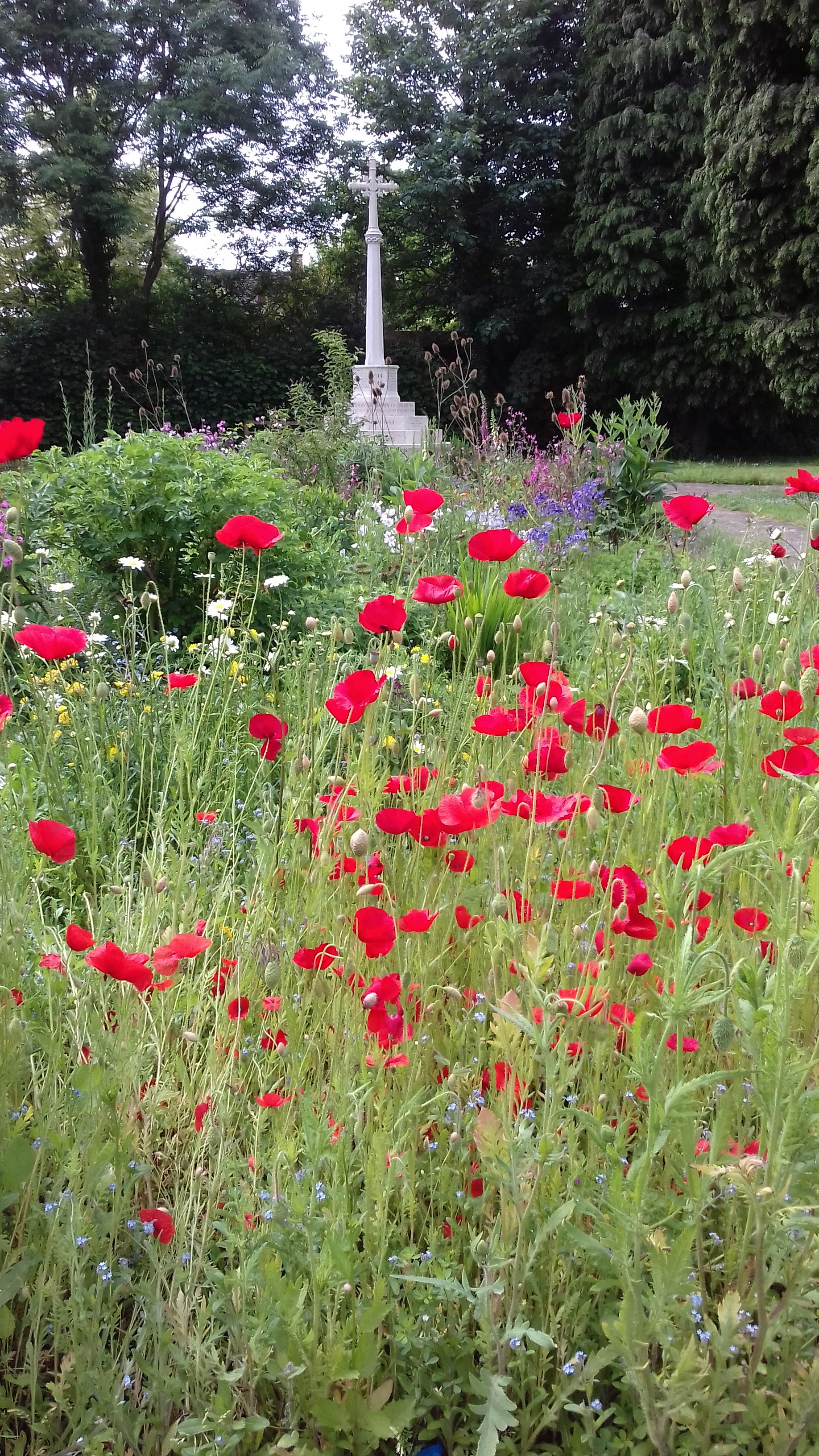 We’re very aware that June’s great display of poppies could easily become November’s ‘weed bed’, as one disgruntled local business-owner put it. So the cultivation the poppies need also helps to keep the place tidy as we not only cut down the stalks and seedheads, but remove the plants completely, resow, and fork the soil over One of the many compromises of wild flower gardening is that clearing the plants away every year means that we destroy the understory of stonecrop, black meddick and forget-me-nots that arrives with the poppies in the spring. It’s a bit untidy, but we generally leave it that way as long as the poppies themselves seem to be thriving, as we’ve noticed that those lower-growing plants are just alive with insects: the bed as a whole seems to be a mini-ecosystem. So far it’s worked – here’s this year’s display, just starting. Something to enjoy for the next month! And then the cycle starts all over again with seed-saving, clearing the plants away, forking the ground over, and resowing for next year.
“Why are you cutting down our bees’ lavender?”
13 August 2017
“Why are you cutting down our bees’ lavender?” said a voice behind me while I was pruning the lavender bushes along the paths. The voice belonged to one of the older children from the local preschool, who often come and help us and watch the bees, dragonflies and other insects as they visit the different flowers – clearly the message had got through!
I explained that the flowers were over for this year, and we needed to trim the plants back so that they’d produce lots more flowers next year. ‘Next year’ is probably quite a vague idea when you’re not yet five, but fortunately the explanation was accepted. Bees visit many other flowers at the moment (we try to have at least two ‘bee magnets’ in flower at any time throughout the year), but it’s true that they go straight for the lavender when it’s out.
The lavender border was started a couple of years ago, when we realised that we needed more structure in the gardens so that they carried on looking good after most of the flowers had faded, particularly as we tend to leave seed heads for insects to hibernate in over winter, and just to look good when there’s not much else happening in the dark cold days. This could look untidy without the more formal structure of the lavender border. Most of the plants are compact varieties – Hidcote, Munstead, Dwarf Blue, Little Lady, Arctic Snow – as although the larger varieties attract more bees, they’re also much harder to keep in check, and would soon take over the paths as well as the beds.
The standard memory aid for pruning lavender is ‘8:8:8’ – prune the bush to eight inches on the eighth day of the eighth month. Not quite so effective if you think in metric! But the general rule applies – trim the plants as soon as they’ve finished flowering, to roughly 20cm all round. Hopefully, we still have a couple of months of warm weather to encourage them to put out new shoots and fill out a little before they stop growing for the winter.
However, to mollify the child who was worried about the bees having no lavender to visit for nectar, we’ve left a few of the later flowers for them!