Alex Mayer, our new MP, visited Leighton Buzzard last week to meet members of the ‘United for Warm Homes’ campaign; South Beds Friends of the Earth are one of the organisations involved.
After that meeting, she wanted to see some of our wildlife-friendly sites First was the flowering hedge we helped to plant a couple of years ago, up by the boundary of The Wharf; then she came down to see Linslade Garden of Remembrance. Sorry, we don’t have any of the photos yet.
She commented on how neat the place was – I think that’s a first! But we do try to keep the path edges cut, and of course they’d been done extra carefully a couple of weeks ago, for Remembrance Day. And we scrape a trowel along the edge of the bed, which keeps weeds down, stops grass and plants invading from the paths, and makes a nice dark contrast of bare soil against the path edge – which makes the beds look particularly neat at this time of year, in low sunlight.
What goes on inside the beds is much less formal, though; Alex Mayer really liked all the tall plant stems we leave, with seed for birds (goldfinches were feeding when we went round to meet her) and places for insects to hide. She was interested in how we look after it, and in the support we have from the community, in many ways. And of course, she was impressed with the help we have from the preschool children, who were out this morning helping us gather leaves – more on that in our next post.
That sounds a bit dramatic, but insect populations really have crashed over the last few years – many of us have noticed that there are fewer bees and other flying insects around, and we don’t have to clean insects off the car windscreen any more.
A recent paper reports a 75% decline over just 27 years.
And of course, without insects, we have far fewer birds. It’s been particularly noticeable here in the Memorial Gardens, where we have the just odd bluetit or robin, and hardly any blackbirds; we used to have far more of them around us when we were working.
There are a number of reasons for this decline – loss of habitat, use of pesticides, erratic weather – but this year the long cold wet spring has made it much worse, as many species haven’t been able to breed as much or as often as they usually do.
How can we help them recover? – Well, in the long term, we need to support measures like the Town Council’s Biodiversity Plan (on their Climate Emergency page, and Central Bedfordshire Council’s local Nature Recovery Strategy.
It really helps when people email councillors to show your support for these plans, and encourage them to see that they get acted on.
But more locally, we can always do more here in the Memorial Gardens. We’ve noticed more different types of beetles, bees and moths since we started managing these flower beds about ten years ago, but there’s still more we can do. We’ve started changing what we do in the autumn – tidying the beds without being too tidy! We tuck leaves between plants to provide shelter and hibernation sites, and we’ve tucked a few small log piles around, too. We’re also adding a greater variety of plants, as some insects are specialists, and need particular flowers, at a particular time, which takes more thinking about than just putting in open-flowered plants that bees visit. Night-flying insects are important pollinators too, so we’ll add some of the flowers they like – we have some evening primroses and phlox growing on, which we’re hoping to put out this side of the cold weather. And of course, the fuller the beds are, the better the shelter for insects, small mammals like voles, and reptiles – we’re always getting surprised by frogs jumping out from their hiding places as we work!
All that rain has at least helped the plants make good growth and flower profusely – here are a few photos taken yesterday, when it was (briefly!) sunny.
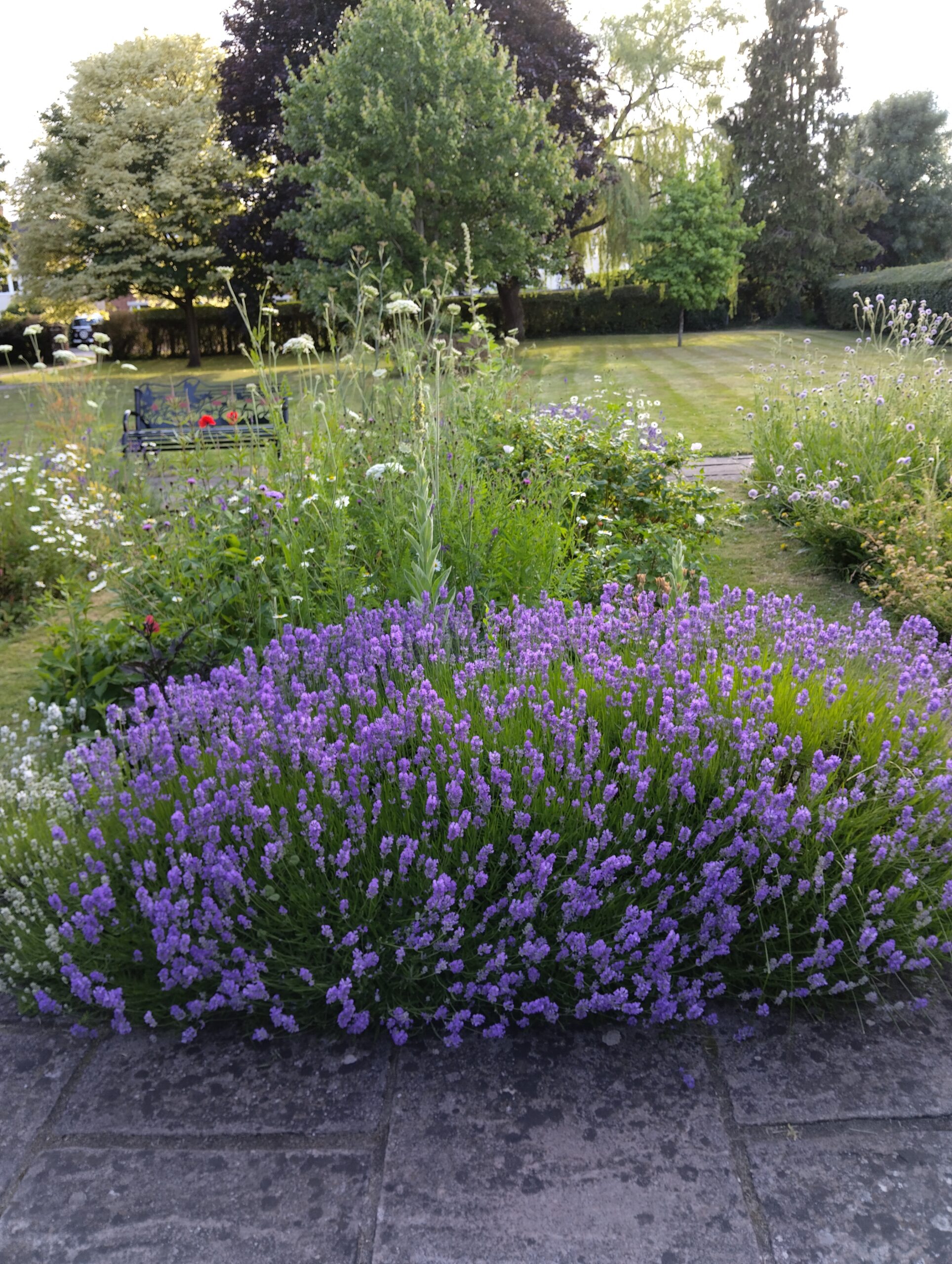
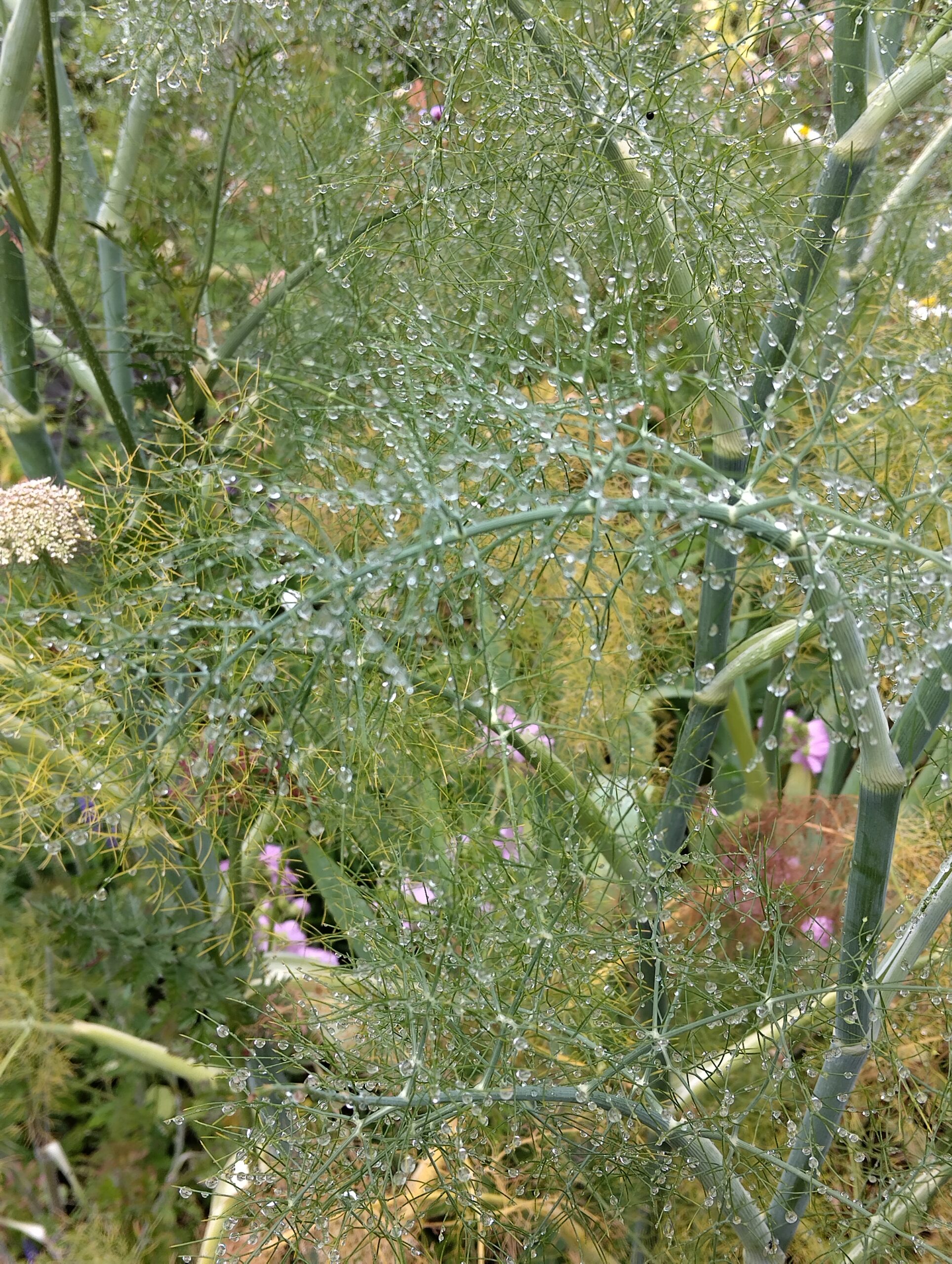
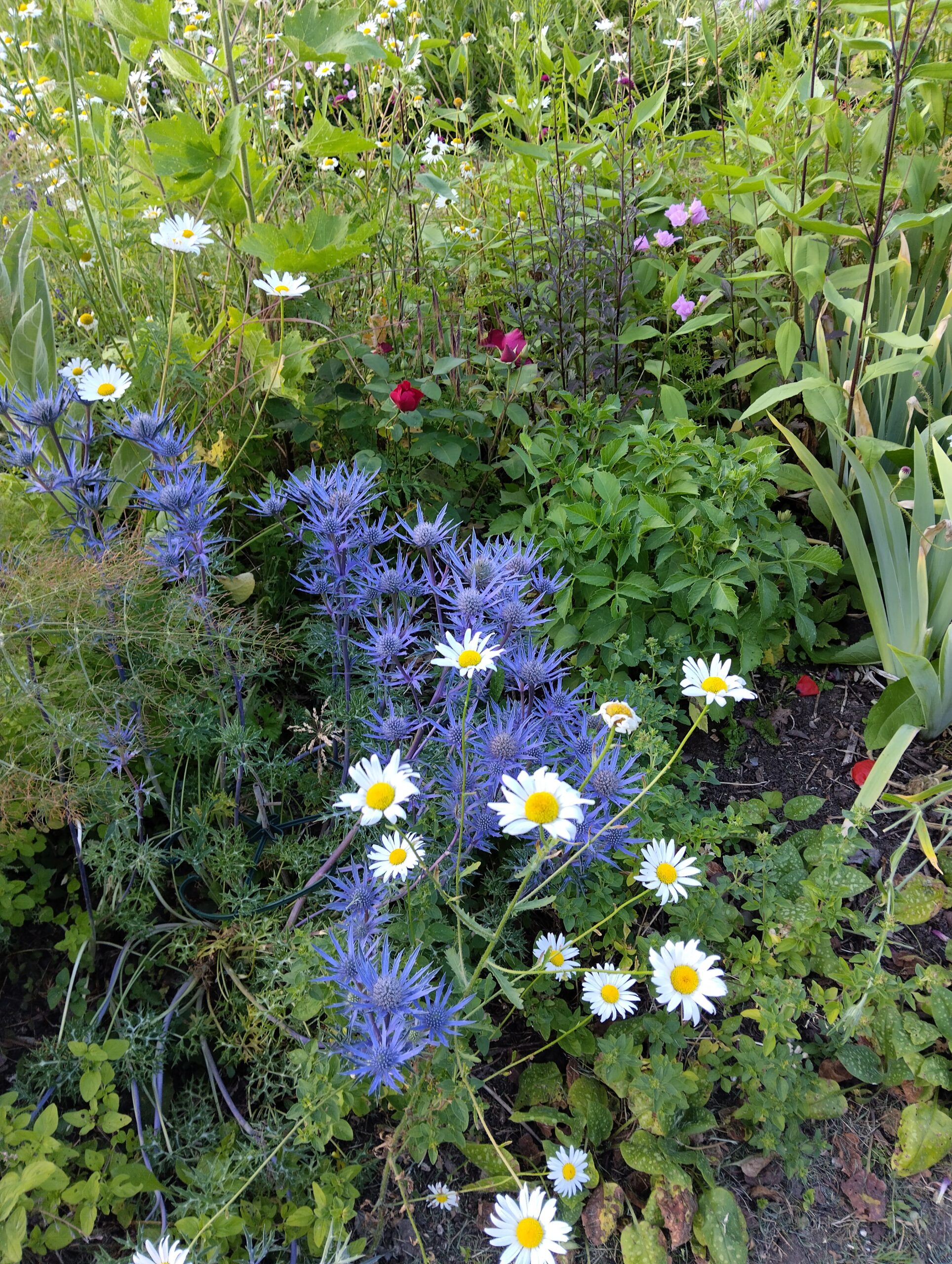
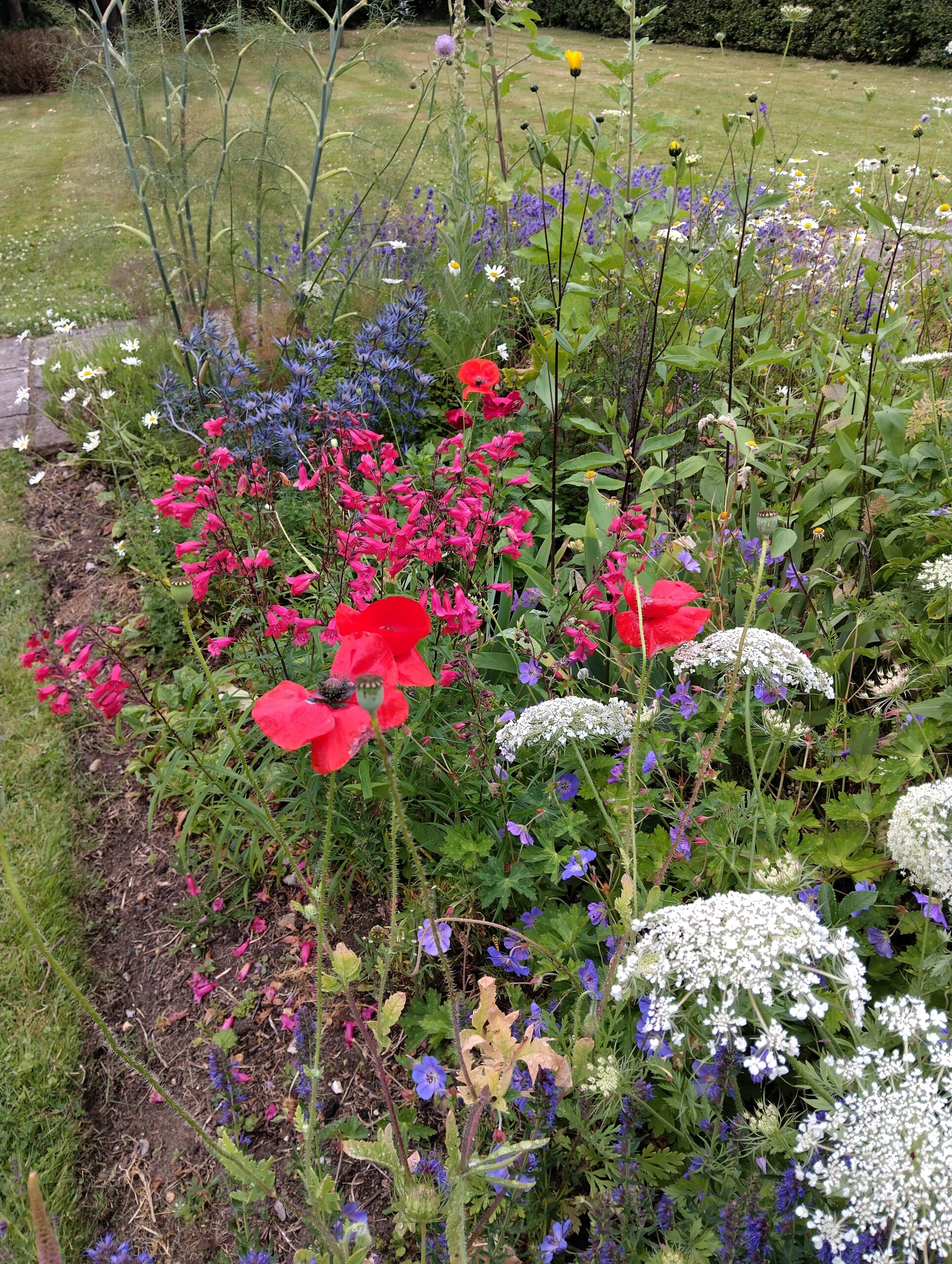
One of the lavender borders near the car park. This variety is called ‘Little Lady’ – it’s a beautiful colour, flowers for a long time, and doesn’t flop around. Raindrops on one of the tall fennel plants Blue eryngium and white oxeye daisies in one of the top beds Red poppies and penstemon, white wild carrot, and blue eryngium and lavender
The gardens have really benefited from all the rain over the last few months, and everything’s growing really strongly. When we cut back spent flowers and stems a week or two ago, we filled two Dalek compost bins, and the gardens still looked lush afterwards!
As we described last year, we’ve slightly changed the types of plants we use here, to try and cope with the very varied weather we’ve had over the last few years. We can’t really rely on spring getting warmer and drier, summer being warm and sunny with occasional storms – this time three years ago we were having a heatwave, this year the plants have been lucky if they see the sun at all for days, and night-time temperatures have fallen to single figures a couple of times lately, which checks plant growth and flowering. So everything we use has to cope with all of that!
This means that the gardens are looking even more informal than ever, but there’s still lots of colour from flowers and leaves. We’re just beginning to see dahlias flowering – they’ve been mainstays of the gardens for the last few years, carrying on from July right up to the first frost, which is usually around Remembrance Day in November. We had always intended to grow more of them, but haven’t added any this year while we decide if it’s really worth all the effort when a couple of people steal many of the flowers. The same couple have been seen a few times doing it, so we know it’s not just the local wildlife! But we have limited volunteer time and a very limited budget, and it doesn’t seem worth buying new things for everyone’s enjoyment, when they’re just going to be stolen. So we’re trying to maintain the level of colour and flowering through the gardens, but using plants that hopefully will be less attractive to thieves, like salvias and penstemons, and – if the weather ever turns warm enough to germinate them – annuals like California poppies, which pollinators love.
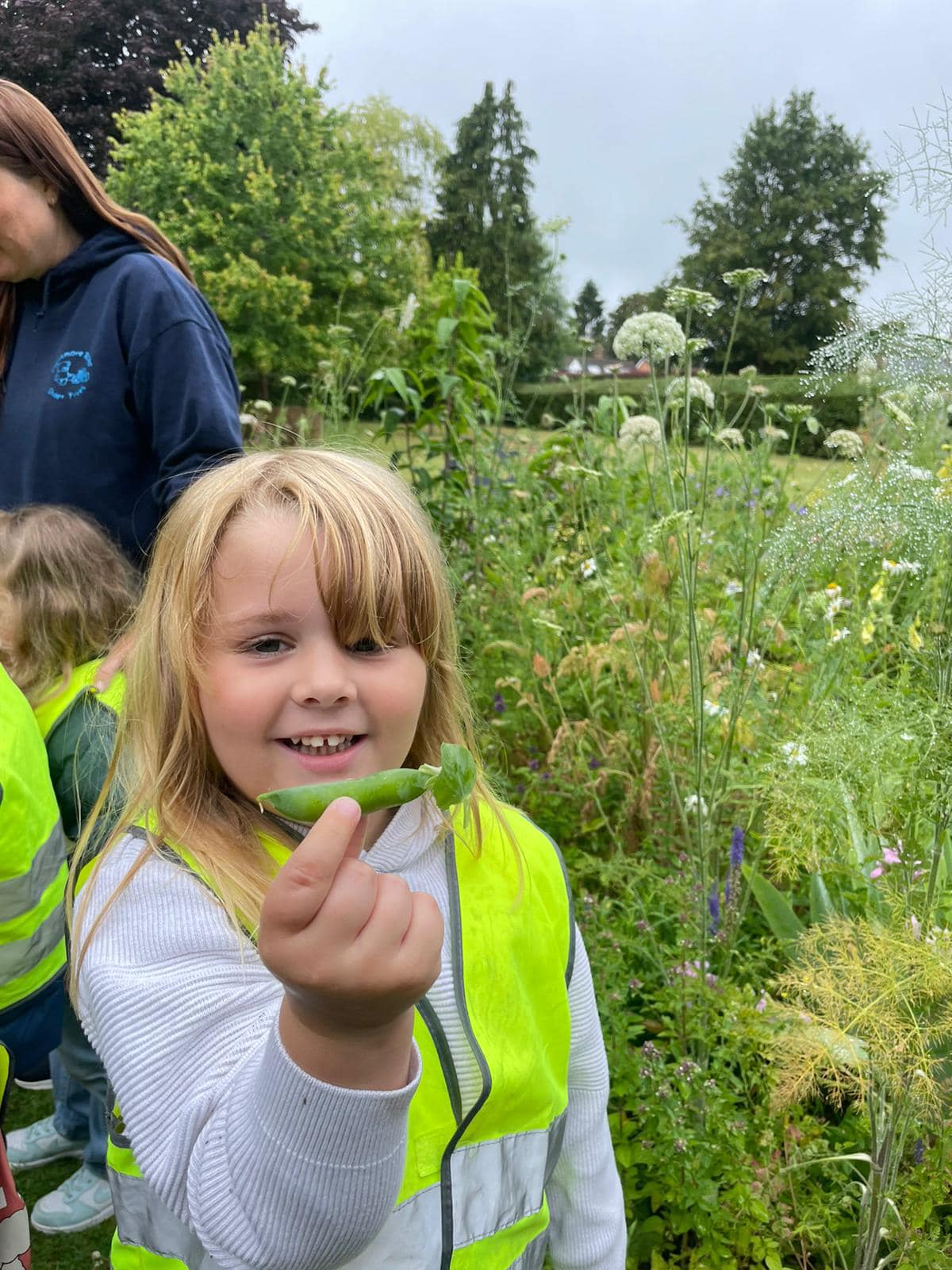
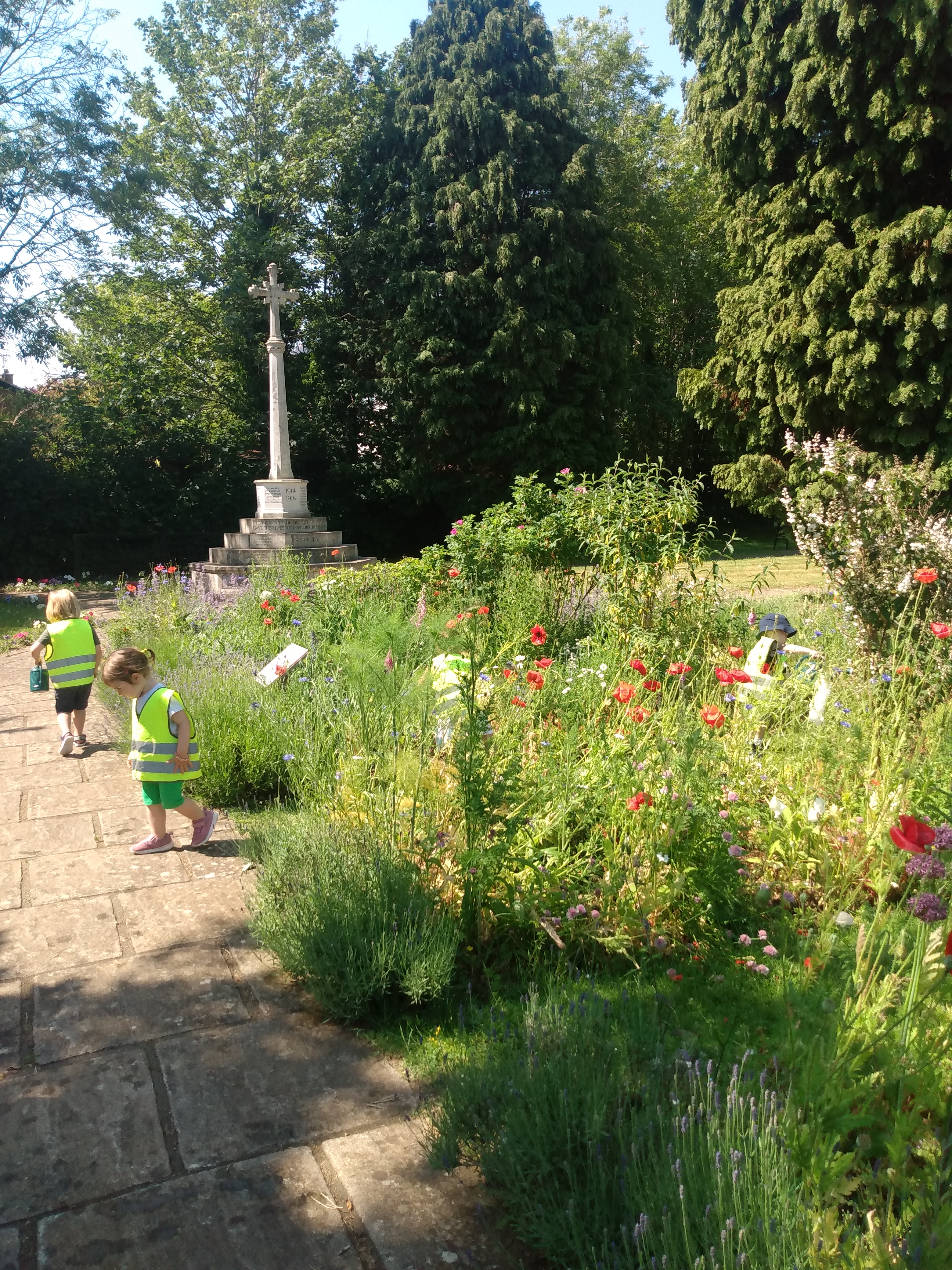
Meanwhile, the children from Mentmore Road Under-Fives came round this morning to pick the peas they’ve been growing for the last few months. Always an exciting morning!
Save the date – we’re having a plant sale in the Memorial Gardens, on the morning of Saturday April 20!
We have a lot of spare plants that are all good for pollinators; we’ve been potting them up and growing them on over the winter, and now they’re ready to be planted out. Here’s a list of what we have at the moment – and what we’re likely to have later in the year, too – so have a browse, and come along and buy some that morning, from about 10 am.
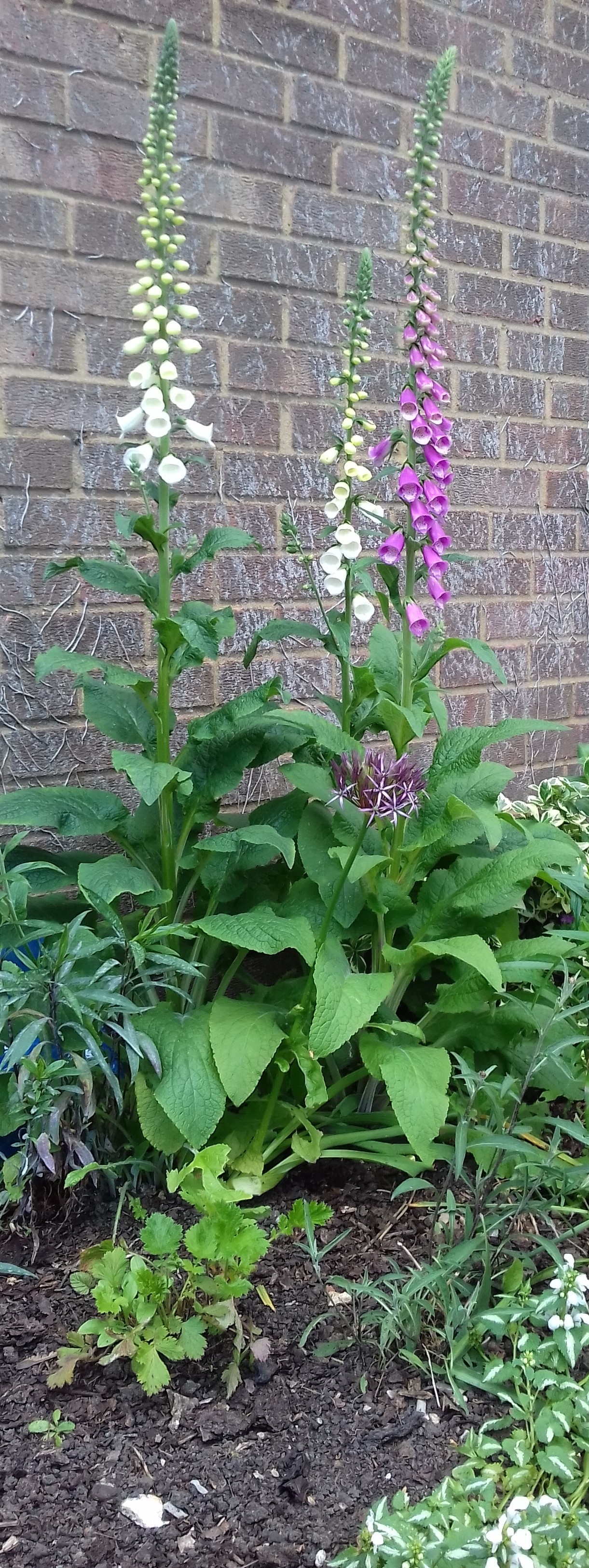
The plants are generally small-flowered and unshowy, but they do attract bees and other pollinators, and most of them are perennials (that means they’ll go on growing in your garden / window box / other container) for several years. The ones that aren’t perennial are foxgloves, which are biennial – that means they spend the first year making a rosette of leaves, which produces a flower spike (or two) the following year, in about May-June. If you let the seeds ripen you’ll have more than enough to start the whole cycle over again, so although they’re not perennial, if they like where you put them, they should keep going for years.
We have a couple of annual plants too – that means they’ll flower, set seed and die in the same year, You can collect the seed and sow it in the autumn or spring to flower next year; or you may just find lots of seedlings around where the original plant was.
Perennials
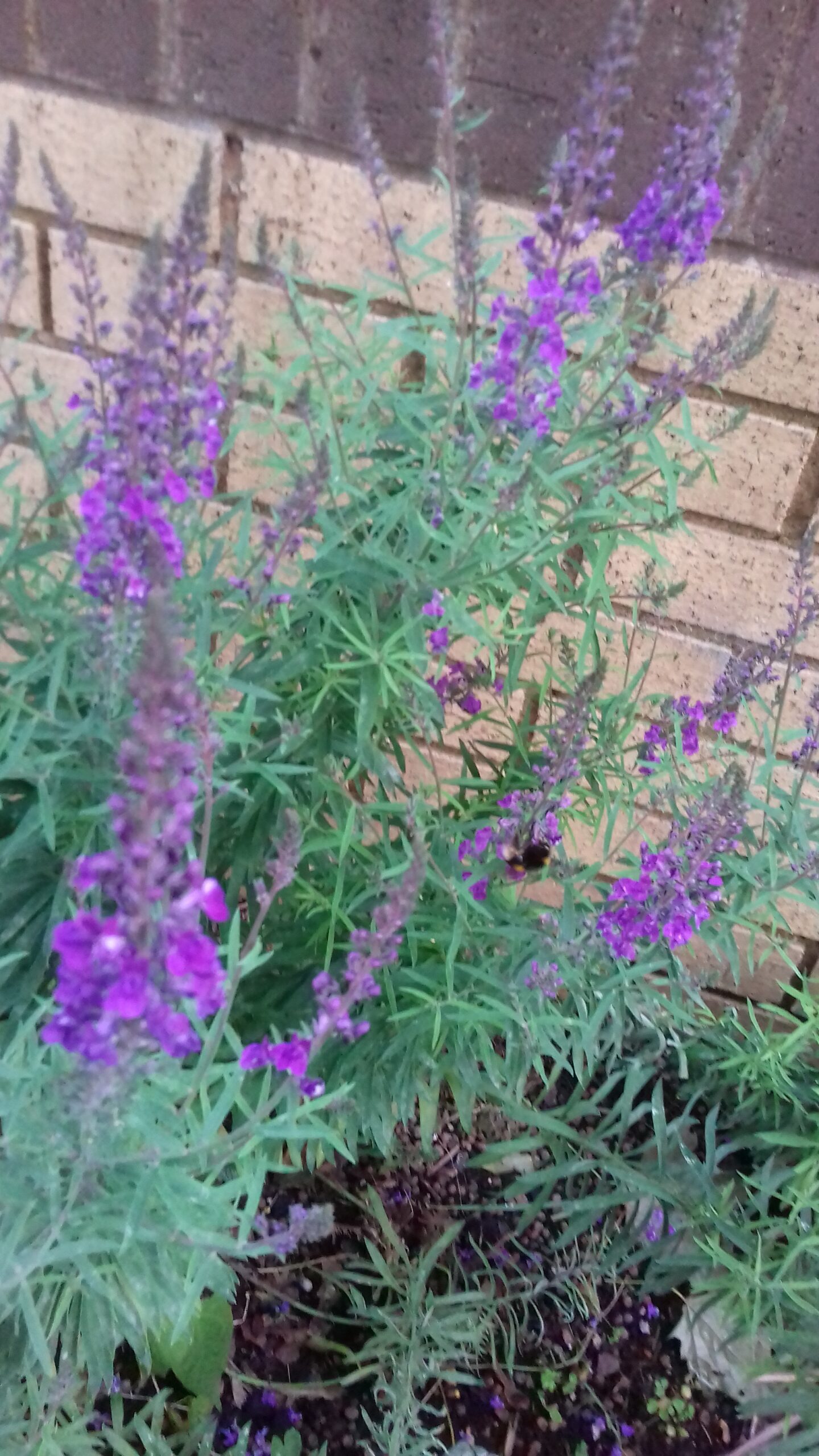
Purple toadflax (Linaria purpurea) – not a UK native
Height 0.5 – 1 metre; stems with small grey-green leaves, with tiny ‘snapdragon’-like purple flowers (sometimes pink) from May or so, until the autumn. The plant may also seed itself round freely.
Prefers full sun.
Bees really love the flowers.
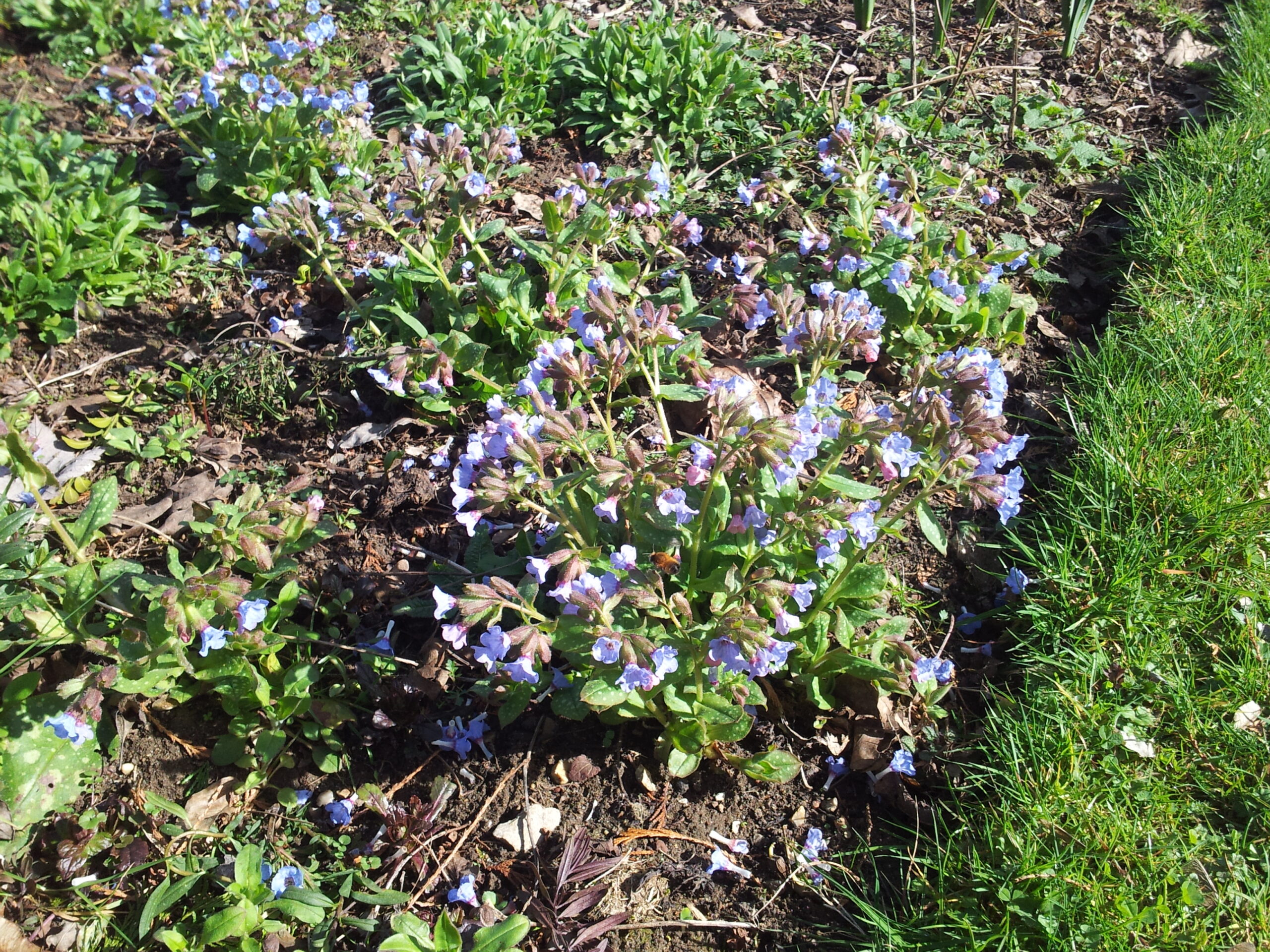
Common lungwort (pulmonaria officinalis) – not a UK native
Low-growing, clump-forming, one of the earliest plants to flower, with blue and pink cowslip-like flowers from February to about April. (The one we’re selling has white flowers; we may have the more common blue ones for sale later in the year).
Likes light shade; dislikes drying out.
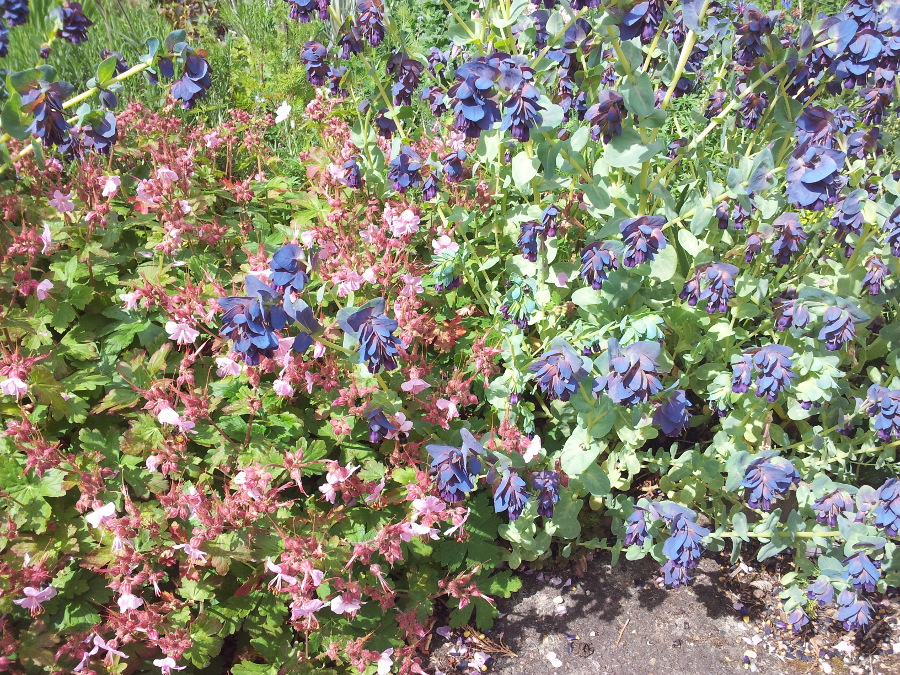
Geranium macrorrhizum – not a UK native
Low-growing ground cover hardy geranium, with pink flowers on stems about 20cm high in April-May. This is another bee magnet, with lovely fresh green foliage the rest of the year (we’ve found frogs sheltering under it at the Gardens).
Honeywort (Cerinthe major) – not a UK native
The other plant in this photo is honeywort, also known as cerinthe. It’s an annual that seeds itself around freely; or you can collect the seeds and sow them where you want.
It has large, sprawling, large stems that make it a bit unwieldy, but it’s very very attractive to bees.
Biennial
Foxglove (Digitalis purpurea) – UK native
Can be quite tall, up to a couple of metres, but usually much shorter. Purple or white flowers (it’s difficult to tell which they’ll be at the leaf stage).
Prefers light or dappled shade, and reasonably good soil.
Later on, we’ll have more plants, including Verbena bonariensis and asters, and hopefully, some rosemary and thyme plants grown from cuttings.
We’re managing the gardens in a slightly different way this year while we take stock of the effects of last year’s very hot dry summer, followed by a very hard frost early in December, followed by an exceptionally wet few weeks. A lot for plants to cope with!
Unsurprisingly, we’ve lost a few plants, but not as many as we feared. We’d put a couple of salvias in the two beds next to the wildflower one by the car park, and we lost both, which is a pity as they were bright red and bright pink, and they sparkled amongst all the blues and pale colours. But we were prepared for it and took cuttings, so we’ll be able to replant at least one of them this autumn, and more next spring. We don’t plant things out in summer, they’d take a lot of volunteer time and water to keep going, and we’re trying to be sustainable here!
Salvias tend to feature on lists of ‘plants that are good in dry conditions’, but it’s often not mentioned that they also hate having their roots in cold wet soil, which makes them a bit difficult to manage in the more extreme weather we’re getting now in the UK.
Similarly, penstemons are borderline hardy (that means they might survive frost, or they might not …) so we weren’t surprised when we didn’t see any new shoots on the lovely bright red one in one of the central beds. Then this week I noticed one of the preschool children carefully watering a few green shoots, and it’s off! So we may plant out more of those from cuttings I took last year.
Preschoo9l helpers watering plants taller than they are!
And of course the irises’ flowering season was cut short by someone tearing off all their flower stalks, and those of other tall flowers like foxgloves. They’ll flower next year, and in the meantime we’ll split them and plant them in a few places around the gardens, so that if anyone wants to tear them off next year, at least they’ll get some exercise doing it!
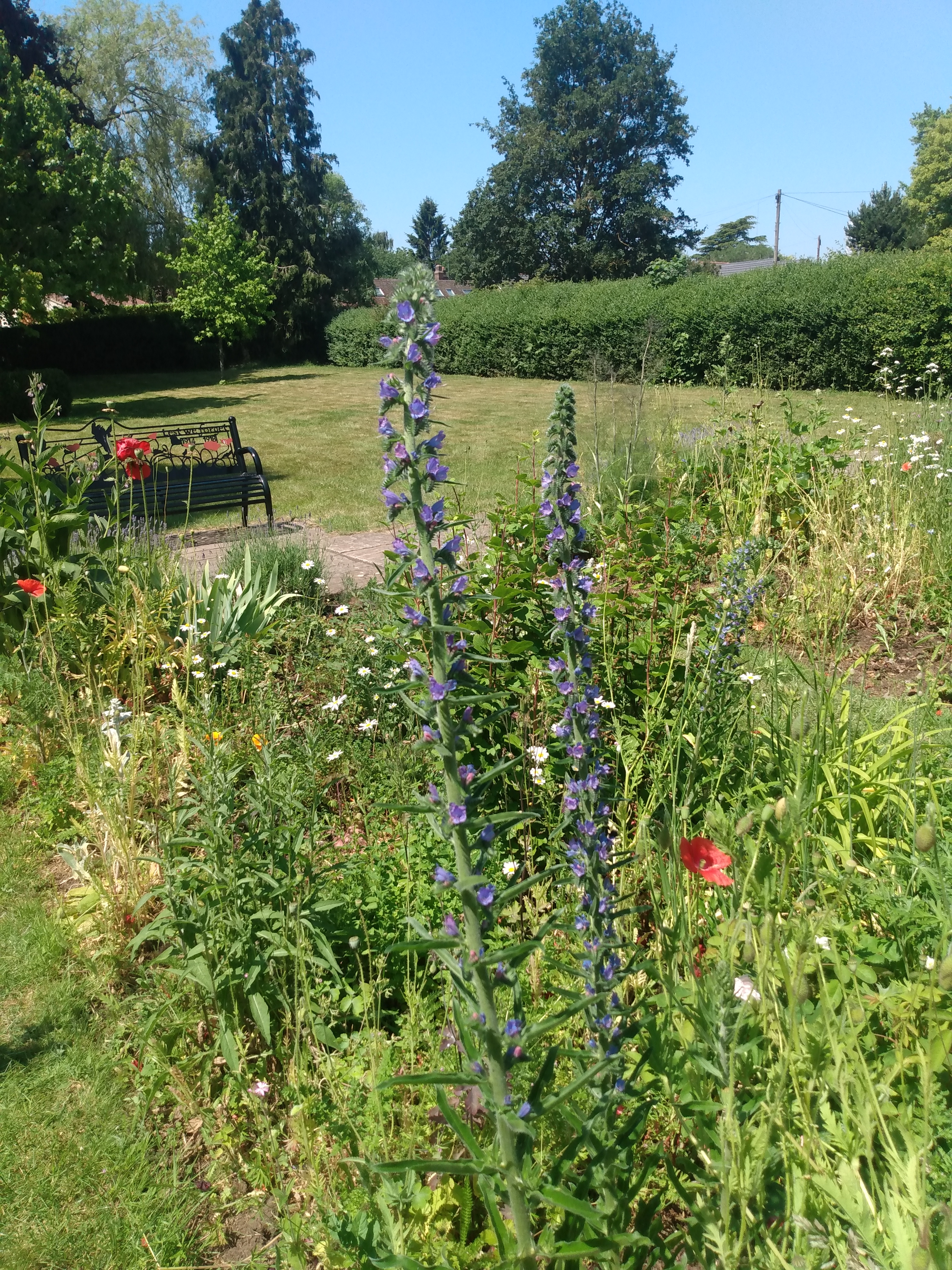
So this year, although we’re planning to keep the framework of shrubs and perennials, and we’re investigating plants that will cope with the weather extremes we can expect now, we decided to let the self-sown annuals and biennials do their thing – bright red poppies all round the gardens, pot marigolds and French marigolds, foxgloves, hollyhocks and the amazing Viper’s Bugloss that’s such a bee magnet. It’s a bit untidier and less structured than usual, but it’s lush and full and colourful, and we’ve had ever so many compliments on it already.
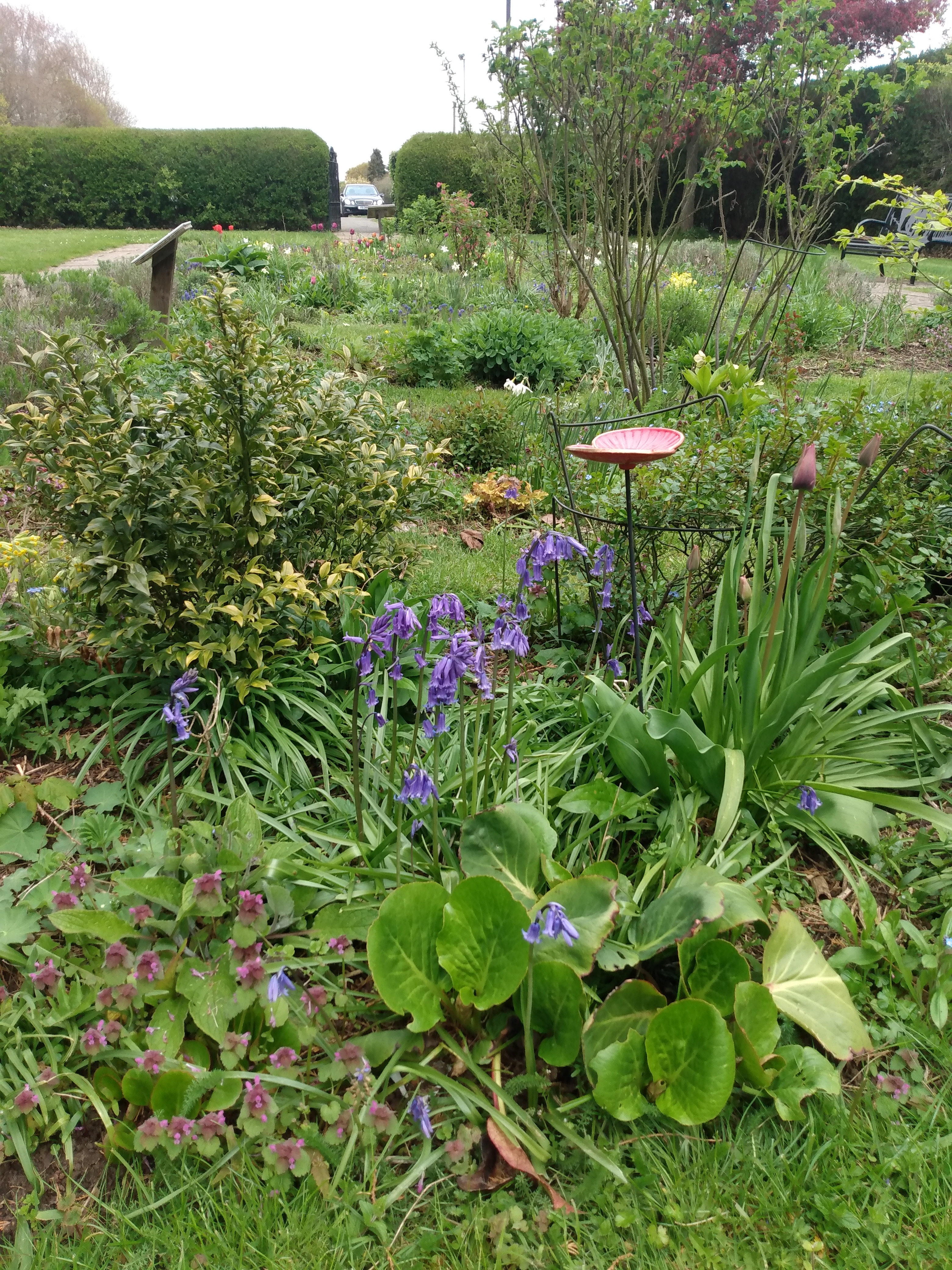
When we started working here, we planted some native bluebells in the bed nearest to the war memorial. They came up the next year, but didn’t flower at all for a few years; then last year, we had a couple of flowers. And now this year, look at them!
The main clump are the ones we planted originally; what’s really exciting is that they appear to be spreading, so they’re happy here. Lovely to see them on a cold grey morning today!
It’s always interesting working at some of the other wildlife sites that South Beds Friends of the Earth look after (there are 19 of them!), just seeing different ways of doing things, and learning more about where plants really thrive, rather than just surviving.
And it can make us very grateful for what we have here in the Garden of Remembrance – for example, unlike the area by the brook along Cotefield Drive, we don’t have people letting their dogs use the space as a toilet for us to clear up after. And we don’t have any vigorous clumps of nettles trying to smother all the more delicate wild flowers, partly due to over-fertile soil – which itself is partly due to people thinking it’s fine to just dump lawn clippings and other plant waste on!
Fly tipping and dog mess problems apart, the bank of the brook’s been transformed over the last couple of years, from a tangle of nettles and brambles to a much more interesting mini-landscape with little clearings of red and white deadnettles, primroses, red campion, foxgloves. Even on a cool day like yesterday, we saw several different types of bees out, enjoying all the nectar. And of course, there were still plenty of young nettles for us to bag up and add to our compost.
At last we’ve had some sunshine, and what a difference it’s made – suddenly we have colour in all the beds, and everything’s started growing again. Here’s one of the beds near the car park:
We’re beginning to untangle the various tangles of self-sown plants – unfortunately, most of them contain the only poppies we’re likely to have this year, so we’re trying to keep most of those, while removing all grass clumps, and some of the other plants. And at the start of the year, we sometimes wait until annuals like red deadnettle have finished flowering before pulling them out, so there’s plenty of nectar and pollen for the many early bees around the gardens.
Mostly though, we’ve been getting on with the behind-the-scenes work, like sowing more annuals to fill gaps, turning the compost bins, and getting the last bags of leaves into the leaf mould bin. And yesterday, a couple of the team went over to Cotefield Drive to help weed out nettles on the banks of the brook, to stop them suppressing the many wild flowers that have been planted there over the last few years. The cooperation helps both teams – when we came back, we brought six bags of young nettles, full of nitrogen to give our compost a boost as we remake it, and speed it up; we’re hoping to mulch more before any summer heatwaves, to keep moisture in the ground and reduce the amount of water we have to use.
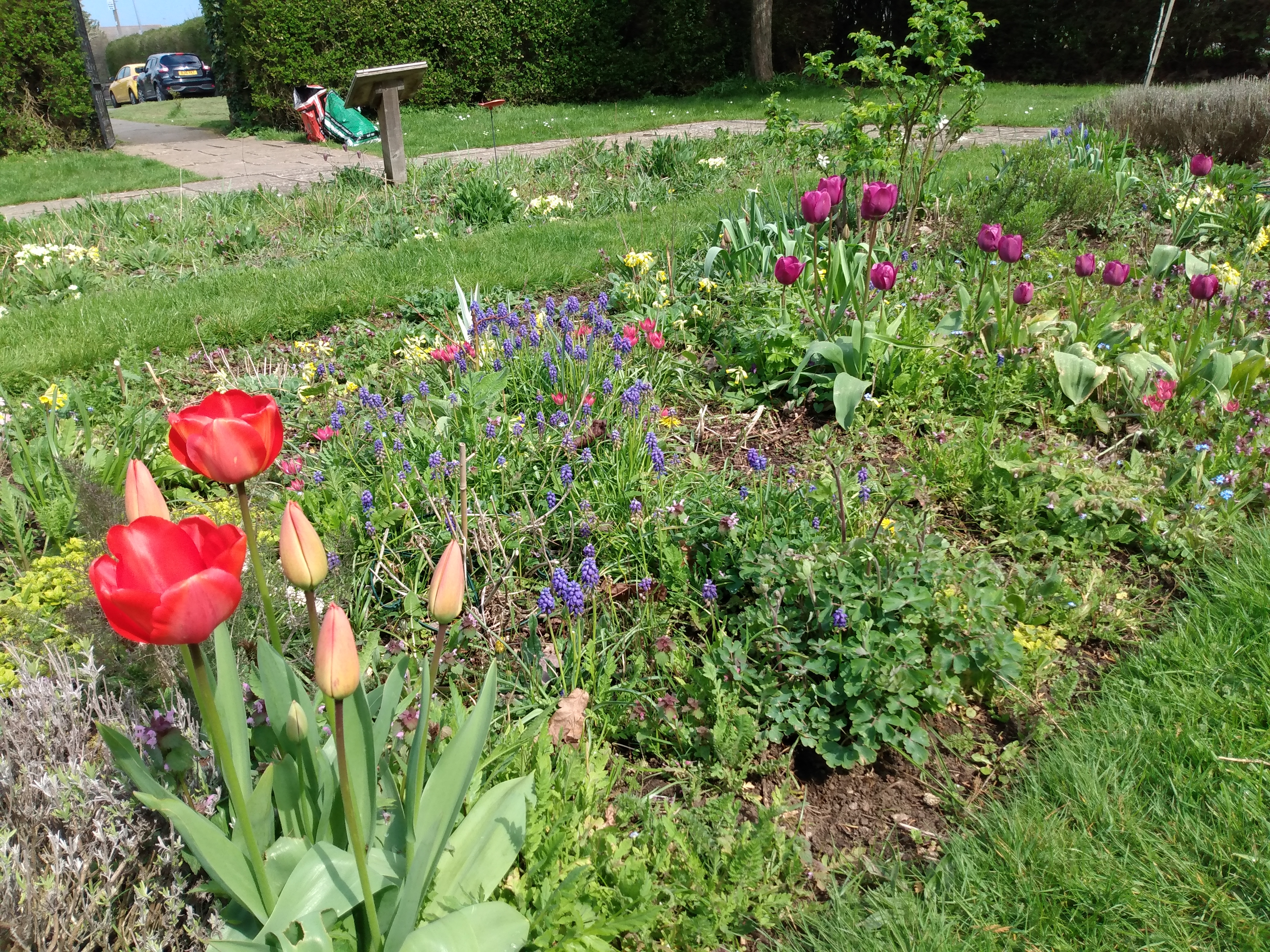
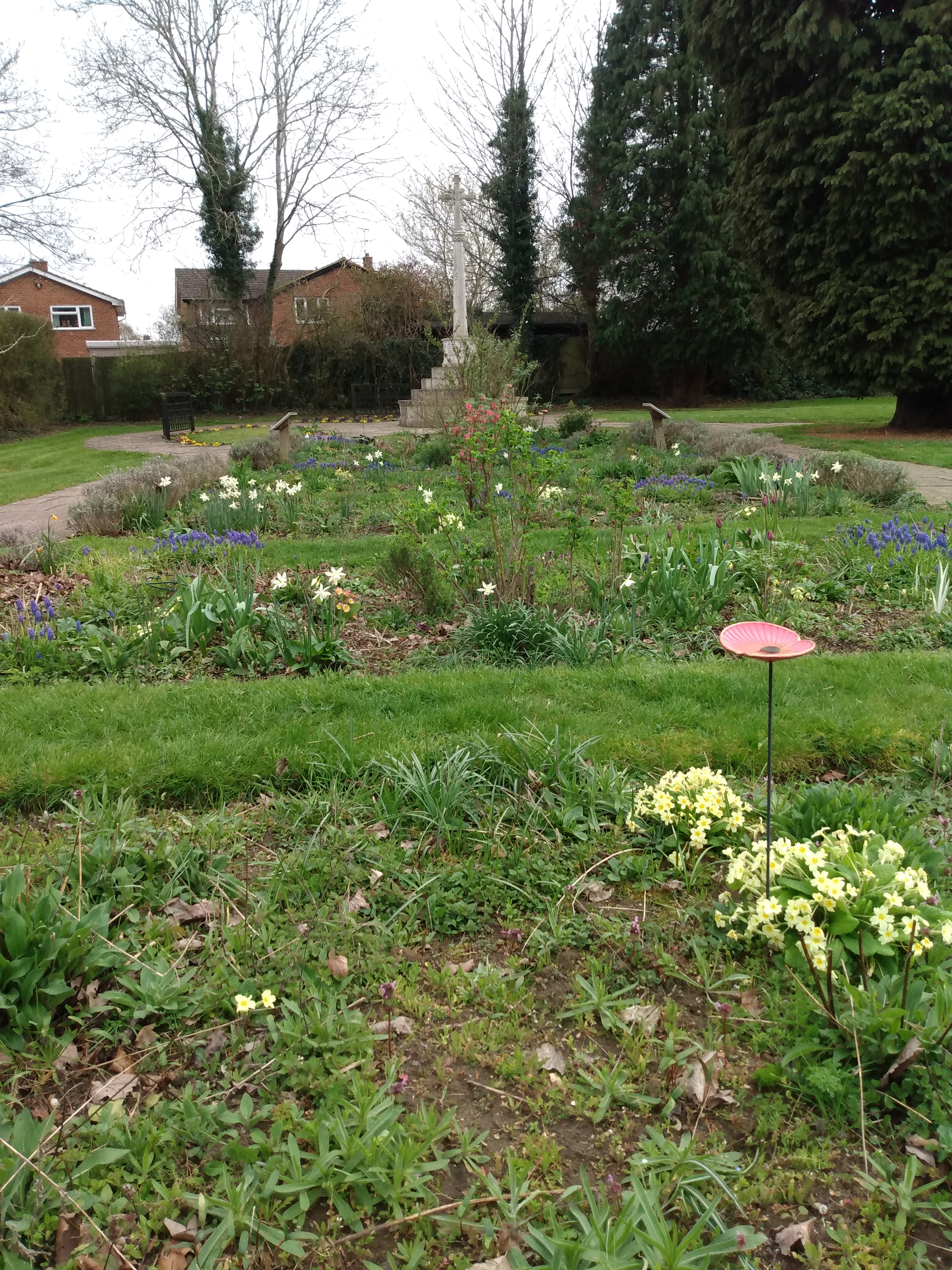
It’s been a really long, cold, wet winter, but finally we’re beginning to see a bit of colour in the gardens, and bees are visiting the flowers more as the days get just a little warmer.
Looking south from the car park gate to the war memorial
‘Thalia’ daffodils – these are the ones that bees like, they don’t seem to bother with the usual yellow ones
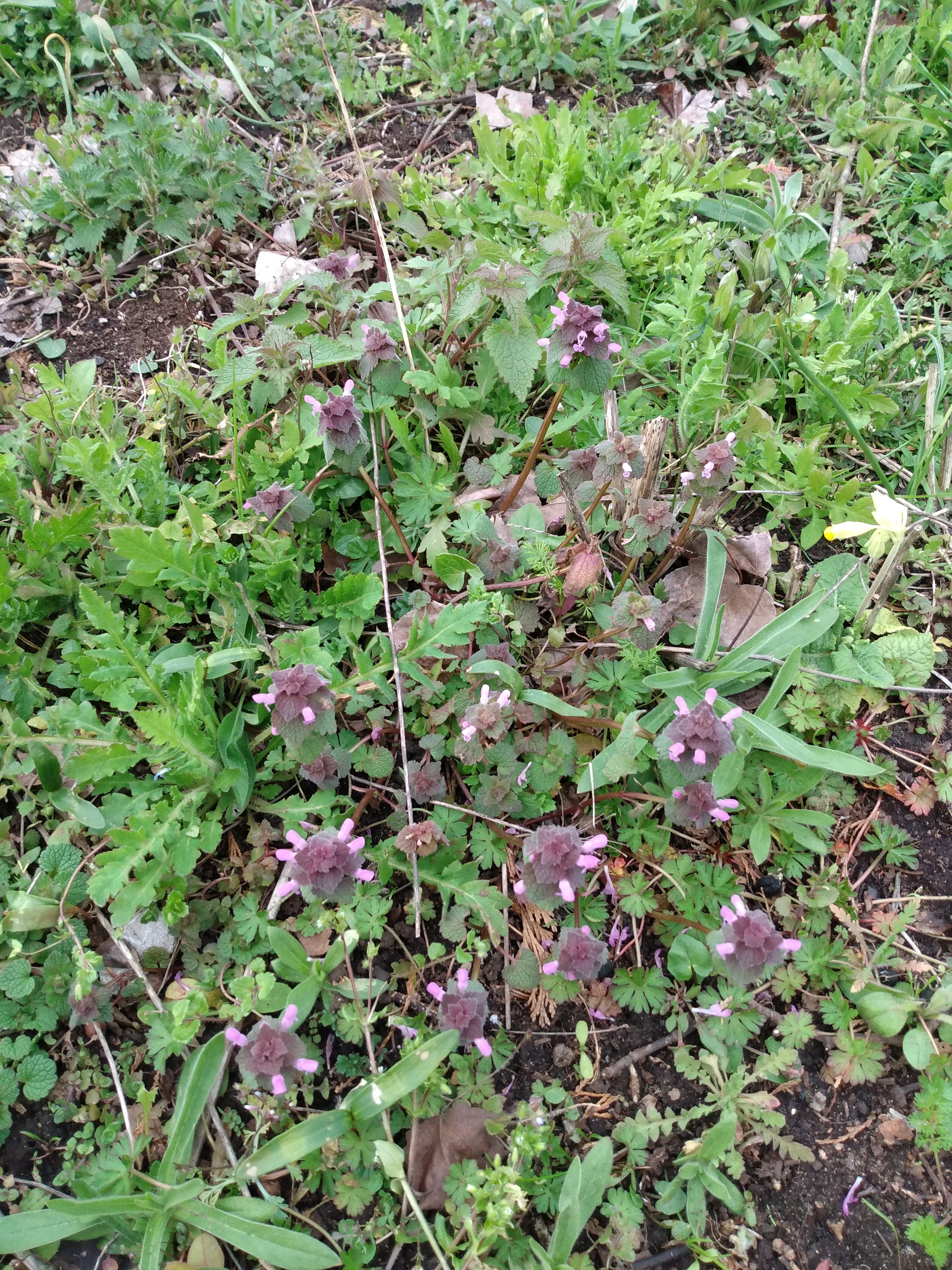
Our constant, unassuming star plant – once we’ve managed to establish this red deadnettle, it’s seeeded itself quietly around the gardens, and is one of the ones most visited by bees
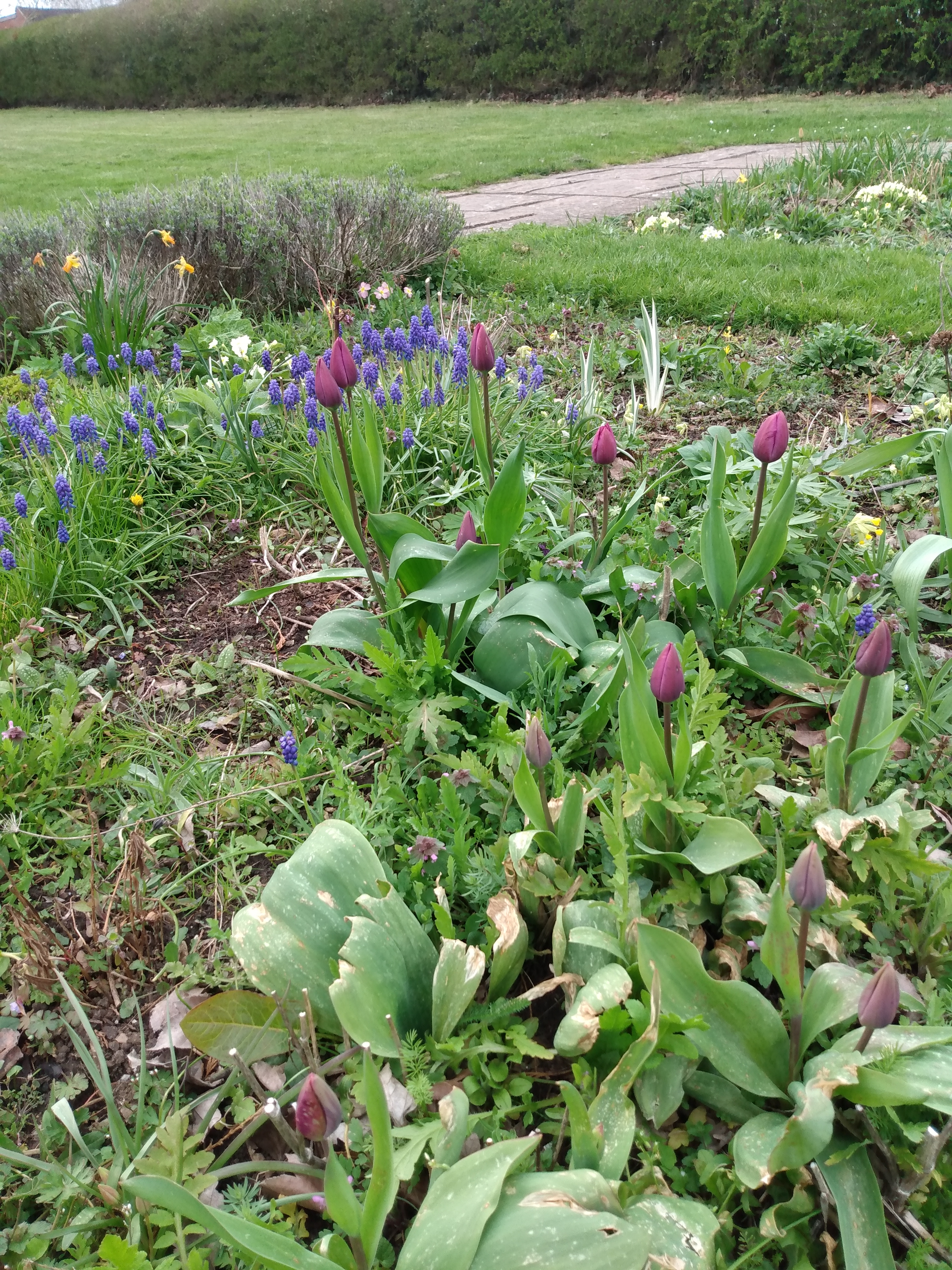
Purple tulips and blue grape hyacinths
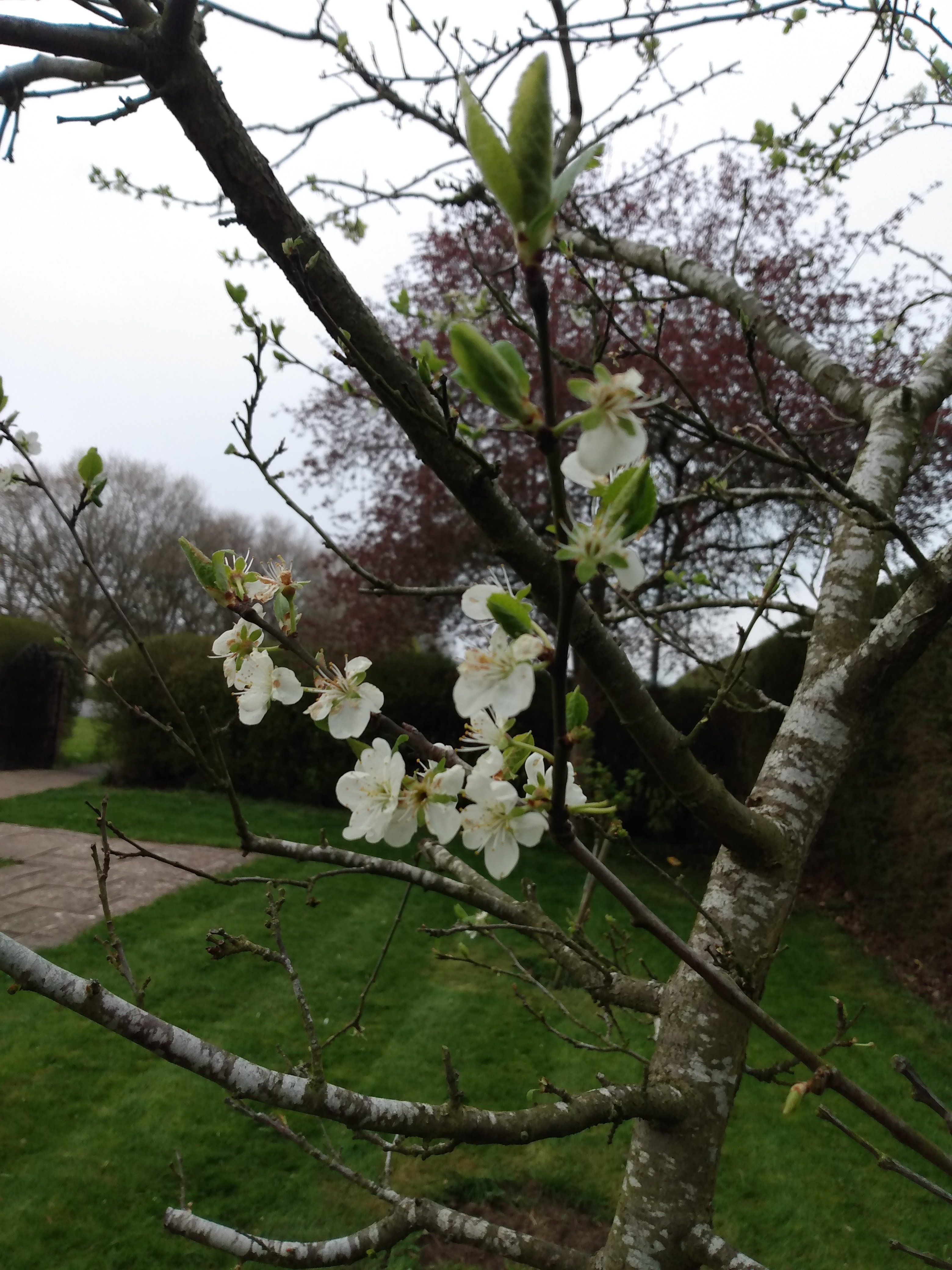
The plum blossom is out at last!
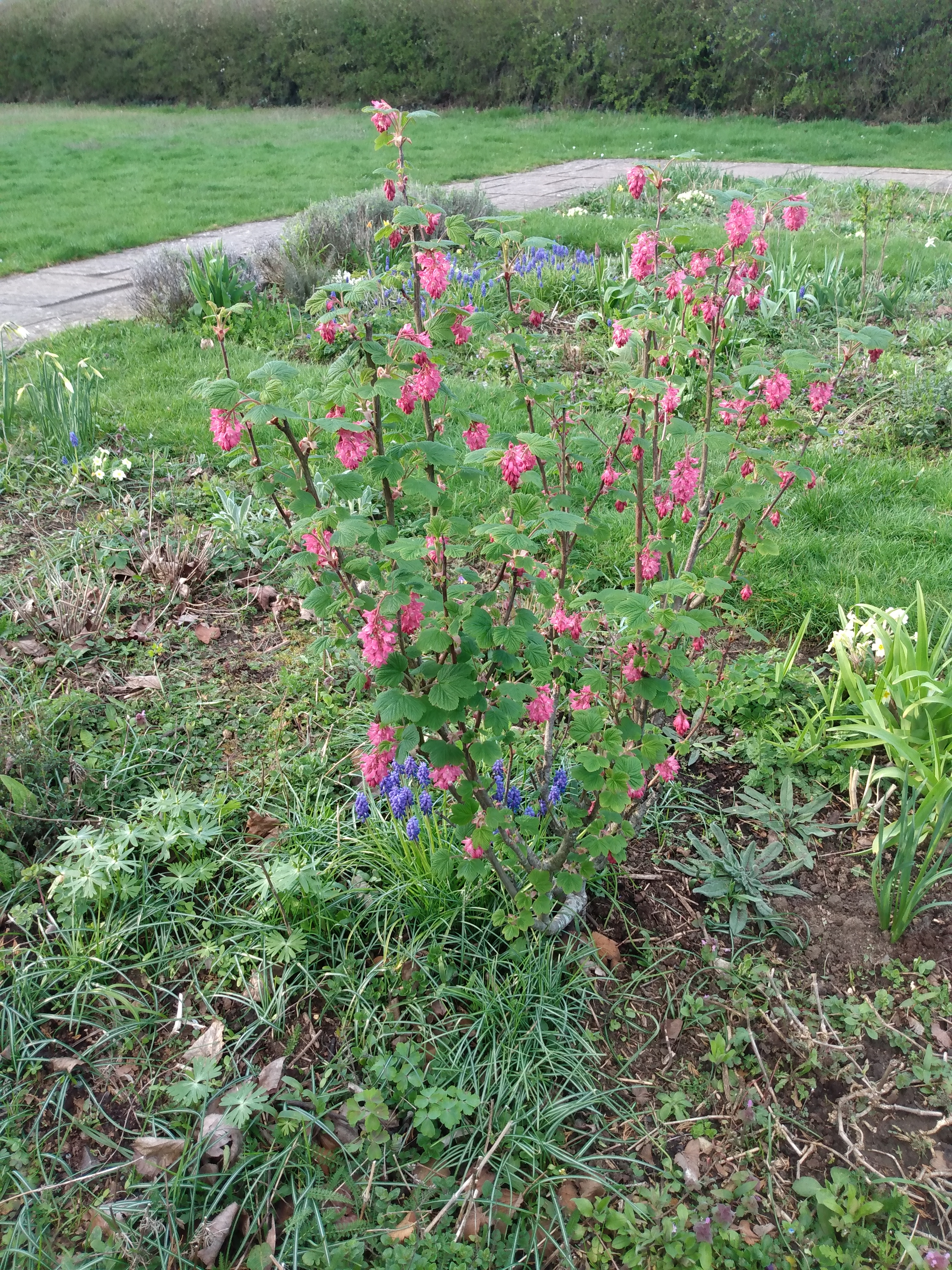
The flowering currant’s taken a while to establish itself, but it’s flowering really well this year